- Category
- Pulses
- State
- Dry
- Usual unit
- g
What it is
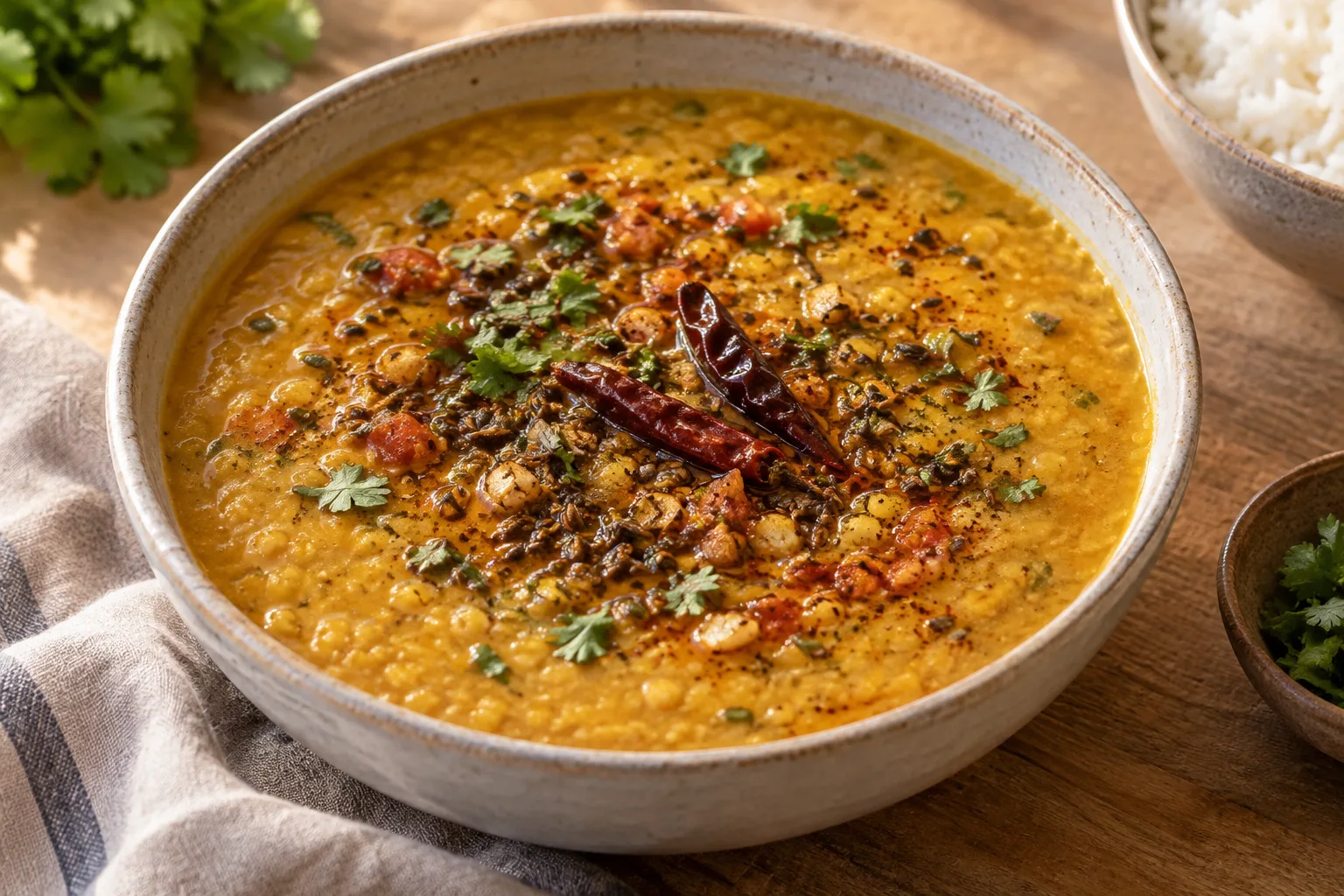
Masoor dal is a name for a form of lentil used in South Asian cooking and, in many contexts, for a dish made with lentils. The product sold as masoor dal is often split, skinned red lentils, but the name can also be associated with whole masoor lentils, which have brown or greenish tones and retain their skins. These forms behave differently in the pot: split lentils soften readily and tend to break down into a thick texture, while whole lentils are more likely to keep their shape. Check the appearance and package description, then choose according to the result you want. Masoor dal is a dry legume rather than a fresh vegetable. Before cooking, sort through it to remove small stones or debris and rinse it.
When to use it
Choose split masoor dal when you want a soft, thick preparation such as dal, soup, stew or a purée. Its tendency to break down can also help give body to a sauce. Whole masoor works better when you want lentils to remain distinct, such as in a salad or as a side. The form matters more than the name alone: if a recipe calls for whole lentils, check that the package does not contain split, skinned red lentils. You can adjust the consistency with the amount of liquid and the degree of cooking, but the two forms will not produce identical results.
How to use it
Spread the lentils out or inspect them in a sieve and remove any small stones or debris. Rinse well with water and drain. Soaking is usually unnecessary for split lentils; follow the package directions if they give specific instructions. Put the lentils in a pot with water or stock and simmer until tender. Split red lentils soften and thicken the liquid, making them useful for dal, soup and creamy stews; add more liquid if you prefer a thinner result. Season with ingredients such as cumin, garlic, ginger, turmeric, onion, tomato or chili. You can also make a separate spiced oil or tadka and stir it in near the end. Serve with rice or flatbread, or blend the cooked lentils for a smooth soup, dip or base for fillings and vegetable patties.
Flavour and texture
Lentils have a mild, earthy, slightly nutty flavor. Split, skinned masoor becomes soft and creamy and can break down into a thick dish; whole masoor keeps more of its shape and offers a more distinct bite. The result depends on the form you buy, the amount of liquid and how long you cook it. Spices, garlic, onion and tomato can add intensity while allowing the lentil flavor to remain present.
How to choose it
Look for dry lentils that appear clean, with no visible moisture, debris or damaged packaging. Read the label to see whether they are split and skinned or whole: split lentils usually cook until very soft, while whole lentils retain more of their shape. Color alone is not enough to choose; check the form and intended use. For a thick dal, split red lentils are a practical choice. For a dish with distinct lentils, choose a whole variety.
Storage
Keep dry lentils in a tightly closed container in a cool, dry, dark place. Protect them from moisture and check that the package is intact before storage. Refrigerate cooked lentils in a covered container and use them within the following days; they can also be frozen for longer storage. Keep cooked lentils separate from raw foods and follow appropriate food-storage practices in your kitchen.
Substitutions
Other split lentils, such as yellow lentils, can replace masoor in soups or dal, though the color and texture may differ. Adjust the liquid and cooking to suit the result you want. Whole lentils can replace split lentils when you want more structure, but they will not break down in the same way. Check the form before swapping one product for another.
Common mistakes
Confusing split masoor dal with whole masoor can greatly change the texture: split lentils break down, while whole ones retain more shape. Do not skip sorting and rinsing, since small debris may be present. Avoid using a fixed amount of liquid without considering the finished consistency; split lentils thicken a dish as they soften.
Safety and allergens
Sort dry lentils and remove any stones or debris; rinse them before cooking and cook until tender. Refrigerate cooked lentils in a covered container and avoid leaving them at room temperature for prolonged periods.
Culinary uses
- Base for dal, soups and stews
- Thickener for purées, sauces and other soft-textured dishes
- Plant-based ingredient for patties and fillings
Recommended techniques
- Sort, rinse and simmer until tender
- Simmer split red lentils until they soften and break down
- Mash or blend cooked lentils for a smooth texture
- Season with a spiced oil or tempering
Pairs well with
- Rice
- Flatbreads such as naan or chapati
- Cumin, garlic, ginger, turmeric and chili
- Onion, tomato and cilantro
Frequently asked questions
Is masoor dal the same as red lentils?
Masoor dal often means split, skinned red lentils, but the name is also used for whole masoor lentils. Check the form on the package.
Do split masoor lentils need soaking?
Soaking split lentils is usually unnecessary. Rinse them and follow any specific directions on the package.
Why does masoor dal turn soft and purée-like?
Split, skinned red lentils soften and break down as they cook. Choose whole lentils if you want them to keep their shape.
Ingredient allergens
Allergen listThere are no verified associations for these ingredients yet.
Sources and review
Automatically researched, cross-checked and validated content. Sources consulted:
- Client Challenge doi.org/10.2307/jj.27939689.16
- Lentils • The Nutrition Source nutritionsource.hsph.harvard.edu/food-features/lentils/
- Dal, daal, dahl o dhal | Gastronomía & Cía www.gastronomiaycia.com/dal-daal-dahl-o-dhal/
- Dal (alimento) - Wikipedia, la enciclopedia libre es.wikipedia.org/wiki/Dal_(alimento)
- The All Of It Leftover Challenge | WNYC our.barnard.edu/?calcid=753&calpgid=61&cid=753&crid=0&ecid=19750&gid=1&pgid=252&sid=1133
- Supporting Your Pulse with Pulses - Kendall Reagan Nutrition Center www.chhs.colostate.edu/krnc/monthly-blog/supporting-your-pulse-with-pulses/
- cooking “india”: identities and ideologies in indian cookbooks etd.ohiolink.edu/acprod/odb_etd/ws/send_file/send?accession=akron1499672751079546&dispositio…
- Cooking Healthy, Eating Well (CHEW) | Student Wellness Center www.sjsu.edu/wellness/grow-your-wellbeing/chew.php
- A Tomato-y Egyptian Lentil Soup for Cooler Days - University of California Press www.ucpress.edu/blog-posts/a-tomato-y-lentil-soup-for-cooler-days
- Lentils - MSU Extension Nutrition | Montana State University www.montana.edu/extension/nutrition/nutrition-cooking-culture/food-fact-sheets/lentils.html
- LA COCINERA NOVATA: MASOOR DAL, PLATO INDIO DE LENTEJAS NARANJAS lacocineranovata.blogspot.com/2015/11/masoor-dal-plato-indio-de-lentejas.html
- Masoor Dal — Open Spice Box openspicebox.com/es/ingredients/masoor-dal
- Receta de masoor dal, plato indio de lentejas naranjas www.petitchef.es/recetas/entrante/masoor-dal-plato-indio-de-lentejas-naranjas-fid-1563225
- Receta del dal o daal, combinación de legumbres www.enbuenasmanos.com/el-dal
- Lentejas y dal explicados: guía de compra para principiantes – Desi Gourmet desigourmet.es/blogs/recetas-de-comida-india/lentejas-y-dal-explicados-guia-de-compra-para-p…