- Category
- Oils and fats
- State
- Liquid
- Usual unit
- tablespoon
What it is
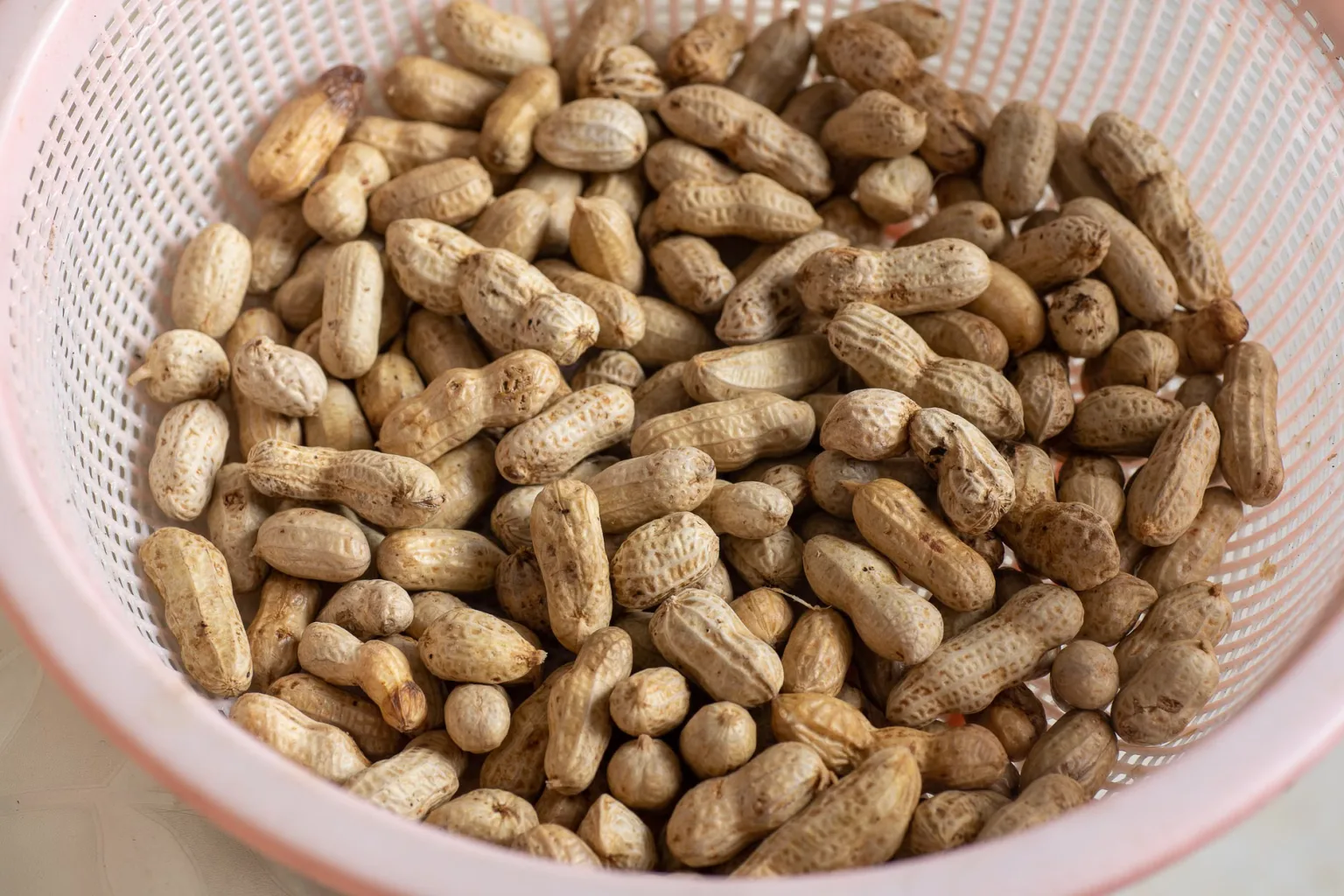
Peanut oil, also called groundnut oil, is a vegetable oil extracted from peanut seeds. It is available in refined and unrefined forms and can be produced through different processes, including pressing or cooking followed by pressing. As a result, products do not all have the same color, aroma, or flavor: some taste mild, while others have a more pronounced peanut character. In the kitchen, peanut oil can be used as a cooking fat for frying or stir-frying, and uncooked in dressings, sauces, and vinaigrettes. Read the product label to identify the type you have, and do not assume that every peanut oil has the same flavor or composition. Since it comes from peanuts, check the package information when cooking for someone with a peanut allergy.
When to use it
Choose peanut oil when you want a vegetable cooking fat for frying or stir-frying, or when you want to include it in a sauce, vinaigrette, or dressing. Refined products tend to have a milder flavor than unrefined ones, so they may suit dishes where you do not want the oil to dominate. If the oil has a noticeable peanut aroma, use it in dishes where that flavor is welcome, including as a finishing touch. Flavor and characteristics vary by product, so check the label rather than assuming that one type represents them all. If someone has a peanut allergy, check the package information and ask a healthcare professional about the specific product.
How to use it
For frying or stir-frying, add the oil to the pan and use it as you would another cooking fat suitable for the dish. Peanut oil can also be used uncooked: mix a little into a salad, vinaigrette, or sauce, then taste before adding more. Products with a stronger peanut flavor can significantly change a dish's character. It pairs in sauces and savory preparations with ingredients such as soy sauce, ginger, sesame oil, scallion, or vinegar. Check the label to understand what kind of oil you have and follow the manufacturer's directions. Do not use the oil if it develops an unpleasant smell or taste.
Flavour and texture
Flavor ranges from mild to distinctly peanut-like, depending on the product and how it was processed. Refined peanut oil is generally less pronounced in flavor than unrefined oil. It is a liquid fat that can be used in hot preparations or uncooked. Color can also vary; a light color is described for some products, but color alone does not establish quality or reveal the processing method.
How to choose it
Read the product name and description to see whether the oil is identified as refined or unrefined and whether its flavor is described as mild or pronounced. Check that the container is sealed and undamaged, and read the label for the ingredient and allergen information. Color alone cannot tell you how an oil was made. If you want a subtle flavor, look for a product described as refined or mild; if you want a more noticeable peanut aroma, choose one whose description indicates a stronger flavor.
Storage
Keep the oil tightly closed in a cool place away from direct light. These conditions help maintain its quality. Avoid leaving the container open or exposed to heat and light. No single storage duration is established here for every product, so follow the manufacturer's directions and any date on the package. If the oil develops an unpleasant smell or taste, do not use it.
Substitutions
For frying or stir-frying, another vegetable oil suited to the preparation can be used; olive oil is one possible option when its flavor fits the dish. A substitute will change the result, so do not expect another oil to reproduce peanut oil's distinctive flavor exactly. For dressings and sauces, choose an alternative for the flavor profile you want and add it gradually.
Common mistakes
Do not assume that all peanut oils are equally mild or suited to the same use: refined and unrefined products can differ in flavor. Color is not a reliable way to identify the oil type. Another mistake is overlooking the package's allergen information or assuming that all products have the same characteristics.
Safety and allergens
Peanut oil comes from peanuts. Read the package information, especially when cooking for someone with a peanut allergy. Products can differ; if an allergy is involved, ask a healthcare professional about the specific oil before using it.
Culinary uses
- grasa de cocción para freír y saltear
- aceite para aliños, salsas y vinagretas
Recommended techniques
- freír
- saltear
- usar en crudo para aliñar
- incorporar a salsas y vinagretas
Pairs well with
- salsa de soja
- jengibre
- aceite de sésamo
- cebolleta
- vinagre
- cilantro
Frequently asked questions
What is peanut oil used for?
It is used for frying and stir-frying, and uncooked in dressings, sauces, and vinaigrettes. Its flavor depends on the product and how it was processed.
Does all peanut oil have a strong flavor?
No. Flavor varies; refined oil is generally milder than unrefined oil. Check the product description and label.
What should I consider if someone has a peanut allergy?
Peanut oil comes from peanuts. Check the package information and ask a healthcare professional about the specific product.
Ingredient allergens
Allergen listThere are no verified associations for these ingredients yet.
Estimated nutrition
- Fat
- 100 g
- Saturates
- 17.9 g
- Carbohydrate
- 0 g
- Sugars
- 0 g
- Protein
- 0 g
- Salt
- 0 g
Sources and review
Automatically researched, cross-checked and validated content. Sources consulted:
- Preparación para Emergencias: Almacenamiento de Alimentos a Largo Plazo para Desastres | CAES Field Report fieldreport.caes.uga.edu/publications/C1310-SP/preparacion-para-emergencias-almacenamiento-d…
- Food & Nutrition | Colorado State University Extension foodsmartcolorado.colostate.edu/food-safety/emergency-resources/how-to-use-series/como-utili…
- Usos del cacahuete en la cocina y en la industria | Itac Professional www.itac-professional.com/blog/cacahuete-industria-alimentaria/
- Family Food Cent$ newsletter - febrero 2022 - SDSU Extension extension.sdstate.edu/sites/default/files/2022-01/MC-02453-S.pdf
- News | Expanded Food & Nutrition Education Program | Washington State University extension.wsu.edu/efnep/news/
- Para la ciudadanía www.aesan.gob.es/para-la-ciudadania
- Recetas - Expanded Food and Nutrition Education Program efnep.tamu.edu/recipessp/
- Tanzania Food Composition Tables | The Nutrition Source nutritionsource.hsph.harvard.edu/wp-content/uploads/2023/09/Tanzania-Food-Composition-Tables…
- Guidelines for refrigeration of foods | Servicio de Extensión de OSU extension.oregonstate.edu/es/food/preservation/guidelines-refrigeration-foods
- Historical context of peanuts in Mexico – Exploring Afro-Mexico Through Food and Science pressbooks.cuny.edu/afromexicanfoodandscience/chapter/historical-information-of-peanut/
- Datos sobre grasas y aceites1 - Ask IFAS ask.ifas.ufl.edu/publication/FS292/pdf
- Aceite de cacahuete | Gastronomía & Cía www.gastronomiaycia.com/aceite-de-cacahuete/
- Propiedades del aceite de cacahuete – Botanical-online www.botanical-online.com/alimentos/aceite-cacahuete-propiedades
- Aceite de cacahuete: usos en cocina y por qué no es para freír buenfindeboutique.com/aceite-de-cacahuete-usos-cocina
- Ingredientes que maridan con aceite de cacahuete ✓ basmatic.com/maridaje/aceite-de-cacahuete
- Food allergen labelling and information requirements technical guidance - GOV.UK www.gov.uk/government/publications/food-allergen-labelling-and-information-requirements-tech…