- Category
- Grains, flour and pasta
- State
- Fresh
- Usual unit
- g
What it is
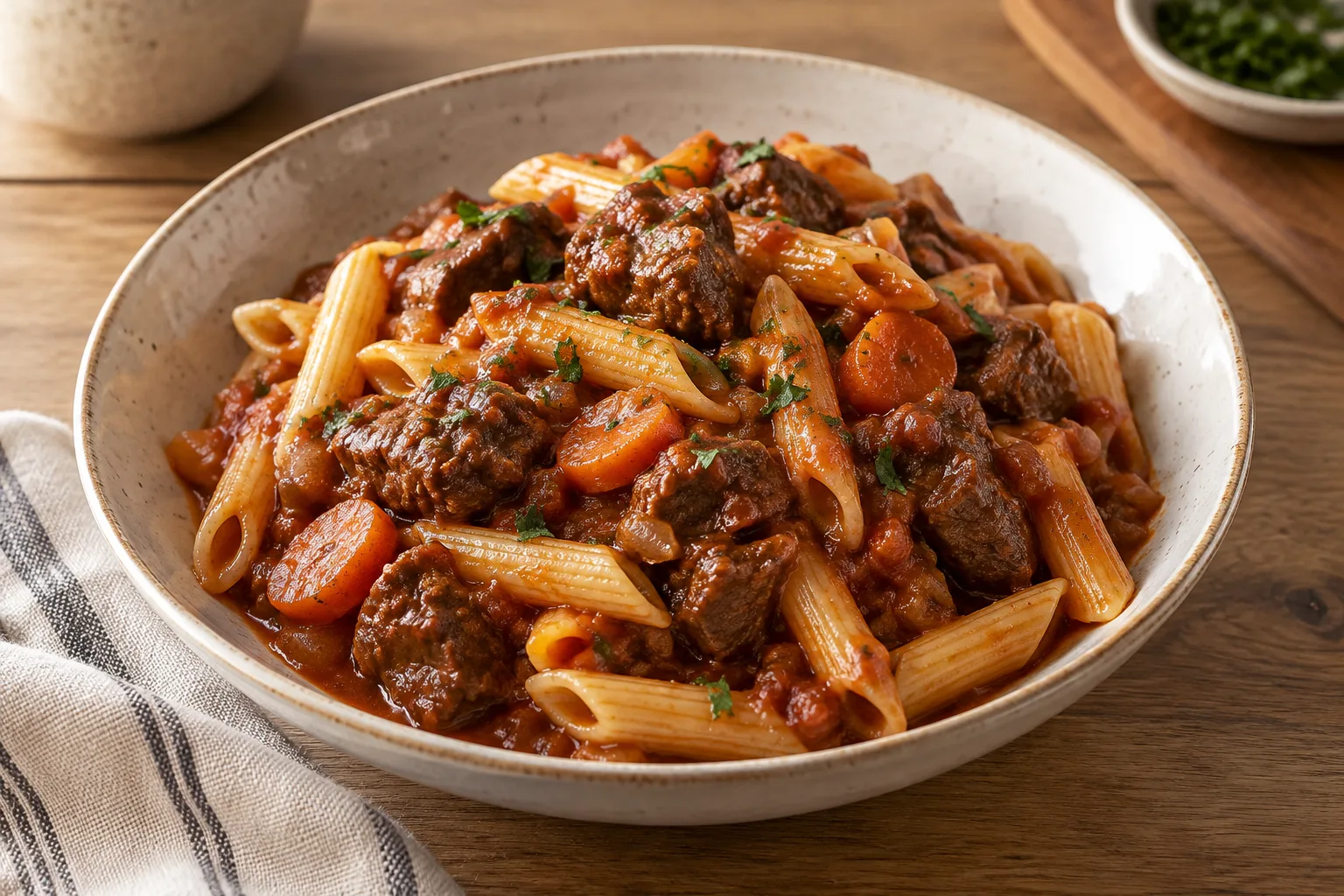
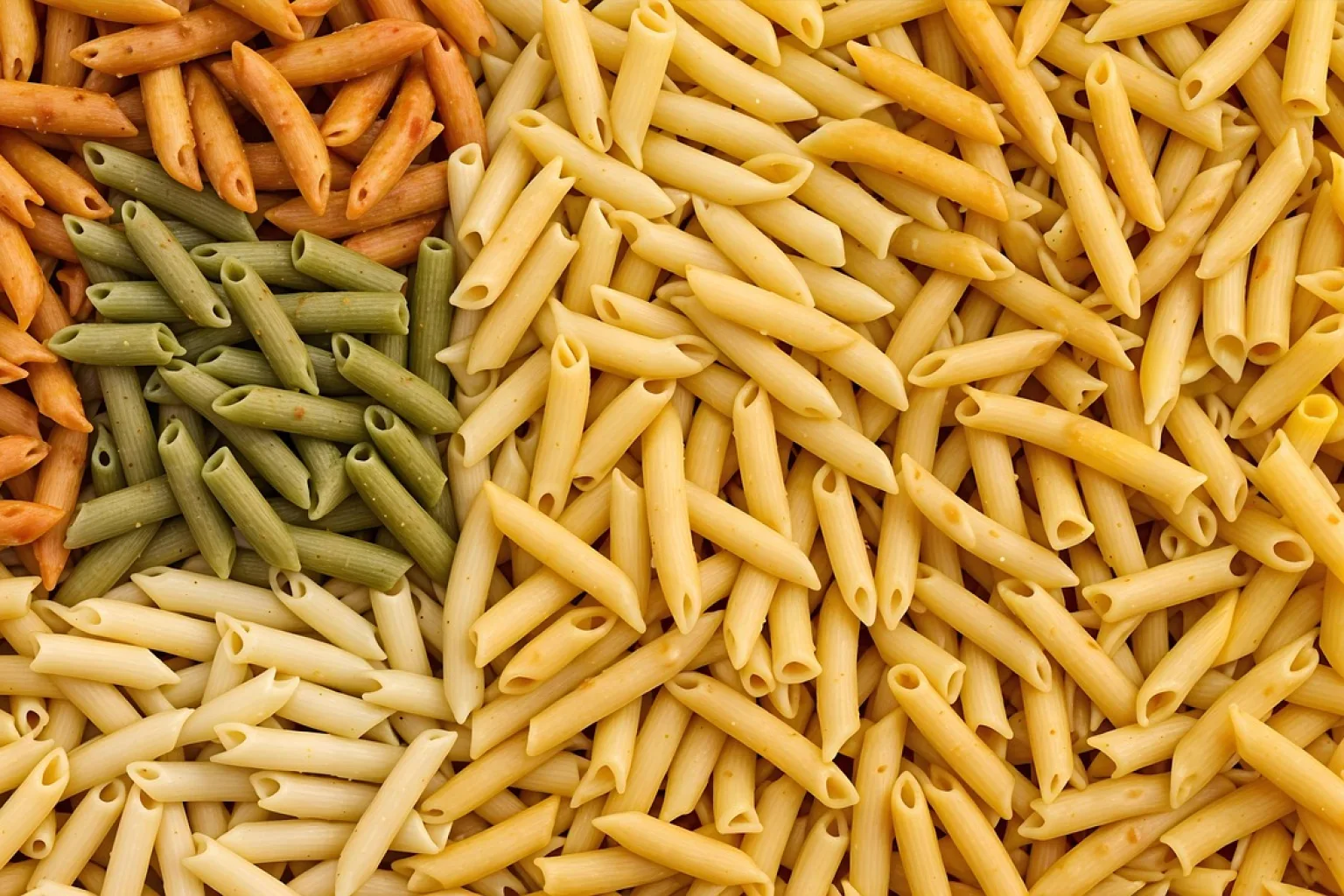
Penne is a short pasta shape formed as a tube with diagonally cut ends, resembling the tip of a pen. It is sold in smooth and ridged versions: penne lisce has a smooth exterior, while penne rigate has ridges on the outside. Like other pasta shapes, it can be served with sauce, used in salads or added to a casserole. The available examples include dishes with tomato, pesto, vegetables and other ingredients. The name refers to a pen, but in everyday cooking the defining features are the short tube and its angled ends.
When to use it
Choose penne when you want a short pasta shape that is easy to combine with sauce and other ingredients. The ridged version offers a different outside texture from the smooth version, so choose according to the finish you prefer. Penne can be served hot with tomato sauce, pesto or vegetables, used in pasta salad, or included in a casserole that finishes cooking in the oven. Its tubular shape also works well in mixtures with small pieces of other ingredients, letting pasta and additions come together in each bite.
How to use it
Cook the pasta in water, following the timing and directions on the package because instructions can differ between products. Taste a piece to check the texture you want, then drain when ready. For a hot dish, toss the pasta with your chosen sauce and ingredients; it can be combined with pesto, tomatoes, herbs, vegetables, olives or cheese. For pasta salad, drain it thoroughly before mixing it with dressing and other components. For a casserole, combine cooked pasta with sauce, vegetables or other ingredients, then finish the dish in the oven according to the recipe.
Flavour and texture
Penne has a mild flavor, so it can be paired with a range of sauces and ingredients without overpowering them. Its tube shape gives each piece a distinct bite and makes it easy to mix with other components. The exterior may be smooth or ridged: rigate has raised lines and a different surface texture. The cooked texture depends on preparation, so follow the package directions and check the pasta rather than assuming every product cooks in the same way.
How to choose it
Check whether the package contains penne lisce, with a smooth exterior, or penne rigate, with outer ridges, and choose the texture that suits your dish. Read the ingredient list and manufacturer’s instructions, since product details and cooking directions can vary. If you plan to make a salad or casserole, consider the sauce and other ingredients before choosing the pasta format so it fits the preparation you have in mind.
Storage
The available evidence does not establish one storage method or shelf life for every penne product and presentation. Check the package directions and follow them, especially if the product is sold as fresh pasta. Keep the product identifiable and consult the manufacturer’s date and instructions before use. The available information does not specify how long cooked penne can be kept; follow the food-safety and storage guidance that applies to the prepared dish.
Substitutions
Rigatoni can replace penne when you want another tube-shaped pasta with a larger shape and straight-cut ends. Ziti is another straight-cut tube, particularly suited to baked preparations. Rotini or shells are also possible alternatives in pasta salad. The shape and texture will change, so the result will not be identical; adjust the sauce and other ingredients to suit the pasta you choose.
Common mistakes
Do not assume every penne variety has the same surface: both smooth and ridged versions exist. Avoid relying on one universal cooking time; check the package and taste the pasta as it cooks. When making a salad or casserole, drain the pasta before mixing it with other ingredients. A substitute with a different size or shape may also change how the finished dish comes together.
Safety and allergens
Follow the package cooking directions and the manufacturer’s storage instructions. Check the ingredient list if you need to avoid a particular ingredient, since product composition can vary.
Culinary uses
- Base for hot pasta dishes
- Component in pasta salads and baked casseroles
Recommended techniques
- Boil in water and drain according to the package instructions
- Toss with sauce while warm
- Bake in a casserole with sauce and other ingredients
Pairs well with
- Tomato sauce, basil and cheese
- Pesto, vegetables and small pieces of other ingredients
- Olives, tomatoes and herbs in pasta salad
Frequently asked questions
What does penne mean?
The name refers to a pen; the pasta is short and tubular, with diagonally cut ends.
What is the difference between penne lisce and penne rigate?
Penne lisce has a smooth exterior, while penne rigate has ridges on the outside.
Can I use penne in pasta salad?
Yes. Penne can be used in pasta salad; drain it and combine it with dressing and your chosen ingredients.
Ingredient allergens
Allergen listThere are no verified associations for these ingredients yet.
Estimated nutrition
- Fat
- 0.72 g
- Saturates
- 0 g
- Carbohydrate
- 33.1 g
- Sugars
- 1.44 g
- Fibre
- 1.4 g
- Protein
- 7.19 g
- Salt
- 0 g
Sources and review
Automatically researched, cross-checked and validated content. Sources consulted:
- Client Challenge doi.org/10.2307/jj.27939689.16
- The Essential Glossary of Cooking Terms for the Culinary Arts - Escoffier www.escoffier.edu/blog/culinary-arts/the-essential-glossary-of-cooking-terms-for-the-culinar…
- Pasta - Wikipedia, la enciclopedia libre es.wikipedia.org/wiki/Pasta
- Cooking as a College Student - Writing and Learning Center writingandlearningcenter.unc.edu/2025/01/cooking-as-a-college-student/
- Cooking 101 (Week 4) Quick and Easy Menus, Recipes and Tips for Singles and Couples: Grocery Shopping Made Easy | NDSU Agriculture www.ndsu.edu/agriculture/extension/publications/cooking-101-week-4-quick-and-easy-menus-reci…
- A Guide to the Strategic Pantry - Swain County Center | N.C. Cooperative Extension swain.ces.ncsu.edu/news/a-guide-to-the-strategic-pantry/
- Antipasti Pasta Salad | Institute of Culinary Education www.ice.edu/blog/recipe-fermented-antipasti-pasta-salad
- Making a Casserole from What's on Hand | UNL Food | Nebraska food.unl.edu/article/making-casserole-whats-hand/
- MAKE YOUR OWN - A Recipe Guide extension.umaine.edu/food-health/resource/make-your-own-recipe-guide-pdf/
- Meal Planning with Food Pantry Boxes extension.psu.edu/meal-planning-with-food-pantry-boxes/
- "¿Soy el único que quería saber del 'penne'?": de aquí viene el nombre de cada variante de pasta italiana www.directoalpaladar.com/consumidores/explica-origen-nombre-cada-variante-pasta-italiana-muc…
- Pasta penne: historia, origen y características - Conzazoni conzazoni.com/blogs/pasta-penne-historia-y-caracteristicas/
- Penne, rigatoni y ziti: diferencias pasta| Excelencias Gourmet www.excelenciasgourmet.com/es/producto/penne-rigatoni-ziti-diferencias
- Food allergen labelling and information requirements technical guidance - GOV.UK www.gov.uk/government/publications/food-allergen-labelling-and-information-requirements-tech…
- Penne | Hashizume Noodle hashizumen.co.jp/en/noodles/penne/
- Fresh egg pasta – Penne - Pasta di Venezia - Gluten Free www.pastadivenezia.it/en/prodotti/penne/