- Category
- Herbs and spices
- State
- Fresh
- Usual unit
- leaves
What it is
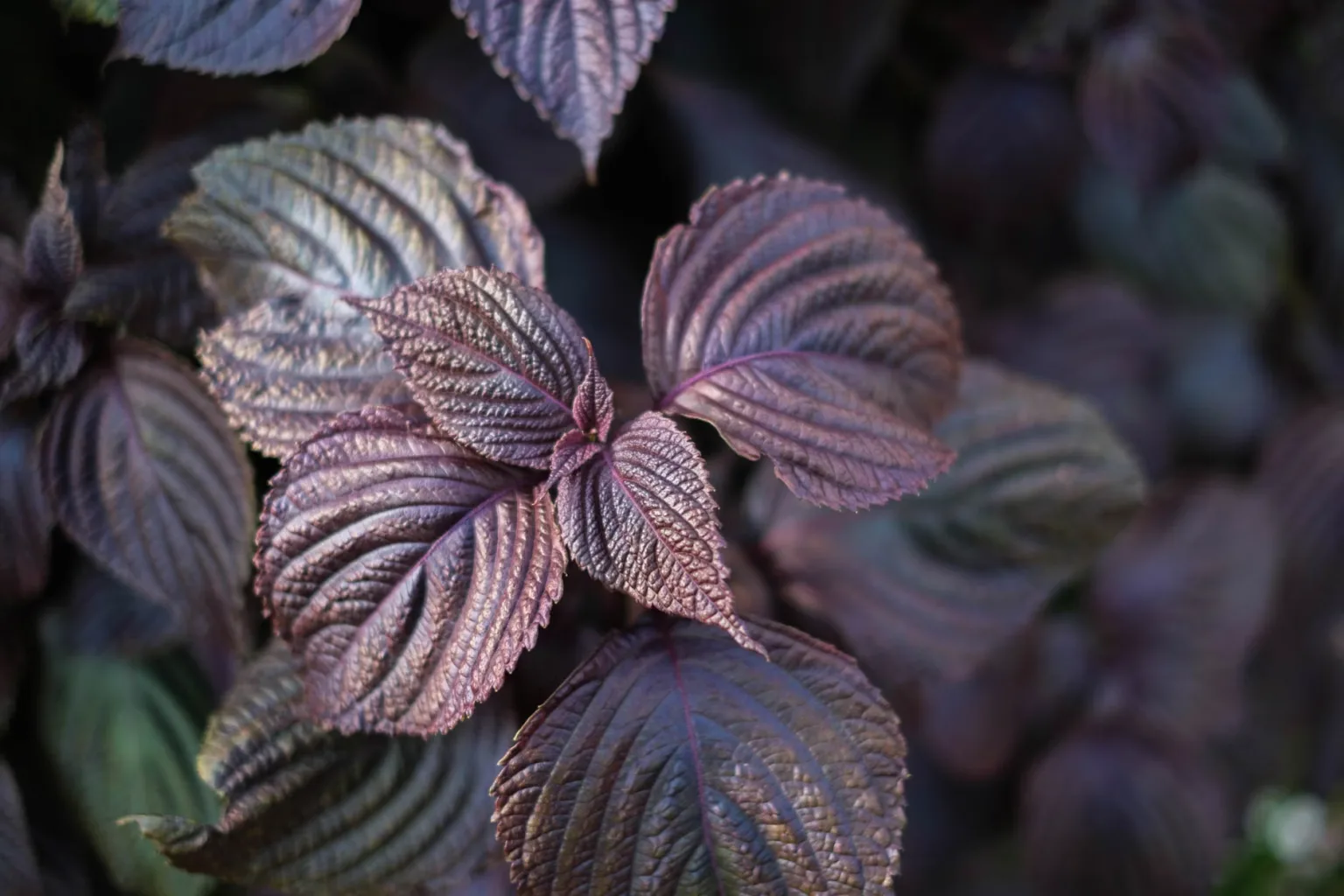
Perilla is an aromatic herb from the species Perilla frutescens, in the mint family, Lamiaceae. Its leaves are the part most often used in cooking and may be green, purple or bicoloured. Shiso is a name associated with Japanese perilla varieties, while Korean leaves are also known as kkaennip. Varieties can differ in shape, colour and flavour, so perilla is best understood as a group of aromatic leaves rather than one fixed flavour. The leaves are eaten fresh, whole or sliced, and are also added to soups, pickles and drinks.
When to use it
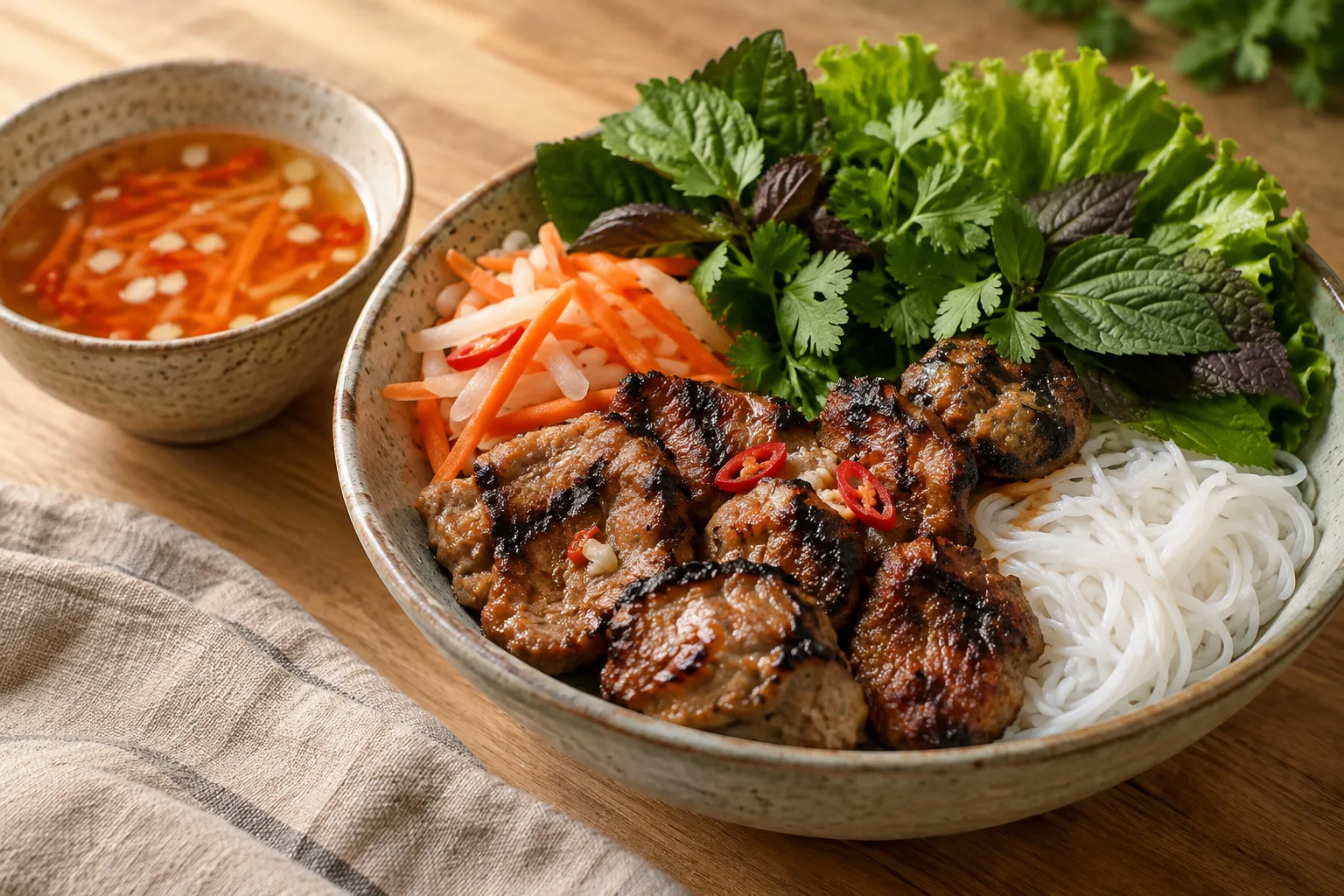
Use perilla when you want a fresh herbal aroma with a menthol-like, citrusy or spicy note, depending on the variety and the individual leaves. It pairs well with fish and seafood, works as a sashimi garnish, and can be used in salads or sliced over rice and noodles. Larger leaves can wrap rice, meat or other fillings. Add it raw or near the end of cooking when you want its aroma to stand out; for a fried preparation, use the leaves in tempura. Purple perilla is also used in some pickled preparations and as a source of colour.
How to use it
Separate the leaves from the stems if you want a more delicate texture, then serve them whole as a garnish or wrap. For salads, noodles, rice and meat or fish dishes, cut the leaves into thin strips and add them near the end to keep their aroma noticeable. You can also layer leaves with fish for steaming, fry them in tempura, or add them to soup. Perilla leaves are also used in pickles and to flavour drinks or infusions. Green and purple varieties may have different flavour profiles, so taste a small amount first and adjust to suit the dish.
Flavour and texture
Perilla’s flavour varies by variety: it can suggest mint, with citrusy, herbal or mildly spicy notes, while some leaves can taste more bitter or sweet. The leaves are aromatic and usually oval with toothed edges; their texture and degree of curl vary. Green and purple perilla also differ in colour and may be perceived differently in flavour.
How to choose it
Choose fresh leaves that look intact and are not visibly wilted or damaged. Perilla is sold in green, purple and sometimes bicoloured varieties; differences in colour and shape are normal. If you need it for a particular dish, ask which variety is available, since the flavour is not always the same. Check that the product is perilla leaf rather than a different aromatic herb with a similar appearance.
Storage
Fresh perilla is sold as an aromatic leaf; follow the storage directions provided by the seller or on the package. Choose an amount you can use while the leaves still look good, and avoid storing damaged leaves with intact ones. The available information does not establish one universal storage duration or method for every variety and form.
Substitutions
Basil can replace perilla as an aromatic herb in some dishes, but it will not reproduce the flavour exactly. Mint can provide a fresh note, although it may dominate the dish and is not an exact equivalent either. Adjust gradually and consider the flavour of the recipe rather than assuming a precise swap.
Common mistakes
Do not assume every perilla variety tastes the same: colour and aromatic notes vary. Nor should basil or mint be treated as exact replacements. If you want the perilla aroma to remain distinct, avoid masking it with too many seasonings and taste before adding more.
Safety and allergens
For packaged products and prepared dishes, check ingredient and allergen information, especially when perilla is part of a mixture or a prepared meal. Allergen information can vary between products.
Culinary uses
- Fresh aromatic herb and garnish
- Leaf wrapper for fillings
- Herbal flavouring for soups, salads, rice and noodles
- Colouring ingredient in some preparations made with red perilla
Recommended techniques
- Serve the leaves whole or sliced thinly, raw
- Fry leaves in tempura batter
- Add sliced leaves to soups, noodles or rice dishes
- Use leaves in pickled preparations or infuse them in a drink
Pairs well with
- Seafood and sashimi
- Grilled meat and rice
- Noodles and salads
- Ginger and citrus
Frequently asked questions
Are perilla and shiso the same?
Shiso is the Japanese name used for some perilla varieties. Other varieties and culinary uses are associated with Korean perilla, so the name does not guarantee an identical variety.
Can perilla leaves be eaten raw?
Yes. Fresh leaves are used raw as a garnish, in salads and sliced over rice, noodles, meat or fish dishes.
What can I use if I cannot find perilla?
Basil can work as an aromatic alternative in some dishes. Mint can add a fresh note, but neither tastes exactly like perilla.
Ingredient allergens
Allergen listThere are no verified associations for these ingredients yet.
Estimated nutrition
- Fat
- 92.9 g
- Saturates
- 10.7 g
- Carbohydrate
- 0 g
- Sugars
- 0 g
- Fibre
- 0 g
- Protein
- 0 g
- Salt
- 0 g
Sources and review
Automatically researched, cross-checked and validated content. Sources consulted:
- Alérgenos alimentarios | EFSA www.efsa.europa.eu/es/safe2eat/food-allergens
- Client Challenge doi.org/10.2307/jj.27939689.16
- Etiquetado de sustancias que causan alergias e intolerancias alimentarias www.aesan.gob.es/seguridad-alimentaria/informacion-alimentaria/etiquetado-sustancias
- Food Allergies | FDA www.fda.gov/food/nutrition-food-labeling-and-critical-foods/food-allergies
- Food allergens | Food Safety and Quality | FAO www.fao.org/food-safety/scientific-advice/food-allergens/en
- Allergen guidance for food businesses - GOV.UK www.gov.uk/government/publications/allergen-guidance-for-food-businesses/allergen-guidance-f…
- Qué es el shiso, una planta imprescindible en la cocina asiática, y qué usos darle en cocina www.directoalpaladar.com/ingredientes-y-alimentos/que-shiso-planta-imprescindible-cocina-asi…
- Comprehensive Review of Perilla frutescens: Chemical Composition, Pharmacological Mechanisms, and Industrial Applications in Food and Health Products - PMC pmc.ncbi.nlm.nih.gov/articles/PMC11988686/
- Perilla: cultivo, cuidados y plantas compañeras plotmygarden.com/es/plants/perilla
- - YouTube www.youtube.com/watch?v=qctil8ijWJ4
- LA PERILLA – Huerto del Rey Moro www.huertodelreymoro.org/la-perilla/
- El shiso www.joseanalija.com/shiso/
- Shiso rojo: análisis y comparativa de las mejores opciones para sushi y cocina asiática yuanlaosi.es/shiso-rojo/
- ¿Por qué la perilla está ganando popularidad? Secretos y usos inesperados www.clarin.com/internacional/perilla-ganando-popularidad-secretos-usos-inesperados_0_ZZrKP5j…
- Perilla frutescens - Wikipedia, la enciclopedia libre es.wikipedia.org/wiki/Perilla_frutescens