- Category
- Vegetables
- State
- Fresh
- Usual unit
- unit
What it is
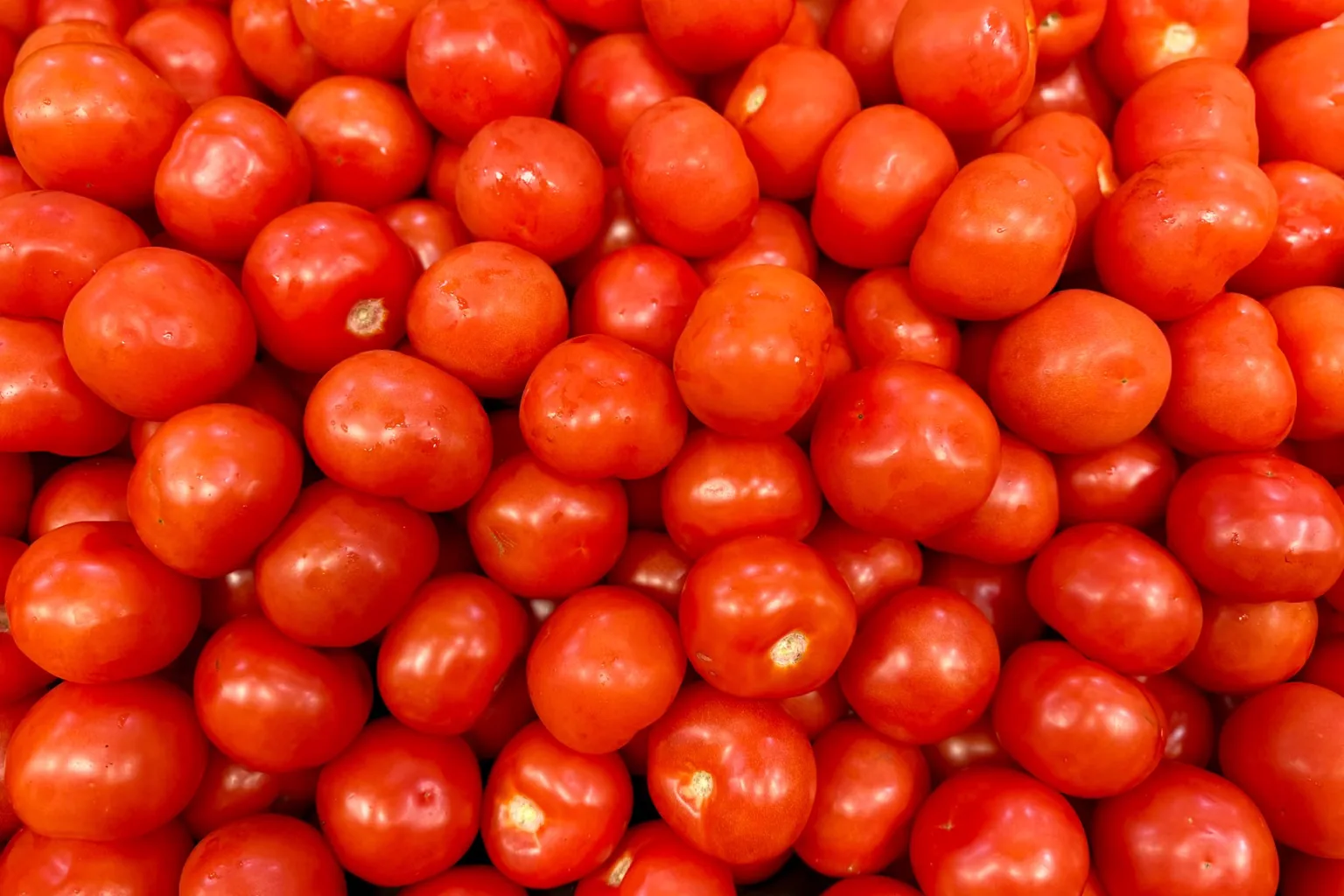
A Roma tomato is an elongated type of tomato often grouped with plum or paste tomatoes. Like other tomatoes, it is botanically a fruit, although it is commonly used as a vegetable in cooking. Roma tomatoes are valued for firm, meaty flesh and, in general, less moisture and fewer seeds than some round tomatoes. These traits make them useful for cooking down into sauces or paste, but they can also be eaten raw. Individual tomatoes vary with cultivar, ripeness and handling, so firmness and juiciness are not identical from one fruit to another. The name does not guarantee a particular flavor or texture, and Roma tomatoes are not limited to cooked dishes.
When to use it
Choose Roma tomatoes when you want meaty flesh and a cooked preparation that can be reduced to a thick consistency, such as a sauce or purée. They also work in soups and stews, and can be sliced into salads or fresh dishes when ripe and when their texture suits your preference. Their shape and firmness may be convenient for home preserving, but canning requires a tested recipe and should not be improvised. If you want especially juicy slices, compare their firmness with other tomatoes and choose according to the result you prefer.
How to use it
Rinse tomatoes under running water and dry them before cutting. Remove the stem and any bruised areas, then slice, dice or chop them to suit the dish. For sauce, chop the tomatoes and cook until the mixture reaches the consistency you want, stirring when needed to prevent sticking. For a thicker result, continue cooking to reduce some of the liquid. Roma tomatoes can also be added to soups and stews for body and flavor, or served raw in a salad. Adjust cooking to the size of the pieces and the tomatoes’ moisture. For home canning or preserving, follow a tested recipe exactly, including its instructions for acidification and processing.
Flavour and texture
Flavor and texture depend on cultivar, growing conditions, ripeness and handling. Roma tomatoes are generally recognized for their firm, meaty flesh and relatively low moisture compared with juicier tomatoes. When cooked down, those qualities can help produce a thicker sauce. Their sweetness and acidity vary, so taste the preparation before adjusting its seasoning.
How to choose it
Look for tomatoes with color appropriate to their variety, intact skin and a fresh appearance. They should feel firm or yield slightly to gentle pressure, depending on the ripeness you prefer. Avoid fruit with sunken areas, dark bruises, wrinkled skin or signs of decay. For cooking, choose ripe, firm tomatoes. Appearance and firmness can help you judge condition, but they do not guarantee that every tomato will have the same flavor.
Storage
Handle tomatoes gently and avoid stacking them where they may be bruised. If they are not yet ripe, let them ripen at room temperature away from direct sunlight. Once ripe, you can refrigerate them for storage; chilling may affect flavor and texture. If flavor is your priority, use them before refrigerating. Refrigerate cut tomatoes in a clean, covered container and use them promptly. For freezing or canning, follow reliable instructions specific to the chosen method.
Substitutions
Another plum or paste tomato can replace Roma tomatoes, though it may contribute more liquid or have a different flesh texture. Canned plum tomatoes can also work in cooked dishes; cook the mixture until it reaches the thickness you want. Juicier tomatoes may need longer reduction. Do not substitute tomatoes in a preserving recipe without checking that the method and instructions remain safe.
Common mistakes
Do not assume all Roma tomatoes have the same ripeness, firmness or moisture. Avoid cooking a mixture over high heat without stirring if it starts to stick or splatter, and judge progress by consistency rather than time alone. For preserves, do not improvise ingredient amounts, acidification or processing, and do not use spoiled tomatoes. Follow a tested recipe and all of its directions.
Safety and allergens
Rinse tomatoes under running water before preparing them and discard damaged portions. For home canning, use a tested recipe for that product and follow its directions for acidification, container size and processing exactly. Tomato acidity can vary; do not improvise the method or change the specified amount of acid.
Culinary uses
- Sauce and paste base
- Fresh ingredient for salads, soups and stews
Recommended techniques
- Chop or slice for fresh dishes
- Cook down for sauces or paste
Pairs well with
- Onion and sweet pepper
- Herbs and spices
Frequently asked questions
What are Roma tomatoes used for?
Their meaty, relatively low-moisture flesh is useful in sauces, purées, soups and stews. They can also be sliced and served raw.
Can Roma tomatoes be eaten raw?
Yes. Rinse them, remove the stem and slice them for salads or other fresh dishes. Firmness and ripeness vary from tomato to tomato.
Are Roma tomatoes suitable for home canning?
They can be used in tomato preparations, but safe canning depends on following a tested recipe, including its specified acidification and processing. Do not improvise these steps.
Ingredient allergens
Allergen listThere are no verified associations for these ingredients yet.
Estimated nutrition
- Fat
- 0.34 g
- Saturates
- 0 g
- Carbohydrate
- 4.73 g
- Sugars
- 2.7 g
- Fibre
- 0.7 g
- Protein
- 0.68 g
- Salt
- 0.01 g
Sources and review
Automatically researched, cross-checked and validated content. Sources consulted:
- Client Challenge doi.org/10.2307/jj.27939689.16
- Tomate - Wikipedia, la enciclopedia libre es.wikipedia.org/wiki/Tomate
- La historia del tomate en la cocina | Hida hida.es/historia-del-tomate-en-la-cocina/
- Tomate Italiano: Historia, Variedades y Usos en la Cocina | Casa Longini 🇮🇹 Productos Italianos www.casalongini.com/tomate-italiano-historia-variedades-y-usos-en-la-cocina/
- 6 VARIEDADES DE TOMATES Y SUS USOS EN COCINA - Masymas Supermercados super-masymas.com/variedades-de-tomates/
- Tomatoes | UC Master Food Preserver Program of Orange County ucanr.edu/site/uc-master-food-preserver-program-orange-county/tomatoes
- All About Tomatoes | Institute of Culinary Education www.ice.edu/blog/what-are-tomatoes
- Preserving vegetables: Tomatoes | OSU Extension Service extension.oregonstate.edu/catalog/sp-50-920-preserving-vegetables-tomatoes
- tomato - FoodLink - Purdue Extension extension.purdue.edu/foodlink/food.php?food=tomato
- Preserve Smart apps.chhs.colostate.edu/preservesmart/produce/pickling/tomatoes/
- Tomatoes | Food Preservation | Illinois Extension | Illinois extension.illinois.edu/food-preservation/tomatoes
- ¡Bienvenidos! – Contadina contadina.mx/2020/02/05/bienvenidos/
- Publicaciones de Seguridad alimentaria www.aesan.gob.es/actualidad/publicaciones-seguridad-alimentaria
- How to Preserve Tomatoes | USU extension.usu.edu/preserve-the-harvest/research/tomatoes
- SS-VEC-928/VH079: Handling Florida Tomatoes—Round and Roma Types ask.ifas.ufl.edu/publication/VH079
- Tomatoes: Select, store and enjoy | Lincoln Land Community College www.llcc.edu/news/tomatoes