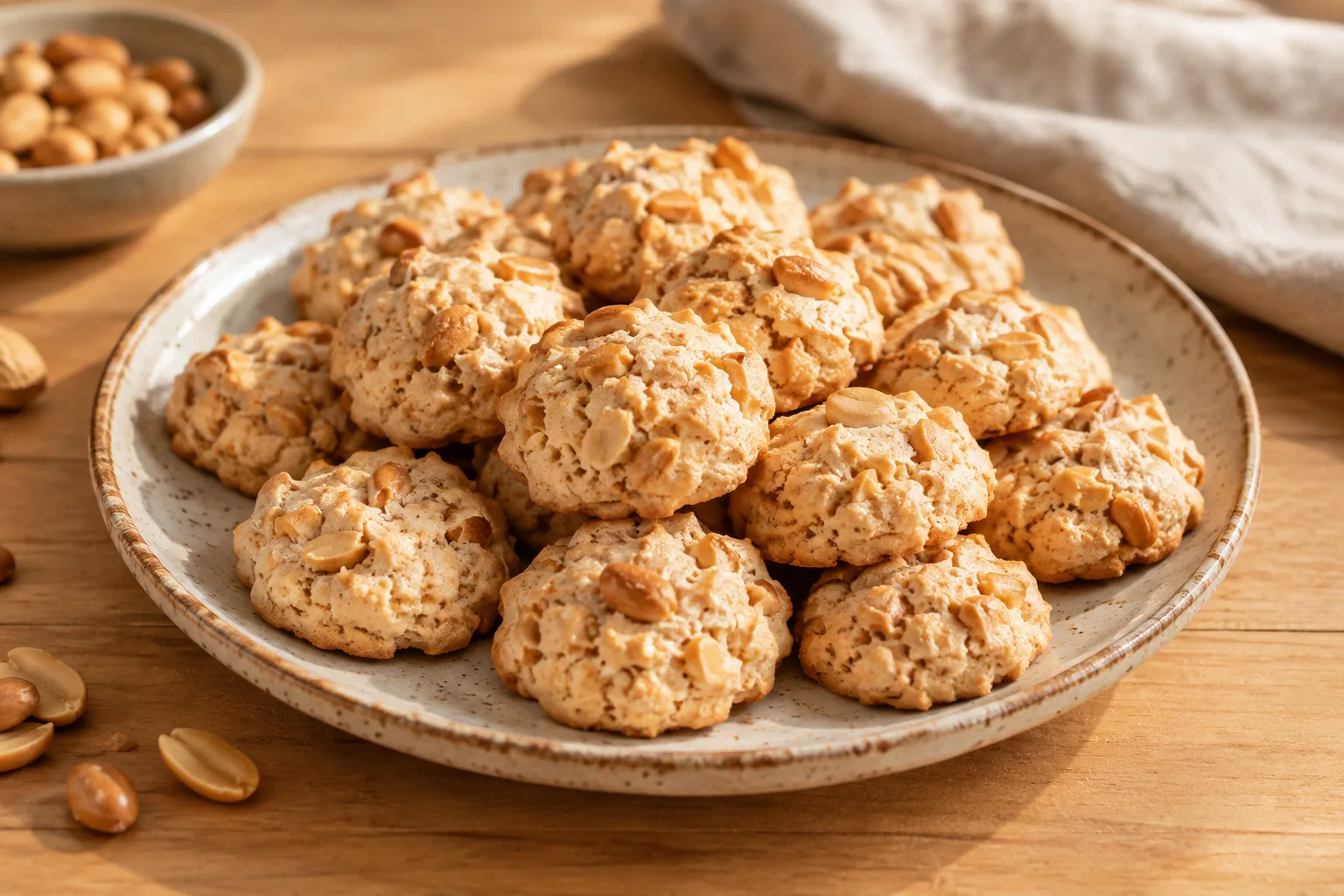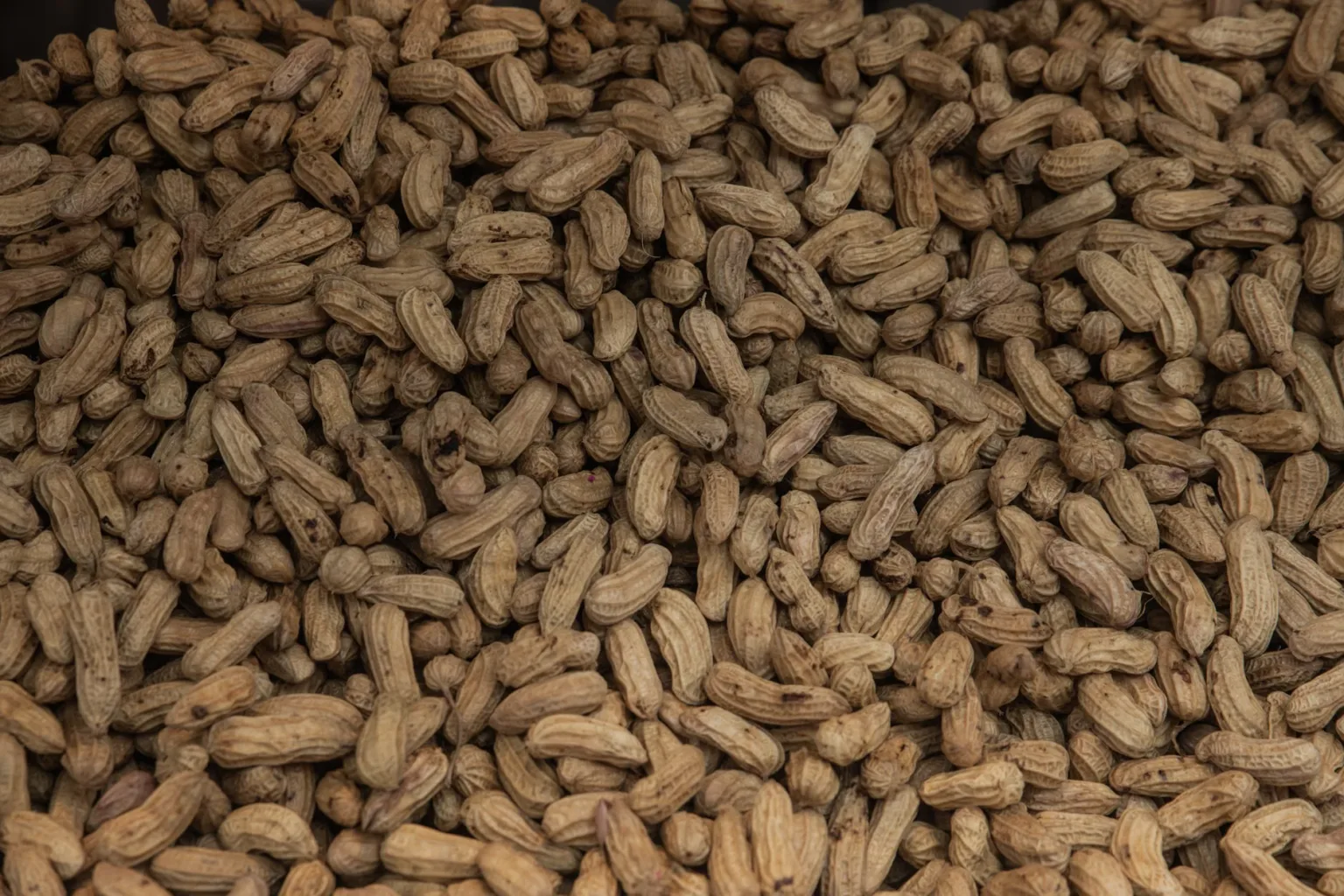
- Category
- Pulses
- State
- Dry
- Usual unit
- g
What it is
The peanut, also called a groundnut, is the edible seed of a legume in the Fabaceae family. Although cooking often groups it with tree nuts because of its flavor and snack uses, botanically it is a legume. Unsalted peanuts are peanuts with no salt added; that description alone does not tell you whether they are raw or roasted, or whether other ingredients have been added, so check the package. They can be used whole or chopped, ground, or blended into a paste for other preparations. Their flavor works in both savory and sweet cooking, while their texture adds contrast. In a recipe, adjust the seasoning and the level of roasted flavor to suit the product and the result you want.
When to use it
Use them when you want to add crunch and a distinctive peanut flavor, or when a sauce or paste needs a peanut base. Whole or chopped peanuts make a topping for salads, rice and noodles; ground peanuts can be added to batters, desserts and coatings. They are also useful in stews and curries where peanut sauce contributes body and flavor. Because they have no added salt, they let you control the seasoning more closely, but check the label for other ingredients. If a recipe calls for salted peanuts, add salt gradually and taste before adjusting.
How to use it
Check the package to see whether the peanuts are raw or roasted and whether they contain anything besides peanuts. For crunch, serve them whole or chop them shortly before use, then scatter them over a salad, rice, noodles or dessert. To distribute their flavor more evenly, grind them into crumbs or a coarse meal and add them to batters, toppings or coatings. You can also blend them into a paste and stir it gradually into a sauce or stew until incorporated. If the peanuts are raw and you want a roasted flavor, roast them before adding them, watching their color and aroma so they do not burn. Taste the dish before adding salt: the peanuts have no added salt, but other ingredients may already season it.
Flavour and texture
Peanuts have a distinctive, full flavor with a mild sweetness; roasted peanuts have more pronounced toasted notes. Whole peanuts usually give a firm, crunchy bite, while chopped or ground peanuts provide a finer texture and spread their flavor through a dish. Peanut paste is more creamy. Flavor and texture vary with the degree of roasting and the product form, so taste the peanuts before deciding how much to use.
How to choose it
Choose an intact package and check that the label says no salt has been added. Also read the ingredient list: “unsalted” does not necessarily mean the product contains no oil or other ingredients. If buying in bulk, look for dry, fairly uniform peanuts with no visible signs of moisture. Check allergen information and any cross-contact warnings on the package, especially if serving the peanuts to other people.
Storage
Keep peanuts in a tightly closed container in a cool, dry place, protected from heat and moisture. Reseal the package after each use and follow any storage instructions on the label. If they smell rancid or seem unusually moist, do not use them. Storage can vary with the product, processing and packaging, so do not assume the same instructions apply to raw, roasted and ground peanuts.
Substitutions
For a similar crunch, you can use unsalted sunflower seeds, though their flavor will be different. If a recipe calls for peanut paste, try sunflower seed butter in an equivalent amount and adjust the texture with the recipe’s liquid if needed. The swap changes both flavor and possibly texture. Do not use these alternatives for someone with an allergy without first checking that they are safe for that person and reviewing the product label.
Common mistakes
Do not assume “unsalted” means raw, roasted or free of other ingredients; check the label. Avoid adding all the recipe’s salt without tasting first, since other ingredients may already be seasoned. When grinding, stop at the texture you want; continued blending can turn pieces into a paste. Do not use peanuts that smell rancid or appear damp.
Safety and allergens
Peanuts can cause serious allergic reactions. If someone has a peanut allergy, do not serve peanuts to them or use a substitute without carefully checking its ingredients and allergen information. Keep the package closed and follow the handling instructions on the label.
Culinary uses
- crunchy snack
- ingredient for sauces, stews and curries
- addition to baking and desserts
Recommended techniques
- eat whole or chop
- grind into crumbs or a coarse meal
- blend into peanut paste
Pairs well with
- chocolate and caramel
- rice and noodles
- salads and savory sauces
Frequently asked questions
Are peanuts tree nuts?
Botanically, peanuts are legumes in the Fabaceae family, though in cooking they are often used much like tree nuts.
Does “unsalted” mean the peanuts are raw?
No. It means no salt has been added, but it does not tell you whether they are raw or roasted. Check the package.
How can I use peanuts in a sauce?
Grind or blend them into a paste and stir it gradually into the sauce or stew. Taste before adding salt.
Ingredient allergens
Allergen listThere are no verified associations for these ingredients yet.
Estimated nutrition
- Fat
- 10.7 g
- Saturates
- 35.7 g
- Carbohydrate
- 28.6 g
- Sugars
- 14.3 g
- Fibre
- 7.1 g
- Protein
- 21.4 g
- Salt
- 1.28 g
Sources and review
Automatically researched, cross-checked and validated content. Sources consulted:
- Client Challenge doi.org/10.2307/jj.27939689.16
- The Essential Glossary of Cooking Terms for the Culinary Arts - Escoffier www.escoffier.edu/blog/culinary-arts/the-essential-glossary-of-cooking-terms-for-the-culinar…
- revista del - Comité Científico www.aesan.gob.es/dam/jcr:c6a76f54-0d6e-43b4-ad26-ac603ba37960/comite_cientifico_38.pdf
- Cacahuetes: qué son, origen, propiedades nutricionales y usos en la cocina www.abc.es/recetasderechupete/cacahuetes-que-son-origen-propiedades-nutricionales-y-usos-en-…
- Cacahuete: Descubre todos sus secretos | Just Spices | JUST SPICES ® www.justspices.es/blog/temas-populares/cacahuete-descubre-sus-secretos
- Cacahuete: qué es, propiedades y usos culinarios bonviveur.com/es/noticias/cacahuete
- Para la ciudadanía www.aesan.gob.es/para-la-ciudadania
- Propiedades de los cacahuetes tostados sin sal: beneficios, nutrientes y usos en repostería artesanal aliciascake.es/propiedades-de-los-cacahuetes-tostados-sin-sal/
- Sopa de Cacahuates (Manís) del Oeste Africano extension.oregonstate.edu/es/node/193891/printable/print
- LA DIABETES Y SU VIDA www.fcs.uga.edu/docs/Dec_Winter_DLL_B+W_-_Spanish.pdf
- Compras para la salud: merienda (refrigerio o tentempié)1 ask.ifas.ufl.edu/publication/FS279/pdf
- Arachis hypogaea - Wikipedia, la enciclopedia libre es.wikipedia.org/wiki/Arachis_hypogaea
- Cacahuate Tostado: Análisis, Comparativa y Mejores Opciones para tus Dulces Caseros doncaramelo.es/cacahuate-tostado/
- Food allergen labelling and information requirements technical guidance - GOV.UK www.gov.uk/government/publications/food-allergen-labelling-and-information-requirements-tech…