- Category
- Pulses
- State
- Dry
- Usual unit
- g
What it is
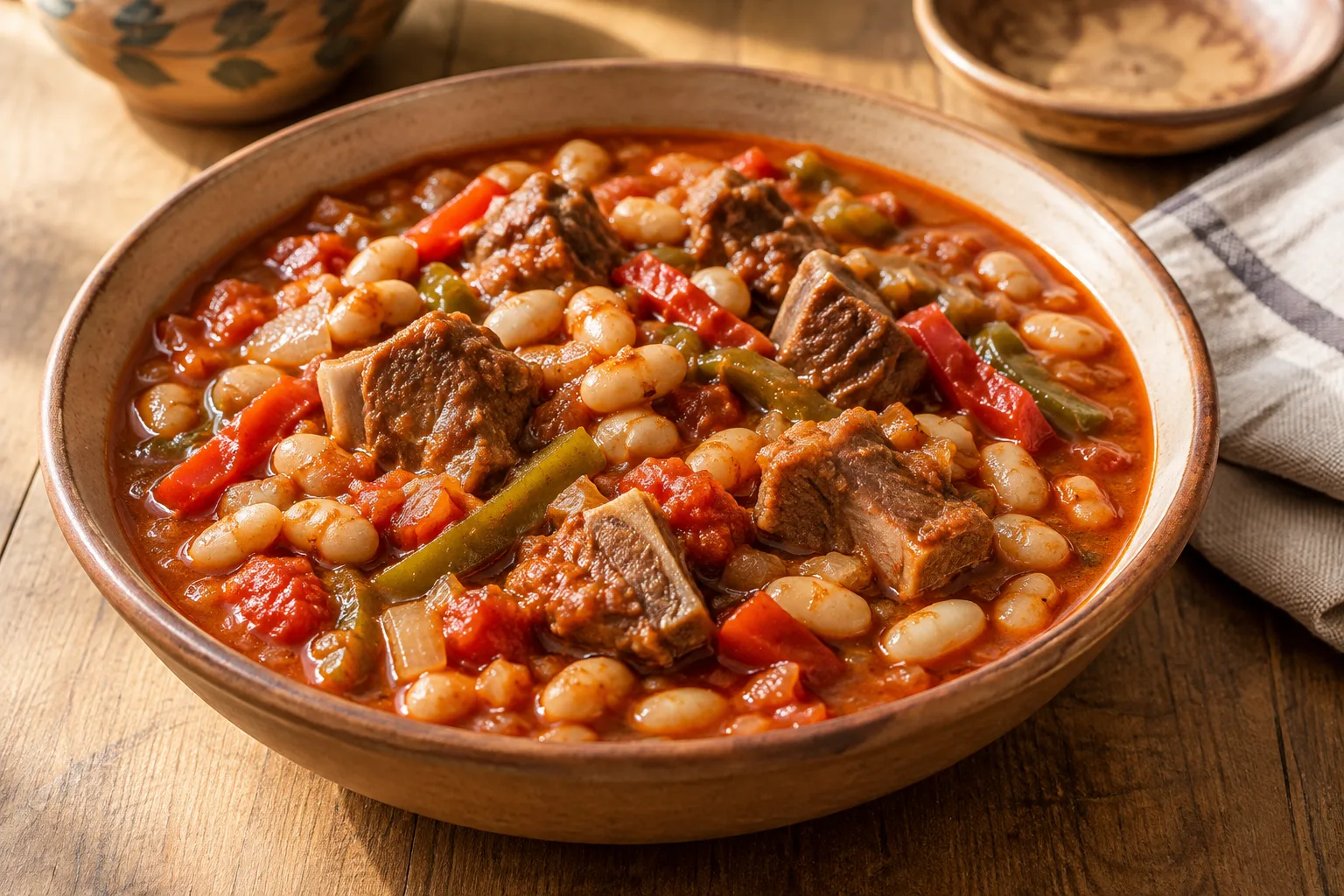
White beans are edible seeds from a legume, and the name covers varieties that differ in size and shape. This profile describes the dried form, which is cooked in water until tender. Some varieties are small and oval; cannellini and Great Northern beans are examples of other white-bean types. Their delicate flavor lets them work well with other ingredients rather than overpowering them, and they take on flavors from cooking liquid, herbs and seasonings. Since the name does not refer to just one variety, size and texture can vary from one product to another.
When to use it
Use white beans when you want a mild, substantial base for soup, stew or potage, or a legume to serve alongside vegetables, herbs and other ingredients. Once cooked, they can also go into salads or be mashed or blended to make a thicker, creamier preparation. White-bean varieties differ in size, so choose a type to suit the texture you want and check for tenderness before using it in a recipe. Cooked beans also take on flavors from the liquid and seasonings they are prepared with.
How to use it
Inspect dried beans and remove any visibly damaged beans or foreign material. Cook them in water until tender; cooking time can vary with variety and size, so use texture rather than a fixed time as your guide. For soup or potage, combine them with cooked onion and garlic, then simmer gently with herbs such as mint or parsley. To thicken the dish, mash some of the beans or blend a portion and stir it back in. You can also drain cooked beans for salads. Adjust the liquid and seasonings to suit the dish. Follow the package directions where applicable.
Flavour and texture
White beans generally have a mild, delicate flavor, sometimes described as slightly nut-like. When properly cooked, they are tender and creamy. Some varieties are small and oval, while others are larger. Their understated flavor makes them receptive to the herbs, broth and sauces used with them.
How to choose it
For this dried-bean profile, choose a package identified as dried white beans and look for beans that appear reasonably uniform and free of obvious damage. Size and shape vary by variety, so differences alone do not indicate a defect. If a recipe specifies cannellini or Great Northern beans, seek that type or adapt the preparation to a similar white bean.
Storage
Keep dried beans in a clean, sealed container in a cool, dry place. Protect them from moisture and inspect them before cooking; discard beans with obvious damage or signs of deterioration. Once cooked, follow the recipe and local food-safety guidance for storage. Do not use improvised home-canning methods to store beans at room temperature.
Substitutions
Cannellini and Great Northern beans are alternatives used in white-bean recipes, although size and results can differ. You can also swap one white-bean variety for another and adjust cooking according to tenderness. Replacing them with a different kind of legume may change the dish's flavor and texture more noticeably.
Common mistakes
Do not assume every white-bean variety is the same size or softens at the same rate. Avoid taking the beans off the heat before they are tender, and do not rely on one fixed cooking time for every product. Another common mistake is adding them without checking the dish's balance of liquid and seasoning.
Safety and allergens
Cook dried beans until tender and follow the package directions. For home canning, use only a tested preservation recipe; do not improvise methods or processing times.
Culinary uses
- Base for soups and stews
- Ingredient in salads and purées
- Adds body to potages
Recommended techniques
- Boiling
- Simmering until tender
- Mashing or blending to thicken soups
Pairs well with
- Onion and garlic
- Mint and parsley
- Olive oil and vinegar
- Tomato and sage
Frequently asked questions
Which varieties are called white beans?
The name covers several varieties. Cannellini and Great Northern beans are two examples, and they can differ in size and shape.
What dishes can I make with white beans?
They work in soups, stews, potages, salads and purées. Their mild flavor pairs well with herbs and other seasonings.
How can I tell when white beans are cooked?
Check their texture: they should be tender. Cooking time varies with the size and variety, so do not rely on one universal time.
Ingredient allergens
Allergen listThere are no verified associations for these ingredients yet.
Estimated nutrition
- Fat
- 0 g
- Saturates
- 0 g
- Carbohydrate
- 14.6 g
- Sugars
- 0 g
- Fibre
- 4.6 g
- Protein
- 6.15 g
- Salt
- 0.73 g
Sources and review
Automatically researched, cross-checked and validated content. Sources consulted:
- Client Challenge doi.org/10.2307/jj.27939689.16
- The Essential Glossary of Cooking Terms for the Culinary Arts - Escoffier www.escoffier.edu/blog/culinary-arts/the-essential-glossary-of-cooking-terms-for-the-culinar…
- Storing White Rice | USU extension.usu.edu/preserve-the-harvest/research/storing-white-rice
- Nutrition After Your Transplant - Health Online healthonline.washington.edu/sites/default/files/record_pdfs/Nutrition-After-Your-Transplant-…
- Page 7 | See All Home Food Preservation and Safety - Home Food Preservation and Safety - Food Safety and Quality extension.psu.edu/food-safety-and-quality/home-food-preservation-and-safety/see-all-home-foo…
- ¿Qué son los frijoles? Descubre tipos y variedades-Blog goya.es/blog/que-son-los-frijoles-descubre-sus-tipos-y-variedades
- Potaje de Frijoles Blancos 1913 (White bean Potage) - lacocina.utsa.edu/spanish-potaje-white-bean-potage/
- Revista del comité científico de la aecosan número 24 aesan.gob.es/dam/jcr:979384c0-5bd9-46d4-a29e-ccf5876c769c/RCC_24.pdf
- Frijoles blancos: beneficios y algunas recetas - Mejor con Salud mejorconsalud.as.com/dieta/nutricion/frijoles-blancos-beneficios-recetas/
- Frijol blanco – Kekoa Foods kekoafoods.com/es/pages/navy-bean?srsltid=AYCX9vKCD_eibf1aHMe5smgzjNPVmxJw7ZdACCD59ghxeiPc42…
- Frijoles Blancos Básicos | Cook for Your Life www.cookforyourlife.org/es/videos/frijoles-blancos-basicos/