Kitchen notebook

Kitchen science

Articles and guides about Kitchen science: cooking ideas, explanations and tips researched and checked by KitchenPause.

Seasonal produce

A seasonal guide to choosing and storing fresh herbs

Choose herbs for the food you plan to cook and for what is abundant where you shop, rather than following a universal calendar. Learn how to store tender and sturdy-stemmed herbs, and how to use surplus by freezing or drying it.

Latest additions

Latest additions

Available content that can be reviewed from the recipe collection.

Kitchen science

What changes in food when we manage starch

Cooking and cooling potatoes, rice or pasta does not remove their starch. It can reorganize some of it, making it less accessible to digestion. Here is what that change means, what you may notice on the plate, and what it does not prove.

Read →
Kitchen science

What Changes in Food When We Control Pressure

A pressure cooker and industrial high-pressure processing are not the same thing. Understanding what each method does helps explain texture, cooking changes, and the limits of claims about safety.

Read →
Kitchen science

What changes in food when we control fermentation

Fermentation transforms ingredients through microbial and enzymatic activity. Controlling it can steer changes in flavour, texture and preservation, but it does not produce the same result every time or automatically make a food probiotic.

Read →
Kitchen science

What changes in food when we control starch

Starch can thicken a preparation during cooking and change its structure as it cools. Understanding those changes helps you manage texture and recipe design without assuming that cooking technique alone establishes a food’s nutritional effects.

Read →
Kitchen science

What changes in food when pressure is controlled

A pressure cooker and industrial high-pressure processing are not the same thing. Understanding their mechanisms helps explain changes in texture, flavour, composition and preservation without attributing them to pressure alone.

Read →
Kitchen science

Practical Decisions Based on Water

Water changes roles when it serves as an ingredient, cooking medium, surface moisture, or a preservation variable. Learn to distinguish these decisions without confusing culinary quality with food safety.

Read →
Kitchen science

What changes in food when fermentation is controlled

Fermentation transforms sugars and other components through microorganisms. Understanding what can change—and what the process does not guarantee—helps you appreciate its flavors and approach it prudently at home.

Read →
Kitchen science

Kitchen science: how proteins shape texture

Heat can change the structure of proteins and, in turn, the firmness, elasticity and perceived moisture of food. Understanding the process encourages attentive cooking without assuming every ingredient responds in the same way.

Read →
Kitchen science

Practical decisions based on acidity

How to use acidity as a sensory and technical adjustment tool, while distinguishing what is perceived on the palate from what can be measured in a preparation.

Read →
Recipes

Recipes to enjoy

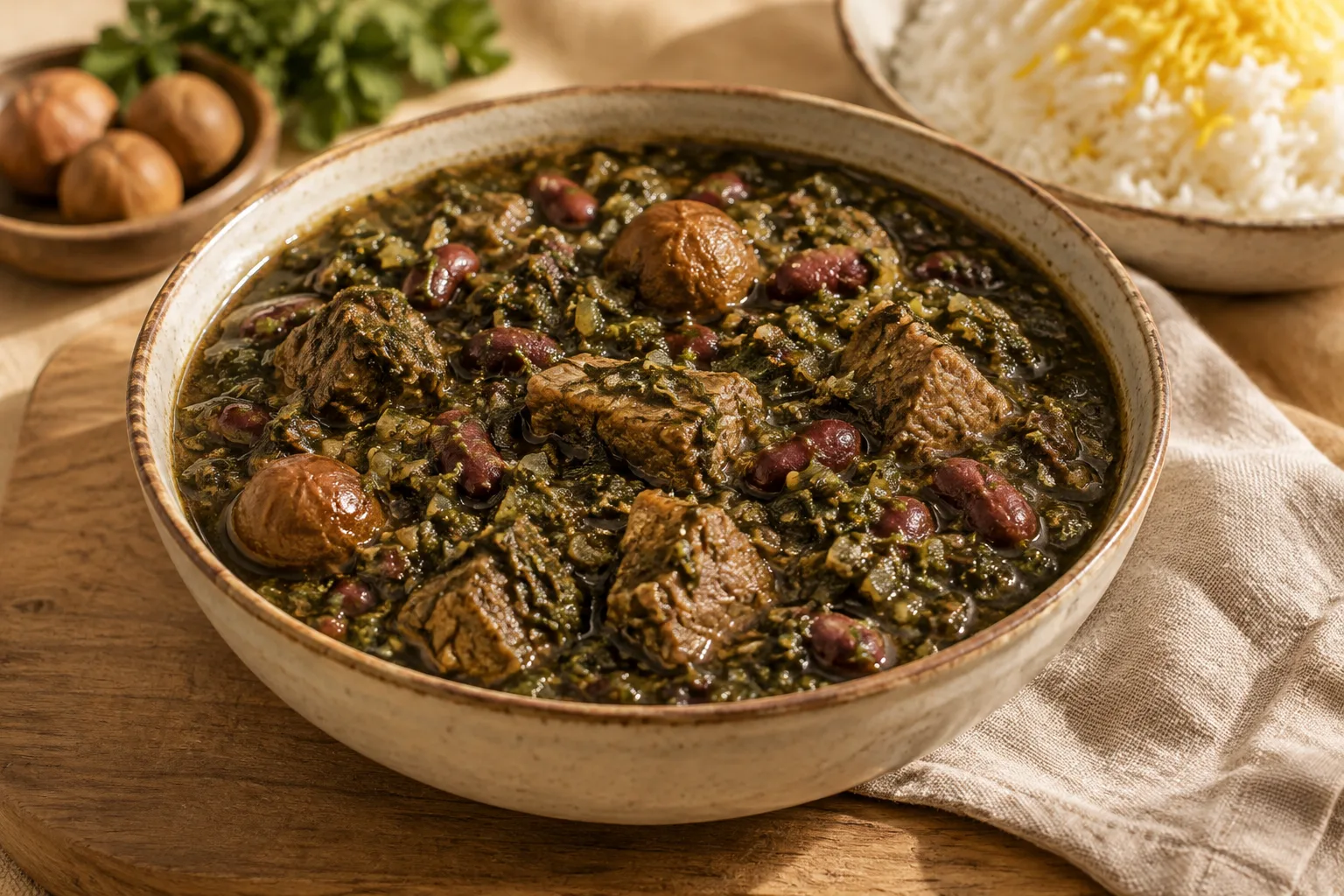
Iranian ghormeh sabzi
160 minIntermediate

Iranian ghormeh sabzi

An Iranian stew of lamb or beef with fresh herbs, red kidney beans and dried limes, slowly cooked until the meat is tender.

View recipe