Documentary synthesis prepared with AI assistance. It does not replace specialist review or certify kitchen testing. · Updated 2 November 2026
A cuisine shaped by landscape and community
Jordan sits within the Levant, a region whose cuisines share ingredients and preparations across present-day national borders. The country’s food is best understood through both that wider culinary conversation and its own documented customs. A meal may draw on grains, legumes, olive oil, vegetables, dairy, and meat, while its preparation and manner of sharing say as much about community as about flavor. The contrast between the fertile Jordan Valley and the desert landscapes associated with Wadi Rum also offers different contexts for food and hospitality, rather than a single menu that applies everywhere.
Mansaf provides a particularly visible example of food as social practice: a festive dish connected with Jordanian identity, gatherings, and agropastoral life. But the country’s everyday repertoire is broader. Freekeh with chicken, a tomato skillet known as galayet bandora, and shared mezze all show how grains, vegetables, bread, and meat can serve different occasions. Some dishes are shared across the Levant, and names or versions may carry specific Palestinian, Syrian, or other regional associations. Their presence in Jordan reflects culinary exchange and belonging, not an exclusive claim of origin.
Shared histories and a living repertoire
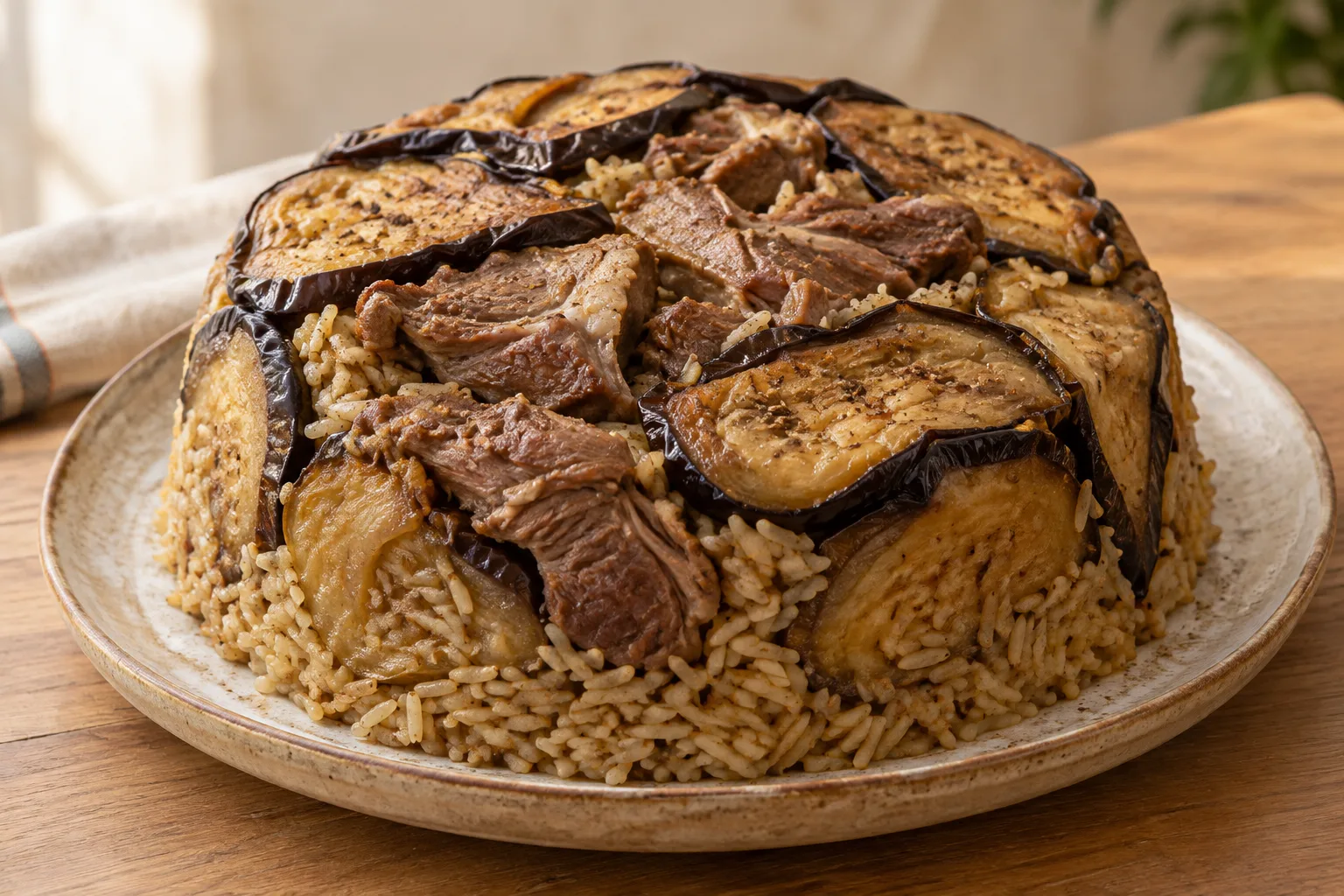
Jordanian cooking belongs to a long-standing Levantine food culture, where dishes and methods circulate among neighboring communities and are adapted within households. The evidence describes maqluba as a dish found across the Middle East and notes that a medieval Baghdadi cookbook, written in the thirteenth century, contains a chapter on it. That historical reference documents an early written account of the preparation; it does not establish one exclusive origin for every modern version. Family recipes vary in their choice of meat and vegetables, and Jordanian examples sit within that larger shared history.
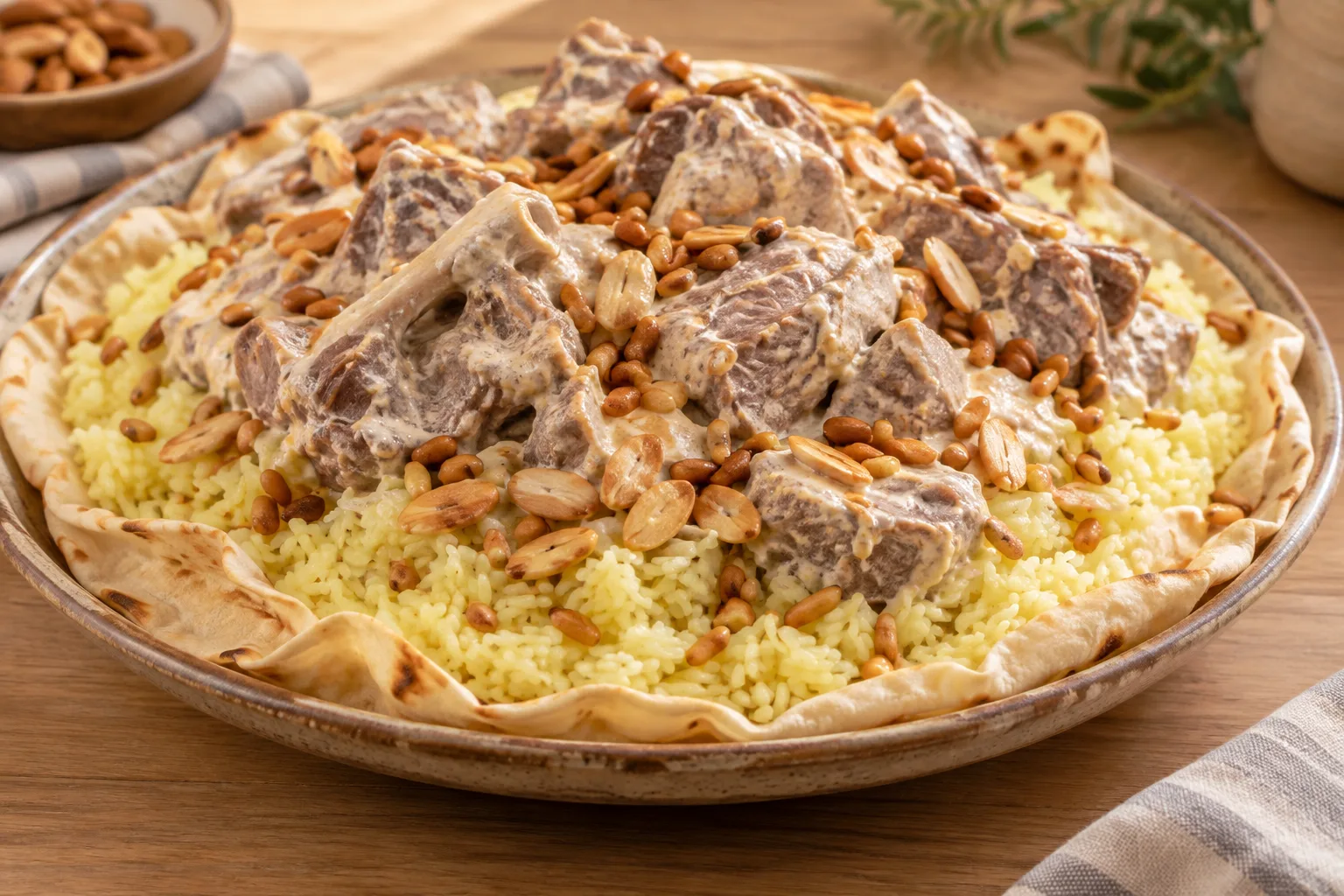
Mansaf has a distinct place in Jordan’s contemporary heritage landscape. Its inscription on UNESCO’s Representative List in 2022 recognizes a festive banquet and its social and cultural meanings. The listing describes a preparation of meat cooked in yogurt sauce and served with rice or bulgur over thin bread, while also recording associated gatherings and the transmission of knowledge. This recognition speaks to the documented practice, not to every aspect of Jordanian cuisine. Other regional foods, including musakhan and knafeh, are also shared or closely associated with neighboring communities. Naming those connections clearly helps describe Jordan’s food history without flattening its differences.
Grains, dairy, vegetables, and the pantry
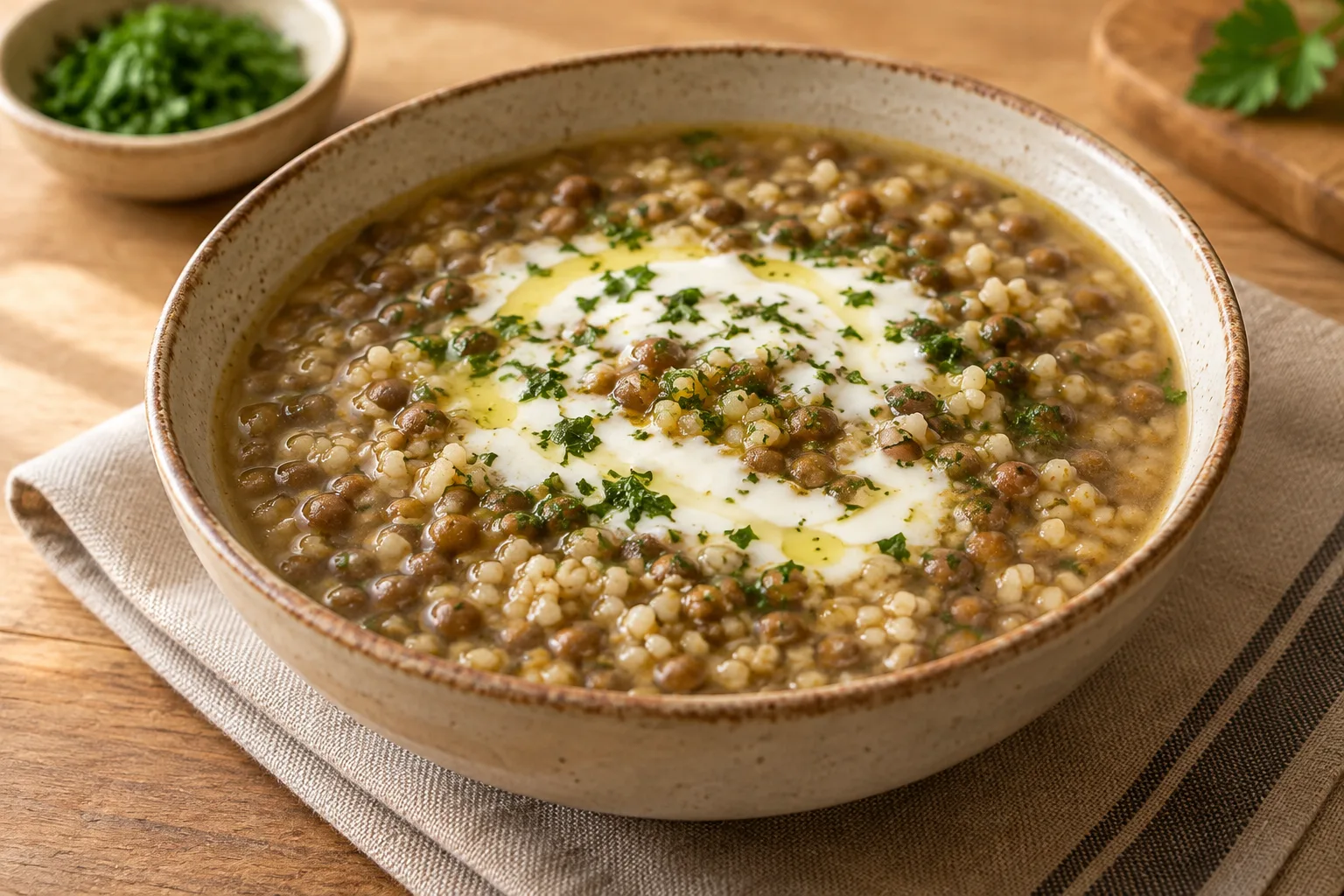
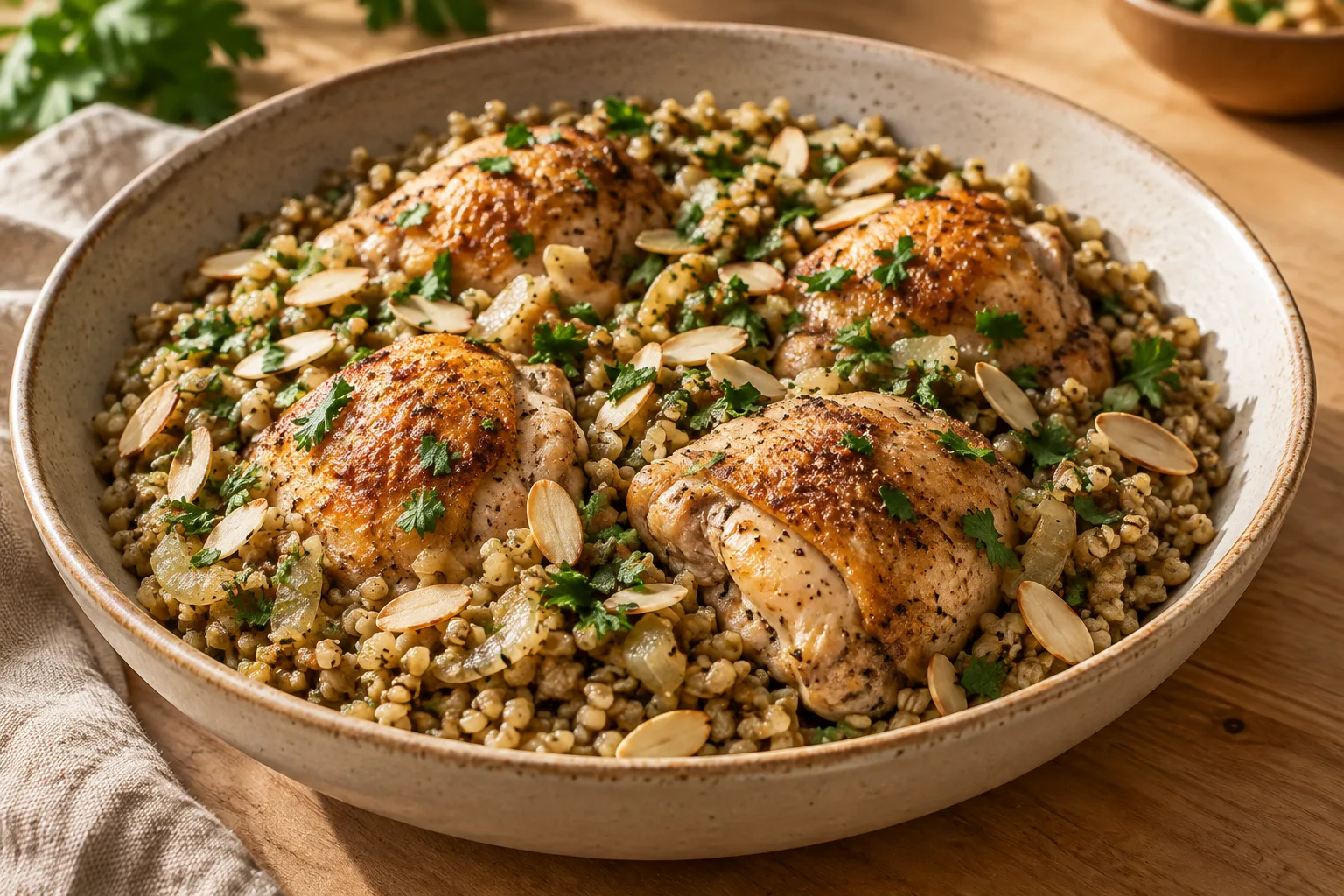
Jordan’s documented pantry spans staples suited to both everyday meals and large shared dishes. Rice and bread support preparations such as mansaf and maqluba; bulgur and freekeh offer other grain choices. Freekeh is made from young green wheat that is roasted, rubbed to remove its husk, and sometimes cracked. That processing gives it a distinctive smoky aroma and a firm, chewy bite. In Jordanian cooking it appears with chicken, as well as in wider regional preparations. It is one example of how a grain’s transformation becomes part of a dish’s character.
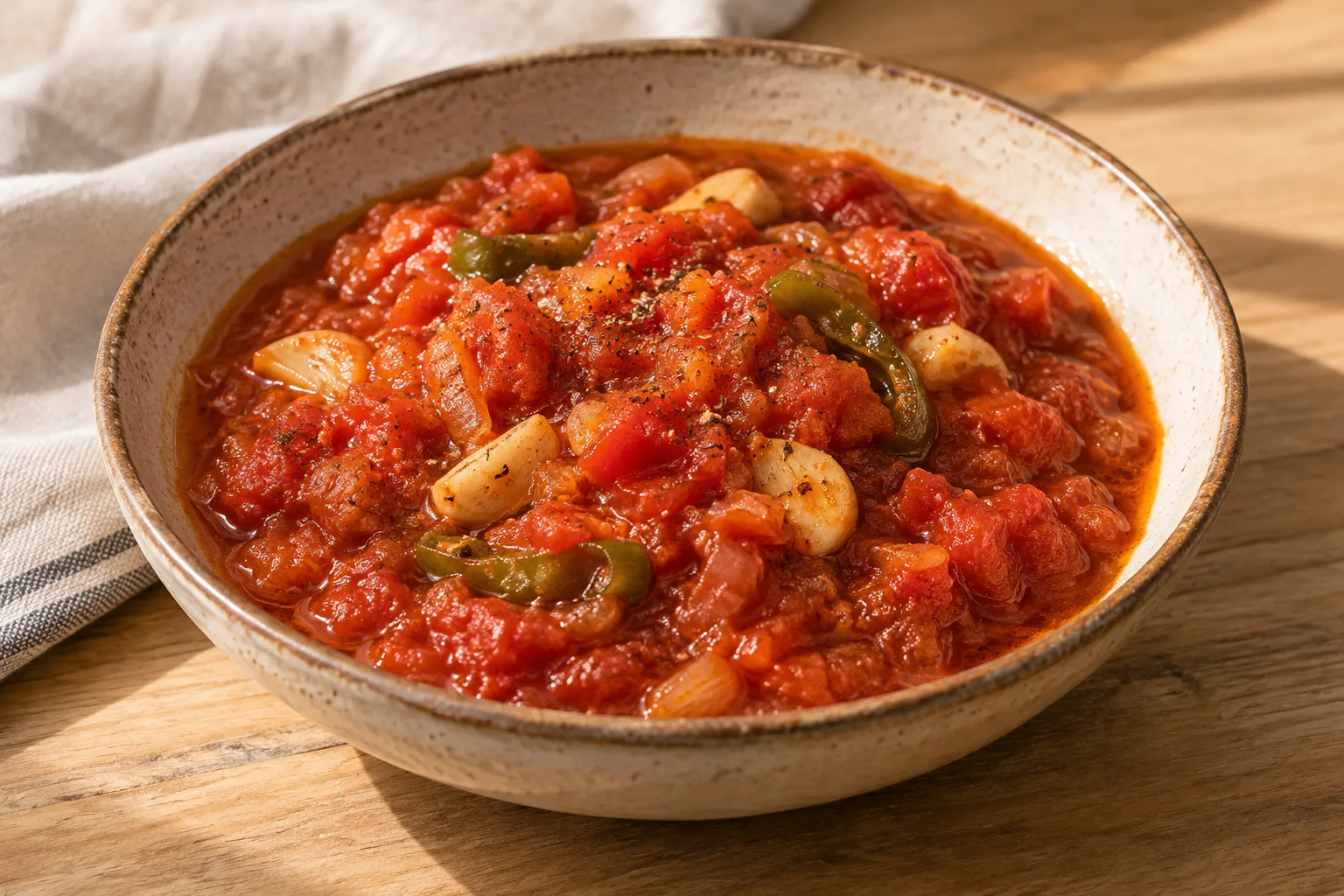
Dairy has a special role in mansaf. The dish is made with meat in a yogurt sauce, and descriptions of Jordanian cooking identify dried fermented yogurt, known as jameed, as a defining ingredient in that sauce. Olive oil, tomatoes, garlic, and green chilli appear in galayet bandora, a simple skillet preparation with family variations. Chickpeas, sesame paste, and eggplant are familiar components of Levantine mezze; their use in Jordan links local meals to a wider regional repertoire. Flatbreads are not merely an accompaniment: they can carry, scoop, or support other foods, as in mansaf and musakhan. The combination of stored grains, preserved dairy, fresh vegetables, and bread gives the pantry both practical range and strong regional character.
Tang, smoke, warmth, and contrast
Jordanian dishes can be read through contrasts of sourness, savoriness, and texture rather than through one fixed spice profile. Mansaf’s yogurt sauce gives its meat and grain a tangy, dairy-rich character, while bread and rice or bulgur make the banquet substantial. Freekeh contributes a toasted, smoky, nutty note and a pleasantly chewy texture; when cooked with chicken, it absorbs the savory broth and is often finished with toasted nuts. These qualities make it distinct from a soft, neutral bed of rice, even when both grains appear in generous shared meals.
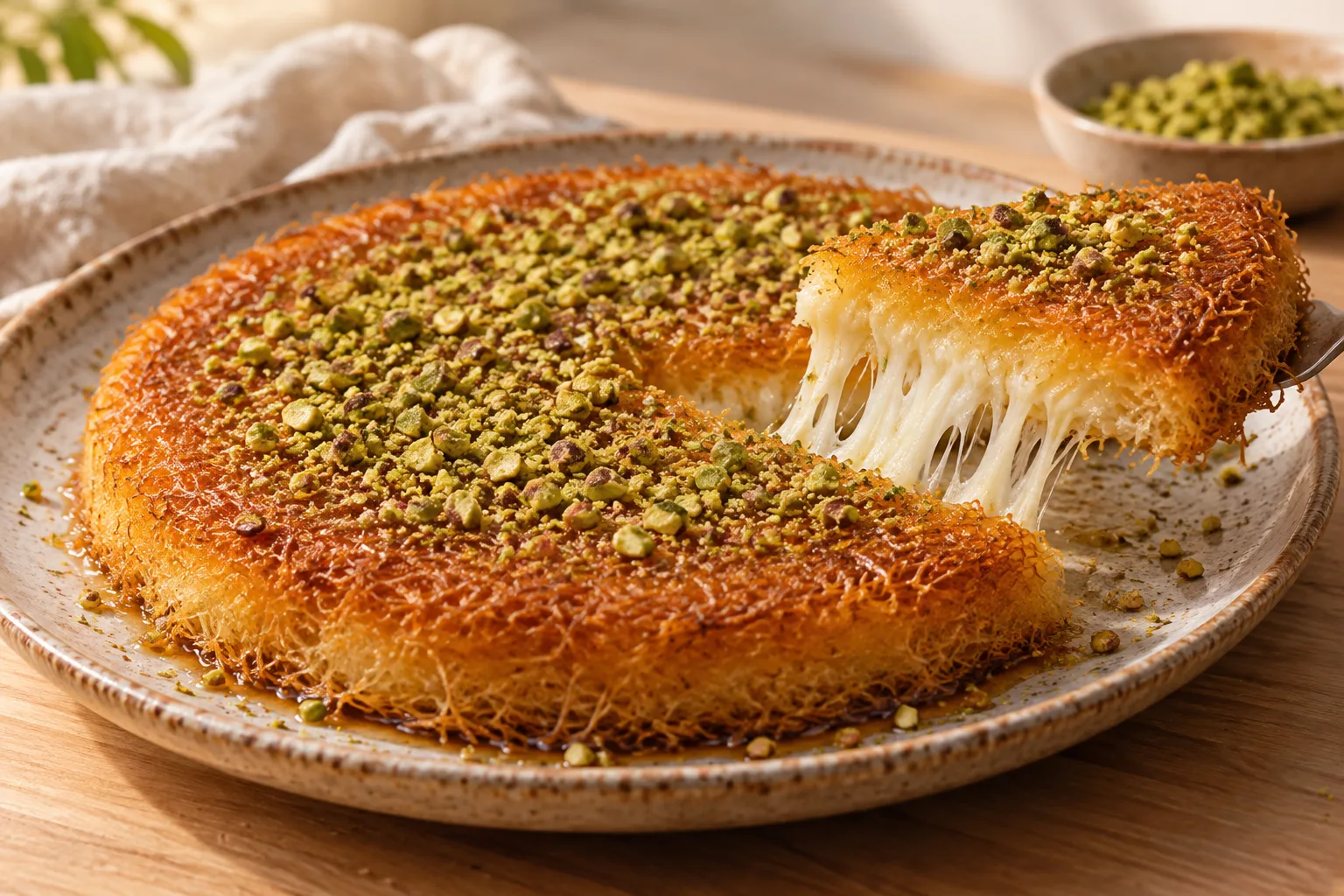
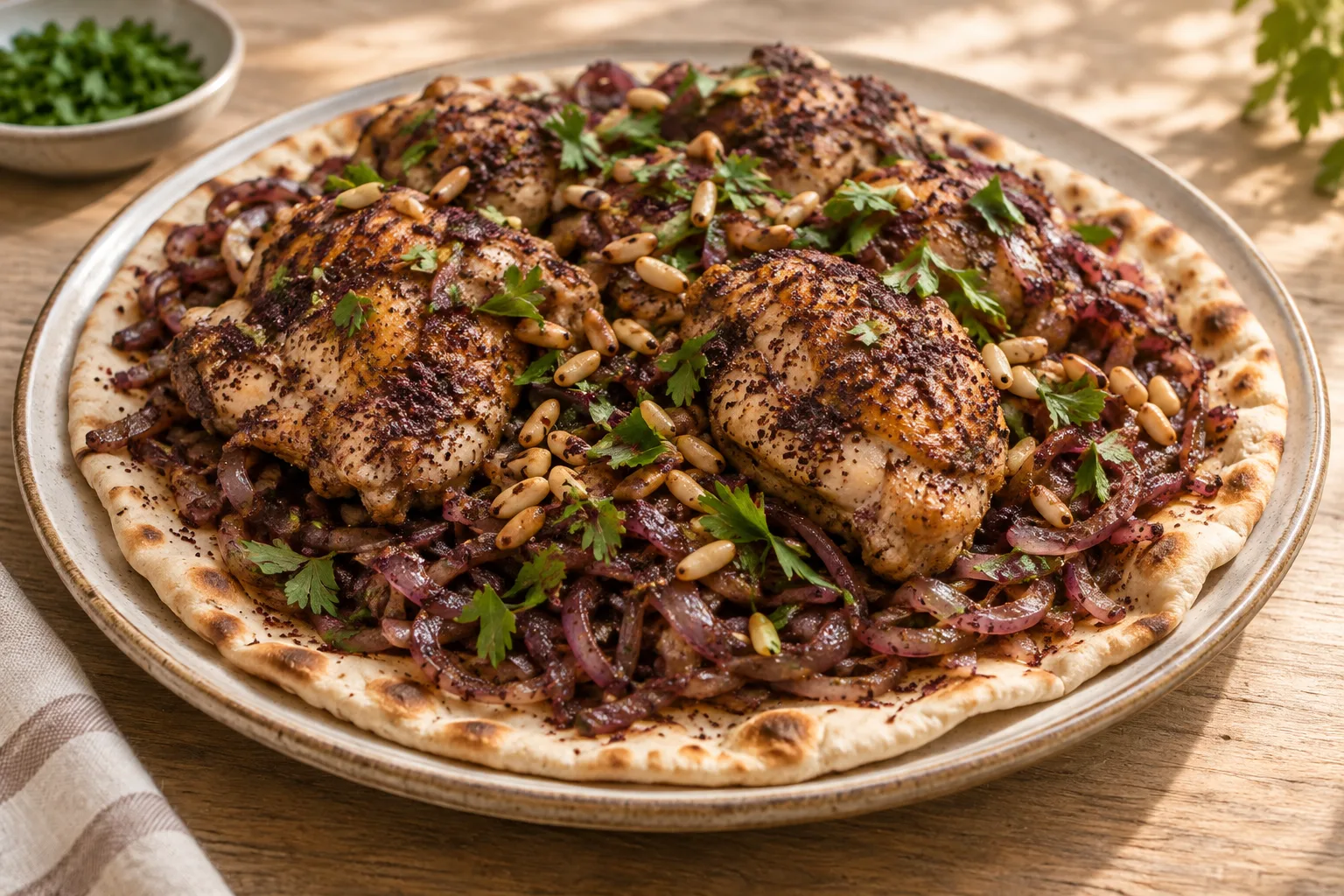
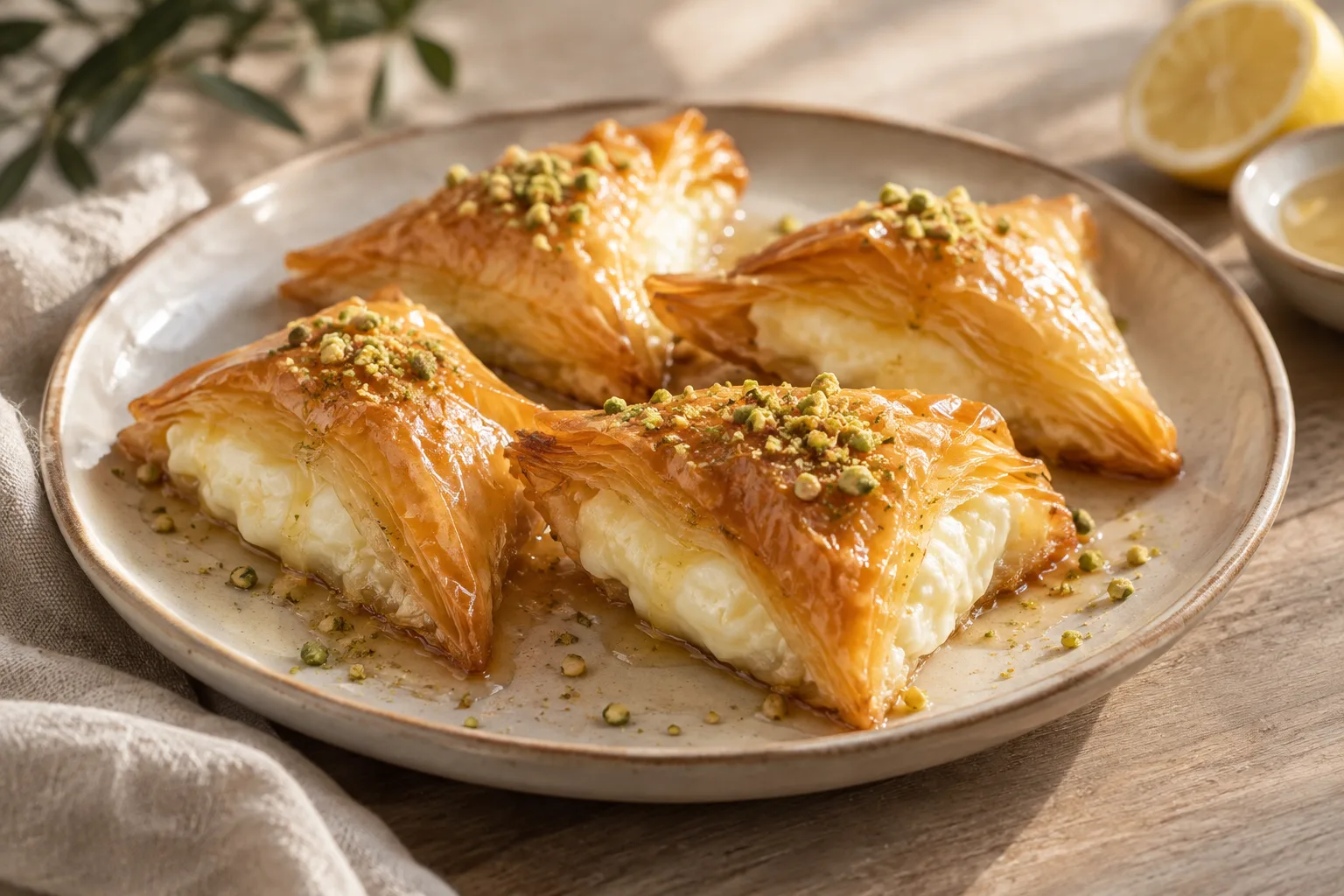
Tomato preparations provide a different register. In galayet bandora, ripe tomatoes break down with olive oil, garlic, and chilli into a thick, concentrated skillet dish. Its flavor can be bright and gently hot, while the texture remains soft enough to gather with bread. Sumac, a tart reddish spice, is prominent in musakhan, where it seasons slowly cooked onions served with chicken on flatbread. Knafeh offers another set of contrasts: crisp pastry threads, a soft cheese filling, sweet syrup, and pistachio garnish. Its Nabulsi form is associated with Nablus, so it is useful to distinguish that particular cultural reference from the broader circulation of the dessert. Across these examples, acidity, toasted grain, tender meat, crisp bread, and syrupy sweetness each have a clear culinary role.
Hospitality, celebration, and transmission
Hospitality is expressed through food in Jordan, and the clearest documented example is mansaf. It is associated with festive and social occasions, including weddings and condolences, and can also be served as a way of resolving differences. Its preparation may itself become a social event, with cooks sharing stories and conversation while working. The finished platter brings together bread, grain, meat, and sauce, and guests gather around it. The UNESCO description records both traditional eating practices and their present-day variation: some people eat from a shared platter by hand, while others use individual dishes and spoons.
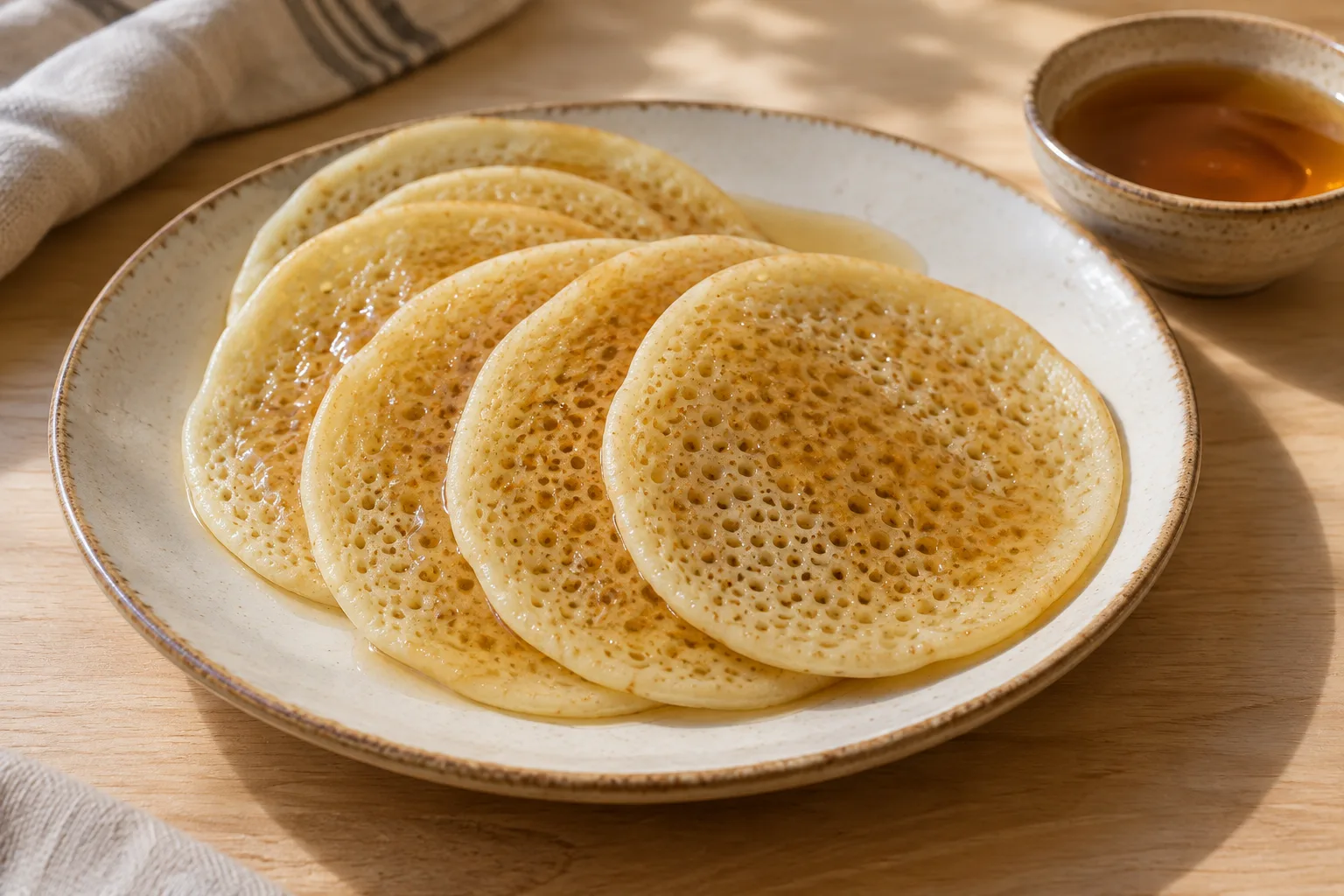
Knowledge travels through households and communities as well as formal institutions. Recipes and related practices are passed down, with women identified in the UNESCO documentation as important transmitters across generations; culinary institutes and universities also contribute. Seasonal and religious calendars shape other foods. Qatayef, small filled pancakes that may be prepared with cream, nuts, or cheese, are widely associated with Ramadan across the region, including Jordan. Such a shared seasonal food can have local variations without belonging exclusively to one country. These examples show that transmission is not simply preservation of an unchanging recipe. It includes adapting ingredients, learning the gestures of preparation, and deciding how a dish fits a family gathering or public celebration.
Slow cooking, roasting, and the final turn
A number of Jordanian preparations depend on managing time, moisture, and the order in which ingredients meet. For freekeh with chicken, the grain can be rinsed and cooked in broth, taking on flavor as it softens but retaining a definite bite. Toasted almonds or pine nuts add a crisp finish. In a separate everyday technique, galayet bandora cooks tomatoes in a pan with olive oil, garlic, and chilli until the fruit breaks down and the liquid thickens. Families may make a meatless version or add meat; the skillet method remains central to the preparation.
Maqluba demonstrates the importance of assembly as well as cooking. Rice, meat, and vegetables are arranged in a pot and cooked together; to serve, the pot is carefully inverted onto a platter. The reveal is part of the dish’s familiar presentation, and the word itself refers to turning something over. Mansaf takes another route, cooking meat in yogurt sauce and building a platter with bread and grain. In Wadi Rum, zarb is described as a Bedouin method in which meat and vegetables cook slowly in a covered pit beneath the ground, giving the food a smoky character. In musakhan, onions are cooked slowly with olive oil and sumac, then set on flatbread with roasted chicken. The techniques differ, but each makes the cooking process visible in the finished meal.
From shared platters to everyday meals
Jordanian meals take more than one form. A festive mansaf is arranged on a large common platter and eaten by a group gathered around it; the scale and shared serving make it suited to a reception or other social event. UNESCO documents traditional use of the right hand, alongside contemporary use of plates and spoons. Jordan’s tourism material also describes the meal as a way to express generosity and notes its presence at gatherings and occasions of condolence. These customs are meaningful examples, not rules that define every household meal.
Smaller everyday dishes have their own table logic. Galayet bandora is served warm or at room temperature with pita or shrak bread, which can be used to scoop up the thick tomatoes. Mezze place small plates at the center, inviting diners to sample hummus, eggplant preparations, and other accompaniments together. Freekeh with chicken, by contrast, is a grain-based main dish that can be brought to the table as a platter and shared. Along the coast, Aqaba is associated in the supplied food guide with sayadieh, a fish-and-rice preparation; that documented connection adds a coastal point of comparison to inland grain and meat dishes. At the close of a meal, syruped pastries or knafeh may provide a sweet finish. The occasion, scale, and serving style can change, while bread and sharing remain recurring features.
A glossary of Jordanian food terms
These names point to preparations and ingredients encountered in Jordanian cooking and the wider Levant. Spelling varies when Arabic words are written in English, and a familiar name may refer to more than one family or regional version.
- Mansaf: A festive Jordanian banquet built from meat cooked in yogurt sauce and served with rice or bulgur over thin bread. It carries social meanings as well as culinary ones.
- Jameed: Dried, fermented yogurt used to make the characteristic sauce for mansaf. It brings a concentrated tang to the dish.
- Freekeh: Young green wheat that is roasted and rubbed to remove its husk; it can be served as a grain pilaf with chicken.
- Galayet bandora: A tomato skillet cooked with olive oil, garlic, and often green chilli. It is commonly eaten with bread and has household variations.
- Maqluba: A layered rice, meat, and vegetable dish cooked in a pot and inverted onto a serving platter.
- Musakhan: Chicken and sumac-seasoned onions served over flatbread; a Levantine preparation closely associated with Palestinian foodways and also present in Jordan.
- Knafeh: A syruped dessert made in some versions with fine pastry threads and cheese. Knafeh Nabulsi names a version associated with Nablus.
- Qatayef: Filled pancakes especially associated with Ramadan across the region, with fillings that can include cream, nuts, or cheese.
One country, many cuisines
Amman
Jordan’s capital is a documented setting for a varied urban food scene, with restaurants and family meals bringing together dishes from across the country and the Levant. Mansaf, mezze, and everyday tomato and grain preparations can all be encountered in this broader culinary setting. Their presence in the city reflects circulation and adaptation; it does not make every dish an exclusive product of Amman.
Aqaba
Aqaba offers a coastal point of comparison within Jordan’s food landscape. A documented food guide associates the city with sayadieh, a fish-and-rice dish, setting it apart from inland examples centered on grains, dairy sauces, and meat. This connection supports a coastal culinary perspective without assigning every seafood preparation or ingredient an exclusive Aqaba origin.
Wadi Rum and Bedouin hospitality
In Wadi Rum, documented Bedouin hospitality is associated with shared meals and zarb, in which meat and vegetables cook slowly in a covered underground pit. The method gives the food a smoky character and places cooking within a desert-hosting context. This is a specific regional practice, not a template for every Bedouin meal or every dish served in the desert.
Cook
Fats, flavours and condiments
Cooking fats. Olive oil is used to dress salads, accompany hummus and labneh, and dip pita bread. Manakeesh dough is topped with olive oil and white cheese or zaatar.
Examples of culinary uses, without a statistical observation period. Partial qualitative coverage: no quantities, frequency, share of other fats or regional differences.
Herbs and spices. Cumin, sumac, paprika, saffron, and cardamom are described as spices used in Jordanian cuisine.
Jordan; Jordanian cuisine, with no regional breakdown. Does not establish frequency, amounts, or prevalence in recipes or population consumption.
Sauces and condiments. In Jordan, mansaf is described with a thick sauce made from fermented dried yogurt, called jameed. Falafel is often served as a sandwich or in pita bread with tahini sauce, tomatoes, cucumbers, and pickles; shawarma is served with vegetables and sauces.
Jordan; mansaf, falafel, and shawarma, with no regional breakdown. Does not establish that these accompaniments are universal or specify frequency or amounts.
Drinks
Everyday drinks. In an online survey, 540 participants reported usually drinking water.
Adults living in Jordan; voluntary sample of 672 people. July 2020, during pandemic restrictions. Self-reported online questionnaire; multiple-response question on usual drinks. Response count, not litres or average intake. The sample is not nationally representative. Table percentages use multiple responses and are not interpreted as population prevalence.
Coffee and tea preparation. Turkish coffee and Arabic coffee with cardamom are part of hospitality customs; tea is also offered to visitors.
Drinks with meals. Turkish or Arabic coffee with cardamom may round off a meal as a hospitality custom.
Cultural description without a statistical observation period. No measured shares, amounts, serving sizes or frequency. It does not describe every household or establish digestive effects.
Nutrition and dietary patterns
Energy and nutrients. Daily adult means: men, 2907.5 kcal, 114.6 g protein, 120.9 g fat, 345.9 g carbohydrate and 20.7 g fibre; women, 2209.3 kcal, 81.8 g protein, 97.7 g fat, 256.9 g carbohydrate and 17.8 g fibre.
Observation period: 2021-2022. Adults aged 20–64 with energy reports classified as plausible; initial survey of 2145 people in Jordanian households. October 2021 to March 2022; sex-specific means. Mean of two nonconsecutive dietary recalls, converted using food-composition tables; implausible energy reports excluded. The table analyses only the 47.2% classified as plausible. These are not recommendations or a whole-population mean. Pregnancy and lactation excluded; possible recall and selection bias.
Salt and sugars. In the study sample, mean urinary sodium excretion was 4.1 g per day, used to estimate sodium intake.
103 healthy Jordanian adults aged 18–64, recruited by convenience at a university and its hospital. May–June 2014; sodium, not total salt or sugars. Controlled full-day urine collection and laboratory sodium measurement. Small local study, not nationally representative. It does not estimate free or added sugars; sodium is not converted into grams of salt.
Dietary patterns. Self-reported categories in the university sample: vegan, 1.8%; lacto-ovo vegetarian, 10.7%; semi-vegetarian, 11.4%.
1209 students aged 17–28 at the University of Jordan, Amman. March–September 2005; one university. Self-administered questionnaire with multistage stratified sampling. The semi-vegetarian category included respondents reporting chicken or fish consumption. Historical data using the study’s operational classification; not current Jordanian prevalence or equivalent to current flexitarian definitions.
Timing and company
Meals per day. Reported daily meals: one, 13%; two, 51%; at least three, 36%. At most two snacks: 63%. Reporting breakfast: 67%.
136 adult Jordanian students at one university in Irbid. June–October 2019; reported usual meals and snacks. Cross-sectional pilot with a self-administered questionnaire; percentages from the results table. Small university sample, not nationally representative. Not a current distribution for all households.
Weekdays and weekends. In the university sample, breakfast skipping was less common on Fridays and Saturdays than on class days.
March–May 2022; self-reported breakfast habits. Qualitative comparison of student breakfasts; no meal timings, durations or differences across all meals given here.
Eating at home and away. Dinners with guests at home may involve generous portions and encouragement to have more as a gesture of hospitality.
Dinners with guests at home; fieldwork period not stated. Guest dinners only: no shares of usual breakfasts, lunches or dinners at home versus elsewhere, or current national habits.
Cooking frequency. A reported 17.4% spent at least 60 minutes preparing dinner on a usual weekday; 36.8% said they did not cook.
672 adults residing in Jordan; voluntary online survey. July 2020 lockdown; dinner preparation on a usual weekday. Self-reported questionnaire with minute bands; results of the dinner-preparation question. Not eating duration or cooking days per week. Nonrepresentative sample in an exceptional pandemic setting.
Eating together. Reported breakfast company: alone, 32.80%; with the whole family, 26%; with friends, 14.50%.
891 Jordanian students from four public universities; convenience sample. March–May 2022; self-reported breakfast habits. Cross-sectional self-reported questionnaire; faculty-based selection and convenience recruitment. Reported breakfast context, including respondents who skip breakfasts; not all meals or the whole population.
Cereals and plant foods
Cereals and cereal products. Annual availability per person: wheat products, 76.7 kg; rice, 23.3 kg; maize products, 1.8 kg.
Pulses. Annual availability per person: chickpeas, 3.3 kg; lentils, 1.0 kg; dry beans, 0.4 kg.
Vegetables. Annual availability per person: tomatoes, 26.4 kg; cucumbers, 10.5 kg; dry onions, 9.9 kg; eggplants, 5.3 kg.
Fruit. Annual availability per person: bananas, 7.3 kg; oranges, 6.0 kg; apples, 4.8 kg; grapes, 2.1 kg.
Potatoes, roots and tubers. Annual availability per person: potatoes, 12.5 kg; potato products, 9.5 kg; other starchy roots and their products, 0.4 kg.
National food availability per inhabitant in Jordan. Year 2024; original food-balance categories. Food series of the national balance; available quantities per population, in kg per person per year. Calculated availability, not measured intake or household purchases. Original categories and rounding retained; products are not summed or converted into cooked or raw-equivalent weights.
Bread. In Aqaba, examples include whole-wheat pita, shrak for sandwiches and tabun, a thicker flatbread served with soups and hot dishes.
Regional description without a statistical observation period. Partial qualitative coverage: no per-person consumption quantities or claim that these types are universal in all households.
Protein foods
Meat. Annual availability per person: chicken, 30.9 kg; beef, 6.6 kg; mutton, 4.6 kg; goat meat, 0.7 kg.
National food availability per inhabitant in Jordan. Year 2024; original food-balance categories. Food series of the national balance; available quantities per population, in kg per person per year. Calculated availability, not measured intake or household purchases. Original categories and rounding retained; products are not summed or converted into cooked or raw-equivalent weights. The extraction does not clarify carcass versus edible weight.
Fish and seafood. Annual availability per person: fish, 3.0 kg; crustaceans, 0.1 kg.
National food availability per inhabitant in Jordan. Year 2024; original food-balance categories. Food series of the national balance; available quantities per population, in kg per person per year. Calculated availability, not measured intake or household purchases. Original categories and rounding retained; products are not summed or converted into cooked or raw-equivalent weights. No species breakdown or fresh/preserved shares.
Eggs. Annual availability of table eggs is 6.4 kg per person.
National food availability per inhabitant in Jordan. Year 2024; original food-balance categories. Food series of the national balance; available quantities per population, in kg per person per year. Calculated availability, not measured intake or household purchases. Original categories and rounding retained; products are not summed or converted into cooked or raw-equivalent weights. Weight is not converted to egg counts.
Milk and dairy products. Annual availability per person: cow milk, 5.6 kg; cheese, 2.9 kg; jameed, 0.4 kg.
National food availability per inhabitant in Jordan. Year 2024; original food-balance categories. Food series of the national balance; available quantities per population, in kg per person per year. Calculated availability, not measured intake or household purchases. Original categories and rounding retained; products are not summed or converted into cooked or raw-equivalent weights. Partial category selection; yoghurt categories are not combined and concentrated milk is not converted to equivalents.
Meal composition
Breakfast composition. Breakfast may include hummus, mutabbal, white cheese, pickles, tomatoes, cucumbers, yoghurt and labneh, with pita and mint tea.
Main meal composition. Main dishes include mansaf: mutton, rice and pine nuts with a yoghurt-based jameed sauce.
Appetisers and snacks. Snack or light-meal examples include mua’janat, pastries filled with meat, cheese, spinach or potatoes.
Desserts and sweets. Aqaba’s al-hooh has layers of pastry filled with nuts or dates, fried in ghee and dipped in syrup.
Aqaba, Jordan; cultural description without a statistical period. Partial qualitative coverage; no frequency, quantities or consumption shares, and not representative of all households.
Dinner composition. Friday family dinners may include meat dishes.
Jordanian adults in a cultural survey. Friday family-dinner example; fieldwork date not stated. Qualitative description of questionnaire findings on customs. Partial qualitative coverage; no frequency, quantities or consumption shares, and not representative of all households.
Techniques and equipment
Cooking techniques. Aqaba examples include grilled fish, oven-baked manakish and al-hooh fried in ghee.
Aqaba, Jordan; cultural description without a statistical period. Partial qualitative coverage; no frequency, quantities or consumption shares, and not representative of all households.
Vegetable preparation. Maqlubeh is made with layers of fried vegetables, meat or chicken and rice. Spinach and potatoes also appear as mua’janat fillings.
Culinary examples from Aqaba; no consumption survey. Aqaba, Jordan; cultural description without a statistical period. Reading of examples on the destination’s official food page. Partial qualitative coverage; no frequency, quantities or consumption shares, and not representative of all households.
Food preservation. Traditional jameed production includes salting and sun-drying the strained dairy paste.
Fermented foods. Jameed is a dried fermented yoghurt product made from goat or sheep milk and used in sauces for dishes such as mansaf.
Jordan; heritage description without a statistical observation period. Partial qualitative coverage; no frequency, quantities or consumption shares, and not representative of all households.
Kitchen equipment. In the 2015 census, 93.1% of private households had an oven/cooker, as a combined category, and 38.7% had a microwave.
Private households throughout the Kingdom of Jordan. 2015 census; national row of the durable-goods table. Census tabulation of household appliance presence; table read and visually checked. Historical ownership, not usage or current equipment. Oven and cooker are not separated in this category; no pressure-cooker figure given here.
Shopping, prices and waste
Grocery shopping locations. The sample includes online grocery shopping and large supermarkets.
Shopping frequency. Some students reported shopping less frequently after vaccines became available.
Prepared food and delivery. Some students reported ordering meals through delivery apps more frequently after vaccines became available.
January–March 2022 survey of changes after vaccine availability. Partial coverage, not nationally representative; no weekly trips, expenditure shares or prices provided here.
Household food waste. Estimated household food waste is approximately 81.3 kg per person per year.
Households in Jordan. National study covering 2024; results announced in 2025. National food-waste study estimate; household value reported in an institutional report. Partial coverage: sampling design, edible fractions, food types and reasons for waste are not verified here. Restaurant, hotel and hospital waste is not added.
Seasons and celebrations
Seasonal produce. Olives are usually harvested from November to January. The Jordanian produce trade calendar places lemons and oranges from October to March, and apricots from April to June.
Jordan; descriptive windows without an observation year or regional breakdown. Partial coverage. Harvesting depends on variety, weather and use; citrus and apricot trade seasons are not exact harvest dates or availability in every shop.
Celebration food. During Ramadan, whose dates follow the Islamic lunar calendar, Aqaba’s iftar breaks the fast at sunset and may end with qatayef filled with cheese or walnuts, fried and soaked in syrup.
Aqaba, Jordan; Ramadan, with dates varying each year. Partial cultural coverage; participation and frequency are not measured, and not all festivals are covered. No fixed Gregorian date is assigned to Ramadan.
Pantry and recipes
Most consumed ingredients. In 2024, food availability was 76.7 kg per person per year for wheat products, 30.9 for chicken meat, 28.9 for sugar, 26.4 for tomatoes and 23.3 for rice.
National food availability per inhabitant in Jordan. Year 2024; original food-balance categories. Food series of the national balance; available quantities per population, in kg per person per year. Partial coverage: national food-balance availability, not observed intake. Published categories are neither summed nor weight-converted; this does not measure household waste or individual preferences.