Africa · Northern Africa

Morocco

Recipes connected with Morocco

Food and eating habits

How people eat in Morocco

50 indicators exploring everyday meals, ingredients and food culture. Information is completed progressively from documented evidence.

48 of 50 indicators with documented information

Not all data are comparable: food supply, purchases and intake are different measures. Check the period, population and method for each finding. Qualitative descriptions do not establish percentages or amounts.

Timing and company

7/8
Timing and company — Morocco
IndicatorFindings and context
Meal times
Quantitative findingSurvey

52% had breakfast between 7 h and 9 h, 75% had lunch between 12 h 30 and 14 h 30 and 67% had dinner between 20 h and 22 h, local time.

Scope, method and limitations
Observation period
2011–2012
Unit
% of people; local clock time
Population or sample
People aged 15 or over in ordinary households in Morocco.
Geographic scope
National survey, October 2011 to September 2012.
Definition and method
Time-use survey with a 24-hour activity record and stratified probability sampling.
Comparison limitations
These are historical percentages for the reported time windows. Current meal times may differ.
Meals per day
Quantitative findingSurvey

6% recorded one or two meals per day, 28% three, 47% four and 19% five or more.

Scope, method and limitations
Observation period
2011–2012
Unit
% of people by meals per day
Population or sample
People aged 15 or over in ordinary households in Morocco.
Geographic scope
National survey, October 2011 to September 2012.
Definition and method
Time-use survey with a 24-hour activity record and stratified probability sampling.
Comparison limitations
The release groups meals together and does not separately report snacks.
Meal duration
Quantitative findingSurvey

The national mean was 88 minutes per day spent on meals.

Scope, method and limitations
Observation period
2011–2012
Unit
minutes/person/day
Population or sample
People aged 15 or over in ordinary households in Morocco.
Geographic scope
National survey, October 2011 to September 2012.
Definition and method
Time-use survey with a 24-hour activity record and stratified probability sampling.
Comparison limitations
Partial measure of total daily time. The table does not break out breakfast, lunch or dinner duration.
Daily energy distribution Insufficient data in the sources consulted
Weekdays and weekends
Quantitative findingSurvey

Mean daily time spent on meals was 87 minutes Monday to Thursday and also on Friday, 88 on Saturday and 91 on Sunday.

Scope, method and limitations
Observation period
2011–2012
Unit
minutes/person/day by day category
Population or sample
People aged 15 or over in ordinary households in Morocco.
Geographic scope
National survey, October 2011 to September 2012.
Definition and method
Time-use survey with a 24-hour activity record and stratified probability sampling.
Comparison limitations
Partial comparison of total daily time. It does not measure meal times or counts by day of week.
Eating at home and away
Quantitative findingSurvey

The proportion of people eating away from home was 13% overall, 22% among men and 4% among women.

Scope, method and limitations
Observation period
2011–2012
Unit
% of people; meals away from home
Population or sample
People aged 15 or over in ordinary households in Morocco.
Geographic scope
National survey, October 2011 to September 2012.
Definition and method
Time-use survey with a 24-hour activity record and stratified probability sampling.
Comparison limitations
The denominator is people. The release does not break down the share of breakfasts, lunches or dinners eaten away from home.
Cooking frequency
Quantitative findingSurvey

In the cooking category, the mean was 85 minutes per person per day, 162 among women and 4 among men.

Scope, method and limitations
Observation period
2011–2012
Unit
minutes/person/day
Population or sample
People aged 15 or over in ordinary households in Morocco.
Geographic scope
National survey, October 2011 to September 2012.
Definition and method
Time-use survey with a 24-hour activity record and stratified probability sampling.
Comparison limitations
Partial coverage of population average time. The table does not give the number of days per week each person cooked.
Eating together
Quantitative findingSurvey

48.9% of the sample reported eating with their family at least twice a day.

Scope, method and limitations
Observation period
2018–2022
Unit
% of surveyed adults
Population or sample
507 adults in Rabat–Salé–Kénitra.
Geographic scope
Regional study, 2018–2022.
Definition and method
Two-stage survey. Eating with family meant sitting at the same table at the same time.
Comparison limitations
Partial regional coverage. The survey result does not quantify all occasions of eating alone or with other people.

Pantry and recipes

2/2
Pantry and recipes — Morocco
IndicatorFindings and context
Most consumed ingredients
Quantitative findingSurvey

Selected examples of published mean quantities:Watermelon, national: 16.6; Melon, national: 7.4; Dates, national: 2.51; Sugar as a product, national: 24.78; Sugar, urban: 23.00; Sugar, rural: 27.44 kg per person per year.

Scope, method and limitations
Observation period
2013–2014
Unit
kg/person/year; selected household-survey food-product quantities
Population or sample
People living in ordinary households in Morocco; collective households excluded.
Geographic scope
Annual mean per person; collection July 2013–June 2014.
Definition and method
National household consumption and expenditure survey, selected sample 15970 households spread over the year.Daily and retrospective acquisition records; published means reproduced.
Comparison limitations
Partial historical coverage of selected foods, without a complete ranking of most-consumed foods.Household survey, not measured individual intake.Sugar is a food product, not ingested total, added or free sugars.Do not add different products or convert to portions.
Ingredient prevalence in recipes
Quantitative findingRecipe sample

Salt: 5/6; Water: 4/6; Olive oil: 3/6; Wheat flour: 3/6; Fresh cilantro: 3/6; Butter: 2/6; Sugar: 2/6; Lemon: 2/6; Cooked chickpeas: 2/6; Fresh parsley: 2/6; Ground black pepper: 2/6; Garlic: 2/6.

Scope, method and limitations
Observation period
2026
Unit
recipes containing exact ingredient entry /6 unique published recipes
Population or sample
Complete corpus of six published KitchenPause recipes attributed to Morocco; not a household or national-cuisine sample.
Geographic scope
Collected 3 November 2026.Harira versions remain separate recipes.
Definition and method
One recipe per stable identity, without counting translations.Each ingredient counts once per recipe.Different entries remain separate, such as cold water, batter water and water; or olive oil and extra-virgin oil.
Comparison limitations
Partial coverage:presence in ingredient lists only, not quantities, consumption frequency or national prevalence.Small changing corpus with dish variants.Similar names are not merged; no percentages calculated.

Cereals and plant foods

6/6
Cereals and plant foods — Morocco
IndicatorFindings and context
Cereals and cereal products
Quantitative findingSurvey

Flour: 98.5; Cereal grains: 18.5; Semolina: 9.1; Couscous: 5.5; Pasta: 6.7 kg per person per year.

Scope, method and limitations
Observation period
2013–2014
Unit
kg/person/year; household survey consumption estimates, product basis specified
Population or sample
People living in ordinary households in Morocco; collective households excluded.
Geographic scope
Annual mean per person; collection July 2013–June 2014.
Definition and method
National household consumption and expenditure survey, selected sample 15970 households spread over the year.Daily and retrospective acquisition records; published means reproduced.
Comparison limitations
Partial historical coverage:consumption estimated through a household survey, not measured individual intake or current habits.No conversion to cooked servings or edible portions.Aggregates and their components must not be added. Product weights, without grain-equivalent conversion; cooked state is not established.
Bread
Quantitative findingSurvey

Purchased bread, national: 19.3; Urban: 29.6; Rural: 3.8 kg per person per year.

Scope, method and limitations
Observation period
2013–2014
Unit
kg/person/year; household survey consumption estimates, product basis specified
Population or sample
People living in ordinary households in Morocco; collective households excluded.
Geographic scope
Annual mean per person; collection July 2013–June 2014.
Definition and method
National household consumption and expenditure survey, selected sample 15970 households spread over the year.Daily and retrospective acquisition records; published means reproduced.
Comparison limitations
Partial historical coverage:consumption estimated through a household survey, not measured individual intake or current habits.No conversion to cooked servings or edible portions.Aggregates and their components must not be added. Purchased bread only:does not include all bread made at home from flour.
Pulses
Quantitative findingSurvey

Dry pulses, national: 7.3; Urban: 7.0; Rural: 7.8 kg per person per year.

Scope, method and limitations
Observation period
2013–2014
Unit
kg/person/year; household survey consumption estimates, product basis specified
Population or sample
People living in ordinary households in Morocco; collective households excluded.
Geographic scope
Annual mean per person; collection July 2013–June 2014.
Definition and method
National household consumption and expenditure survey, selected sample 15970 households spread over the year.Daily and retrospective acquisition records; published means reproduced.
Comparison limitations
Partial historical coverage:consumption estimated through a household survey, not measured individual intake or current habits.No conversion to cooked servings or edible portions.Aggregates and their components must not be added.
Vegetables
Quantitative findingSurvey

Fresh vegetables, total: 124.1; Tomatoes: 26.3; Kitchen-garden plants and culinary herbs, combined category: 8.5 kg per person per year.

Scope, method and limitations
Observation period
2013–2014
Unit
kg/person/year; household survey consumption estimates, product basis specified
Population or sample
People living in ordinary households in Morocco; collective households excluded.
Geographic scope
Annual mean per person; collection July 2013–June 2014.
Definition and method
National household consumption and expenditure survey, selected sample 15970 households spread over the year.Daily and retrospective acquisition records; published means reproduced.
Comparison limitations
Partial historical coverage:consumption estimated through a household survey, not measured individual intake or current habits.No conversion to cooked servings or edible portions.Aggregates and their components must not be added.
Fruit
Quantitative findingSurvey

Fruit, total group: 67.5; Oranges: 10.3; Bananas: 3.2 kg per person per year.

Scope, method and limitations
Observation period
2013–2014
Unit
kg/person/year; household survey consumption estimates, product basis specified
Population or sample
People living in ordinary households in Morocco; collective households excluded.
Geographic scope
Annual mean per person; collection July 2013–June 2014.
Definition and method
National household consumption and expenditure survey, selected sample 15970 households spread over the year.Daily and retrospective acquisition records; published means reproduced.
Comparison limitations
Partial historical coverage:consumption estimated through a household survey, not measured individual intake or current habits.No conversion to cooked servings or edible portions.Aggregates and their components must not be added. Total includes the report’s fresh, dried and prepared categories; not fresh fruit alone.
Potatoes, roots and tubers
Quantitative findingSurvey

Potatoes, national: 33.7; Urban: 33.2; Rural: 34.4 kg per person per year.

Scope, method and limitations
Observation period
2013–2014
Unit
kg/person/year; household survey consumption estimates, product basis specified
Population or sample
People living in ordinary households in Morocco; collective households excluded.
Geographic scope
Annual mean per person; collection July 2013–June 2014.
Definition and method
National household consumption and expenditure survey, selected sample 15970 households spread over the year.Daily and retrospective acquisition records; published means reproduced.
Comparison limitations
Partial historical coverage:consumption estimated through a household survey, not measured individual intake or current habits.No conversion to cooked servings or edible portions.Aggregates and their components must not be added.

Protein foods

4/5
Protein foods — Morocco
IndicatorFindings and context
Meat
Quantitative findingSurvey

Meat, total: 29.6; Red meat: 11.7; Beef, including minced: 6.3; Sheep meat, including minced: 4.5; Poultry, rabbit and game, combined category: 14.9; Industrial chicken: 13.6; Farm chicken: 0.4; Offal and tripe: 2.5 kg per person per year.

Scope, method and limitations
Observation period
2013–2014
Unit
kg per person per year
Population or sample
People living in ordinary households in Morocco; collective households excluded.
Geographic scope
Annual mean per person; collection July 2013–June 2014.
Definition and method
National household consumption and expenditure survey, selected sample 15970 households spread over the year.Daily and retrospective acquisition records; published means reproduced.
Comparison limitations
Partial historical coverage:consumption estimated through a household survey, not measured individual intake or current habits.No conversion to cooked servings or edible portions.Aggregates and their components must not be added.
Fish and seafood
Quantitative findingSurvey

Fish and seafood, national total: 13.6; Fresh fish: 13.3; Preserved fish: 0.2; Crustaceans and molluscs: 0.1; Urban total: 15.6; Rural total: 10.5 kg per person per year.

Scope, method and limitations
Observation period
2013–2014
Unit
kg per person per year
Population or sample
People living in ordinary households in Morocco; collective households excluded.
Geographic scope
Annual mean per person; collection July 2013–June 2014.
Definition and method
National household consumption and expenditure survey, selected sample 15970 households spread over the year.Daily and retrospective acquisition records; published means reproduced.
Comparison limitations
Partial historical coverage:consumption estimated through a household survey, not measured individual intake or current habits.No conversion to cooked servings or edible portions.Aggregates and their components must not be added.
Eggs
Quantitative findingSurvey

Eggs, national: 103; Urban: 122; Rural: 74 eggs per person per year.

Scope, method and limitations
Observation period
2013–2014
Unit
eggs per person per year
Population or sample
People living in ordinary households in Morocco; collective households excluded.
Geographic scope
Annual mean per person; collection July 2013–June 2014.
Definition and method
National household consumption and expenditure survey, selected sample 15970 households spread over the year.Daily and retrospective acquisition records; published means reproduced.
Comparison limitations
Partial historical coverage:egg units, without conversion to weight or portions.Household-survey consumption estimates, not measured individual intake or current habits.
Milk and dairy products
Quantitative findingSurvey

All dairy, national: 59; Urban: 72.5; Rural: 38.8 litres fresh-milk equivalent per person per year.

Scope, method and limitations
Observation period
2013–2014
Unit
litres fresh-milk equivalent per person per year
Population or sample
People living in ordinary households in Morocco; collective households excluded.
Geographic scope
Annual mean per person; collection July 2013–June 2014.
Definition and method
National household consumption and expenditure survey, selected sample 15970 households spread over the year.Daily and retrospective acquisition records; published means reproduced.
Comparison limitations
Partial historical household-survey coverage.These are equivalents calculated and published by the authors to aggregate different dairy foods, not litres of milk drunk.No new conversion or assumption of measured individual intake.
Protein sources Insufficient data in the sources consulted

Fats, flavours and condiments

3/3
Fats, flavours and condiments — Morocco
IndicatorFindings and context
Cooking fats
Quantitative findingSurvey

Oils, total: 22.4 L; Olive oil: 6.9 L; Table oil: 15.4 L; Other oils: 0.1 L; Butter, total: 1.9 kg; Farm butter: 0.8 kg; Pasteurised animal butter: 0.5 kg; Vegetable butter: 0.5 kg; Smen: 0.1 kg; Oils, urban total: 23.0 L; Oils, rural total: 21.6 L; Olive oil, urban: 6.8 L; Olive oil, rural: 7.1 L; Table oil, urban: 16.1 L; Table oil, rural: 14.3 L; Butter, urban total: 2.0 kg; Butter, rural total: 1.8 kg per person per year.

Scope, method and limitations
Observation period
2013–2014
Unit
L oil/person/year; kg butter/person/year; separate units, household survey
Population or sample
People living in ordinary households in Morocco; collective households excluded.
Geographic scope
Annual mean per person; collection July 2013–June 2014.
Definition and method
National household consumption and expenditure survey, selected sample 15970 households spread over the year.Daily and retrospective acquisition records; published means reproduced.
Comparison limitations
Partial historical household-survey consumption estimates, not measured individual intake or current use.Oil litres and butter kilograms are different units:no conversion or addition.Totals include their components and must not be added to them.
Herbs and spices
Qualitative descriptionCultural context

The described repertoire includes cinnamon, coriander, saffron, cumin and ras el hanout.The spice-stall description also lists paprika, turmeric and anise seeds.

Scope, method and limitations
Population or sample
Cultural description, without a consumer or recipe sample.
Geographic scope
Morocco; general presentation without regional breakdown.
Definition and method
Reading of the culinary repertoire and spice-market description.
Comparison limitations
Partial qualitative coverage:no recipe prevalence, use frequency or quantities.The page identifies no survey period.
Sauces and condiments
Qualitative descriptionCultural context

Souss-Massa amlou is a spread made with almonds, argan oil and honey.During Ramadan it is described served with tafarnout bread, msemen or baghrir, and alongside tea.

Scope, method and limitations
Population or sample
Culinary context of families and a Souss cooperative; no representative sample.
Geographic scope
Souss-Massa; cultural description published 13 March 2026, without a consumption survey.
Definition and method
Reading of a regional description with testimony on ingredients and serving.
Comparison limitations
Partial qualitative coverage, focused on Souss and Ramadan.No consumption quantities or proportions; not representative of all Moroccan households.

Meal composition

6/6
Meal composition — Morocco
IndicatorFindings and context
Breakfast composition
Quantitative findingSurvey

46·1% were classified as breakfast skippers: they reported eating breakfast never, rarely or sometimes during the previous 30 days.

Scope, method and limitations
Observation period
2016
Unit
% of surveyed Taza students; defined breakfast skipping
Population or sample
764 students aged 14–19 years attending schools in Taza.
Geographic scope
Taza; survey conducted February–March 2016.
Definition and method
Self-reported GSHS questionnaire; stratified cluster-random sampling of schools and classes. The published skipping definition is retained.
Comparison limitations
Partial local historical coverage, not a national estimate. Does not mean daily skipping or measure breakfast foods or amounts. Cross-sectional self-report.
Main meal composition
Quantitative findingSurvey

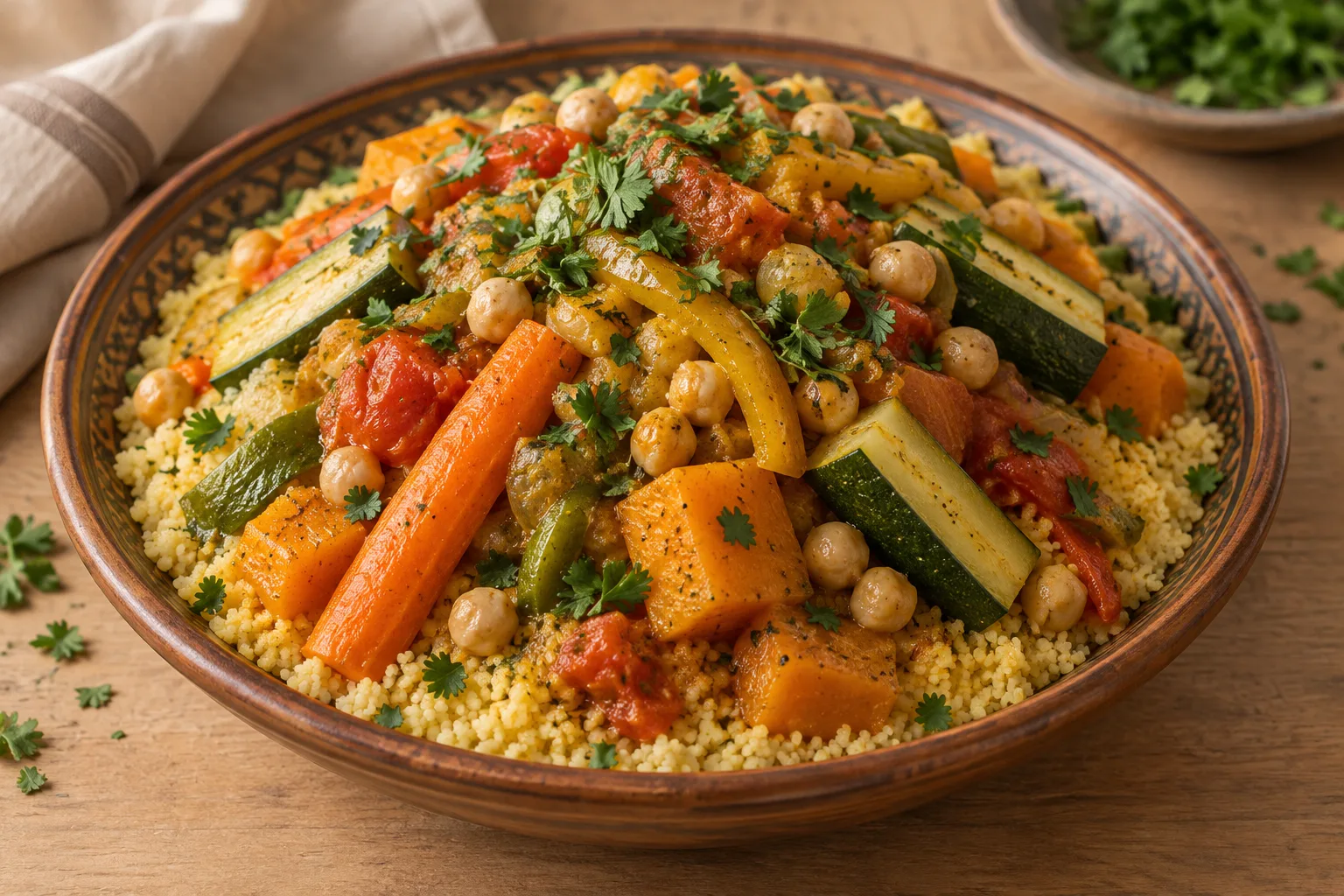
In the local sample’s recalled lunch descriptions: tagine, 54%; couscous, 17.2%. The following general culinary description is qualitative: Accompaniments described include raw or cooked vegetable salads and aubergine zaalouk. Couscous has variants with meat, vegetables, fish or chicken and may be served with marqa vegetable broth.

Scope, method and limitations
Observation period
2012–2013
Unit
% of local recalled lunch descriptions; cultural examples separate
Population or sample
615 adults aged 18–70: 305 in two Casablanca districts and 310 in six rural Souss communes.
Geographic scope
Data collected in 2012–2013 in Casablanca and Souss; not representative of all Morocco. Additional general culinary description without an observation date.
Definition and method
Face-to-face interviews, sex/age quotas and previous 24-hour recall; collection covered the whole week. Published percentages reproduced.
Comparison limitations
Partial local historical coverage. Lunch percentages are not an exhaustive partition. The general culinary description does not measure frequency and does not come from the local sample. Not current national percentages.
Dinner composition
Quantitative findingSurvey

In recalled dinners: yoghurt or a few cakes with tea, 4.1%; no dinner, 6%; cooked or raw vegetable salads with bread, 20.8%; tagine, 22.6%; pasta, 19.7%.

Scope, method and limitations
Observation period
2012–2013
Unit
% of surveyed adults; recalled dinner categories
Population or sample
615 adults aged 18–70: 305 in two Casablanca districts and 310 in six rural Souss communes.
Geographic scope
Data collected in 2012–2013 in Casablanca and Souss; not representative of all Morocco.
Definition and method
Face-to-face interviews, sex/age quotas and previous 24-hour recall; collection covered the whole week. Published percentages reproduced.
Comparison limitations
Partial local historical coverage, not current national habits or grams per dish. Selected categories are not an exhaustive partition and must not be added as if mutually exclusive. No rural/urban breakdown for these figures.
Appetisers and snacks
Qualitative descriptionSurvey

In focus groups, adolescent participants expressed a preference for snacks, soft drinks and cookies consumed away from home over those prepared at home, perceiving them as tastier.

Scope, method and limitations
Population or sample
Focus-group participants from two schools in Taza; parents and teachers also participated.
Geographic scope
Taza; qualitative phase of a study published in 2020. Specific focus-group dates are not stated.
Definition and method
Semi-structured discussions and thematic analysis; records a reported perception, not measured frequency.
Comparison limitations
Partial local qualitative coverage. Does not quantify between-meal occasions, amounts or national prevalence. Quantitative survey dates are not automatically assigned to these groups.
Desserts and sweets
Qualitative descriptionCultural context

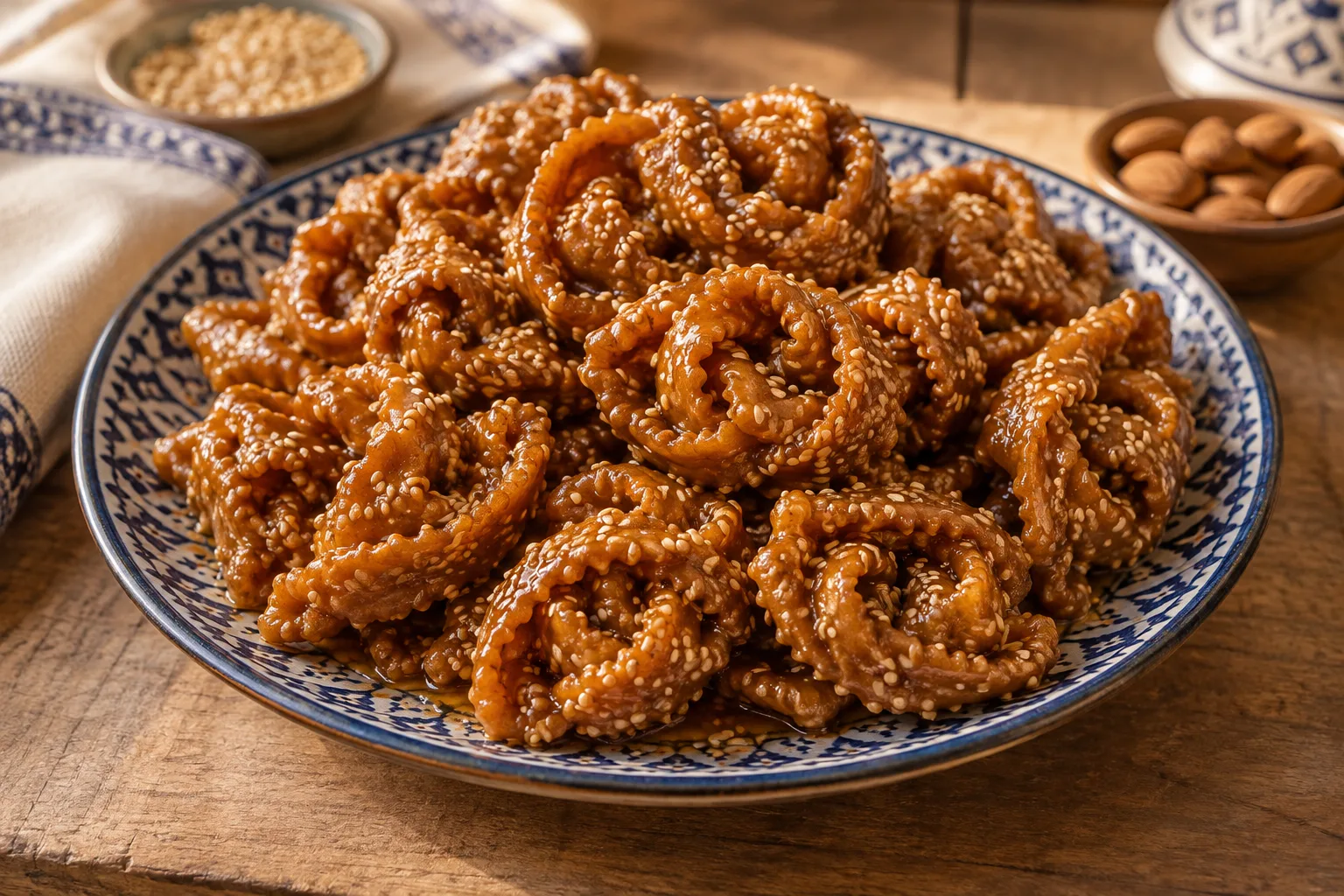
Gazelle horns are described as crushed almonds wrapped in thin pastry with orange-blossom aroma, accompanying green mint tea. Chebakia is served with soup or tea and is associated with Ramadan.

Scope, method and limitations
Population or sample
Culinary description for visitors; no household sample.
Geographic scope
Morocco, with regional variants; page without an observation date.
Definition and method
Reading of an official culinary description of ingredients and serving.
Comparison limitations
Partial qualitative coverage. Culinary examples, without percentages, frequency, amounts or a description of every national menu.
Portion sizes
Quantitative findingCultural context

Guide reference portions: cheese, 45 g; red cheese, 60 g. Educational reference amounts, not observed weights of consumed servings.

Scope, method and limitations
Observation period
2012 (legal deposit; reference portions, no observation)
Unit
g/reference portion; educational guide, not observed servings
Population or sample
Population addressed by general nutrition education; document for health professionals, without a consumption sample.
Geographic scope
Morocco; guide with 2012 legal deposit, dairy section. No observation period because these are educational references.
Definition and method
Reading of the guide’s published single-portion equivalents, retaining the original cheese and red-cheese categories.
Comparison limitations
Partial coverage of dairy reference portions, not usual national serving sizes or personalized targets. No specific varieties identified; do not add both amounts or convert them into nutrients.

Techniques and equipment

5/5
Techniques and equipment — Morocco
IndicatorFindings and context
Cooking techniques
Qualitative descriptionRecipe sample

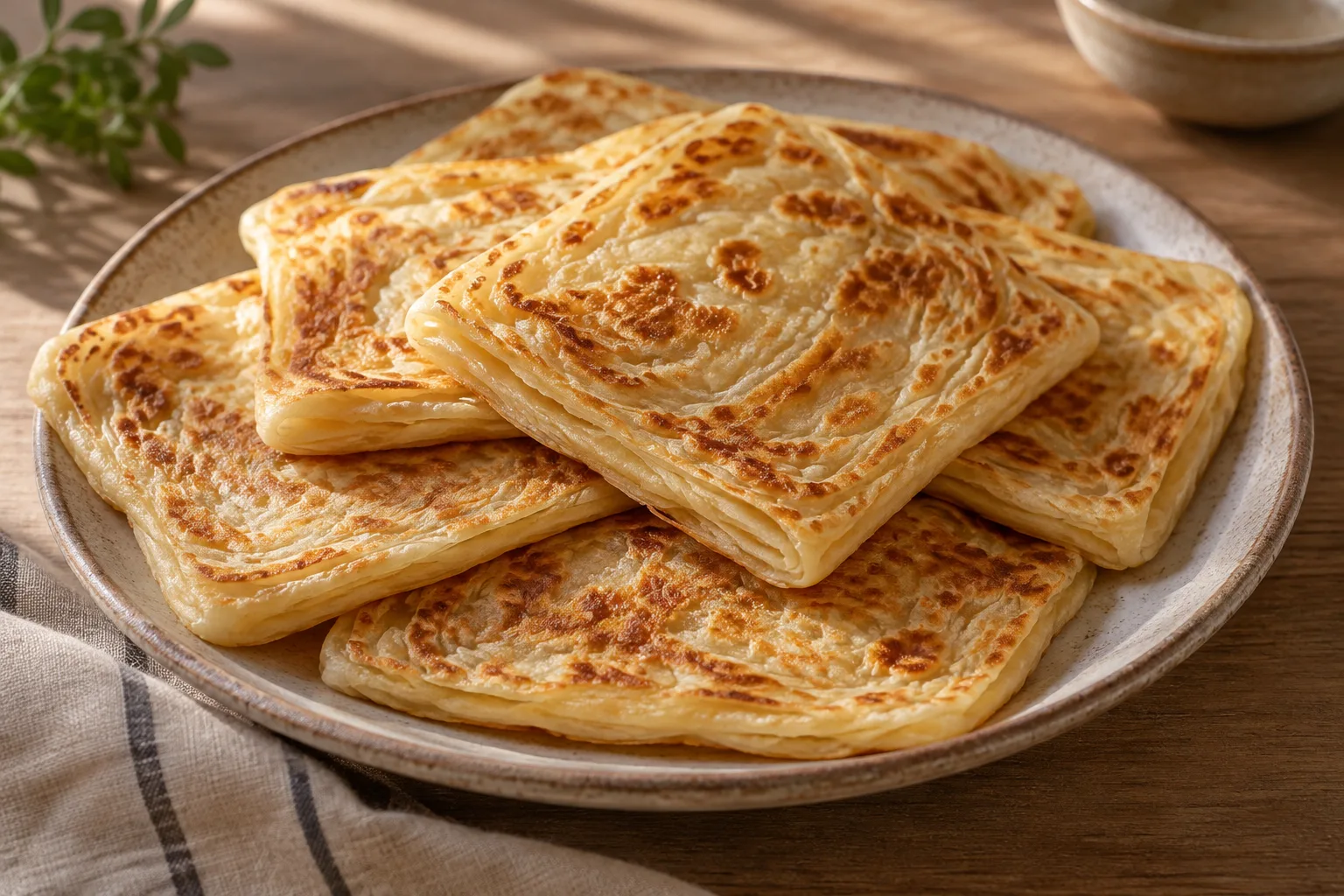
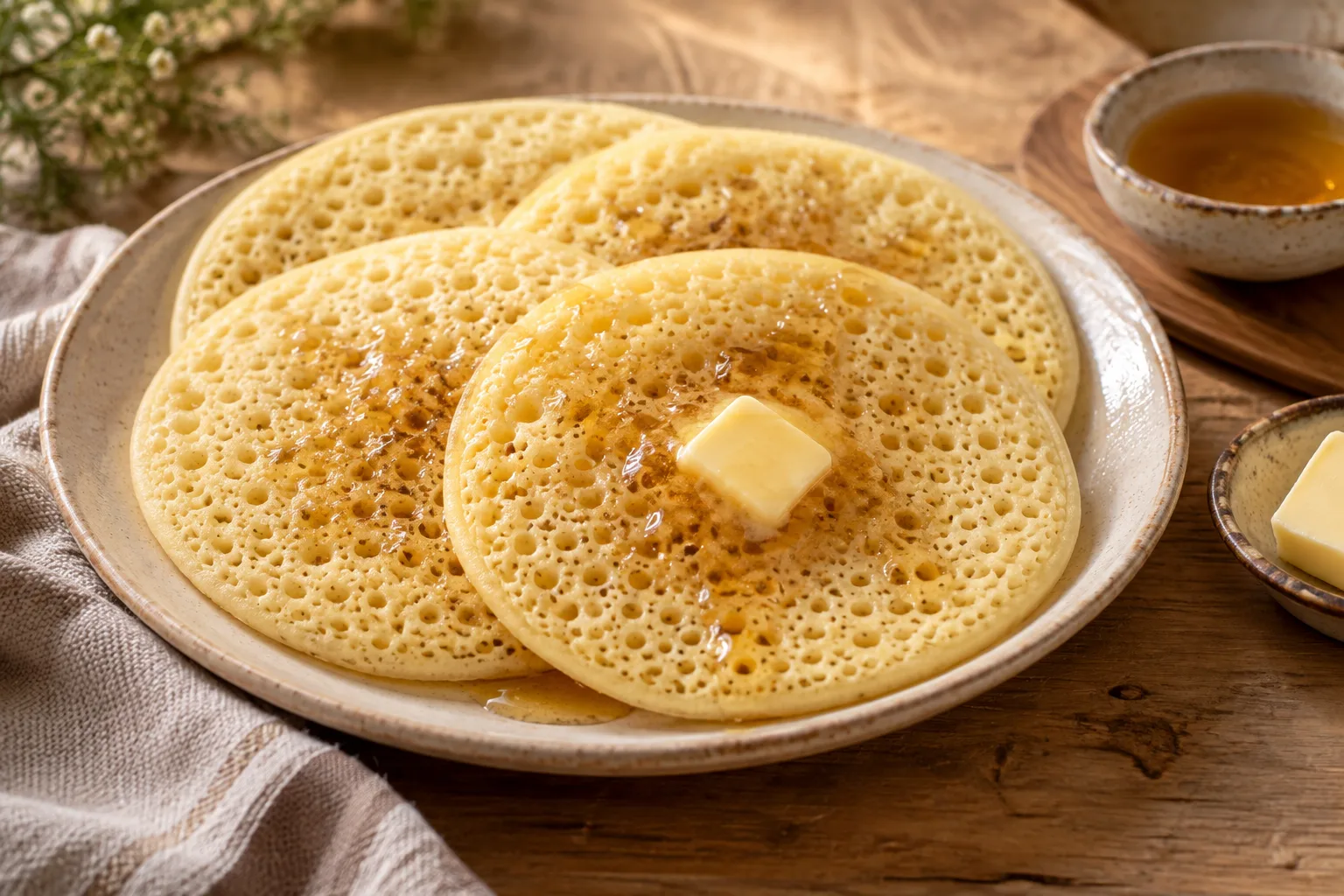
Semolina baghrir is cooked in a pan without turning. For msemen, the dough is stretched, folded into a square, flattened and pan-cooked on both sides.

Scope, method and limitations
Population or sample
Identified KitchenPause recipes associated with Morocco; no household sample.
Geographic scope
Published versions consulted 3 November 2026; recipe examples, without a population consumption period.
Definition and method
Reading of the selected recipes’ complete preparation instructions, retaining their technical differences.
Comparison limitations
Partial qualitative coverage of concrete examples. Does not measure national method frequency or prevalence throughout the recipe corpus. Times or amounts are not transferred between recipes.
Vegetable preparation
Qualitative descriptionRecipe sample

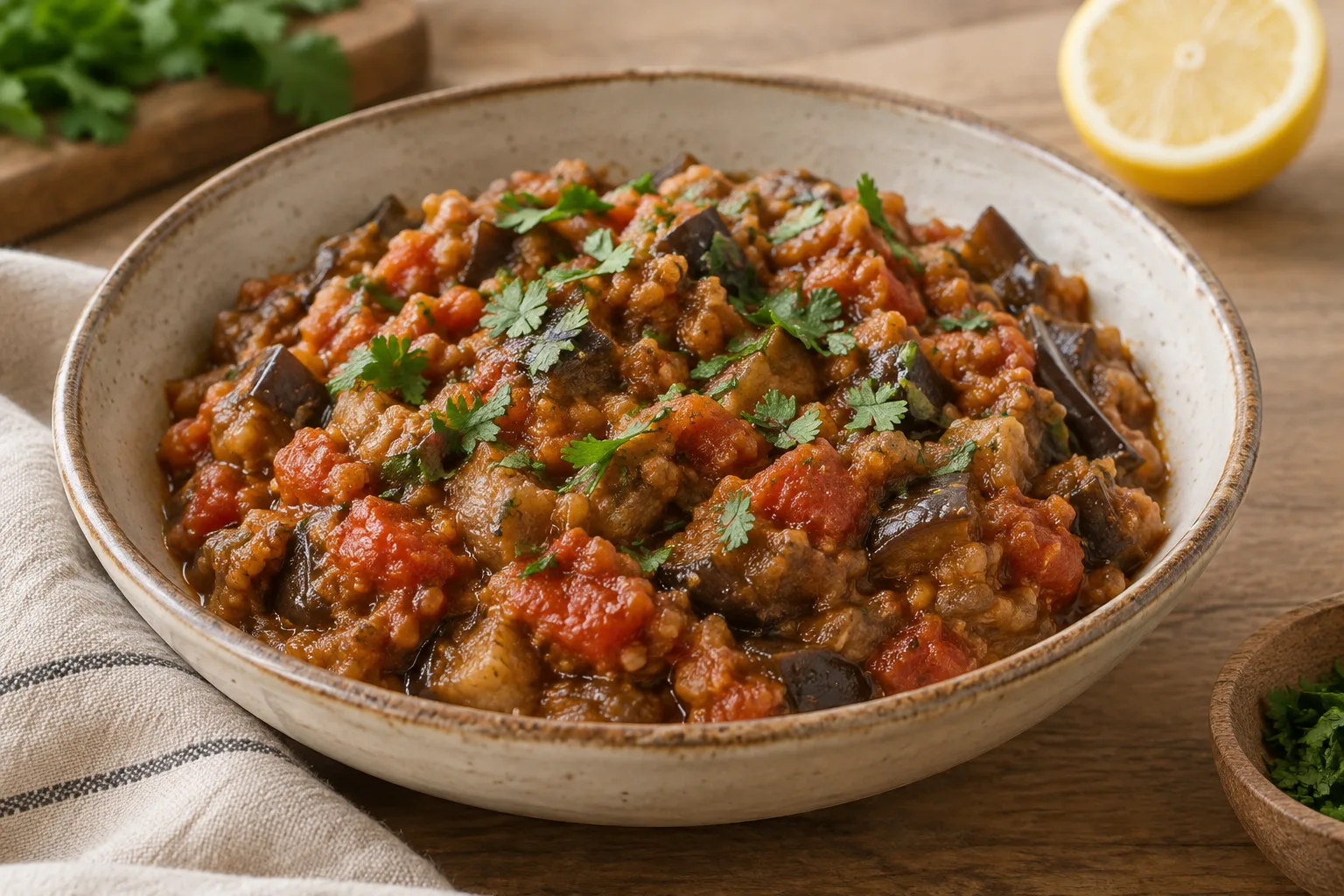
In aubergine and tomato zaalouk, the vegetables are cooked covered in a pan, mashed into a thick textured mixture and finished uncovered.

Scope, method and limitations
Population or sample
Identified KitchenPause recipes associated with Morocco; no household sample.
Geographic scope
Published versions consulted 3 November 2026; recipe examples, without a population consumption period.
Definition and method
Reading of the selected recipes’ complete preparation instructions, retaining their technical differences.
Comparison limitations
Partial qualitative coverage of concrete examples. Does not measure national method frequency or prevalence throughout the recipe corpus. Times or amounts are not transferred between recipes.
Food preservation
Qualitative descriptionCultural context

Khlii is described as meat cut into strips, salted and macerated, dried and cooked; the product is coated with a mixture of fat or oil.

Scope, method and limitations
Population or sample
Described Moroccan traditional product, without a household sample or use survey.
Geographic scope
Technical description presented by the Moroccan delegation in 2015; no consumption observation period.
Definition and method
Reading of the product description in an FAO/WHO working document on dried meats.
Comparison limitations
Partial qualitative coverage of a product, not household preservation frequency. The description sets no times, temperatures or shelf life and does not establish a current standard.
Fermented foods
Qualitative descriptionCultural context

A study of traditional Moroccan lben identified lactic acid bacteria and yeasts as dominant microorganisms. It also tested selected cultures in experimental versions of this fermented dairy product.

Scope, method and limitations
Population or sample
Characterized traditional product and experimental preparations; not a consumer sample.
Geographic scope
Morocco; article published in 2014. The abstract does not specify collection or experimental dates.
Definition and method
Reading of the original abstract of microbiological, biochemical and sensory research; not the full article.
Comparison limitations
Partial qualitative coverage of the studied lben. Does not show that all versions contain the same microorganisms or measure consumption or home-fermentation frequency. No shelf life established.
Kitchen equipment
Quantitative findingSurvey

Households equipped with a refrigerator: national 95.8%, urban 97.0%, rural 93.1%.

Scope, method and limitations
Observation period
2024
Unit
% households equipped with a refrigerator
Population or sample
Moroccan households, with urban/rural breakdown, in the National Employment Survey.
Geographic scope
Observation 2024, reproduced in the social indicators, 2026 edition.
Definition and method
Equipment rate published in Table 5.19, sourced from the employment survey; not a census rate.
Comparison limitations
Partial coverage of one appliance. Does not measure use, working condition, temperature or effective food storage, or provide oven, microwave or pressure-cooker rates.

Drinks

3/3
Drinks — Morocco
IndicatorFindings and context
Everyday drinks
Quantitative findingSurvey

Tea (urban): 138.6; Tea (rural): 163.8; Tea (national): 148.7; Coffee (urban): 64.1; Coffee (rural): 60.3; Coffee (national): 62.6; Aromatic plants (urban): 21.4; Aromatic plants (rural): 16.9; Aromatic plants (national): 19.6 DH per person per year.

Scope, method and limitations
Observation period
2013–2014
Unit
DH/person/year
Population or sample
People living in ordinary households in Morocco; collective households excluded.
Geographic scope
Annual mean per person; collection July 2013–June 2014.
Definition and method
National household consumption and expenditure survey, selected sample 15970 households spread over the year.Daily and retrospective acquisition records; published means reproduced.
Comparison limitations
Partial historical coverage of expenditure on tea, coffee and aromatic plants. Amounts in dirhams, not beverage volumes or individual intake. Does not cover all beverages or establish frequencies or servings.
Coffee and tea preparation
Quantitative findingSurvey

Tea (urban): 2.15; Tea (rural): 2.73; Tea (national): 2.38; Coffee (urban): 0.91; Coffee (rural): 1.14; Coffee (national): 1.01 kg per person per year.

Scope, method and limitations
Observation period
2013–2014
Unit
kg/person/year; tea and coffee product weights
Population or sample
People living in ordinary households in Morocco; collective households excluded.
Geographic scope
Annual mean per person; collection July 2013–June 2014.
Definition and method
National household consumption and expenditure survey, selected sample 15970 households spread over the year.Daily and retrospective acquisition records; published means reproduced.
Comparison limitations
Partial historical coverage: household estimates of tea and coffee product weights. Not litres of prepared drink, cups or measured individual intake. No conversion to doses or assumption of a particular preparation.
Drinks with meals
Qualitative descriptionCultural context

In Souss-Massa, tea is described as an accompaniment to amlou offered to guests, in the context of the Ramadan table.

Scope, method and limitations
Population or sample
Culinary context of families and a Souss cooperative; no representative sample.
Geographic scope
Souss-Massa; cultural description published 13 March 2026, without a consumption survey.
Definition and method
Reading of a regional description with testimony on ingredients and serving.
Comparison limitations
Partial qualitative coverage, focused on Souss and Ramadan.No consumption quantities or proportions; not representative of all Moroccan households.

Nutrition and dietary patterns

3/3
Nutrition and dietary patterns — Morocco
IndicatorFindings and context
Energy and nutrients
Quantitative findingObserved intake

Median daily intakes were 2065 kcal of energy, 67 g of protein, 290 g of carbohydrates, 72 g of fat and 21 g of dietary fibre.

Scope, method and limitations
Observation period
2018–2022
Unit
kcal/person/day; g/person/day
Population or sample
507 adults from the Rabat–Salé–Kénitra region.
Geographic scope
Regional study conducted from 2018 to 2022 in urban and rural areas.
Definition and method
Two-stage sampling and a diet history survey. Median estimated intakes as reported in Table 2.
Comparison limitations
Partial coverage of the Moroccan population. Estimates rely on participants’ reports and describe the regional sample during the study period.
Salt and sugars
Quantitative findingObserved intake

Before and during Ramadan, respectively, median sodium intakes were 3688 and 3928 mg per day, and median sucrose intakes were 17% and 18% of total energy.

Scope, method and limitations
Observation period
2018
Unit
mg sodium/person/day; sucrose % of total energy
Population or sample
340 fasting adults from Rabat–Salé–Kénitra, one per household.
Geographic scope
Regional survey in 2018, covering one week before Ramadan and one week during the month.
Definition and method
Dietitians collected diet histories. Food amounts were estimated with a picture guide and nutrients calculated with Bilnut.
Comparison limitations
Partial evidence from fasting adults in that region and those weeks. Sodium is expressed in mg and sucrose as a share of energy. These measures do not estimate grams of salt or total, added or free sugars.
Dietary patterns
Quantitative findingSurvey

29.9% scored below 5 on the simplified Mediterranean diet adherence index, which the study defined as low adherence.

Scope, method and limitations
Observation period
2008
Unit
% of adults with complete dietary data; score points
Population or sample
2214 adults with complete dietary data from a Moroccan household sample.
Geographic scope
Cross-sectional survey conducted in May 2008.
Definition and method
In-home interviews about usual food frequency. The index uses reported frequencies and thresholds based on the sample medians.
Comparison limitations
Partial historical coverage of one dietary pattern. The score classification does not measure how many people identified as vegetarian, vegan or flexitarian.

Shopping, prices and waste

7/7
Shopping, prices and waste — Morocco
IndicatorFindings and context
Food expenditure
Quantitative findingSurvey

Mean annual food expenditure: 7887 DH per person. Food share of the total budget: national 38.2%, urban 35.2%, rural 48.6%.

Scope, method and limitations
Observation period
2022–2023
Unit
DH/person/year; % total consumption budget
Population or sample
People represented by Morocco’s National Household Living Standards Survey.
Geographic scope
Survey 2022–2023; tables label the period 2022. Amounts in dirhams at 2022 prices.
Definition and method
Published consumption-expenditure estimates and budget coefficients. The aggregate includes valued own-consumption and in-kind benefits, not only cash payments.
Comparison limitations
Partial historical coverage of the report’s analytical food grouping. Not the COICOP food and non-alcoholic beverage category. No conversion to monthly spending or inference of food intake or fixed-basket prices.
Cost of a common basket
Quantitative findingPurchases

The medium Ramadan basket was advertised from MAD 195.00. It contained 1 kg sugar, 5 kg soft wheat flour, 1 kg lentils, 500 g chickpeas, 72 cl double-concentrated tomato paste, 2 L soybean oil, 200 g green tea, 1 kg honey-flavoured preparation, 500 g Majhoul dates and 200 g ground coffee.

Scope, method and limitations
Observation period
2026 (observed 2026-11-03)
Unit
MAD per advertised bundle (starting price); listed kg, g, L and cl
Population or sample
One basket listed by Carrefour Supermarket through Bringo in Morocco.
Geographic scope
Online offer observed on 3 November 2026.
Definition and method
Dated reading of the retail listing and its quantities. The advertised basket price is retained in Moroccan dirhams.
Comparison limitations
Partial coverage of one bundle and retail channel. This is an advertised starting price, subject to availability and outlet terms. The capture does not verify payment or delivery charges.
Cost of specific meals
Quantitative findingSurvey

Advertised menu-item prices: vegetable tagine, 30 DH; chef’s couscous with saffron and seven vegetables, with lben, 80 DH; meat skewers with saffron, fries and omelette, 90 DH.

Scope, method and limitations
Observation period
2026 (observed 2026-11-03; menu update date unstated)
Unit
DH/listed menu item; serving size and count unstated
Population or sample
Menu of one establishment: Auberge Pied du Siroua, Tagmoute, near Taliouine.
Geographic scope
Online menu observed 3 November 2026; its update date is not stated.
Definition and method
Dated capture and direct reading of the establishment’s menu. Dirham prices and advertised accompaniments retained, without euro conversion or a recorded purchase.
Comparison limitations
Partial coverage of prices per listed menu item, not per weighed serving or diner: serving size and count are unstated. Advertised prices, not verified payments or a national mean; subject to change.
Grocery shopping locations
Quantitative findingSurvey

When asked about ordering groceries online, 62.5% answered “never” and 4.7% said they did so for the first time.

Scope, method and limitations
Observation period
2020
Unit
% of survey respondents
Population or sample
340 adult respondents living in Morocco.
Geographic scope
Survey conducted from September 15 to November 5, 2020, during the pandemic.
Definition and method
Voluntary online questionnaire in Arabic and French, distributed through non-probability snowball sampling.
Comparison limitations
Partial coverage of one shopping channel during the pandemic. These are sample responses without an estimate of spending by channel or national representativeness.
Shopping frequency
Quantitative findingSurvey

54.71% reported going shopping less often than usual, 30% as often as usual and 15.29% more often.

Scope, method and limitations
Observation period
2020
Unit
% of survey respondents
Population or sample
340 adult respondents living in Morocco.
Geographic scope
Survey conducted from September 15 to November 5, 2020, during the pandemic.
Definition and method
Voluntary online questionnaire in Arabic and French, distributed through non-probability snowball sampling.
Comparison limitations
This is a reported change relative to each participant’s usual habits. The survey did not measure the number of trips per week. The sample is not representative of Morocco.
Prepared food and delivery
Quantitative findingSurvey

Share of meals and drinks consumed outside home in food expenditure: national 12.8%, urban 14.8%, rural 7.9%.

Scope, method and limitations
Observation period
2022–2023
Unit
% food expenditure; meals and drinks outside home
Population or sample
People represented by Morocco’s National Household Living Standards Survey.
Geographic scope
Survey 2022–2023; tables label the period 2022. Amounts in dirhams at 2022 prices.
Definition and method
Published consumption-expenditure estimates and budget coefficients. The aggregate includes valued own-consumption and in-kind benefits, not only cash payments.
Comparison limitations
Partial historical coverage of spending outside home, not ordering frequency, home delivery or the share of people buying prepared food. Denominator is food expenditure, not the total budget.
Household food waste
Quantitative findingSurvey

Published estimates of self-reported food waste: fresh vegetables and salads, 98 g per household per week; cheese, 9 g per household per week.

Scope, method and limitations
Observation period
2022
Unit
g/household/week; self-reported category means
Population or sample
442 adult residents of Kenitra province reporting their household food waste.
Geographic scope
Collected January–June 2022; recall of the week preceding the survey.
Definition and method
Voluntary face-to-face and online survey. Published means for selected categories are reproduced; not direct household weighing.
Comparison limitations
Partial local coverage, subject to recall and participant selection. Not representative of all Morocco or all food waste. Edible/inedible separation is not detailed for these categories. No annualization or conversion to kg per person.

Seasons and celebrations

2/2
Seasons and celebrations — Morocco
IndicatorFindings and context
Seasonal produce
Qualitative descriptionCultural context

In Taliouine, saffron flowers are harvested roughly from mid-October to mid-November. The flowers are picked by hand at dawn.

Scope, method and limitations
Population or sample
Saffron producers around Taliouine.
Geographic scope
Approximate local autumn harvest calendar.
Definition and method
A harvest account from a local establishment, cross-checked against a cooperative’s account of autumn picking.
Comparison limitations
Partial coverage of one product and area. The window concerns fresh flowers in the fields and can vary from season to season.
Celebration food
Qualitative descriptionCultural context

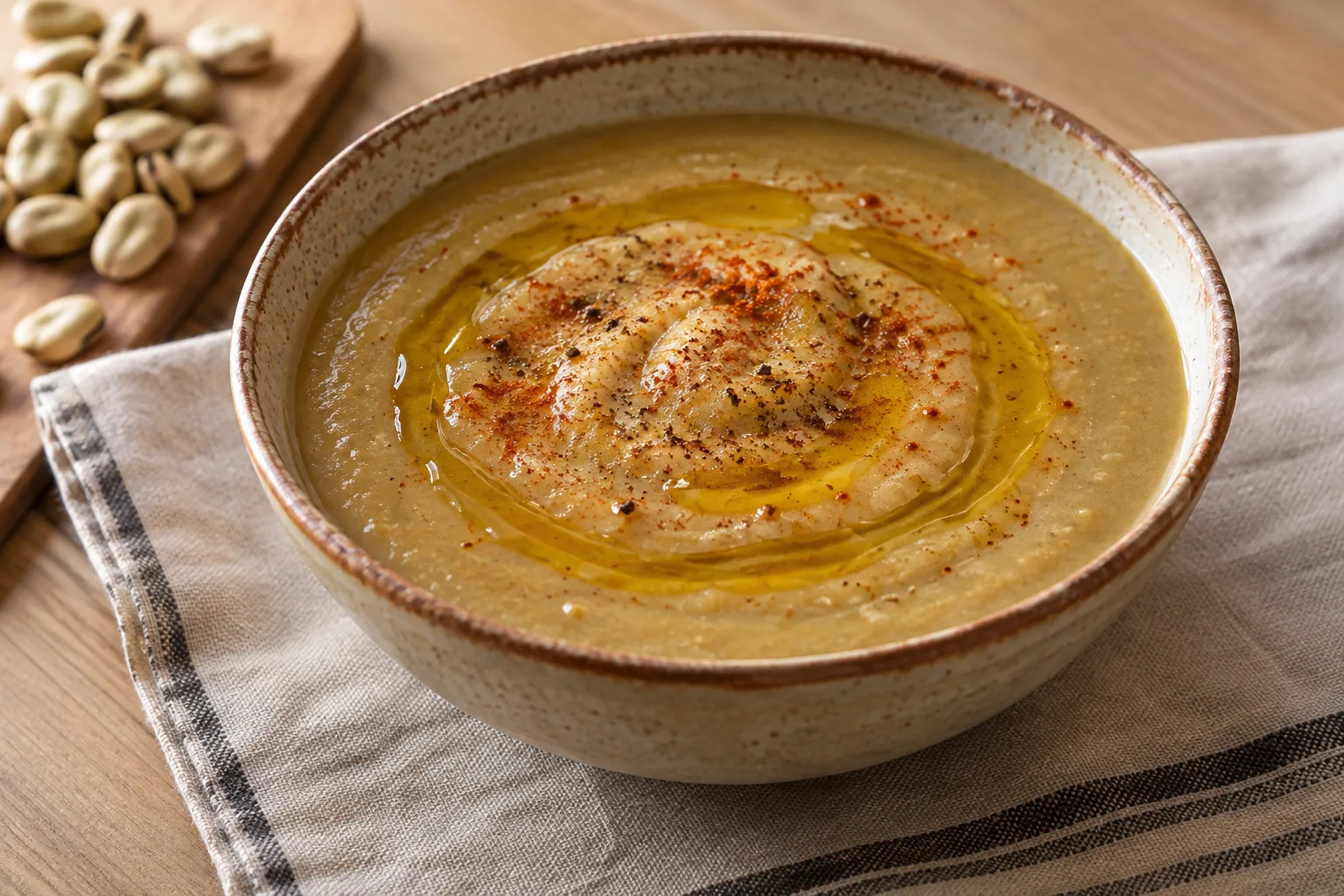
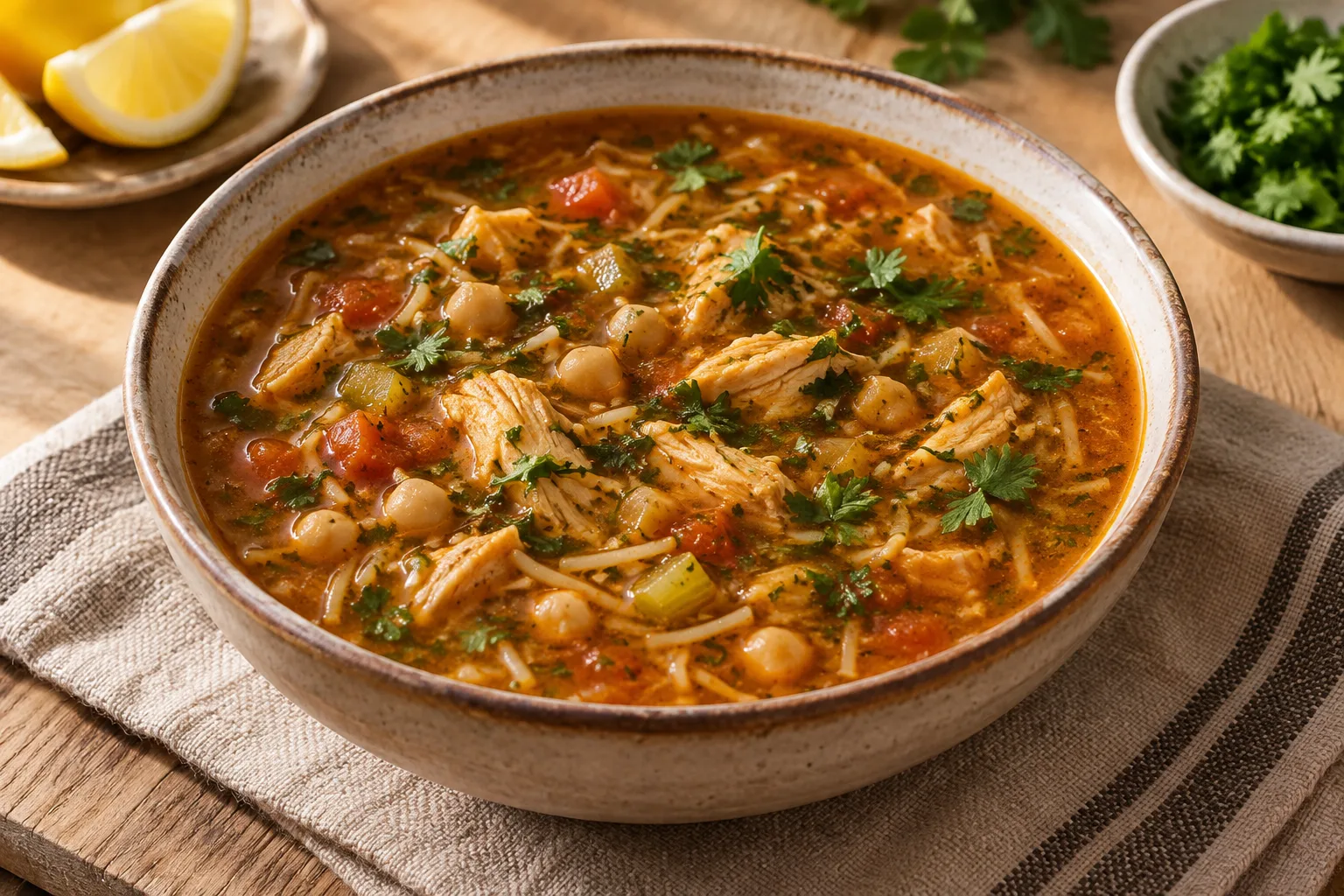
During Ramadan, harira is a soup associated with breaking the fast. One documented preparation uses pulses, tomatoes, pasta and flour. Chebakia is a sweet served with soup or tea.

Scope, method and limitations
Population or sample
Moroccan table traditions during Ramadan.
Geographic scope
Gregorian dates vary with the Islamic lunar calendar.
Definition and method
Qualitative description of dishes and occasions in the national tourist office’s documentation.
Comparison limitations
Selected festive examples. Recipes and accompaniments may vary.

Coverage in progress

The editorial guide for this country is in preparation. You can already explore its recipes; regional attributions are added when documented.

Guide available in other languages: Español

Places and communities

One country, many cuisines

An initial selection of regions to explore. Culinary boundaries may differ from administrative divisions.

Morocco

Fez

Morocco

Marrakech

Morocco

Souss y Agadir

Cook

Recipes connected with Morocco

Each recipe documents one version. Geographic associations do not imply an exclusive origin.
Moroccan Chebakia
Image generated by the Kitchenpause team
150 minAdvanced

Moroccan Chebakia

Spiced dough is shaped into interwoven pastries, fried, dipped in honey, and finished with sesame. Makes about 8 servings.

View recipe
Moroccan msemen
Image generated by the Kitchenpause team
95 minIntermediate

Moroccan msemen

A square, flaky Moroccan flatbread made with flour, semolina and thinly stretched, folded layers of dough. Makes 6.

View recipe
Moroccan chicken harira
Image generated by the Kitchenpause team
85 minIntermediate

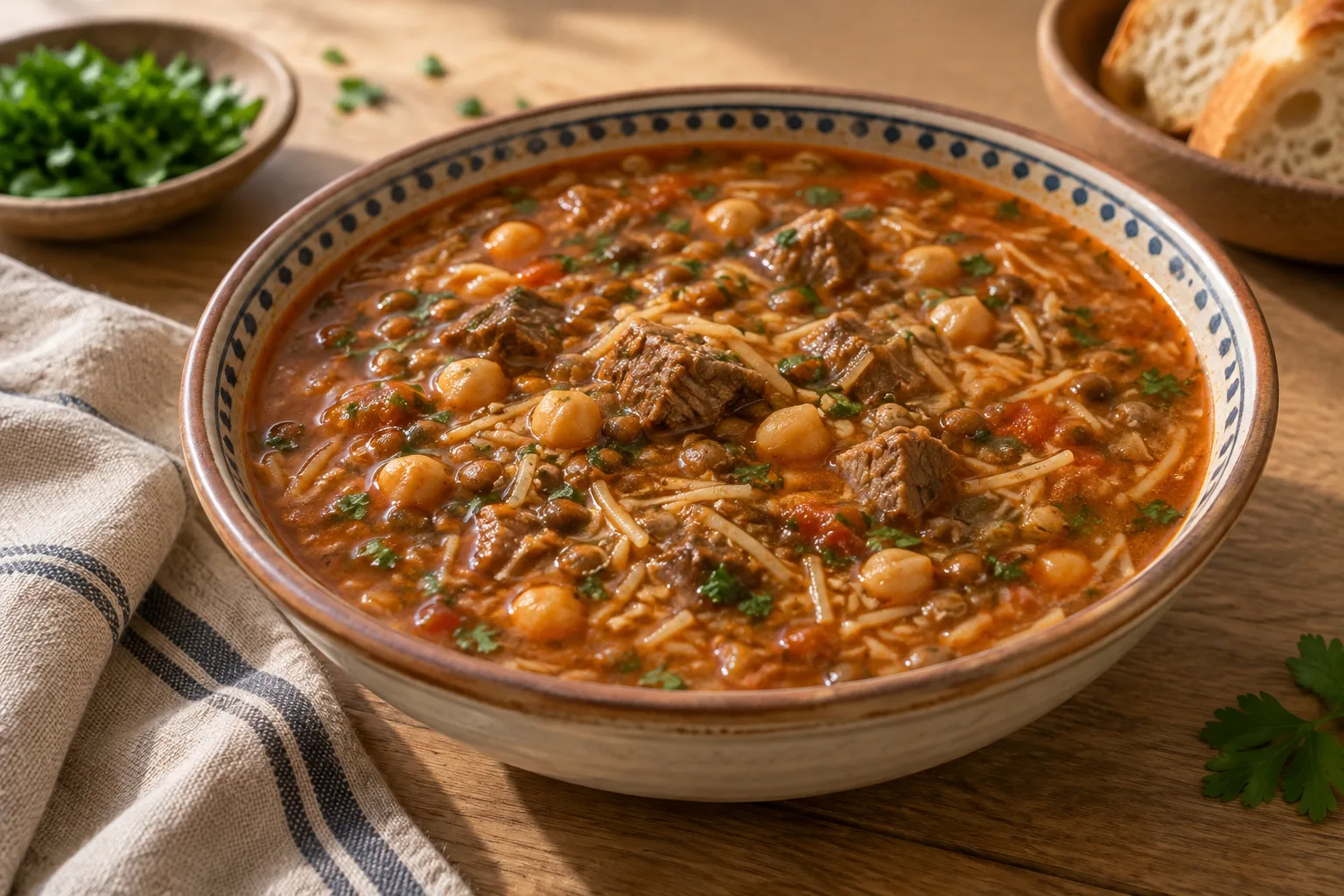
Moroccan chicken harira

Moroccan tomato soup with chicken, chickpeas, noodles, and fresh herbs, seasoned with ginger, turmeric, cinnamon, and saffron.

View recipe
Moroccan Semolina Baghrir
Image generated by the Kitchenpause team
90 minEasy

Moroccan Semolina Baghrir

Moroccan semolina pancakes with a hole-filled surface, cooked on one side and served with a syrup of honey, butter, and orange blossom water.

View recipe

Sources consulted

Read the sources and each document’s scope. A heritage inscription concerns a particular practice, not all of a country’s cuisine.

  1. Présentation des premiers résultats de l’Enquête nationale sur l’emploi du temps www.hcp.ma/Presentation-des-premiers-resultats-de-l-Enquete-Nationale-sur-l-Emploi-du-Temps_… Haut-Commissariat au Plan Consulted: November 3, 2026
  2. Tableaux statistiques de l’Enquête nationale sur l’emploi du temps des Marocains (2011–2012) www.hcp.ma/file/230740/ Haut-Commissariat au Plan Consulted: November 3, 2026
  3. Mediterranean diet pyramid of an adult Moroccan population www.gup.ugal.ro/ugaljournals/index.php/food/article/download/5923/5174 Barakat et al. Consulted: November 3, 2026
  4. Enquête nationale sur la consommation et les dépenses des ménages2013/2014: rapport de synthèse, Tables5,11,13 www.hcp.ma/region-drda/attachment/1125796/ Haut-Commissariat au Plan du Royaume du Maroc Consulted: November 3, 2026
  5. Les délices de la gastronomie marocaine: épices www.visitmorocco.com/fr/decouvrir-le-maroc/gastronomie Office National Marocain du Tourisme Consulted: November 3, 2026
  6. Amlou: Souss culinary heritage,13March2026 maroc.ma/fr/actualites/amlou-une-saveur-du-patrimoine-culinaire-qui-orne-les-tables-du-souss… Portail national du Maroc; original cooperative interview Consulted: November 3, 2026
  7. Morocco KitchenPause published recipe corpus,6 unique recipes,3November2026 www.kitchenpause.com/es/recetas?country=MA KitchenPause; native public recipe corpus Consulted: November 3, 2026
  8. Social-ecological influences on unhealthy dietary behaviours among Moroccan adolescents: a mixed-methods study www.cambridge.org/core/journals/public-health-nutrition/article/socialecological-influences-… El-Ammari et al.; Public Health Nutrition; Cambridge University Press Consulted: November 3, 2026
  9. Food & Drinks: Moroccan starters, main dishes and pastries www.visitmorocco.com/en/travel-info/food-drinks Moroccan National Tourism Office Consulted: November 3, 2026
  10. Les repas des Marocains: Casablanca and rural Souss; survey2012–2013 agritrop.cirad.fr/597050/1/Anthropology%20of%20the%20Middle%20East%20-%20Les%20repas%20des%2… Tibère, Poulain, Bricas, Boumeggouti and Fischler; Anthropology of the Middle East2020; CIRAD author repository Consulted: November 3, 2026
  11. Guide Marocain de Nutrition: reference portions; legal deposit2012 www.sante.gov.ma/Publications/Guides-Manuels/Documents/GUIDE-M-P.pdf Ministère de la Santé, Royaume du Maroc Consulted: November 3, 2026
  12. KitchenPause Morocco recipe baghrir: actual published preparation steps www.kitchenpause.com/es/recetas/baghrir-marroqui-de-semola KitchenPause; identified published recipe Consulted: November 3, 2026
  13. KitchenPause Morocco recipe msemen: actual published preparation steps www.kitchenpause.com/es/recetas/msemen-marroqui KitchenPause; identified published recipe Consulted: November 3, 2026
  14. KitchenPause Morocco recipe zaalouk: actual published preparation steps www.kitchenpause.com/es/recetas/zaalouk-marroqui-de-berenjena-y-tomate KitchenPause; identified published recipe Consulted: November 3, 2026
  15. REP15/AFRICA; Moroccan delegation description of khlii,2015 www.fao.org/input/download/report/918/REP15_CAf.pdf Joint FAO/WHO Codex Alimentarius; Moroccan delegation Consulted: November 3, 2026
  16. Influence of autochthonous lactic acid bacteria and enzymatic yeast extracts on the microbiological, biochemical and sensorial properties of Lben generic products. doi.org/10.1017/S0022029914000119 Mangia, Garau, Murgia, Bennani and Deiana; Journal of Dairy Research Consulted: November 3, 2026
  17. Les indicateurs sociaux du Maroc,2026;Table5.19householdrefrigerators2024 www.hcp.ma/file/248623/ Haut-Commissariat au Plan; Enquête nationale sur l’emploi Consulted: November 3, 2026
  18. ENNVM2022–2023: food expenditure and meals/beverages outside home www.hcp.ma/file/243318/ Haut-Commissariat au Plan Consulted: November 3, 2026
  19. Panier Ramadan Moyen Format, Carrefour via Bringo www.bringo.ma/fr_MA/stores/carrefour-supermarket/panier-ramadan-18/products/panier-essentiel… Bringo / Carrefour Supermarket Consulted: November 3, 2026
  20. Au goût du safran: Auberge Pied du Siroua advertised menu, observed3November2026 www.aubergesiroua.com/menu Auberge Pied du Siroua; first-party online menu and dated primary observation record Consulted: November 3, 2026
  21. Exploring Household Food Dynamics During the COVID-19 Pandemic in Morocco www.frontiersin.org/journals/nutrition/articles/10.3389/fnut.2021.724803/full El Bilali et al., Frontiers in Nutrition Consulted: November 3, 2026
  22. Household Food Waste in Morocco: An Exploratory Survey in the Province of Kenitra orgprints.org/id/eprint/54108/1/Belfakira%20et%20al.-2024.pdf Belfakira et al.; Sustainability2024; author-deposited published version in Organic Eprints Consulted: November 3, 2026
  23. Food Expenditure and Food Consumption before and during Ramadan in Moroccan Households pmc.ncbi.nlm.nih.gov/articles/PMC7803226/ Barakat et al. Consulted: November 3, 2026
  24. Adherence to a Mediterranean diet in Morocco and its correlates link.springer.com/article/10.1186/1471-2458-12-345 El Rhazi et al., BMC Public Health Consulted: November 3, 2026
  25. Safran de Taliouine : la récolte www.aubergesiroua.com/safran-taliouine Auberge Pied du Siroua Consulted: November 3, 2026
  26. Taliouine, terre du safran cooperativeyacout.com/fr/origine/safran-taliouine Coopérative Yacout Consulted: November 3, 2026
  27. Les spécialités typiques du Maroc www.visitmorocco.com/fr/informations-pratiques/d%C3%A9guster Office National Marocain du Tourisme Consulted: November 3, 2026
  28. Horloge locale et jours fériés www.visitmorocco.com/fr/informations-pratiques/horloge-locale-jours-feries Office National Marocain du Tourisme Consulted: November 3, 2026
  29. Gastronomía de Marruecos visitmorocco.com/en/discover-morocco/gastronomy Office National Marocain du Tourisme

We use session and security technologies to provide our features. Only with your permission do we load Google Analytics to measure visits and Google Maps on Contact. Choose separately, reject or accept both.

Withdraw either permission here. Withdrawing analytics reloads the page to unload the running tag.

Cookie policy