- Category
- Vegetables
- State
- Canned
- Usual unit
- g
What it is
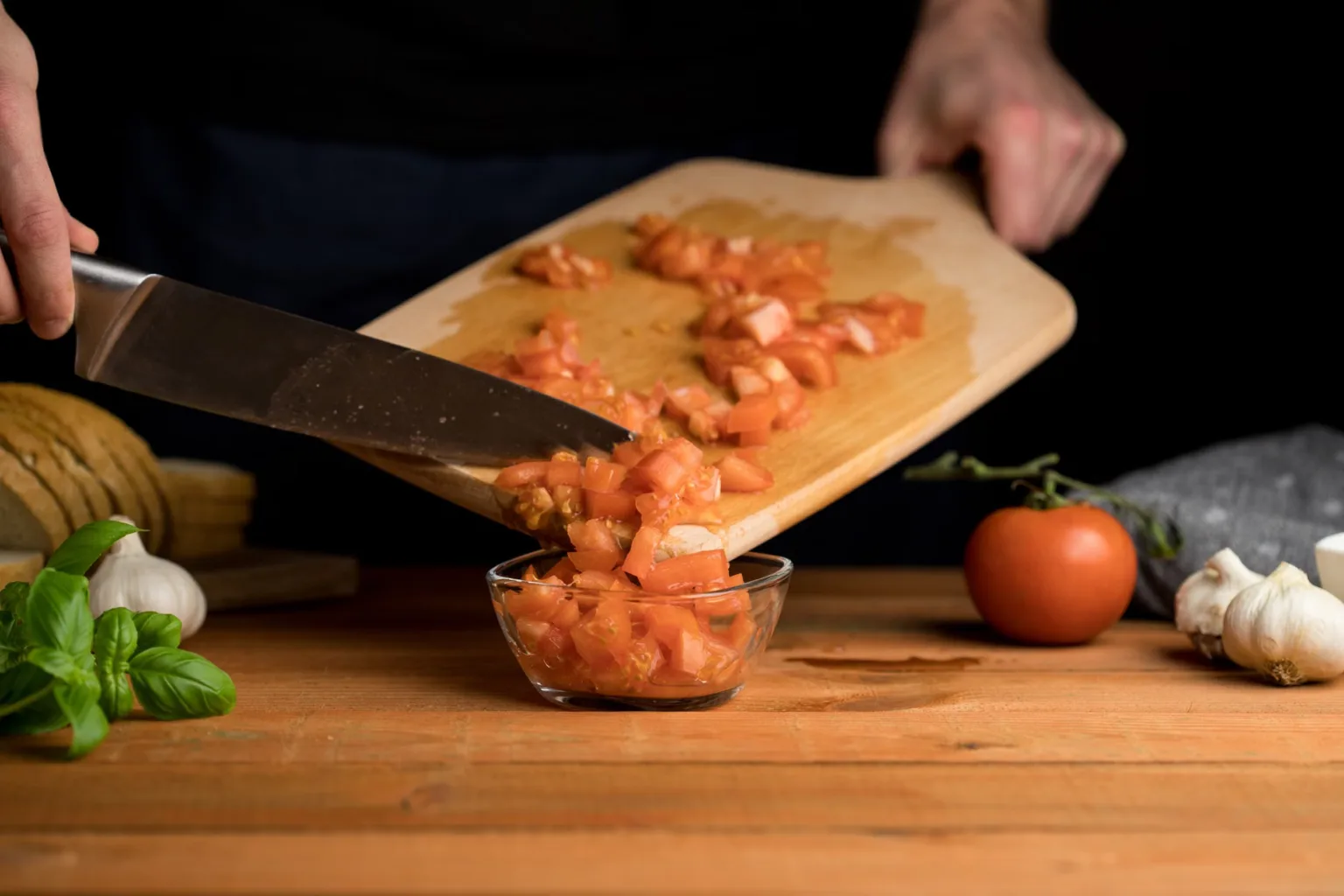
Canned chopped tomatoes are tomatoes cut into pieces and packed for preservation. They are commonly sold in cans or other containers, often with tomato juice; ingredients and seasoning can vary by product. The pieces may differ in size, and the amount of packing liquid is not necessarily the same in every tin. This format lets you add chopped tomato to a dish without washing and cutting fresh tomatoes. It is different from passata, which is generally smoother, and from canned whole tomatoes, which need to be broken up or chopped before use. Check the ingredient list to see what is in the particular product, especially if you are managing added salt or other ingredients.
When to use it
Use canned chopped tomatoes when you want visible tomato pieces in a cooked sauce, soup or stew, particularly in dishes where the tomatoes can soften during gentle cooking. They are a useful pantry option when fresh tomatoes are not available or when you want to skip the washing and chopping. Choose a smoother tomato product if you do not want pieces, or fresh tomatoes if a recipe relies on their firm raw texture. Since the amount of packing liquid and seasoning can vary, account for the liquid in the tin and taste before adding salt.
How to use it
Open the container and add the tomatoes with their juice, or drain some of the liquid if your recipe needs a thicker mixture. For a sauce, cook them with a base such as onion or garlic until the pieces soften; stir and break them up if you want a less chunky texture. Add them to soups and stews during cooking so they can soften and blend with the other ingredients. To make a mixture more concentrated, cook it uncovered, stirring occasionally so it does not stick. Taste before adding salt or other seasoning, especially if the product already contains salt or seasonings. Follow any use instructions on the label.
Flavour and texture
They provide tomato flavor, though the exact taste can vary with the product and any added ingredients. The pieces give a more noticeable texture than passata; as they cook, they soften and may partly break down. The packing juice can make a sauce more liquid, so add it in an amount that suits the consistency you want.
How to choose it
Check the ingredient list and choose a product that suits the dish. Some products contain tomato and juice, while others may also include salt or seasonings. Make sure the package is intact, and read any storage or use instructions on the label. Cut size and the amount of packing liquid affect the finished dish, so choose a product with a texture that suits whether you want a chunky or more even sauce.
Storage
Store an unopened container according to the manufacturer’s directions, and follow any special storage or use instructions on the label. After opening, follow the package directions if provided and handle the product hygienically. Do not assume an opened container can be stored in the same way as a sealed one. If storage guidance is unavailable, consult the product information or official food-safety advice.
Substitutions
Canned whole tomatoes can work if you chop or break them up before adding them. Passata is another option when pieces are not essential, but its smoother texture can change the character of the dish. Adjust the amount of liquid and seasoning after tasting, since canned products are not all made the same way.
Common mistakes
Adding all the packing juice without checking the recipe can make a sauce too thin. Salting before tasting is another common misstep because some products already contain salt. Do not expect the tomato pieces to stay firm through a long simmer; they soften and may break down. Do not improvise a home-canning process for tomatoes or sauce: use current, tested instructions for home preservation.
Safety and allergens
Check the label for ingredients and any storage or use instructions. Handle the product hygienically, and do not use a container that is damaged or shows unusual signs. For home canning, follow a tested recipe and its processing directions; simply heating and sealing a container is not enough.
Culinary uses
- Base for cooked tomato sauces
- Ingredient for soups, stews and braises
Recommended techniques
- Simmer to soften and blend the pieces
- Cook uncovered to reduce excess liquid
Pairs well with
- Pasta
- Onion and garlic
Frequently asked questions
Do I need to drain canned chopped tomatoes?
Not necessarily. Keep the juice if the dish needs the liquid, or drain some to control the consistency. Choose based on the texture you want.
Are canned chopped tomatoes the same as passata?
No. Chopped tomatoes retain pieces, while passata is generally smoother. Passata can substitute when pieces are not important, but the texture will differ.
Can I use them for home canning?
Do not improvise a canning process. Use current, tested instructions for preserving tomatoes or sauces at home, including the specified ingredients and processing steps.
Ingredient allergens
Allergen listThere are no verified associations for these ingredients yet.
Estimated nutrition
- Fat
- 0.25 g
- Saturates
- 0.03 g
- Carbohydrate
- 3.47 g
- Sugars
- 2.55 g
- Fibre
- 1.9 g
- Protein
- 0.79 g
- Salt
- 0.29 g
Sources and review
Automatically researched, cross-checked and validated content. Sources consulted:
- En el etiquetado alimentario hay algunas menciones que son obligatorias eletiquetadocuentamucho.aesan.gob.es/obligatoria.html
- Romanica Olomucensia : «¿Qué pinga es esto?». Usos disfemísticos en el español de Cuba doi.org/10.5507/ro.2021.007
- La historia del tomate en la cocina | Hida hida.es/historia-del-tomate-en-la-cocina/
- Los 6 mejores tipos de tomate y cómo usarlos en cocina mercadosantamariadelacabeza.es/blog/tesoros-gastronomicos/tipos-de-tomate
- Vamos a Conservar Alimentos: Tomates extension.psu.edu/vamos-a-conservar-alimentos-tomates/
- Elaboración de Conservas a Presión (Pressure Canning) | VCE Publications | Virginia Tech pubs.ext.vt.edu/348S/348-585S/348-585S.html
- El tomate: Historia, cocina y cultura. Cinco siglos entre ... www.scielo.cl/scielo.php?pid=S0719-49942025000300102&script=sci_arttext&tlng=es
- El tomate en conserva: del tomate pelado al concentrado de tomate - Panepanna panepanna.es/el-tomate-en-conserva-del-tomate-pelado-al-concentrado-de-tomate/
- Para la ciudadanía www.aesan.gob.es/para-la-ciudadania
- The laws of salsa | Servicio de Extensión de OSU extension.oregonstate.edu/es/catalog/sp-50-1003-laws-salsa