- Category
- Vegetables
- State
- Fresh
- Usual unit
- unit
What it is
Red bell pepper, also called sweet red pepper, is the fresh fruit of a sweet pepper variety. It is used as a vegetable in cooking, although botanically it is a fruit. Its flesh is usually firm and juicy, with a mild, somewhat sweet flavor. It is not the same as paprika, the powdered seasoning made from dried, ground peppers. Nor should it be confused with hot chiles: flavor and heat depend on the variety. This profile describes fresh, sweet red bell pepper, not a dried product or a preserved pepper. Color, shape and size can vary among sweet pepper varieties.
When to use it
Use it raw when you want crisp texture and a fresh, mild flavor in salads, sandwiches or snacks served with dip. In hot dishes it works in stir-fries, soups, stews, sauces and fillings, where cooking softens its flesh. Choose it when you want a sweet, mild pepper flavor rather than the more vegetal character a green pepper can bring. If a recipe calls for a specific product, such as a dried pepper or a hot chile, sweet red bell pepper will not reproduce its flavor or function exactly.
How to use it
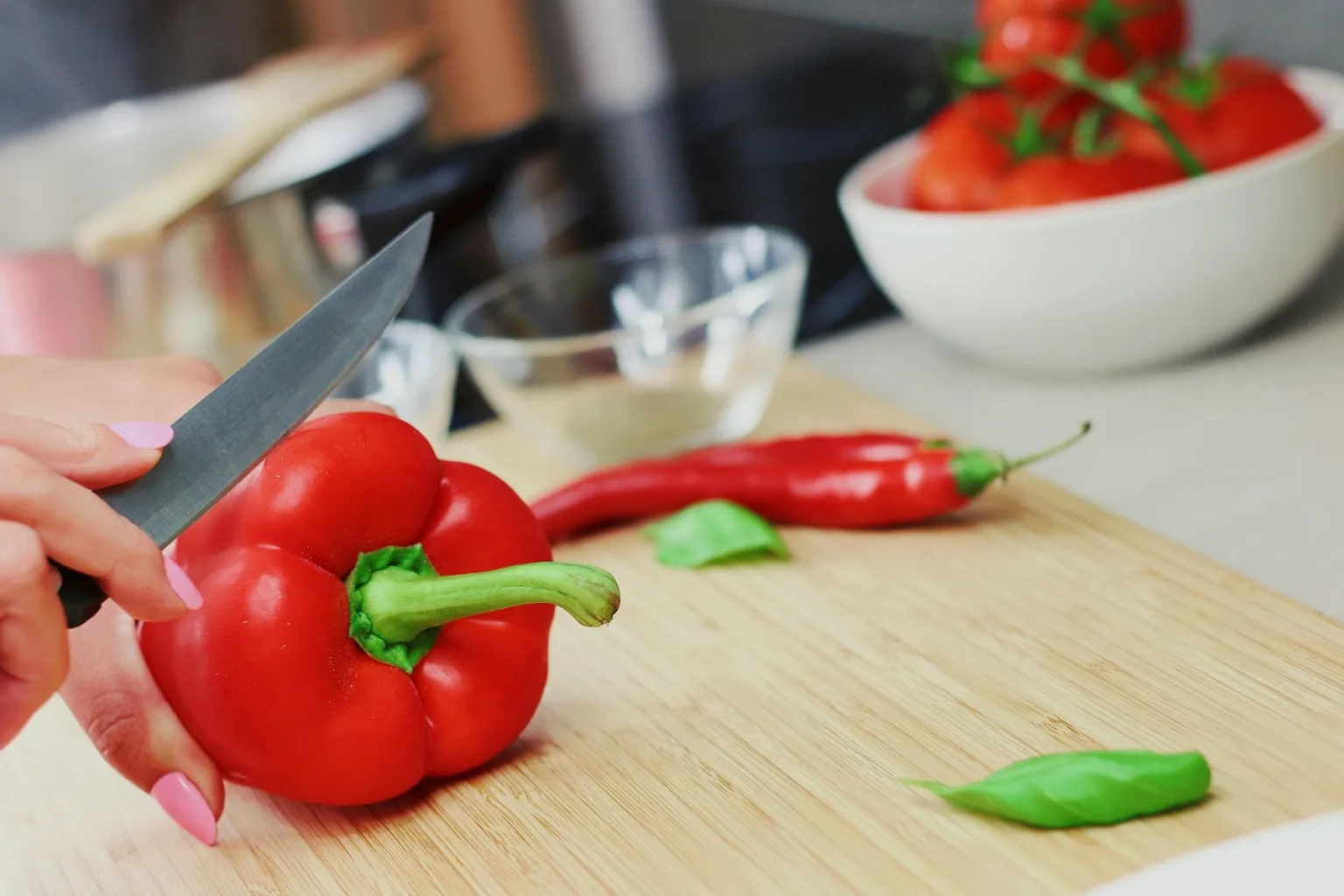
Wash the pepper thoroughly in cold water before cutting; do not use soap, detergent or bleach. Lay it on its side and cut around the stem end to open it. Remove the stem, seeds and inner membrane; rinse the inside if seeds remain. Slice or dice it for salads, salsa, soups, stews and stir-fries, or cut it into larger pieces for roasting or stuffing. Serve it raw for a crisp bite. You can also sauté the strips, roast the pepper or grill it. If stuffing it, remove the seeds and membranes and cook the finished dish according to the recipe instructions.
Flavour and texture
Sweet red bell pepper is generally mild, sweet and aromatic, with juicy, crisp flesh when raw. Cooking softens it and rounds out its flavor. Taste and firmness vary with the variety and stage of maturity, so individual peppers may not be equally sweet or crisp.
How to choose it
Choose peppers that are firm, brightly colored and fresh-looking, with smooth, taut skin. Avoid specimens that are soft, wrinkled, dull, cracked, bruised or visibly damaged. Firm flesh and an intact surface are useful signs when selecting a good-quality pepper; shape and size can vary by variety.
Storage
Store fresh, unwashed peppers in a bag in the refrigerator and aim to use them within about one week. Keep them dry before storage to avoid unnecessary moisture. Wash with cold water just before preparation. Discard the pepper if it is badly deteriorated, or remove a damaged area only if the rest remains in good condition.
Substitutions
Green, yellow or orange sweet bell peppers can stand in for red pepper when the recipe allows another sweet pepper. Green may taste less sweet and more vegetal; color and flavor vary with variety and maturity. Do not substitute a hot chile, paprika, a dried pepper or a jarred pepper without considering that these are different products and can substantially change heat, flavor or texture.
Common mistakes
Confusing fresh red bell pepper with paprika or a hot chile can change a dish because they are not equivalent products. Another common mistake is storing the pepper wet or leaving seeds and membranes in a preparation where a clean texture is wanted. Do not wash it with soap or detergent; cold water is suitable for cleaning it before use.
Safety and allergens
Wash the pepper thoroughly in cold water before preparing it, and do not use soap, detergent or bleach. Fresh peppers can become contaminated during production or handling. Keep utensils and surfaces that contact the food clean.
Culinary uses
- Vegetable for salads and snacks
- Ingredient for cooked dishes, sauces and fillings
Recommended techniques
- Serve raw
- Sauté or stir-fry
- Roast or grill
- Stuff and bake
Pairs well with
- Onion
- Garlic
- Mushrooms
- Beef or chicken
- Rice
Frequently asked questions
Is red bell pepper spicy?
Sweet red bell pepper is generally mild, unlike a hot chile. Check the variety if you need to avoid any unexpected heat.
Should I remove the seeds?
Remove the stem, seeds and inner membrane for most preparations. Rinse the inside if seeds remain attached.
How should I store fresh red bell pepper?
Keep it unwashed in a bag in the refrigerator and aim to use it within about one week.
Ingredient allergens
Allergen listThere are no verified associations for these ingredients yet.
Estimated nutrition
- Fat
- 14.3 g
- Saturates
- 0 g
- Carbohydrate
- 39.3 g
- Sugars
- 3.57 g
- Fibre
- 14.3 g
- Protein
- 10.7 g
- Salt
- 0.98 g
Sources and review
Automatically researched, cross-checked and validated content. Sources consulted:
- Client Challenge doi.org/10.2307/jj.27939689.16
- Pimentón - Wikipedia, la enciclopedia libre es.wikipedia.org/wiki/Piment%C3%B3n
- The Essential Glossary of Cooking Terms for the Culinary Arts - Escoffier www.escoffier.edu/blog/culinary-arts/the-essential-glossary-of-cooking-terms-for-the-culinar…
- El pimiento rojo:¿ una verdura o un condimento? - Grupo Gastronómico El Almirez ggelalmirez.com/el-pimiento-rojo-una-verdura-o-un-condimento/
- Pimientos: variedades y usos en cocina - CocinoPedia.com cocinopedia.com/enciclopedia-gastronomica/pimientos-tipos-y-usos/
- Pimiento rojo Km 0 de Lleida dulce, jugoso y cultivado en huerto propio para ensaladas, salsas y conservas - Km0 km0andanifruits.com/pimiento-rojo-propiedades-y-beneficios-para-la-salud/
- Selecting, Storing, and Serving Ohio Peppers | Ohioline ohioline.osu.edu/factsheet/hyg-5528
- Peppers files-do-not-link.udc.edu/docs/causes/online/Pepper%2010.pdf
- sweet pepper - FoodLink - Purdue Extension extension.purdue.edu/foodlink/food.php?food=sweet%20pepper
- Peppers - National Center for Home Food Preservation nchfp.uga.edu/how/can/canning-vegetables-and-vegetable-products/peppers/
- El Pimiento Y Su Importancia En La Gastronomía Española - Restaurante Romero restaurante-romero.es/el-pimiento-y-su-importancia-en-la-gastronomia-espanola/
- Bell Peppers | UNL Food | Nebraska food.unl.edu/article/bell-peppers/
- Peppers | Home Vegetable Gardening | Illinois Extension | Illinois extension.illinois.edu/gardening/peppers
- Bell Peppers - Food Source Information www.chhs.colostate.edu/fsi/food-articles/produce/bell-peppers/
- Pepper Basics | Home & Garden Information Center hgic.clemson.edu/factsheet/pepper-basics/
- Preserving Those Colorful Garden Peppers extension.psu.edu/preserving-those-colorful-garden-peppers/