- Category
- Dairy and eggs
- State
- Fresh
- Usual unit
- tablespoon
What it is
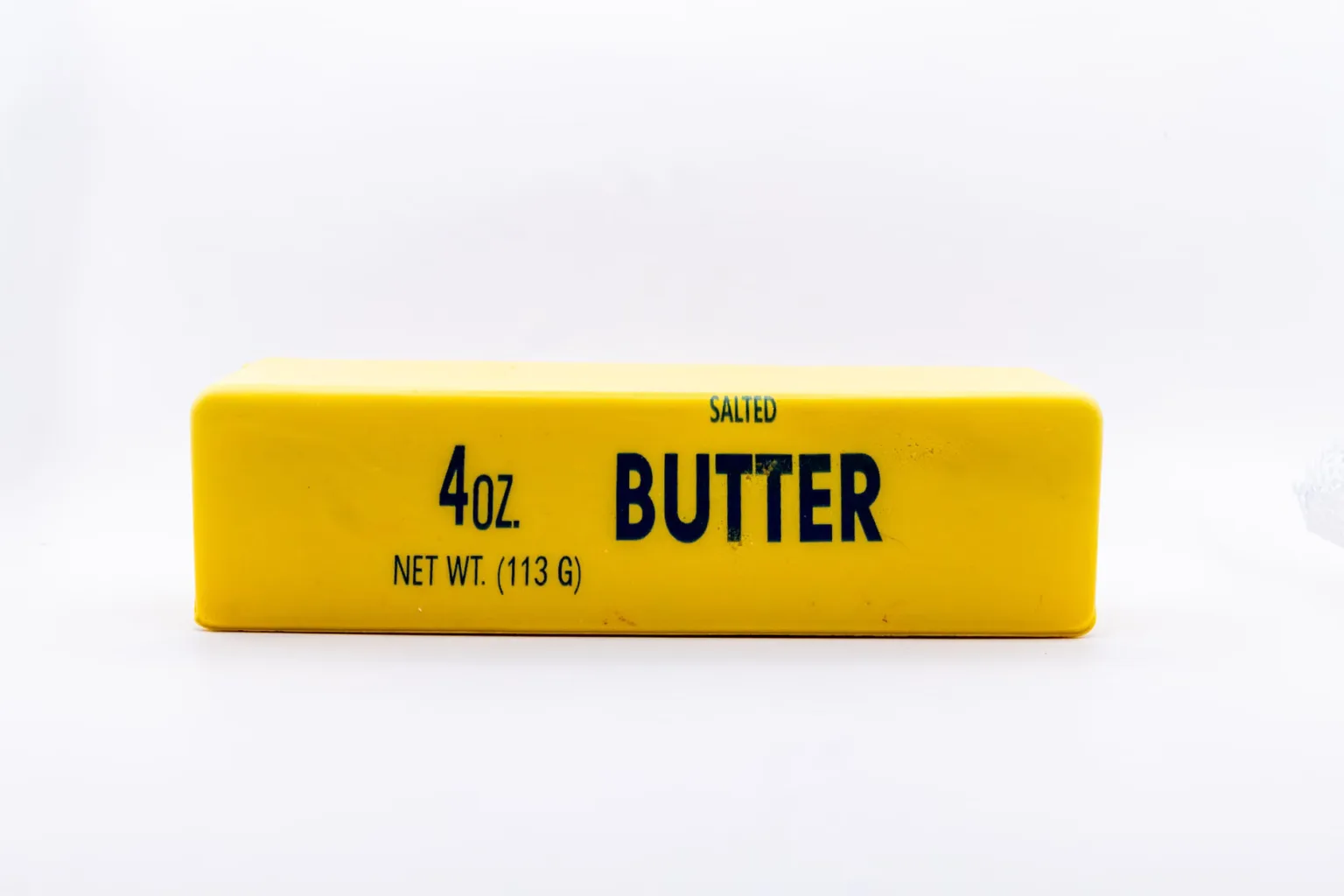
Salted butter is butter made from dairy fat with salt added. Butter itself is produced by churning cream so that the fat separates from other components, then working it into a cohesive mass. Products can differ in form and texture, and the amount or distribution of salt may vary. As a result, salted butters do not all taste equally salty. You can spread it directly, melt it for cooking, or mix it with other ingredients while softened. It is a dairy product and should not be confused with a plant-based spread.
When to use it
Choose it when you want the fat itself to contribute salt and flavor: spread it on bread or toast, use it to finish hot vegetables or potatoes, or add it to enrich a preparation. It can also be used in baking, but remember that it already contains salt. If a recipe calls for unsalted butter and adds salt separately, reduce or reconsider that added amount according to the product and the flavor you want. For delicate dishes, start with a small amount and taste; the level of saltiness depends on the butter you choose.
How to use it
For spreading, let the butter soften enough to spread without tearing the bread; there is no need to melt it. To finish cooked vegetables, potatoes or fish, add a small pat and let the heat melt it. For sautéing or frying, use it as the recipe directs and keep an eye on the heat and the food as it cooks. In sauces, add it melted or softened as appropriate to the method. To make flavored butter, mix softened butter with herbs, spices or other ingredients. In doughs and desserts, measure the amount specified and adjust any added salt, since the butter already contributes saltiness.
Flavour and texture
Its flavor combines buttery dairy richness with salt, and the intensity depends on the product. It can be smooth and easy to spread when softened, and firmer when cold. Some varieties contain noticeable salt crystals; others feel more uniform. When melted, it becomes fluid and can coat or enrich food. Salt levels are not identical across brands, so taste before adding more salt to a dish.
How to choose it
Look for salted butter on the label and check the ingredient list and product information for details about salt. Choose a shape and format that suit your use: a block that is easy to cut for cooking or a presentation that is convenient for spreading. If you plan to bake with it, consider how you will adjust the recipe’s added salt. Color and firmness can vary between products and are not, by themselves, reliable measures of saltiness.
Storage
Store it according to the package directions and keep it covered to limit exposure to air and the absorption of odors. Avoid leaving it uncovered on the table longer than needed, and use clean utensils when serving. If the product says to refrigerate it, keep it refrigerated. There is no single storage period that applies to every salted butter, so follow the date and specific instructions provided by the manufacturer.
Substitutions
If a recipe calls for salted butter and you have only unsalted butter, add salt gradually and taste the preparation. If replacing unsalted butter with salted butter, reduce the salt the recipe adds separately and adjust to taste. Oil can work in some cooking applications, but it does not reproduce butter’s texture or behavior in every dough, sauce or recipe.
Common mistakes
A common mistake is adding all the salt specified in a recipe without accounting for the salt already in the butter. Very cold butter can also be difficult to spread, while melting it can be the wrong choice when a recipe calls for softened butter. Do not assume every brand has the same salt intensity: taste and adjust before correcting the dish.
Safety and allergens
This is a dairy product containing milk. Check the package and follow its storage directions; if you have a milk allergy, avoid the product unless a healthcare professional has advised otherwise.
Culinary uses
- Cooking fat
- Spread and finishing ingredient
- Flavoring ingredient in sweet and savory dishes
Recommended techniques
- Soften to a spreadable consistency
- Melt into sauces or over cooked foods
- Mix softened butter with herbs or other flavorings
- Use in baking
Pairs well with
- Bread and toast
- Vegetables and potatoes
- Fish
- Sugar and baked goods
- Herbs and spices
Frequently asked questions
Can I use salted butter for baking?
Yes, but remember that it already adds salt. Reduce or adjust the recipe’s added salt, and taste the result when practical.
How can I replace salted butter with unsalted butter?
Add salt gradually to the preparation and taste it. The amount needed depends on the butter and the other ingredients.
How should I store salted butter?
Follow the package directions, keep it covered, and refrigerate it if the manufacturer says to. There is no single storage period for every product.
Ingredient allergens
Allergen listThere are no verified associations for these ingredients yet.
Estimated nutrition
- Fat
- 85.7 g
- Saturates
- 50 g
- Carbohydrate
- 0 g
- Sugars
- 0 g
- Fibre
- 0 g
- Protein
- 0 g
- Salt
- 1.61 g
Sources and review
Automatically researched, cross-checked and validated content. Sources consulted:
- Client Challenge doi.org/10.2307/jj.27939689.16
- The Essential Glossary of Cooking Terms for the Culinary Arts - Escoffier www.escoffier.edu/blog/culinary-arts/the-essential-glossary-of-cooking-terms-for-the-culinar…
- Mantequilla - Wikipedia, la enciclopedia libre es.wikipedia.org/wiki/Mantequilla
- La importancia de la mantequilla en la cocina friolisa.es/es/blog/la-importancia-de-la-mantequilla-en-la-cocina.html
- Origen y uso de la mantequilla es más fácil en Canal Cocina - Canal Cocina canalcocina.es/sabias-que/trucos-y-consejos/origen-uso-mantequilla
- Eating Spain: National Cuisine Since 1900 - UKnowledge uknowledge.uky.edu/context/hisp_etds/article/1031/viewcontent/Eating_Spain_National_Cuisine_…
- Usos culinarios de la mantequilla – Mantequilla Lorenzana mantequillalorenzana.com/usos-culinarios-de-la-mantequilla/
- Vamos a Conservar Alimentos - Home Food Preservation and Safety - Food Safety and Quality extension.psu.edu/food-safety-and-quality/home-food-preservation-and-safety/vamos-a-conserva…
- All About Cooking Rice | UNL Food | Nebraska food.unl.edu/article/nutrition-education-program-nep/all-about-cooking-rice/
- Fast facts on fats & heart health - Mayo Clinic Health System sncs-prod-external.mayo.edu/hometown-health/speaking-of-health/fast-facts-on-fats-and-heart-…
- Best Butters for Everyday Use - Consumer Reports go.wisc.edu/aq9j9f
- Eggs and artichokes: Easter recipes from the DeGolyer cookbook collections – News blog.smu.edu/smulibraries/2019/04/15/eggs-and-artichokes-easter-recipes-from-the-degolyer-co…
- Meal Recipes basicneeds.ucsd.edu/food-security/pantry/mealideas.html
- Descubra la historia de la mantequilla salada bretona, símbolo de la gastronomía de Bretaña, durante su estancia en el Château du Colombier, cerca de Saint-Malo www.chateauducolombiersaintmalo.com/es/noticias/mantequilla-salada-bretona-historia-terruno-…
- Cultura Mantequilla Salada Normandia – Holidays-Normandy holidays-normandy.com/es/cultura-mantequilla-salada-normandia
- Food allergen labelling and information requirements technical guidance - GOV.UK www.gov.uk/government/publications/food-allergen-labelling-and-information-requirements-tech…