- Category
- Vegetables
- State
- Fresh
- Usual unit
- g
What it is
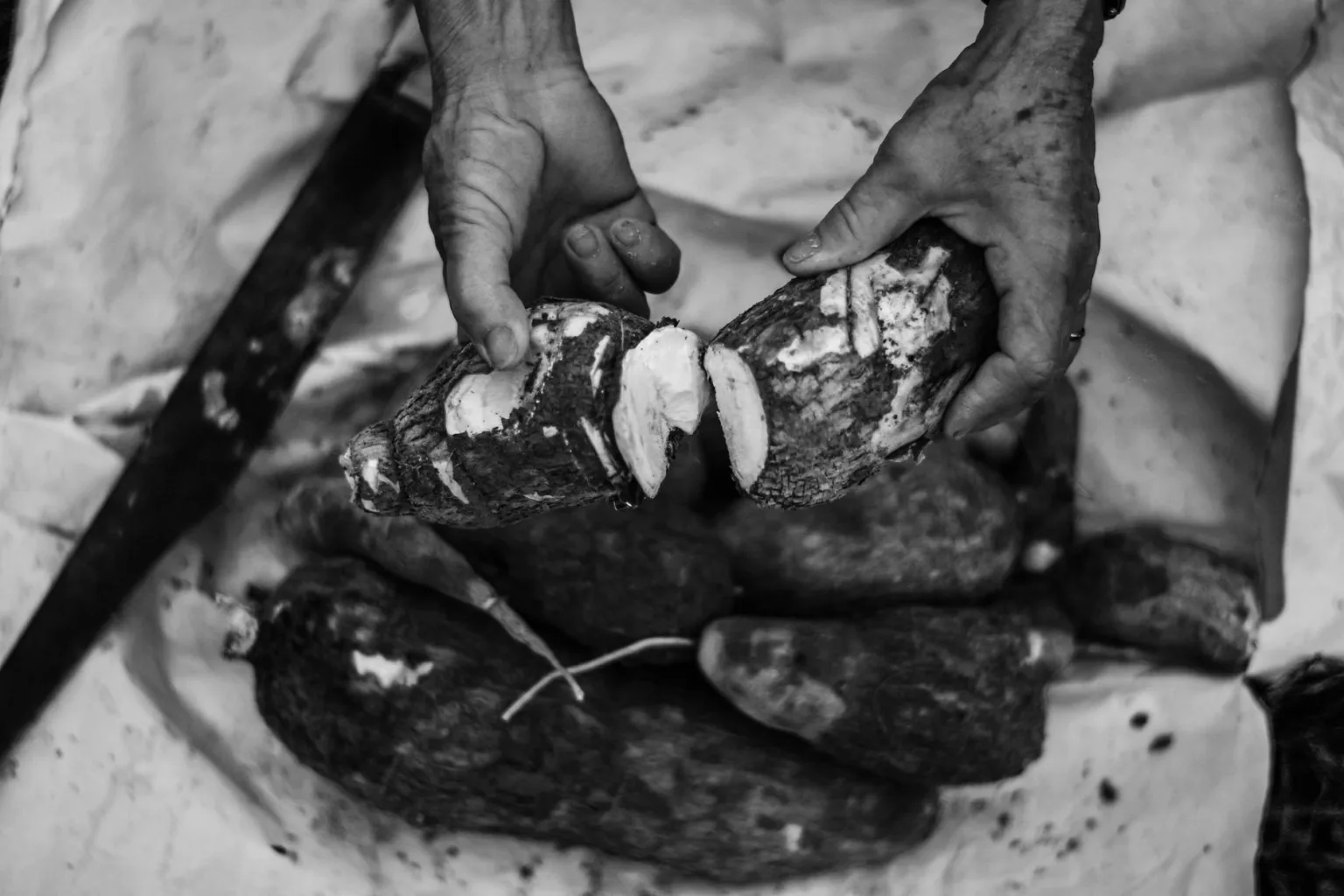
Taro is the underground corm of Colocasia esculenta, a plant in the Araceae family. It is commonly sold with rough brown skin and flesh that is usually white or cream, although some varieties have pink or purple markings. In everyday cooking it is often called a root or tuber, while botanically the edible part is described as a corm. Once cooked, taro can become creamy and has a mild, lightly sweet flavor. It is used in a range of cuisines for side dishes, purées, soups, stews, chips, and desserts. Thorough cooking is essential before eating: raw taro contains calcium oxalate crystals that can irritate the mouth and throat.
When to use it
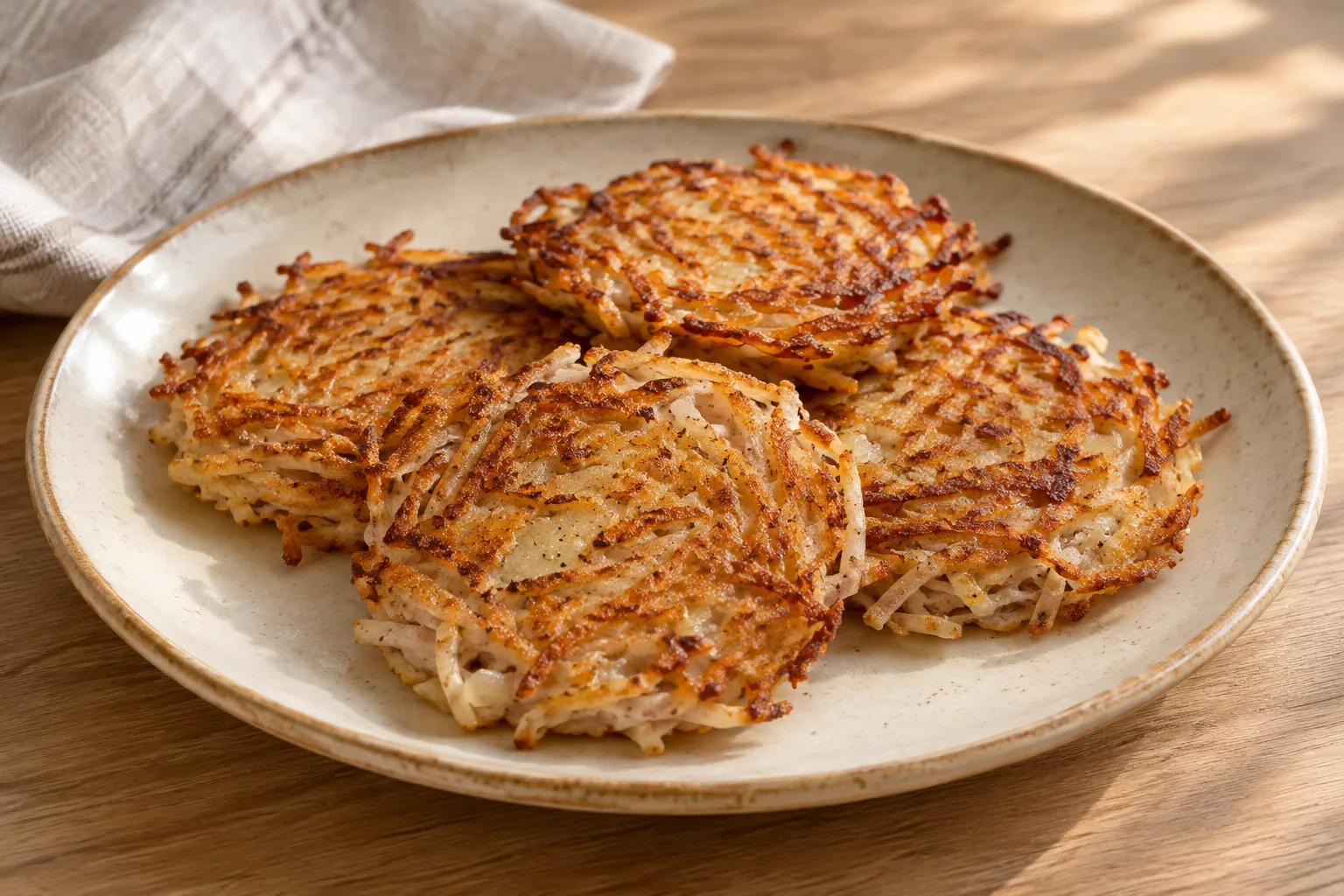
Choose taro when you want a starchy ingredient that can be boiled, roasted, fried, or mashed and used in savory or sweet preparations. Cooked and mashed, it can make a thick purée; cut into pieces, it can go into soups and stews; sliced thinly, it can be made into chips. It is also used in some desserts and sweet doughs. Flesh color and appearance vary among varieties, so do not expect every corm to be uniformly white inside. Allow enough time to cook it fully before serving, and do not taste it raw while preparing a dish.
How to use it
Wash the corm and remove its skin before cooking; the skin is tough and is commonly removed to make preparation easier. Cut it into pieces for boiling or roasting, or into thin slices for frying. Once cooked, it can be mashed into a purée or added to soups and stews. For desserts, use it in recipes that call for cooked taro or prepared taro. Always cook the root thoroughly before eating it: do not eat it raw or partly cooked, as calcium oxalate crystals can cause irritation. If handling fresh taro irritates your skin, avoid direct contact and wash your hands afterward.
Flavour and texture
Cooked taro has a mild, slightly sweet flavor and a starchy texture that can become creamy when boiled and mashed. Its flesh is usually white or cream, although some varieties have pink or purple streaks or spots. Appearance and texture vary with variety and cooking method; fried slices, for example, will not have the same texture as purée. Do not taste taro raw to assess its flavor: it must be cooked thoroughly before eating.
How to choose it
Look for a product identified as taro or Colocasia esculenta. It usually has rough brown skin and pale flesh, sometimes marked with pink or purple depending on the variety. Common names differ by region, and names such as malanga may refer to different plants or products; if you specifically need taro, check the product identification on its label or ask the seller. The available information describes the corm’s appearance and color variation but does not establish reliable freshness tests based on firmness or weight.
Storage
Keep the corm unpeeled until you are ready to prepare it, and follow any storage directions provided on its packaging or by the seller. The available information does not specify a culinary storage life or a precise temperature for fresh taro, so an exact keeping time should not be assumed. Before cooking, confirm that the product is identified as taro and remove the skin. If no storage directions are provided, ask the seller rather than relying on an unverified storage period.
Substitutions
Potato or sweet potato can be alternatives in recipes that work with other cooked, roasted, or mashed starchy roots. They are not identical to taro: their flavor, color, and texture can change the result, and the available descriptions compare recipe uses rather than claiming an exact substitution. Choose according to the dish and adapt the preparation to the ingredient. Substituting another vegetable does not remove the need to cook taro thoroughly whenever you use it.
Common mistakes
Do not eat taro raw or assume that browning the outside is enough: the root must be cooked thoroughly before serving. Another mistake is assuming that every product called malanga or a similar tuber is taro; check its identity when a recipe specifically requires Colocasia esculenta. Do not expect every variety to have the same interior color: the flesh may be pale with pink or purple markings. Finally, potato, sweet potato, and taro do not have identical flavors or textures.
Safety and allergens
Do not eat taro raw. The corm contains calcium oxalate crystals that can irritate the mouth and throat, so cook it thoroughly before eating. Some people may experience skin irritation when handling fresh taro; if this happens, avoid direct contact and wash your hands afterward. These precautions apply to culinary preparation of a product identified as taro; do not taste raw plant parts.
Culinary uses
- féculent pour acompañamientos y platos principales
- ingrediente para purés, sopas, guisos y postres
Recommended techniques
- hervir hasta que esté completamente cocido
- asar, freír o machacar después de cocinar
Pairs well with
- sopas y guisos
- purés y preparaciones dulces
Frequently asked questions
Can taro root be eaten raw?
No. It must be cooked thoroughly before eating because calcium oxalate crystals in raw taro can irritate the mouth and throat.
What does taro root look like inside?
The flesh is usually white or cream, but some varieties have pink or purple markings or streaks.
How can you cook taro?
It can be boiled, roasted, fried, or mashed after cooking. It is also used in purées, soups, stews, chips, and some sweet preparations.
Ingredient allergens
Allergen listThere are no verified associations for these ingredients yet.
Sources and review
Automatically researched, cross-checked and validated content. Sources consulted:
- ¿Por qué la muerte es origen de miedos y tabúes? doi.org/10.64628/aao.fccyk3qj3
- Elephant Ears (Colocasia, Alocasia, and Xanthosoma) – Wisconsin Horticulture hort.extension.wisc.edu/articles/elephant-ears-colocasia-alocasia-and-xanthosoma/
- Taro | www.cocinista.es www.cocinista.es/web/es/enciclopedia-cocinista/ingredientes-del-mundo/taro.html
- Taro | HerbaZest www.herbazest.com/es/hierbas/taro
- Analyzing Food Sources and Food Insecurity of Kichwa ... scholarworks.uark.edu/cgi/viewcontent.cgi?article=1045&context=csesuht
- Colocasia esculenta (Caladium, Dasheen, Elephant Ears, Green Taro, Malanga, Taro) | North Carolina Extension Gardener Plant Toolbox plants.ces.ncsu.edu/plants/colocasia-esculenta/
- Taro raíz china: qué es y cómo se cocina www.finedininglovers.es/explorar/noticias/que-es-el-taro-la-raiz-tropical-parecida-las-patat…
- Evolution of the Agri-Food Chain Concept in the 21st Century ageconsearch.umn.edu/record/353404/files/Agri-Food%2C%2Bcon-12.pdf
- ¿Qué es el taro y cuáles son sus famosas propiedades? salroche.com/blogs/tips-saludables/que-es-el-taro-y-cuales-sus-famosas-propiedades?srsltid=A…