- Category
- Sauces and condiments
- State
- Paste
- Usual unit
- tablespoon
What it is
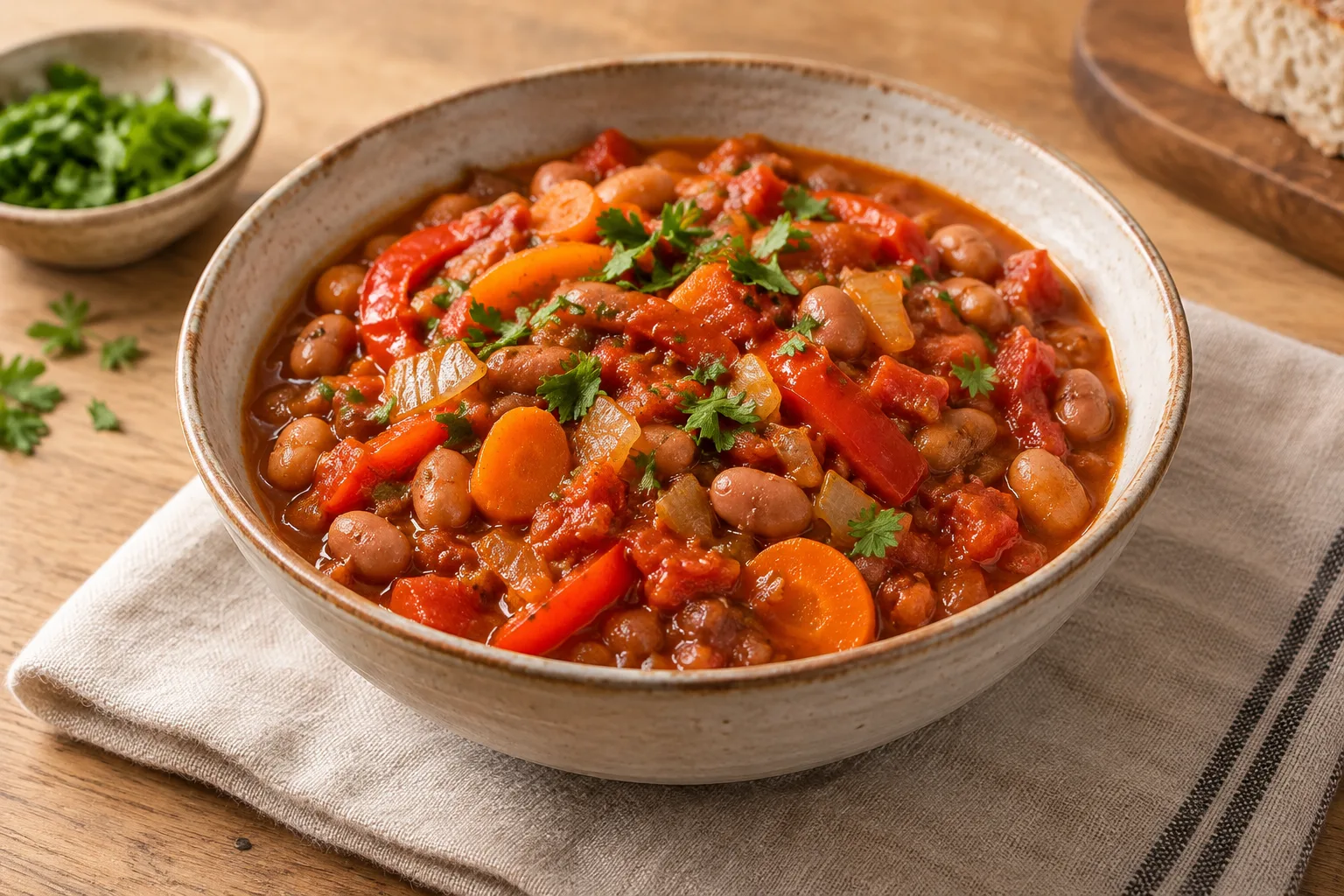
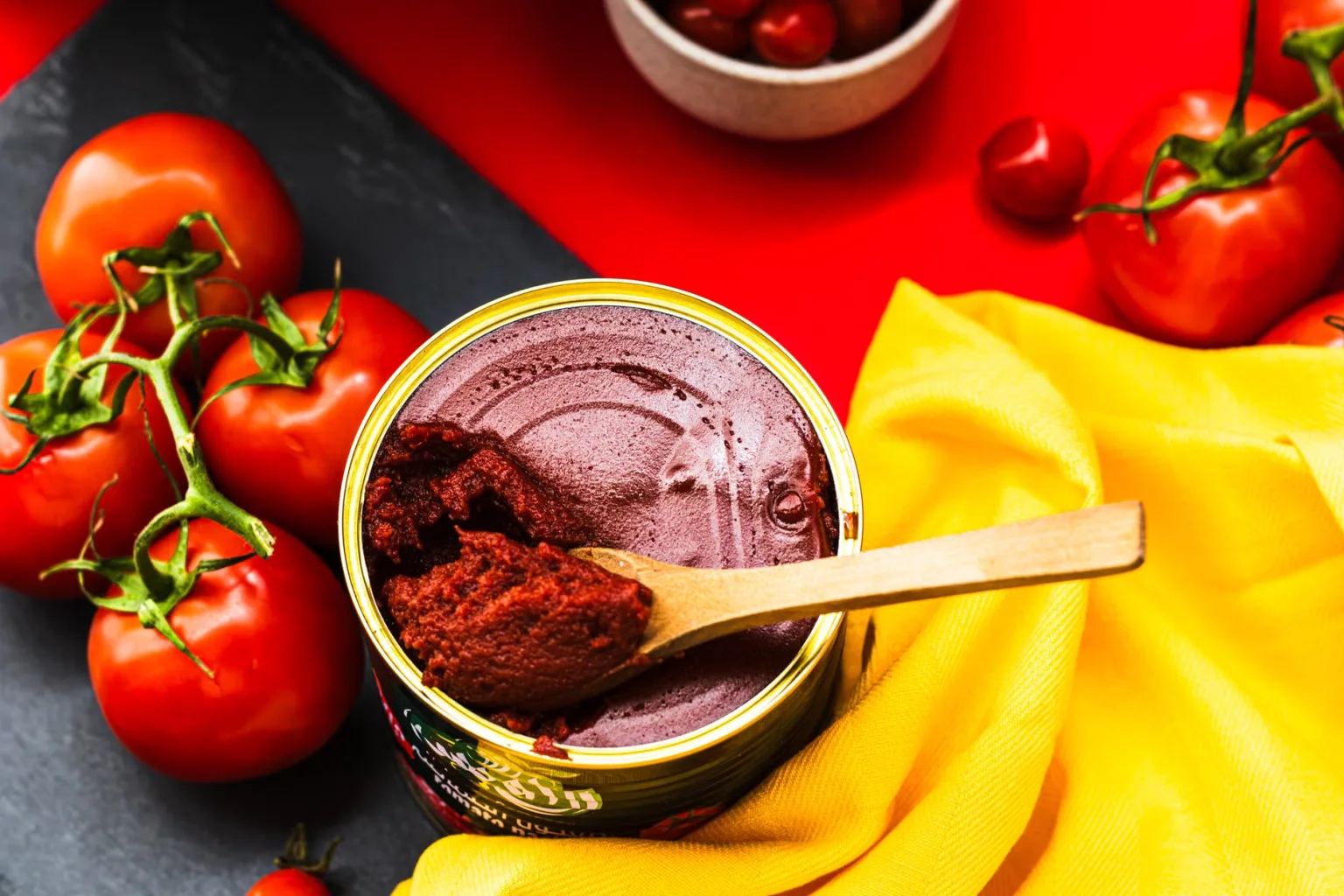
Tomato paste is a thick tomato product made by reducing some of the water in tomatoes during processing. This gives it a more concentrated flavor and a thicker texture than tomato purée or crushed tomatoes. It is commonly sold in cans or tubes, and some products are double or triple concentrated, so their strength can differ. Ingredient lists also vary: some versions contain only tomatoes, while others include salt or additional ingredients. Tomato paste is not the same as a ready-seasoned tomato sauce, which is usually thinner and may contain other components. Because products differ, check the package rather than assuming all tomato paste tastes or behaves exactly alike.
When to use it
Use tomato paste when you want a pronounced tomato flavor without adding as much liquid as fresh, crushed or canned tomatoes would contribute. It works in stews, ragù, soups, pasta sauces, pizza bases, rice dishes and some savory fillings. It can also deepen the flavor of a sauce made with more watery tomatoes. Start with a small amount and taste before adding more, especially when using a double- or triple-concentrated product. It is not the best one-for-one replacement when a dish depends on the juicy texture or lighter flavor of fresh tomatoes.
How to use it
Add a small amount to the dish and stir thoroughly so the paste is evenly distributed. In a sauce or stew, mix it into the cooking base, including aromatics such as onion or garlic, or stir it directly into hot liquid until it dissolves. If a recipe already contains crushed tomatoes, paste can add more tomato intensity without contributing much extra liquid. Increase the amount gradually, particularly if the product is double or triple concentrated, and check the label for salt before seasoning. If a dish needs to be looser, adjust its consistency with liquid as the recipe requires; for a filling, use restraint and check the final moisture.
Flavour and texture
Tomato paste has a concentrated tomato taste, usually stronger than purée or crushed tomatoes. It is thick and smooth, and adds color and body to a dish. The intensity, perceived acidity and saltiness can vary with the concentration and ingredients, so taste the product or the dish before making final seasoning adjustments.
How to choose it
Choose an intact package and check the label to distinguish concentrated paste from tomato sauce and to see whether the product is double or triple concentrated. Review the ingredient list, including whether salt has been added, because products differ. Tubes make it easy to dispense a small amount; with a can, consider how you will handle the remaining paste once opened.
Storage
Before opening, store the product as directed on its package. After opening, follow the manufacturer's instructions for refrigeration, closing the container and using the remaining paste; directions can depend on the format and product. Seal the container properly and use a clean utensil to remove paste. Do not assume that every opened can, jar or tube keeps in the same way: the label is the guidance for that particular product.
Substitutions
Tomato purée, crushed tomatoes or cooked fresh tomatoes can stand in for paste, but they are less concentrated and add more liquid. Adjust the amount gradually, and let the dish reduce if it needs more intensity or less moisture. There is no single exact conversion for every product, especially when the paste is double or triple concentrated.
Common mistakes
Adding a large amount at once can overwhelm a dish because the flavor is concentrated. Another common mistake is replacing paste with the same quantity of crushed tomatoes without accounting for their extra liquid. Add gradually, taste as you go and check whether the paste contains salt before seasoning.
Safety and allergens
Follow the package instructions for storage before and after opening. Keep the container properly closed and avoid introducing dirty utensils; any product-specific directions on the label take precedence.
Culinary uses
- Flavor enhancer
- Thickening and coloring ingredient
Recommended techniques
- Stir into a cooking base or sauce
- Cook briefly with aromatics before adding liquids
Pairs well with
- Onion and garlic
- Herbs such as basil and oregano
Frequently asked questions
Is tomato paste the same as tomato sauce?
No. Tomato paste is thicker and more concentrated; tomato sauce is usually thinner and may contain additional ingredients.
Can I add tomato paste straight to a stew?
Yes. Stir it into the cooking base or into hot liquid until evenly combined. Start with a little and taste before adding more.
What can I use if I do not have tomato paste?
Purée or crushed tomatoes can work, but they add more liquid and give a less concentrated flavor. Adjust the amount and consistency of the dish.
Ingredient allergens
Allergen listThere are no verified associations for these ingredients yet.
Estimated nutrition
- Fat
- 0 g
- Saturates
- 0 g
- Carbohydrate
- 21.2 g
- Sugars
- 12.1 g
- Fibre
- 6.1 g
- Protein
- 3.03 g
- Salt
- 1.21 g
Sources and review
Automatically researched, cross-checked and validated content. Sources consulted:
- ¿Por qué la muerte es origen de miedos y tabúes? doi.org/10.64628/aao.fccyk3qj3
- Sopa - Wikipedia, la enciclopedia libre es.wikipedia.org/wiki/Sopa
- ¿Qué es el concentrado de tomate y cómo se usa en la cocina? - Agrupalmería agrupalmeria.com/que-es-el-concentrado-de-tomate-y-como-se-usa-en-la-cocina/
- Recetas con tomate concentrado | Cocina con Hida hida.es/tomate-concentrado-recetas-sencillas/
- Qué Es Tomate Concentrado: Usos Y Beneficios | ArrozSOS www.arrozsos.es/blog/que-es-tomate-concentrado/
- Tomate concentrado. Qué es y para qué se utiliza www.crockpotting.es/p/tomate-concentrado
- Guia_RGSEAA.pdf www.aesan.gob.es/dam/jcr:ebc1dca1-078f-400f-a649-6cc68ad1e1ef/Guia_RGSEAA.pdf
- Tanzania Food Composition Tables | The Nutrition Source nutritionsource.hsph.harvard.edu/wp-content/uploads/2023/09/Tanzania-Food-Composition-Tables…
- Concentrado de tomate: qué es, cómo usarlo en cocina y en qué 13 recetas queda de maravilla www.directoalpaladar.com/ingredientes-y-alimentos/concentrado-tomate-que-como-usarlo-cocina-…
- Pasta de Tomate Concentrada - Proveedor y Distribuidor lemonconcentrate.es/pasta-tomate-concentrada/
- - YouTube www.youtube.com/watch?v=reSatT-TXMA
- Adaptação de instrumento para caracterização de hábitos culinários em população urbana | OpenAlex openalex.org/W2937276047
- Pasta de tomate doble concentrada - Mutti mutti-parma.com/es/productos/pasta-de-tomate-doble-concentrada/