- Category
- Dairy and eggs
- State
- Fresh
- Usual unit
- g
What it is
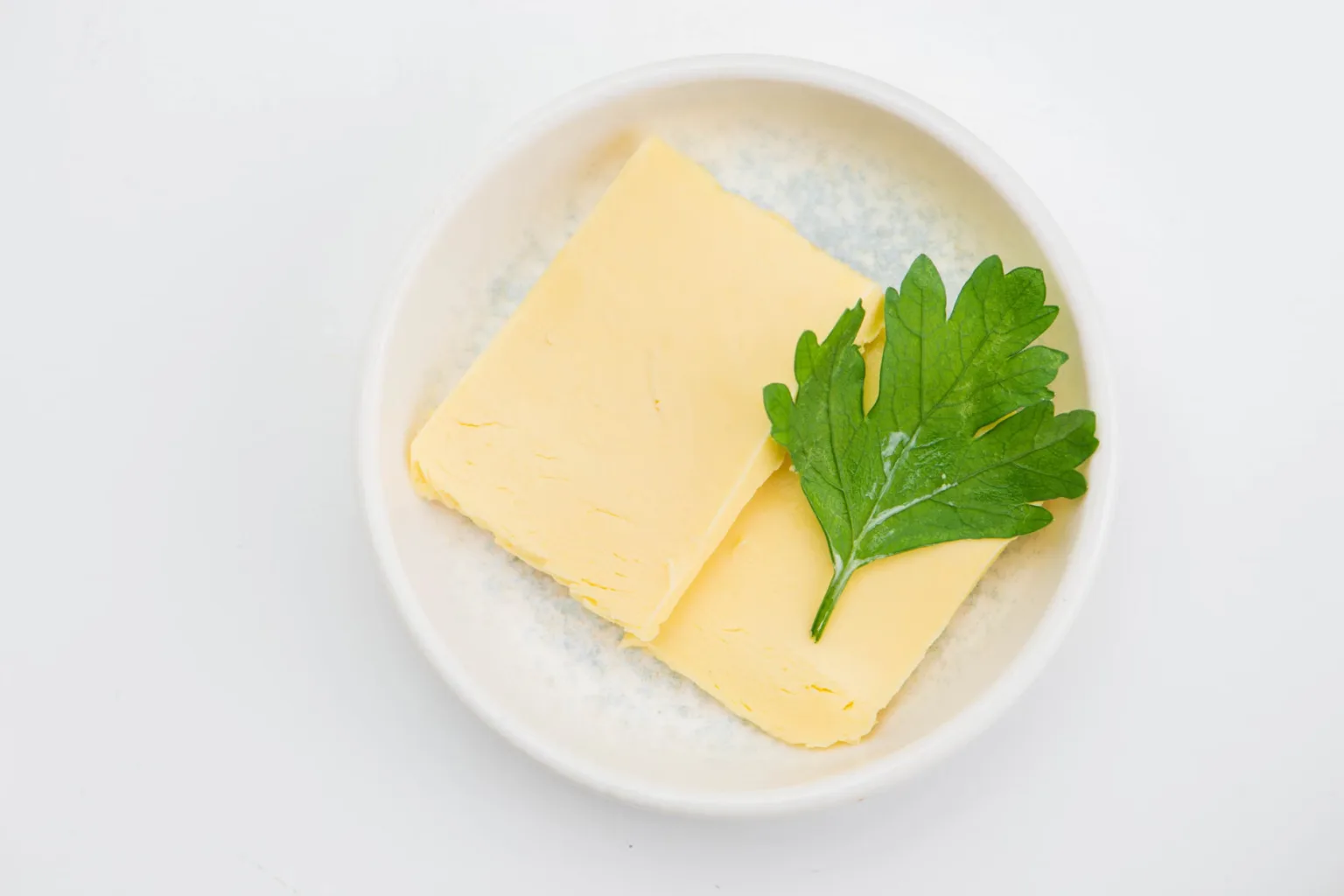
Unsalted butter is made from milk fat, separated by churning cream and worked into a cohesive mass. Unlike salted butter, it has no salt added during processing. It is sold as a solid fat, and its flavor and consistency can vary with how it is made. In the kitchen, it can be spread on bread, used for cooking, or incorporated into baked goods. Because it does not contribute added salt, cooks can choose how much seasoning a recipe needs; this is especially useful in doughs and other preparations where salt balance matters. Unsalted butter is not a vegetable fat: it is a dairy product and contains milk.
When to use it
Choose unsalted butter when you want to control the salt in a recipe separately, particularly for baking and pastry. It can also be spread on bread or toast and used in cooking when the flavor and texture of butter are desired. It works in both sweet and savory preparations: if a recipe needs salt, add the amount specified rather than relying on the salt already present in salted butter. It can also serve as a cooking fat for sautéing or frying when the preparation allows, with seasoning adjusted to suit the dish.
How to use it
Weigh the amount called for and use the butter according to the preparation: spread it directly on bread or toast, melt it for cooking, or work it into doughs and baked goods. If a recipe specifies unsalted butter, do not automatically replace it with salted butter, since salt levels can vary among products. If salted butter is all you have, reduce or omit some of the recipe’s added salt, then adjust to taste. Use it as a fat for sautéing or frying when appropriate for the dish. Check the package for storage directions and allergen information; butter is a dairy food.
Flavour and texture
Unsalted butter has a mild, rich dairy flavor without the distinct saltiness of butter with salt added. Its texture is generally solid and creamy, though it can vary with production and temperature. It melts gradually from solid to liquid, making it suitable for spreading as well as for cooked preparations and doughs.
How to choose it
Look for a package clearly identified as unsalted butter and check its ingredient and allergen information. Make sure it suits the recipe: salted butter can contain varying amounts of salt and may change the result. If you need to avoid milk, do not assume butter is suitable; it is a dairy product, so check the label.
Storage
Follow the storage instructions on the package, since conditions may depend on the product and how it is sold. Keep the butter protected and properly closed between uses, and check the date and any product-specific directions. If the package gives special storage or use instructions, follow them rather than relying on a general rule.
Substitutions
Salted butter can replace unsalted butter, but reduce or omit the salt in the recipe and adjust to taste. The amount of salt can vary between products. If you have only unsalted butter but want a salted flavor, add a measured amount of salt separately instead of changing the butter.
Common mistakes
Do not mistake unsalted butter for butter that is merely low in salt; check the product name and label. Another common mistake is swapping in salted butter without adjusting the recipe’s added salt. Do not assume every product has the same composition or consistency, and do not ignore the package’s storage directions.
Safety and allergens
Butter is a dairy product and contains milk, an allergen to consider. Check the label for ingredients, allergen information and storage conditions, and follow the package directions.
Culinary uses
- Fat for baking and pastry
- Spread for bread and toast
- Cooking fat for sautéing and frying
Recommended techniques
- Spread on bread or toast
- Melt for sautéing or frying
- Work into pastry and baked goods
Pairs well with
- Bread and toast
- Pastry, cakes and biscuits
Frequently asked questions
What is the difference between unsalted and salted butter?
Unsalted butter has no salt added during processing, while salted butter does. The amount of salt can vary from one product to another.
Can I use salted butter in a recipe that calls for unsalted butter?
Yes. Reduce or omit the recipe’s added salt, then adjust the seasoning to taste.
Is unsalted butter suitable for someone with a milk allergy?
It should not be treated as suitable: butter is a dairy product. Check the label and avoid it if milk must be excluded.
Ingredient allergens
Allergen listDocumented presence
-
Milk and milk products
Unsalted butter
Estimated nutrition
- Fat
- 78.6 g
- Saturates
- 50 g
- Carbohydrate
- 0 g
- Sugars
- 0 g
- Protein
- 0 g
- Salt
- 0 g
Sources and review
Automatically researched, cross-checked and validated content. Sources consulted:
- En el etiquetado alimentario hay algunas menciones que son obligatorias eletiquetadocuentamucho.aesan.gob.es/obligatoria.html
- Client Challenge doi.org/10.2307/jj.27939689.16
- Mantequilla - Wikipedia, la enciclopedia libre es.wikipedia.org/wiki/Mantequilla
- Usos culinarios de la mantequilla – Mantequilla Lorenzana mantequillalorenzana.com/usos-culinarios-de-la-mantequilla/
- - YouTube www.youtube.com/watch?v=bTTlFX1CCSg
- Mantequilla con sal o sin sal: cuándo usar una o otra - Revista Mia miarevista.okdiario.com/bienestar/cuerpo/15958.html
- Galenic Medicine and Women's Recipes in the Early etd.ohiolink.edu/acprod/odb_etd/ws/send_file/send?accession=akron1744386918268332&dispositio…
- Para la ciudadanía www.aesan.gob.es/para-la-ciudadania
- NSync A Mei A Tribe Called Quest A*Teens aima.cs.berkeley.edu/npdict.txt
- UC CalFresh Annual Report San Luis Obispo and Santa ... ucanr.edu/media/271184
- Managing allergens | Food Standards Scotland www.foodstandards.gov.scot/business-guidance/running-a-food-business/managing-allergens