Asia · Southern Asia

Iran

Recipes connected with Iran

Food and eating habits

How people eat in Iran

50 indicators exploring everyday meals, ingredients and food culture. Information is completed progressively from documented evidence.

49 of 50 indicators with documented information

Not all data are comparable: food supply, purchases and intake are different measures. Check the period, population and method for each finding. Qualitative descriptions do not establish percentages or amounts.

Timing and company

8/8
Timing and company — Iran
IndicatorFindings and context
Meal times
Quantitative findingSurvey

The group named Conventional, comprising 36% of the sample, had high conditional probabilities of eating around 08.00, 13.00 and 20.00 for breakfast, lunch and dinner, respectively.

Scope, method and limitations
Observation period
2018–2019
Unit
Reported clock time (hours.minutes); % of study participants in one latent class
Population or sample
775 analysed adults aged 20–59, volunteers recruited at Tehran health centres; the described group contained 280 participants.
Geographic scope
Tehran, Iran; one group derived within a local sample, not the whole Iranian population.
Definition and method
Cross-sectional study in 2018–2019; dietary recalls on three days, with at least two completed; latent class analysis of hourly eating-occurrence indicators. Eating occasions provided at least 50 kcal and were separated by 15 minutes.
Comparison limitations
Partial local coverage: reported times and probabilities for one statistical class, not national means or modal intervals. The study’s meal-time definitions are classification criteria rather than findings about habits across the country.
Meals per day
Quantitative findingSurvey

61.12% were classified as regular consumers of all three main meals (95% CI: 59.89–62.34).

Scope, method and limitations
Observation period
2011–2012
Unit
% of school students classified by main-meal regularity; 95% confidence interval
Population or sample
School students aged 6–18 in urban and rural areas of 30 provinces; the national table reports 13,358 participants.
Geographic scope
Iran; national CASPIAN-IV school survey, 2011–2012.
Definition and method
Multistage random cluster sampling and a GSHS-based questionnaire. Classification uses weekly breakfast, lunch and dinner frequency: 5–7 days per week defines not skipping each meal.
Comparison limitations
Partial historical coverage of school students. This category combines weekly habits; it does not establish three meals every day or count snacks. The paper reports 13,486 participants overall and 13,358 in the table; these denominators are kept distinct.
Meal duration
Quantitative findingSurvey

Reconstructing the table’s counts identifies 10–20 minutes as the lunch-duration category with the most participants.

Scope, method and limitations
Observation period
2018
Unit
Minutes, self-reported approximate lunch-duration category
Population or sample
600 male military personnel aged at least 18 at ground-force station number 05 in Kerman; personnel and conscripts.
Geographic scope
Kerman, Iran; February–May 2018; one military station.
Definition and method
Cross-sectional study with simple random selection and a self-administered questionnaire on approximate lunch duration. Category counts were reconstructed from mutually exclusive marital-status rows and cross-checked against education, smoking and diabetes; all four reconstructions agree.
Comparison limitations
Partial local occupational coverage. The largest category is a verified inference from the table, not a national mean or a breakfast or dinner duration. Military routines limit comparison with civilians; no calculated percentages are added.
Daily energy distribution
Quantitative findingObserved intake

Snacks supplied 38% of recorded total energy intake.

Scope, method and limitations
Observation period
2003–2004
Unit
% of recorded total energy intake
Population or sample
761 analysed school children in primary grades one to five; schools in 19 educational districts of Tehran.
Geographic scope
Tehran, Iran; December 2003–October 2004; weekday dietary recalls.
Definition and method
Cross-sectional study with two-stage random sampling. One 24-hour recall reported by mothers or caregivers and checked with children separates main meals and snacks according to the respondent’s identification.
Comparison limitations
Local historical data, not representative of all Iranians or present intake. Weekends and extreme energy values were excluded. It documents only the combined snack contribution, not energy shares for breakfast, lunch and dinner.
Weekdays and weekends
Quantitative findingSurvey

Weekdays/weekend: 6.38/6.29 eating occasions per day; breakfast at 8:01/8:11 a.m., lunch at 1:51/2:08 p.m. and dinner at 8:38/8:48 p.m. No statistically significant differences were observed.

Scope, method and limitations
Observation period
2019
Unit
Eating occasions/day; local clock times, hours:minutes a.m./p.m.
Population or sample
825 apparently healthy adults aged 20–59 attending Tehran health centres.
Geographic scope
Tehran, Iran; February–August 2019; a local health-centre sample.
Definition and method
Three non-consecutive 24-hour recalls: the average of two weekdays and one weekend day. An occasion provides at least 50 kcal and is separated from another by at least 15 minutes. The table reports means and ANOVA comparisons adjusted for sex and age.
Comparison limitations
Partial local coverage with only one weekend day. Lack of significance does not establish equality. Occasions include snacks, not only main meals. Times retain the original a.m./p.m. format without conversion. No duration per meal is reported.
Eating at home and away
Quantitative findingSurvey

Approximately 40% consumed at least one meal away from home during the three analysed days.

Scope, method and limitations
Observation period
2007
Unit
% of participants with at least one away-from-home meal over three days
Population or sample
84 adolescents aged 12–16 and their families from eight schools in Shiraz; 94.04% were classified as overweight or at risk of overweight.
Geographic scope
Shiraz, Iran; recruitment in November 2007; a local school sample.
Definition and method
Three 24-hour recalls, two weekdays and one weekend day. Away from home includes restaurants and fast food. The published figure counts participants with at least one away-from-home meal.
Comparison limitations
Partial local historical coverage of a sample with a distinctive weight profile. It is not the percentage of meals and cannot establish breakfast, lunch or dinner location shares; it does not represent the current Iranian population.
Cooking frequency
Quantitative findingSurvey

Published mean of 5.0 meals cooked at home per person per week, covering lunch and dinner.

Scope, method and limitations
Observation period
2021
Unit
Meals cooked at home per person per week, lunch and dinner only
Population or sample
Respondents interviewed in Iran by the Gallup World Poll.
Geographic scope
Iran; the survey’s published national result.
Definition and method
Questions on how many days respondents personally cooked lunch and dinner at home during the preceding week; published total of both.
Comparison limitations
Historical partial coverage: counts meals rather than distinct cooking days; excludes breakfast. No preparation minutes or percentage cooking every day is established.
Eating together
Quantitative findingSurvey

Mean of 10.6 shared meals per week: 5.4 lunches and 5.2 dinners.

Scope, method and limitations
Observation period
2022
Unit
Shared lunches and dinners per person per week
Population or sample
Respondents interviewed in Iran by the Gallup World Poll.
Geographic scope
Iran; the survey’s published national result.
Definition and method
Questions on days in the preceding week when respondents ate lunch or dinner with someone they knew. The methodological note lists countries repeated in the following year; Iran is not among them.
Comparison limitations
Partial coverage: lunch and dinner only; no percentage of meals eaten alone or split between family, friends and other acquaintances. The later wording added examples of companions; those versions are not mixed.

Pantry and recipes

2/2
Pantry and recipes — Iran
IndicatorFindings and context
Most consumed ingredients
Quantitative findingSurvey

In 2001–2003, mean household consumption per person was 450.2±1.9 g/day for bread and cereals, 229.3±1.5 g/day for vegetables and 142.5±1.8 g/day for fruits; published means±standard errors.

Scope, method and limitations
Observation period
2001–2003
Unit
g/person/day, mean±SE
Population or sample
7158 urban and rural households across 28 Iranian provinces, sampled across all four seasons. National totals for selected food groups.
Geographic scope
Partial historical coverage in g/person/day, without annualisation. This is neither individually weighed intake nor purchasing data and does not rank individual ingredients. The text and table headings disagree on urban and rural sample counts: only national totals are retained here, without correcting or using area breakdowns.
Definition and method
Three consecutive 24-hour household recalls conducted by nutritionists, usually interviewing the person responsible for cooking. Certain foods, including bread, fats, oils and sugar containers, were weighed. Household quantities per person were averaged over three days.
Comparison limitations
Partial historical coverage in g/person/day, without annualisation. This is neither individually weighed intake nor purchasing data and does not rank individual ingredients. The text and table headings disagree on urban and rural sample counts: only national totals are retained here, without correcting or using area breakdowns.
Ingredient prevalence in recipes
Qualitative descriptionRecipe sample

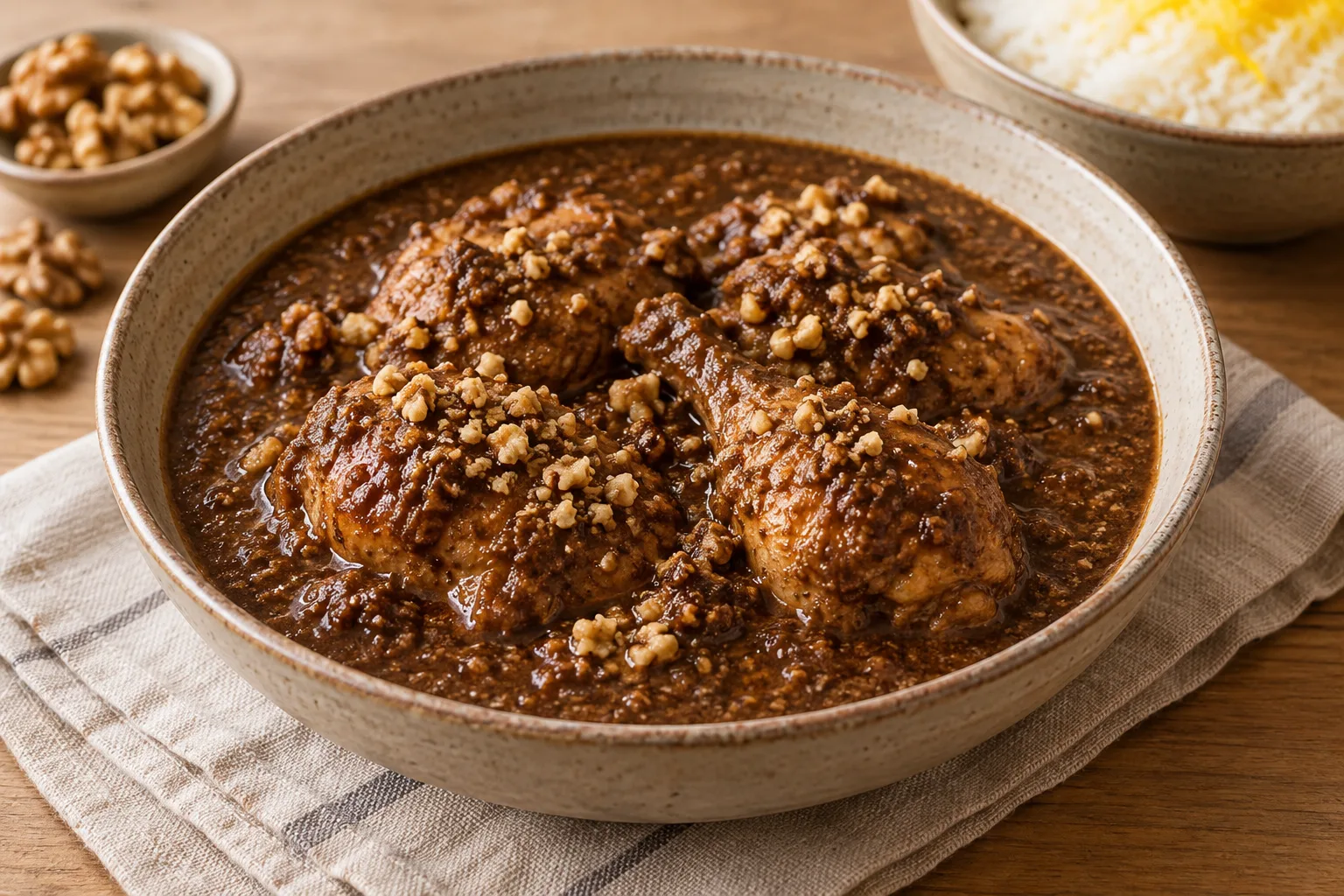
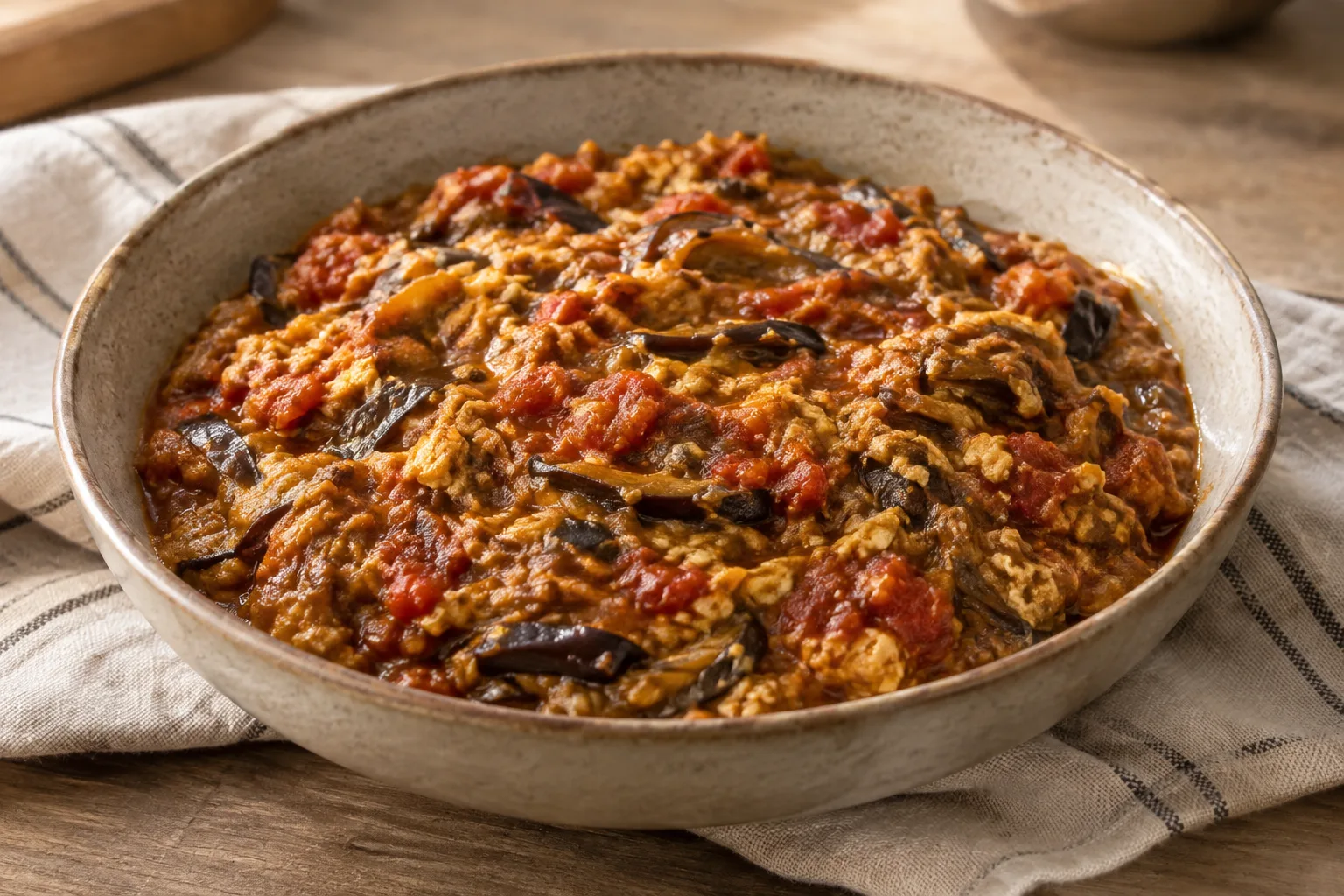
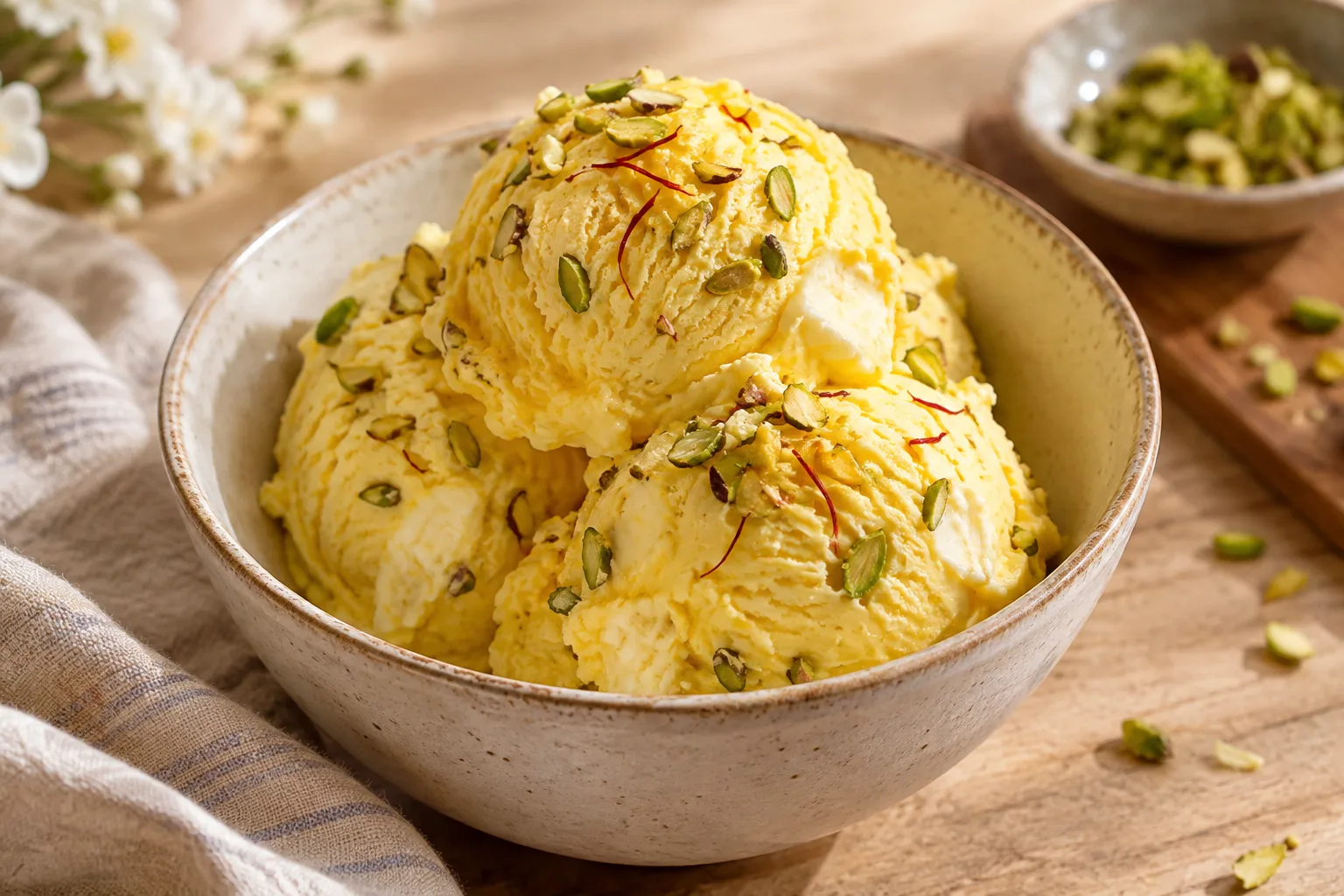
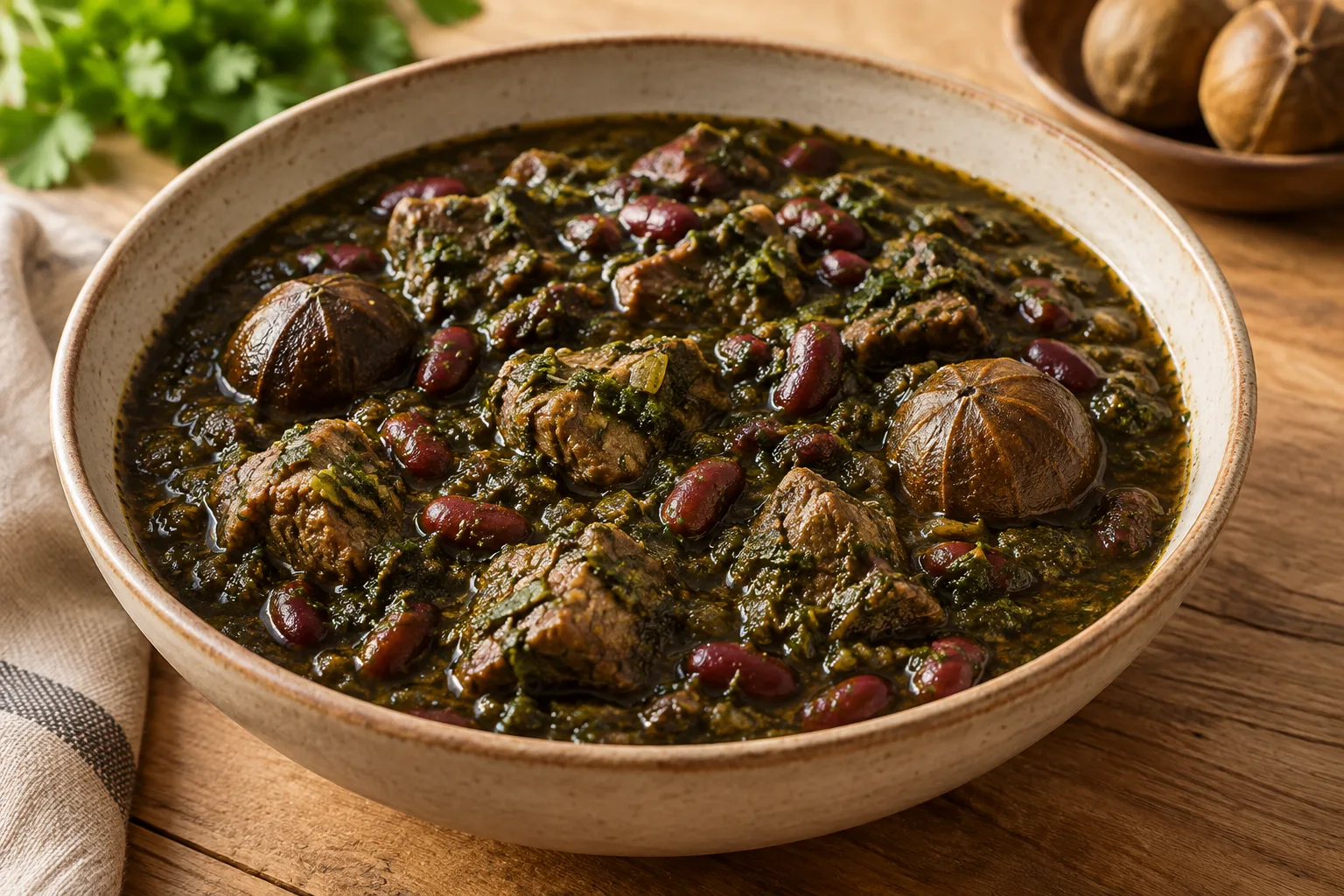
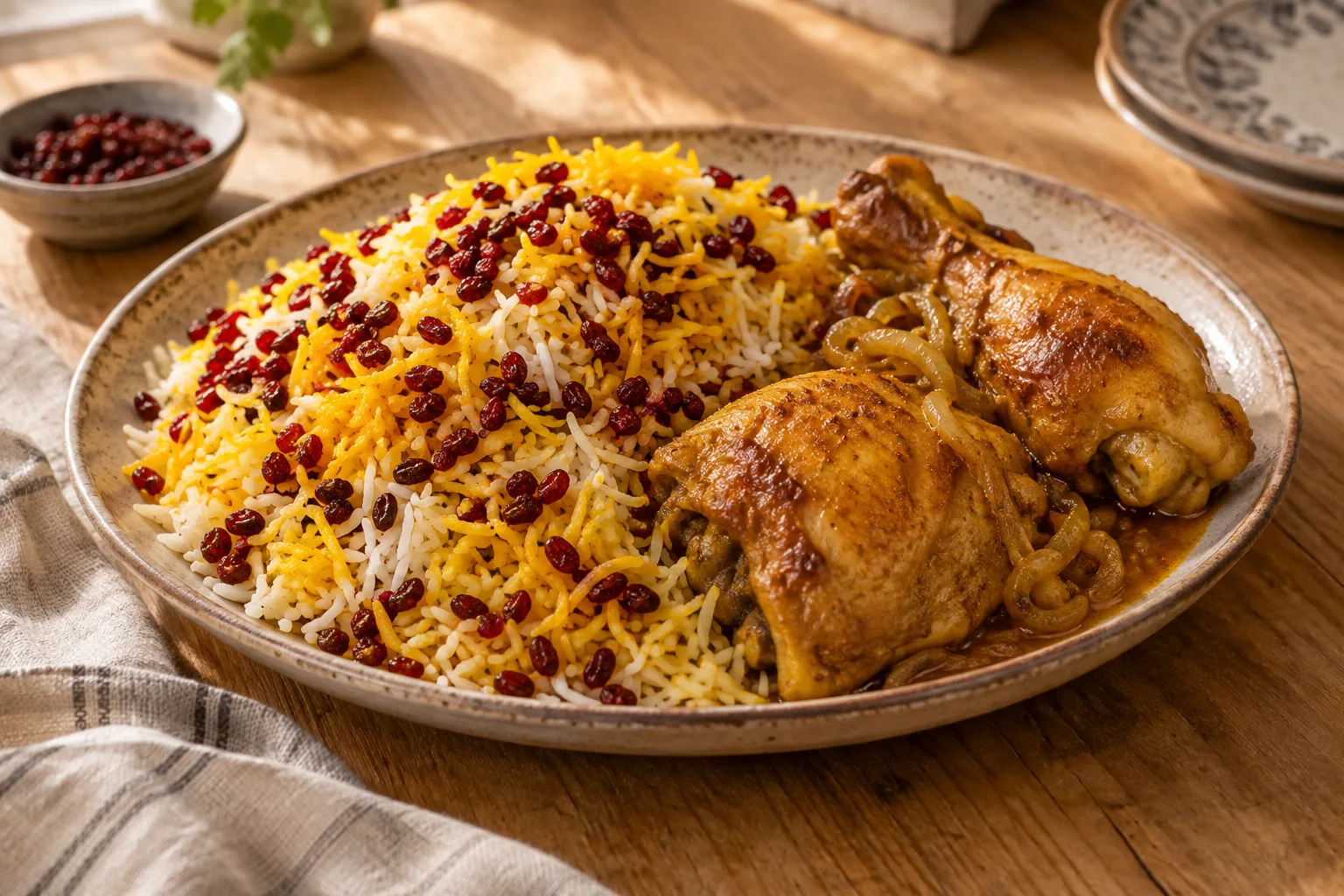
In this catalogue sample, zereshk polo combines long-grain rice and barberries; ghormeh sabzi includes red beans, herbs and dried limes; mirza ghasemi brings together aubergine, tomatoes, garlic and eggs. Bastani sonnati uses saffron and rose water; fesenjan uses walnuts and pomegranate molasses.

Scope, method and limitations
Observation period
Catalogue consulted 2026-11-03; not national observation
Population or sample
The five distinct published recipes attributed to Iran in KitchenPause with a Spanish entry, consulted on 3 November 2026.
Geographic scope
The five distinct published recipes attributed to Iran in KitchenPause with a Spanish entry, consulted on 3 November 2026.
Definition and method
Selection of all published catalogue recipes attributed to Iran and available in Spanish. Repeated copies of the same recipe are excluded; the ingredient lists on each page were checked without merging variants.
Comparison limitations
Partial qualitative coverage: ingredient examples from a small editorial sample including a dessert. No prevalence, percentages or ranking are provided, and this does not represent all Iranian recipes or population intake.

Cereals and plant foods

6/6
Cereals and plant foods — Iran
IndicatorFindings and context
Cereals and cereal products
Quantitative findingSurvey

The combined bread and cereals group had a mean of 450.2±1.9 g per person per day in 2001–2003; published mean±standard error.

Scope, method and limitations
Observation period
2001–2003
Unit
g/person/day,mean±SE
Population or sample
7158 urban and rural households across 28 Iranian provinces, sampled across all four seasons. National totals for selected food groups.
Geographic scope
7158 urban and rural households across 28 Iranian provinces, sampled across all four seasons. National totals for selected food groups.
Definition and method
Three consecutive 24-hour household recalls conducted by nutritionists, usually interviewing the person responsible for cooking. Certain foods, including bread, fats, oils and sugar containers, were weighed. Household quantities per person were averaged over three days.
Comparison limitations
Partial historical coverage in g/person/day, without annualisation. This is neither individually weighed intake nor purchasing data and does not rank individual ingredients. The text and table headings disagree on urban and rural sample counts: only national totals are retained here, without correcting or using area breakdowns. The published group does not separate species or preparation-specific quantities; its original weight is retained without conversion to dry, cooked or annual amounts.
Bread
Qualitative descriptionSurvey

Lavash, taftoon, barbari and sangak are the wheat flatbreads included in the experimental study’s Tehran bakery sample.

Scope, method and limitations
Observation period
Publication2020;bread sampling date not specified
Population or sample
Bread samples from Tehran bakeries: 15 bakeries per type; establishments are not summed as necessarily distinct across bread types.
Geographic scope
Partial qualitative coverage of bread types in a local sample. It measures neither grams consumed, market shares nor national frequency; glycaemic results are not extended to health advice or the whole population.
Definition and method
Random selection of three bakeries per bread type in each of five Tehran areas; samples were purchased and stored for an experimental study. Published in 2020; no unstated collection date is assigned to the bread samples.
Comparison limitations
Partial qualitative coverage of bread types in a local sample. It measures neither grams consumed, market shares nor national frequency; glycaemic results are not extended to health advice or the whole population.
Pulses
Quantitative findingSurvey

The category published as Beans had a mean of 19.1±0.5 g per person per day in 2001–2003; mean±standard error.

Scope, method and limitations
Observation period
2001–2003
Unit
g/person/day,mean±SE
Population or sample
7158 urban and rural households across 28 Iranian provinces, sampled across all four seasons. National totals for selected food groups.
Geographic scope
7158 urban and rural households across 28 Iranian provinces, sampled across all four seasons. National totals for selected food groups.
Definition and method
Three consecutive 24-hour household recalls conducted by nutritionists, usually interviewing the person responsible for cooking. Certain foods, including bread, fats, oils and sugar containers, were weighed. Household quantities per person were averaged over three days.
Comparison limitations
Partial historical coverage in g/person/day, without annualisation. This is neither individually weighed intake nor purchasing data and does not rank individual ingredients. The text and table headings disagree on urban and rural sample counts: only national totals are retained here, without correcting or using area breakdowns. The published group does not separate species or preparation-specific quantities; its original weight is retained without conversion to dry, cooked or annual amounts.
Vegetables
Quantitative findingSurvey

The vegetables group had a mean of 229.3±1.5 g per person per day in 2001–2003; published mean±standard error.

Scope, method and limitations
Observation period
2001–2003
Unit
g/person/day,mean±SE
Population or sample
7158 urban and rural households across 28 Iranian provinces, sampled across all four seasons. National totals for selected food groups.
Geographic scope
7158 urban and rural households across 28 Iranian provinces, sampled across all four seasons. National totals for selected food groups.
Definition and method
Three consecutive 24-hour household recalls conducted by nutritionists, usually interviewing the person responsible for cooking. Certain foods, including bread, fats, oils and sugar containers, were weighed. Household quantities per person were averaged over three days.
Comparison limitations
Partial historical coverage in g/person/day, without annualisation. This is neither individually weighed intake nor purchasing data and does not rank individual ingredients. The text and table headings disagree on urban and rural sample counts: only national totals are retained here, without correcting or using area breakdowns. The published group does not separate species or preparation-specific quantities; its original weight is retained without conversion to dry, cooked or annual amounts.
Fruit
Quantitative findingSurvey

The fruits group had a mean of 142.5±1.8 g per person per day in 2001–2003; published mean±standard error.

Scope, method and limitations
Observation period
2001–2003
Unit
g/person/day,mean±SE
Population or sample
7158 urban and rural households across 28 Iranian provinces, sampled across all four seasons. National totals for selected food groups.
Geographic scope
7158 urban and rural households across 28 Iranian provinces, sampled across all four seasons. National totals for selected food groups.
Definition and method
Three consecutive 24-hour household recalls conducted by nutritionists, usually interviewing the person responsible for cooking. Certain foods, including bread, fats, oils and sugar containers, were weighed. Household quantities per person were averaged over three days.
Comparison limitations
Partial historical coverage in g/person/day, without annualisation. This is neither individually weighed intake nor purchasing data and does not rank individual ingredients. The text and table headings disagree on urban and rural sample counts: only national totals are retained here, without correcting or using area breakdowns. The published group does not separate species or preparation-specific quantities; its original weight is retained without conversion to dry, cooked or annual amounts.
Potatoes, roots and tubers
Qualitative descriptionSurvey

In the households in this survey, consumption of potatoes and other roots was higher in autumn and winter than in spring and summer.

Scope, method and limitations
Observation period
2000–2002,as reported in source
Population or sample
7158 urban and rural households selected across all Iranian provinces; household groups distributed across seasons.
Geographic scope
Partial historical qualitative coverage: a household seasonal trend, without species- or preparation-specific amounts or current prevalence. Meals outside the home and Ramadan and Nowruz periods were excluded. Its dates and estimates are not pooled with other publications from the household study.
Definition and method
Reanalysis of household recalls over three consecutive days. This publication reports the period as 2000–2002; different household groups were assessed by season, interviewing the person responsible for food preparation.
Comparison limitations
Partial historical qualitative coverage: a household seasonal trend, without species- or preparation-specific amounts or current prevalence. Meals outside the home and Ramadan and Nowruz periods were excluded. Its dates and estimates are not pooled with other publications from the household study.

Protein foods

5/5
Protein foods — Iran
IndicatorFindings and context
Meat
Quantitative findingSurvey

The group published as Meats had a mean of 64.3±0.6 g per person per day in 2001–2003; mean±standard error.

Scope, method and limitations
Observation period
2001–2003
Unit
g/person/day,mean±SE
Population or sample
7158 urban and rural households across 28 Iranian provinces, sampled across all four seasons. National totals for selected food groups.
Geographic scope
Partial historical coverage in g/person/day, without annualisation. This is neither individually weighed intake nor purchasing data and does not rank individual ingredients. The text and table headings disagree on urban and rural sample counts: only national totals are retained here, without correcting or using area breakdowns.
Definition and method
Three consecutive 24-hour household recalls conducted by nutritionists, usually interviewing the person responsible for cooking. Certain foods, including bread, fats, oils and sugar containers, were weighed. Household quantities per person were averaged over three days.
Comparison limitations
Partial historical coverage in g/person/day, without annualisation. This is neither individually weighed intake nor purchasing data and does not rank individual ingredients. The text and table headings disagree on urban and rural sample counts: only national totals are retained here, without correcting or using area breakdowns. The category is not broken down here by species, red meat or poultry; it is not attributed to fish or any particular species.
Fish and seafood
Quantitative findingSurvey

In 2011, 58.33% were in the no-fish-consumption category and 26.25% in the category of 1 serving per week on average.

Scope, method and limitations
Observation period
2011
Unit
%ofrespondents,averageweeklyfishservingcategories
Population or sample
People aged 15–64 in Iran; 11778 responses in the fish table, from a survey with 12000 participants across 31 provinces.
Geographic scope
Partial historical coverage of reported frequency, not weighed quantities, supply or purchases. The table does not specify grams per serving here or distinguish species, shellfish or preparation; no conversion to grams or kilograms is made. The no-consumption category does not establish lifelong abstention. It is not directly compared with household surveys from other years.
Definition and method
National cross-sectional STEPS survey conducted in March 2011, using cluster sampling and trained interviewers. Frequencies weighted to the 2006 census for age, sex and province; categories of average fish servings per week.
Comparison limitations
Partial historical coverage of reported frequency, not weighed quantities, supply or purchases. The table does not specify grams per serving here or distinguish species, shellfish or preparation; no conversion to grams or kilograms is made. The no-consumption category does not establish lifelong abstention. It is not directly compared with household surveys from other years.
Eggs
Quantitative findingSurvey

The eggs group had a mean of 21.6±0.4 g per person per day in 2001–2003; published mean±standard error.

Scope, method and limitations
Observation period
2001–2003
Unit
g/person/day,mean±SE
Population or sample
7158 urban and rural households across 28 Iranian provinces, sampled across all four seasons. National totals for selected food groups.
Geographic scope
Partial historical coverage in g/person/day, without annualisation. This is neither individually weighed intake nor purchasing data and does not rank individual ingredients. The text and table headings disagree on urban and rural sample counts: only national totals are retained here, without correcting or using area breakdowns.
Definition and method
Three consecutive 24-hour household recalls conducted by nutritionists, usually interviewing the person responsible for cooking. Certain foods, including bread, fats, oils and sugar containers, were weighed. Household quantities per person were averaged over three days.
Comparison limitations
Partial historical coverage in g/person/day, without annualisation. This is neither individually weighed intake nor purchasing data and does not rank individual ingredients. The text and table headings disagree on urban and rural sample counts: only national totals are retained here, without correcting or using area breakdowns. These are grams of the food group, without conversion to numbers of eggs, egg size or weekly frequency.
Milk and dairy products
Quantitative findingSurvey

The combined milk and dairy products group had a mean of 139.6±1.5 g per person per day in 2001–2003; published mean±standard error.

Scope, method and limitations
Observation period
2001–2003
Unit
g/person/day,mean±SE
Population or sample
7158 urban and rural households across 28 Iranian provinces, sampled across all four seasons. National totals for selected food groups.
Geographic scope
Partial historical coverage in g/person/day, without annualisation. This is neither individually weighed intake nor purchasing data and does not rank individual ingredients. The text and table headings disagree on urban and rural sample counts: only national totals are retained here, without correcting or using area breakdowns.
Definition and method
Three consecutive 24-hour household recalls conducted by nutritionists, usually interviewing the person responsible for cooking. Certain foods, including bread, fats, oils and sugar containers, were weighed. Household quantities per person were averaged over three days.
Comparison limitations
Partial historical coverage in g/person/day, without annualisation. This is neither individually weighed intake nor purchasing data and does not rank individual ingredients. The text and table headings disagree on urban and rural sample counts: only national totals are retained here, without correcting or using area breakdowns. This is the combined group, not just liquid milk; milk, yoghurt, cheese and fermented products cannot be separated.
Protein sources
Quantitative findingObserved intake

At reassessment in 2021–2023, published means were 24.6±13.0 g/day of animal protein and 43.7±17.5 g/day of plant protein; means±standard deviations, not percentages of total protein.

Scope, method and limitations
Observation period
2021–2023
Unit
g protein/person/day,mean±SD
Population or sample
Subset of 32220 people with repeated assessments across 18 PERSIAN cohort areas; baseline recruitment at ages 35–70. This is not a nationally weighted all-age sample.
Geographic scope
Partial coverage of two broad protein groups. It does not separate here contributions from individual pulses, meats, fish, eggs or dairy products. Published means are neither summed nor normalised as an exact partition. Retrospective estimates are subject to recall and composition errors; they are not equated with household quantities in other studies or used for health advice.
Definition and method
Interviewer-administered food-frequency questionnaire covering 113 foods, asking frequency and portion size over the previous year. Food quantities and nutrients estimated using composition software. The table’s descriptive means are retained without conversion to percentages or causal effects.
Comparison limitations
Partial coverage of two broad protein groups. It does not separate here contributions from individual pulses, meats, fish, eggs or dairy products. Published means are neither summed nor normalised as an exact partition. Retrospective estimates are subject to recall and composition errors; they are not equated with household quantities in other studies or used for health advice.

Fats, flavours and condiments

3/3
Fats, flavours and condiments — Iran
IndicatorFindings and context
Cooking fats
Quantitative findingSurvey

Oil is described as part of the start of Persian savoury dishes, softening onion before other ingredients are added. Separately, the household Fat and oils group averaged 46.2±0.3 g per person per day in 2001–2003; mean±standard error.

Scope, method and limitations
Observation period
2001–2003
Unit
g/person/day, mean±SE
Population or sample
7158 urban and rural households across 28 Iranian provinces, sampled across all four seasons. National totals for selected food groups.
Geographic scope
Partial historical coverage in g/person/day, without annualisation. This is neither individually weighed intake nor purchasing data and does not rank individual ingredients. The text and table headings disagree on urban and rural sample counts: only national totals are retained here, without correcting or using area breakdowns.
Definition and method
Three consecutive 24-hour household recalls conducted by nutritionists, usually interviewing the person responsible for cooking. Certain foods, including bread, fats, oils and sugar containers, were weighed. Household quantities per person were averaged over three days.
Comparison limitations
Partial historical coverage in g/person/day, without annualisation. This is neither individually weighed intake nor purchasing data and does not rank individual ingredients. The text and table headings disagree on urban and rural sample counts: only national totals are retained here, without correcting or using area breakdowns. The figure groups edible fats and oils; it is not total nutrient fat from all foods and does not separate olive oil, other oils, butter or animal fats. It does not quantify the cultural preparation described, whose observation date is unspecified.
Herbs and spices
Qualitative descriptionCultural context

The described repertoire includes saffron, turmeric, advieh blends, and fresh herbs; it also describes herbs as abundant in dishes such as ghormeh sabzi. This is a culinary description, not a measure of frequency or amounts consumed. As a regional example from Gilan, delār or darār combines local mints, coriander and salt and accompanies cucumber or sour plums.

Scope, method and limitations
Observation period
Sin fecha de observación indicada; descripción cultural.
Population or sample
Description of Iranian cuisine; not a survey or a population or recipe sample.
Geographic scope
Persian cuisine in Iran; no regions are specified. The Gilan example comes from a specialist account published in 2000 and updated in 2013, with no fieldwork period specified. It does not establish current prevalence or justify generalisation to all Iran.
Definition and method
Cultural description of ingredients and culinary uses; it does not quantify their presence in recipes or population consumption.
Comparison limitations
No recipe sample with a stated size, selection, dates, and deduplication is provided; prevalence or consumption therefore cannot be estimated. Coverage of herbs and spices is descriptive, not exhaustive. The Gilan example comes from a specialist account published in 2000 and updated in 2013, with no fieldwork period specified. It does not establish current prevalence or justify generalisation to all Iran.
Sauces and condiments
Qualitative descriptionCultural context

The souring ingredients described include dried limes, barberries, pomegranate molasses, and sumac. Kashk is used in preparing kashk-e bademjan and is stirred into ash reshteh. Gilan also has a description of delār or darār, a paste of local mints, coriander and salt, served with cucumber or sour plums. This is a regional example, not a quantified national practice.

Scope, method and limitations
Observation period
Sin fecha de observación indicada; descripción cultural.
Population or sample
Description of Iranian cuisine; not a survey or a population or recipe sample.
Geographic scope
Persian cuisine in Iran; no regions are specified. The Gilan example comes from a specialist account published in 2000 and updated in 2013, with no fieldwork period specified. It does not establish current prevalence or justify generalisation to all Iran.
Definition and method
Cultural description of ingredients and culinary uses; their frequency or consumption is not quantified.
Comparison limitations
Partial, qualitative coverage: there is no information on prevalence in a recipe sample, purchases, or intake, and no exhaustive list of sauces and condiments. The Gilan example comes from a specialist account published in 2000 and updated in 2013, with no fieldwork period specified. It does not establish current prevalence or justify generalisation to all Iran.

Meal composition

6/6
Meal composition — Iran
IndicatorFindings and context
Breakfast composition
Quantitative findingSurvey

Mean reported breakfast frequency was 5.14 days per week (95% CI: 5.08–5.20).

Scope, method and limitations
Observation period
2011–2012
Unit
days/week, mean and 95% confidence interval
Population or sample
School students aged 6–18 in urban and rural areas of 30 provinces; the national table reports 13,358 participants.
Geographic scope
Iran; national CASPIAN-IV school survey, 2011–2012.
Definition and method
Multistage random cluster sampling and a GSHS-based questionnaire. Self-reported weekly breakfast, lunch and dinner frequency; published mean and confidence interval, without recalculation.
Comparison limitations
Historical partial coverage of school students, not all adults or current consumption. It measures only days on which this meal was eaten, not dishes, drinks, starters, desserts, quantities or hot/cold preparation. It does not establish the main meal of the day. The article reports 13,486 participants overall and 13,358 in the table; these denominators are not equated.
Main meal composition
Quantitative findingSurvey

Mean reported lunch frequency was 6.39 days per week (95% CI: 6.35–6.42).

Scope, method and limitations
Observation period
2011–2012
Unit
days/week, mean and 95% confidence interval
Population or sample
School students aged 6–18 in urban and rural areas of 30 provinces; the national table reports 13,358 participants.
Geographic scope
Iran; national CASPIAN-IV school survey, 2011–2012.
Definition and method
Multistage random cluster sampling and a GSHS-based questionnaire. Self-reported weekly breakfast, lunch and dinner frequency; published mean and confidence interval, without recalculation.
Comparison limitations
Historical partial coverage of school students, not all adults or current consumption. It measures only days on which this meal was eaten, not dishes, drinks, starters, desserts, quantities or hot/cold preparation. It does not establish the main meal of the day. The article reports 13,486 participants overall and 13,358 in the table; these denominators are not equated.
Dinner composition
Quantitative findingSurvey

Mean reported dinner frequency was 6.24 days per week (95% CI: 6.21–6.28).

Scope, method and limitations
Observation period
2011–2012
Unit
days/week, mean and 95% confidence interval
Population or sample
School students aged 6–18 in urban and rural areas of 30 provinces; the national table reports 13,358 participants.
Geographic scope
Iran; national CASPIAN-IV school survey, 2011–2012.
Definition and method
Multistage random cluster sampling and a GSHS-based questionnaire. Self-reported weekly breakfast, lunch and dinner frequency; published mean and confidence interval, without recalculation.
Comparison limitations
Historical partial coverage of school students, not all adults or current consumption. It measures only days on which this meal was eaten, not dishes, drinks, starters, desserts, quantities or hot/cold preparation. It does not establish the main meal of the day. The article reports 13,486 participants overall and 13,358 in the table; these denominators are not equated.
Appetisers and snacks
Qualitative descriptionSurvey

Snacks studied among Tehran primary school children included fruit and sweets such as chocolate, cookies, cakes, biscuits and traditional sweets.

Scope, method and limitations
Observation period
December 2003–October 2004
Population or sample
761 primary school children included in the analysis, from public and private schools in Tehran.
Geographic scope
Tehran, December 2003–October 2004; historical local finding.
Definition and method
Two-stage random sampling; one weekday recall and a snack questionnaire covering the preceding month. Mothers/caregivers and pupils were interviewed.
Comparison limitations
Partial descriptive coverage, with no national percentages or quantities adopted. Weekends were not observed. Not all sweets were desserts eaten after a meal.
Desserts and sweets
Qualitative descriptionRecipe sample

The catalogue version of bastani sonnati is saffron ice cream with cream, milk, sugar, egg yolks, rose water and pistachios.

Scope, method and limitations
Observation period
Catalogue snapshot 2026-11-03
Population or sample
One published recipe in the Iranian catalogue: saffron bastani sonnati.
Geographic scope
A recipe example read in the catalogue, not a sample of Iranian households.
Definition and method
Reading the published recipe ingredient list; this specific formulation is retained.
Comparison limitations
Partial coverage of types and ingredients: it establishes neither national frequency nor usual serving size, or consumption after every meal.
Portion sizes
Quantitative findingSurvey

The tahdig survey defined its serving unit as a 10 × 10 cm square; it did not publish grams per serving. This is a conventional study unit, not the observed average size or a national recommendation.

Scope, method and limitations
Observation period
2021–2023
Unit
cm × cm, conventional study serving; not g/serving
Population or sample
Tahdig consumers with internet access and Persian proficiency; 1664 serving-section responses.
Geographic scope
Iran, online survey in 2021–2023, with convenience sampling and sharing among family members.
Definition and method
Questionnaire on frequency and number of servings, defined by surface dimensions. No area-to-mass conversion is adopted.
Comparison limitations
Coverage is limited to the study unit definition. Observed g/serving weights for precisely defined foods remain undocumented here. Non-consumers were excluded and the sample is not nationally representative.

Techniques and equipment

5/5
Techniques and equipment — Iran
IndicatorFindings and context
Cooking techniques
Quantitative findingSurvey

In Fars, the published preparation categories were Fried: 54.2%, Roasted: 27.4% and Boiled: 15.1% of surveyed households.

Scope, method and limitations
Observation period
2018
Unit
% of surveyed households, published preparation categories
Population or sample
Urban and rural households in Fars areas covered by Shiraz University health services; the table reports 6429 households.
Geographic scope
Fars Province, Iran; 2018 survey, not a national result.
Definition and method
Multistage and systematic sampling; questionnaire to the mother or, if absent, the household head. Original published categories retained.
Comparison limitations
Historical partial provincial coverage. Fried, Roasted and Boiled are the original labels, without finer distinctions. These are household response categories, not shares of dishes or ingredients. Sampling reports 6426 households and the table 6429 ; percentages are not recalculated and selected categories are not summed.
Vegetable preparation
Qualitative descriptionCultural context

In the torši tare described in Gilan, leaves and herbs are simmered and finished with garlic browned with turmeric, egg and sour grape juice.

Scope, method and limitations
Observation period
Undated historical regional account
Population or sample
Regional culinary practices described in Gilan; no population sample.
Geographic scope
Gilan, Iran; not generalised nationwide.
Definition and method
Specialist account published in 2000 and updated in 2013 , with no observation period stated.
Comparison limitations
Partial historical cultural coverage. No current frequencies or percentages of households, dishes or ingredients; not a validated home protocol.
Food preservation
Qualitative descriptionCultural context

The Gilan account documents salting and smoking fish, and preserving garlic, turnips and herb-stuffed eggplants in vinegar in glass containers.

Scope, method and limitations
Observation period
Undated historical regional account
Population or sample
Regional culinary practices described in Gilan; no population sample.
Geographic scope
Gilan, Iran; not generalised nationwide.
Definition and method
Specialist account published in 2000 and updated in 2013 , with no observation period stated.
Comparison limitations
Partial historical cultural coverage. No current frequencies or percentages of households, dishes or ingredients; not a validated home protocol.
Fermented foods
Qualitative descriptionCultural context

Doogh is described as an Iranian fermented dairy drink made with yoghurt, water and salt; aromatic herbs may be included.

Scope, method and limitations
Observation period
Product description, observation date unspecified
Population or sample
Product description, not a consumer survey.
Geographic scope
Iran; fermented-drink example, not national frequency.
Definition and method
Technological description in the introduction of a laboratory paper published in 2021 ; no observation date for this formulation.
Comparison limitations
Partial qualitative coverage: no consumption, prevalence or current household practices quantified. No recipe proportions, contaminant results or health claims adopted.
Kitchen equipment
Qualitative descriptionCultural context

The gamaj is a green-glazed earthenware vessel with a lid, described in Gilan for stews and steamed stuffed fish. Household ownership rates for ovens, microwaves or pressure cookers are not documented here.

Scope, method and limitations
Observation period
Undated historical regional account
Population or sample
Regional culinary practices described in Gilan; no population sample.
Geographic scope
Gilan, Iran; not generalised nationwide.
Definition and method
Specialist account published in 2000 and updated in 2013 , with no observation period stated.
Comparison limitations
Partial historical cultural coverage. No current frequencies or percentages of households, dishes or ingredients; not a validated home protocol.

Drinks

3/3
Drinks — Iran
IndicatorFindings and context
Everyday drinks
Quantitative findingObserved intake

In the Golestan cohort, mean daily consumption was 1174 ml of black tea and 42 ml of green tea. These are whole-cohort means, not means restricted to drinkers of each tea type.

Scope, method and limitations
Observation period
2004–2008
Unit
ml/day
Population or sample
Eastern Golestan cohort, adults aged 40–75 at recruitment; analysis of 50027 participants.
Geographic scope
Reported baseline intake, January 2004 to June 2008 ; historical provincial scope.
Definition and method
Nutritionist-administered food frequency questionnaire: usual frequency and cup volume, supported by photographs of five local cups and mugs.
Comparison limitations
Partial coverage: neither a national nor a current mean, and not a serving per cup. Water, coffee, soft drinks and juices are not quantified here; no clinical associations adopted.
Coffee and tea preparation
Qualitative descriptionCultural context

Black tea is described as a concentrate brewed in a small teapot over a kettle or samovar, diluted with hot water and served in a tulip-shaped glass. Sugar lumps may be added to the glass or held in the mouth while sipping.

Scope, method and limitations
Observation period
Undated historical cultural account
Population or sample
Persian practices described in Iran; no population sample.
Geographic scope
Historical cultural account with no observation period specified.
Definition and method
Specialist synthesis of culinary practices, not a consumption survey.
Comparison limitations
Partial qualitative coverage. No current prevalence, serving size, milk use or amounts of sugar or coffee established.
Drinks with meals
Qualitative descriptionCultural context

The cultural account places tea with bread and cheese at breakfast; water, doogh and soft drinks with lunch and dinner, and tea after meals. It provides no percentages of people.

Scope, method and limitations
Observation period
Undated historical cultural account
Population or sample
Persian practices described in Iran; no population sample.
Geographic scope
Historical cultural account with no observation period specified.
Definition and method
Specialist synthesis of culinary practices, not a consumption survey.
Comparison limitations
Partial qualitative coverage. No current prevalence, serving size, milk use or amounts of sugar or coffee established.

Nutrition and dietary patterns

3/3
Nutrition and dietary patterns — Iran
IndicatorFindings and context
Energy and nutrients
Quantitative findingObserved intake

At reassessment in 2021–2023 : energy 2127.6±667.6 kcal/day, protein 68.7±23.7 g/day, fat 56.2±21.5 g/day and carbohydrate 346.3±115.7 g/day; means±standard deviations.

Scope, method and limitations
Observation period
2021–2023
Unit
kcal/day;g/day,mean±SD
Population or sample
Subset of 32220 people with repeated assessments across 18 PERSIAN cohort areas; baseline recruitment at ages 35–70. This is not a nationally weighted all-age sample.
Geographic scope
Partial cohort coverage, not a nationally weighted mean or direct individual measurement. Fibre remains undocumented here. Energy is not recalculated from macronutrients; recommendations and food supply are not mixed in, and no causes are assigned to differences between phases.
Definition and method
Interviewer-administered food-frequency questionnaire covering 113 foods, asking frequency and portion size over the previous year. Food quantities and nutrients estimated using composition software. The table’s descriptive means are retained without conversion to percentages or causal effects.
Comparison limitations
Partial cohort coverage, not a nationally weighted mean or direct individual measurement. Fibre remains undocumented here. Energy is not recalculated from macronutrients; recommendations and food supply are not mixed in, and no causes are assigned to differences between phases.
Salt and sugars
Quantitative findingObserved intake

In 2016 , estimated mean salt intake was 9.52 g/day, with a 95% confidence interval of 9.48–9.56 g/day.

Scope, method and limitations
Observation period
2016
Unit
g salt/day,mean and95%CI
Population or sample
18624 adults aged at least 25 years, selected in 30 provinces; national STEPS survey.
Geographic scope
Historical national estimate of salt, not grams of sodium or only salt added at the table.
Definition and method
Systematic random sampling. Spot urinary sodium for all, with full-day urine collection in a subsample; equations used to estimate daily salt intake.
Comparison limitations
Partial coverage: total, added and free sugars are not documented here. The original abstract was read and does not name the equations used. This is a population estimate, not complete urine collection for every person or current intake; no independent sodium-to-salt conversion performed.
Dietary patterns
Quantitative findingSurvey

The Isfahan survey table reports 7 people identifying as vegetarian, 2 as vegan and 9 as pescetarian. Pescetarian is defined as no meat, but eating fish or shellfish.

Scope, method and limitations
Observation period
2021–2022
Unit
self-identified participants,count
Population or sample
Validation study with 522 Persian-speaking adults aged 19–70 in Isfahan, May 2021 to June 2022.
Geographic scope
Self-identification in a local urban sample, not prevalence throughout Iran.
Definition and method
Cluster selection of health centres; electronic-link responses from selected residents and convenience recruitment for paper questionnaires at the centres. Question on identification with an eating plan.
Comparison limitations
Partial coverage: percentages are not presented here and denominators are not recalculated. Variable-specific responses are missing; the source does not specify operational food criteria for vegetarian or vegan labels and does not measure flexitarianism. Self-identification does not verify actual food consumption.

Shopping, prices and waste

6/7
Shopping, prices and waste — Iran
IndicatorFindings and context
Food expenditure
Quantitative findingSurvey

In Solar Hijri year 1391 , annual net food and tobacco expenditure was 44.6 million rials per urban household and 45.8 million per rural household; published shares of total spending were 27.1% and 42.3%, respectively.

Scope, method and limitations
Observation period
1391 [2012–2013]
Unit
million IRR/household/year;percent of expenditure
Population or sample
Urban and rural household means from the Iranian statistical centre’s sample surveys.
Geographic scope
Historical annual household food and tobacco spending, not food alone or monthly spending per person.
Definition and method
Expenditure includes purchases, own production and goods received free or in return for services. Net spending deducts income from sales of used goods. Published figures retained without calendar or currency conversion. 1391 [March 2012–March 2013].
Comparison limitations
Partial coverage: no division by months or household members, or conversion to toman or foreign currency. The summary rounds the urban total differently in two paragraphs; 44.6 is taken from the specific paragraph without correcting the source. Not current prices.
Cost of a common basket Insufficient data in the sources consulted
Cost of specific meals
Quantitative findingPurchases

In menus collected in Mehr 1405 , the median for chelow kebab koobideh was 500000 toman and for chelow ghormeh sabzi 380000 toman.

Scope, method and limitations
Observation period
Mehr 1405 (2026/27)
Unit
toman/listed menu dish,median
Population or sample
Snappfood restaurant menus in Iranian cities; national rows list 4499 establishments for koobideh and 4162 for ghormeh sabzi.
Geographic scope
Advertised prices of dishes with rice in a specific digital channel and month, not home cooking costs or observed diner expenditure.
Definition and method
Menus collected by the team publishing the data; each brand in each city has one vote so chains with many branches do not dominate the median. Figures checked against the Persian original.
Comparison limitations
Partial coverage: portion size and weight are not standardised. Not all restaurants or transactions represented; inclusion of tax or delivery is not established and no toman–rial conversion is made. Not compared with undated menus or other periods.
Grocery shopping locations
Quantitative findingSurvey

60.9% reported shopping at hypermarkets, 28.7% at stores and 10.3% at bazaars. These are response percentages for shopping places, not spending shares.

Scope, method and limitations
Observation period
24 April to 24 May 2020
Unit
percent of respondents or cases,not spending or mass
Population or sample
Tables of 773 adult participants in a voluntary online survey in Iran, predominantly highly educated.
Geographic scope
Survey conducted from April 24 to May 24, 2020, during the first COVID-19 wave; not a description of current conditions.
Definition and method
Self-administered Persian questionnaire distributed through networks and contacts using snowball recruitment; non-probability sampling and retrospective responses.
Comparison limitations
Not representative of the whole population. Methods mention 774 questionnaires but tables use 773; the table denominator is retained without recalculating percentages or adopting the published response rate. No spending by channel or online shopping measured. The table is used; prose differs in its description of stores and bazaars.
Shopping frequency
Quantitative findingSurvey

34.3% reported shopping once a week and 25.7% twice a week. No mean number of visits or basket size is calculated.

Scope, method and limitations
Observation period
24 April to 24 May 2020
Unit
percent of respondents or cases,not spending or mass
Population or sample
Tables of 773 adult participants in a voluntary online survey in Iran, predominantly highly educated.
Geographic scope
Survey conducted from April 24 to May 24, 2020, during the first COVID-19 wave; not a description of current conditions.
Definition and method
Self-administered Persian questionnaire distributed through networks and contacts using snowball recruitment; non-probability sampling and retrospective responses.
Comparison limitations
Not representative of the whole population. Methods mention 774 questionnaires but tables use 773; the table denominator is retained without recalculating percentages or adopting the published response rate. No spending or item count per basket.
Prepared food and delivery
Quantitative findingSurvey

50.8% reported never using ready-made meals and 45.4% using them less than twice a week. These are not delivery, spending or dish-type figures.

Scope, method and limitations
Observation period
24 April to 24 May 2020
Unit
percent of respondents or cases,not spending or mass
Population or sample
Tables of 773 adult participants in a voluntary online survey in Iran, predominantly highly educated.
Geographic scope
Survey conducted from April 24 to May 24, 2020, during the first COVID-19 wave; not a description of current conditions.
Definition and method
Self-administered Persian questionnaire distributed through networks and contacts using snowball recruitment; non-probability sampling and retrospective responses.
Comparison limitations
Not representative of the whole population. Methods mention 774 questionnaires but tables use 773; the table denominator is retained without recalculating percentages or adopting the published response rate. The question does not define specific recipes or acquisition channels here.
Household food waste
Quantitative findingSurvey

Among reported waste causes, 59.1% cited food left in the fridge too long, 47.6% expired food and 43.2% mould. Multiple answers were allowed; these do not partition total waste.

Scope, method and limitations
Observation period
24 April to 24 May 2020
Unit
percent of respondents or cases,not spending or mass
Population or sample
Tables of 773 adult participants in a voluntary online survey in Iran, predominantly highly educated.
Geographic scope
Survey conducted from April 24 to May 24, 2020, during the first COVID-19 wave; not a description of current conditions.
Definition and method
Self-administered Persian questionnaire distributed through networks and contacts using snowball recruitment; non-probability sampling and retrospective responses.
Comparison limitations
Not representative of the whole population. Methods mention 774 questionnaires but tables use 773; the table denominator is retained without recalculating percentages or adopting the published response rate. Not a weighing measurement or kg/person/year estimate. The causes module does not quantitatively separate edible and inedible fractions; weekly categories are not annualised.

Seasons and celebrations

2/2
Seasons and celebrations — Iran
IndicatorFindings and context
Seasonal produce
Qualitative descriptionCultural context

In Gilan, a summer harvest of tomatoes, cucumbers and squash is described. Separately, steamed beets, labu, are described as an autumn and winter snack.

Scope, method and limitations
Observation period
Observation period not stated
Population or sample
Description of Gilan culinary practices; neither a population survey nor a market record.
Geographic scope
Historical regional example from Gilan, with no stated observation period. It does not represent a current national calendar.
Definition and method
Specialist description published in 2000 and updated in 2013; summer harvesting and seasonal consumption are distinguished.
Comparison limitations
Partial qualitative coverage: no months by product or region, volumes or commercial availability. Eating labu in autumn and winter does not date the beet harvest.
Celebration food
Qualitative descriptionCultural context

Nowruz marks the start of spring. In Iran, sabzi-polo with fish is associated with the eve or first day of Nowruz; its consumption on Yalda night is also described.

Scope, method and limitations
Observation period
Observation period not stated
Population or sample
Culinary traditions described for Iran; no household sample or participation rate is provided.
Geographic scope
Described national festive associations, without regional breakdown or observation period.
Definition and method
Reading of institutional descriptions of the Nowruz calendar and the Iranian dish; not a frequency survey.
Comparison limitations
Partial coverage: not an inventory of all celebrations or regional variants. No annual Gregorian date is fixed for Nowruz or Yalda, and the number of people preparing the dish is not quantified.

Coverage in progress

The editorial guide for this country is in preparation. You can already explore its recipes; regional attributions are added when documented.

Guide available in other languages: Español

Places and communities

One country, many cuisines

An initial selection of regions to explore. Culinary boundaries may differ from administrative divisions.

Iran

Guilán y Rasht

Iran

Kermanshah

Iran

Jorasán Razaví y Gonabad

Cook

Recipes connected with Iran

Each recipe documents one version. Geographic associations do not imply an exclusive origin.
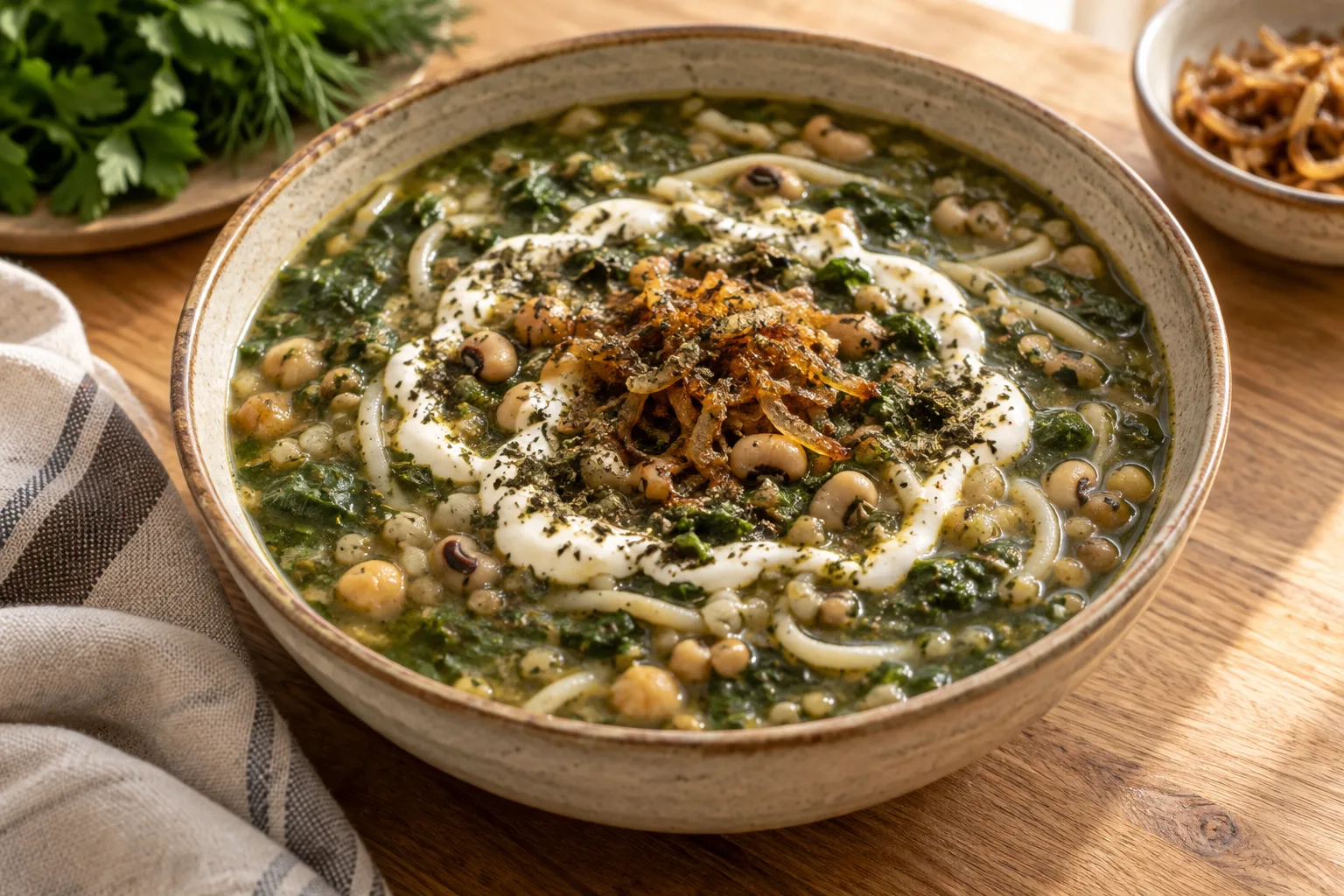
Iranian ash reshteh
Image generated by the Kitchenpause team
210 minAdvanced

Iranian ash reshteh

A thick Iranian soup of chickpeas, black-eyed peas, lentils, fresh herbs and reshteh noodles, finished with kashk. Makes 4 servings; hands-on preparation time is an estimate.

View recipe
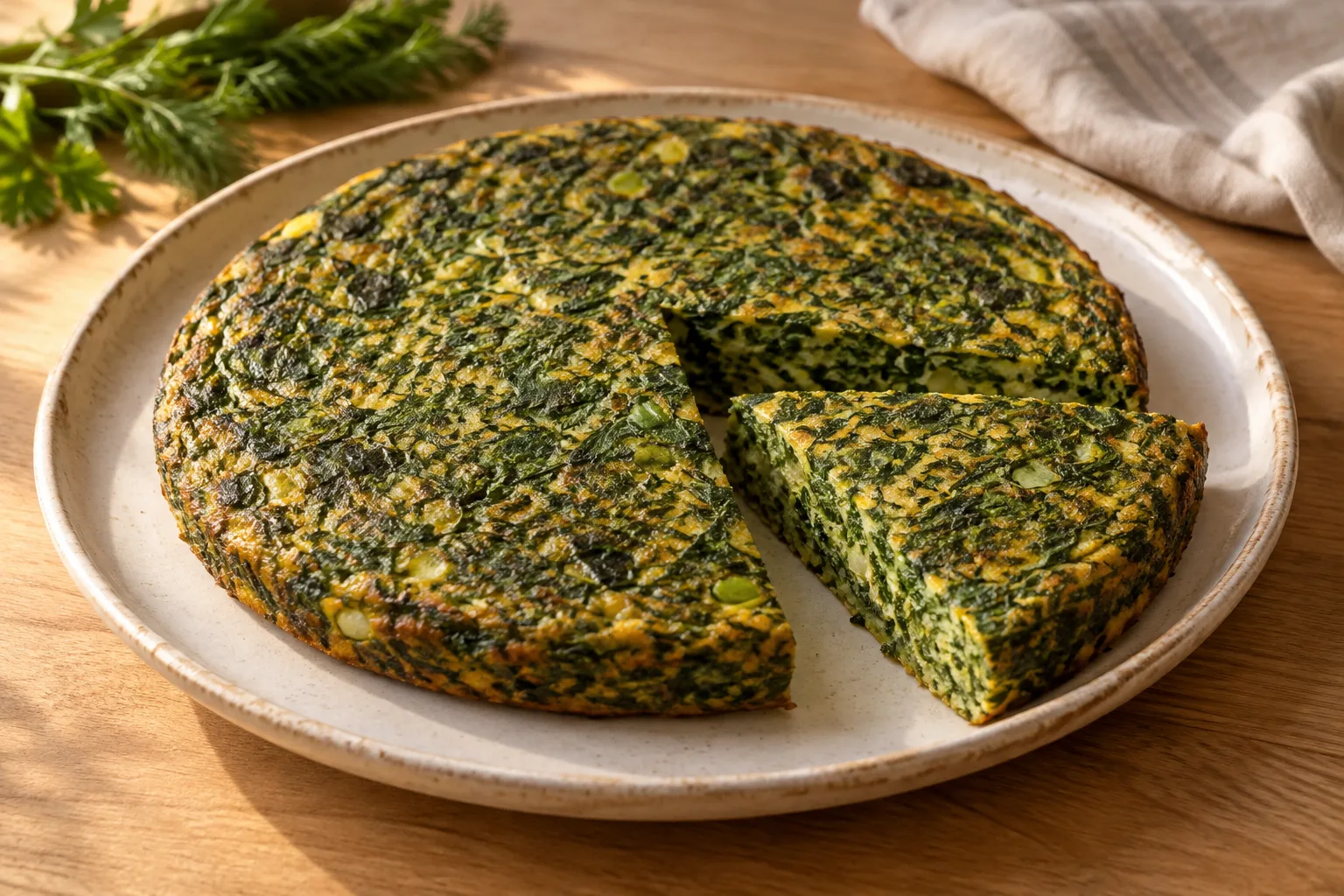
Iranian Mirza Ghasemi
Image generated by the Kitchenpause team
117 minEasy

Iranian Mirza Ghasemi

An Iranian starter of roasted, smoky eggplant with tomato, garlic, turmeric, and egg, cooked until creamy.

View recipe
Saffron bastani sonnati
Image generated by the Kitchenpause team
190 minIntermediate

Saffron bastani sonnati

Traditional Iranian ice cream with milk, egg yolks, saffron, rosewater, pistachios, and pieces of frozen cream.

View recipe
Iranian Ghormeh Sabzi
Image generated by the Kitchenpause team
170 minIntermediate

Iranian Ghormeh Sabzi

An Iranian stew of lamb, red kidney beans and plenty of fresh herbs, with dried lime and a citrus note. Serves 4.

View recipe
Sources consulted

Read the sources and each document’s scope. A heritage inscription concerns a particular practice, not all of a country’s cuisine.

  1. The Persian Store Cupboard: A Complete Guide to Persian Cuisine & Ingredients | LemonSalt www.lemonsalt.co.uk/blogs/guides/the-persian-store-cupboard-a-complete-guide-to-iranian-ingr… lemonsalt.co.uk Consulted: October 26, 2026
  2. Socio-economic Differences in Dietary Intakes: The Comprehensive Study on Household Food Consumption Patterns and Nutritional Status of I.R. Iran applications.emro.who.int/imemrf/Nutr_Food_Sci_Res/Nutr_Food_Sci_Res_2014_1_1_19_26.pdf National Nutrition and Food Technology Research Institute / Nutrition and Food Sciences Research Consulted: November 3, 2026
  3. Guilán: cocina www.iranicaonline.org/articles/gilan-xxi-cooking/ Encyclopaedia Iranica Consulted: November 3, 2026
  4. Temporal patterns of energy intake identified by latent class analysis in Iranian adults www.cambridge.org/core/services/aop-cambridge-core/content/view/E7F0A190214E30C5EB8F8B8CD844… Cambridge University Press / British Journal of Nutrition Consulted: November 2, 2026
  5. Cookpad / Gallup World Cooking Index Year4,2021data www.gallup.com/file/analytics/513236/Gallup-Cookpad-Global%20Analysis%20Report-Year%204.pdf Gallup / Cookpad Consulted: November 2, 2026
  6. World Happiness Report2025,Chapter3Appendix,TableA2 files.worldhappiness.report/WHR25_Ch03_Appendix.pdf World Happiness Report / Gallup research authors Consulted: November 2, 2026
  7. Sharing meals with others: How sharing meals supports happiness and social connections files.worldhappiness.report/WHR25_Ch03.pdf Wellbeing Research Centre, University of Oxford / World Happiness Report; primary authors and Gallup data Consulted: November 2, 2026
  8. Meal Frequency in Iranian Children and Adolescents at National and Sub-National Levels: The CASPIAN-IV Study ijph.tums.ac.ir/index.php/ijph/article/download/4906/4481 Iranian Journal of Public Health / Tehran University of Medical Sciences Consulted: November 2, 2026
  9. Nutritional Assessment for Primary School Children in Tehran: An Evaluation of Dietary Pattern with Emphasis on Snacks and Meals Consumption pmc.ncbi.nlm.nih.gov/articles/PMC4050682/ International Journal of Preventive Medicine / PMC Consulted: November 2, 2026
  10. The Relation between Dietary Patterns and Functional Gastrointestinal Disorders among Iranian Military Men pmc.ncbi.nlm.nih.gov/articles/PMC6357671/ Advanced Biomedical Research / PMC Consulted: November 2, 2026
  11. Lesani et al., supplementary Table S1: weekday and weekend chrono-nutrition in Iranian adults static.cambridge.org/content/id/urn%3Acambridge.org%3Aid%3Aarticle%3AS0007114524002745/resou… Cambridge University Press / British Journal of Nutrition Consulted: November 2, 2026
  12. Association of chrono-nutrition components with cardiometabolic health in a sample of Iranian adults: a cross-sectional study www.cambridge.org/core/services/aop-cambridge-core/content/view/B546AC87ED0D7DC479F38EAF3131… Cambridge University Press / British Journal of Nutrition Consulted: November 2, 2026
  13. Socioeconomic Status, Youth’s Eating Patterns and Meals Consumed away from Home scialert.net/fulltext/?doi=pjbs.2009.730.733 Pakistan Journal of Biological Sciences / Science Alert Consulted: November 2, 2026
  14. Zereshk polo ba morgh (arroz iraní con agracejo y pollo) www.kitchenpause.com/es/recetas/zereshk-polo-ba-morgh-arroz-irani-con-agracejo-y-pollo KitchenPause Consulted: November 3, 2026
  15. Ghormeh sabzi iraní www.kitchenpause.com/es/recetas/ghormeh-sabzi-irani KitchenPause Consulted: November 3, 2026
  16. Bastani sonnati de azafrán www.kitchenpause.com/es/recetas/bastani-sonnati-de-azafran KitchenPause Consulted: November 3, 2026
  17. Mirza ghasemi iraní www.kitchenpause.com/es/recetas/mirza-ghasemi-irani KitchenPause Consulted: November 3, 2026
  18. Fesenjan iraní de pollo y nueces www.kitchenpause.com/es/recetas/fesenjan-irani-de-pollo-y-nueces KitchenPause Consulted: November 3, 2026
  19. Glycemic Index (GI) Values for Major Sources of Dietary Carbohydrates in Iran brieflands.com/journals/ijem/articles/99793.pdf International Journal of Endocrinology and Metabolism Consulted: November 3, 2026
  20. Seasonality in Iranian Fruit and Vegetable Dietary Intake brieflands.com/journals/thrita/articles/18171.pdf Thrita / National Nutrition and Food Technology Research Institute Consulted: November 3, 2026
  21. Iran NCD Risk Factors STEPs Report2011,National report Selected results cdn.who.int/media/docs/default-source/ncds/ncd-surveillance/data-reporting/iran/steps/iran-2… Iran Ministry of Health / WHO STEPS Consulted: November 3, 2026
  22. Nutritional Changes and Contributing Factors in Iran:PERSIAN Cohort2015–2017and2021–2023 onlinelibrary.wiley.com/doi/10.1002/fsn3.72060 Food Science & Nutrition / Wiley Consulted: November 3, 2026
  23. Determining the per capita consumption of Tah-dig in the Iranian food table link.springer.com/article/10.1186/s12889-025-25551-6 BMC Public Health / Springer Nature Consulted: November 3, 2026
  24. Socioeconomic determinants of nutritional behaviors of households in Fars Province, Iran, 2018 www.frontiersin.org/journals/nutrition/articles/10.3389/fnut.2022.956293/pdf Frontiers in Nutrition Consulted: November 3, 2026
  25. Microbial and Chemical Characteristics of Doogh (Iranian Fermented Milk Drink) onlinelibrary.wiley.com/doi/10.1155/2021/3009795 International Journal of Food Science / Wiley Consulted: November 3, 2026
  26. A prospective study of tea drinking temperature and risk of esophageal squamous cell carcinoma pmc.ncbi.nlm.nih.gov/articles/PMC7477845/ International Journal of Cancer Consulted: November 3, 2026
  27. ČĀY (Tea) www.iranicaonline.org/articles/cay-tea/ Encyclopaedia Iranica Consulted: November 3, 2026
  28. Salt intake among Iranian population: the first national report on salt intake in Iran europepmc.org/article/MED/30005027 Journal of Hypertension / primary abstract in EuropePMC Consulted: November 3, 2026
  29. Psychometric Evaluation of the Persian Version of Adult Food Preferences Questionnaire (FPQ-Adult) europepmc.org/articles/PMC13382024 Current Developments in Nutrition / original JATS in EuropePMC Consulted: November 3, 2026
  30. Iran Statistical Yearbook1391,Chapter19,Household Expenditure and Income tehranconvention.org/system/files/iran/19-household-expenditure-and-incomepdf.pdf Statistical Centre of Iran Consulted: November 3, 2026
  31. Iran Statistical Yearbook1391[2012–2013],original title and calendar information irandataportal.syr.edu/wp-content/uploads/preliminary-2.pdf Statistical Centre of Iran Consulted: November 3, 2026
  32. Effects of COVID-19 pandemic on household food waste behaviour in Iran europepmc.org/articles/PMC9641210 Heliyon Consulted: November 3, 2026
  33. Price of chelow kebab koobideh in Iran’s major cities in Mehr1405(2026/27) namafar.com/en/analysis/200078/price-of-chelow-kebab-koobideh-in-iran-s-major-cities-in-mehr… Namafar,original collection of Snappfood menu data Consulted: November 3, 2026
  34. International Day of Nowruz www.unesco.org/en/days/nowruz UNESCO Consulted: November 3, 2026
  35. Sabzi-polo with fish visitiran.ir/en/cuisine/Sabzi-polo-with-fish Visit Iran Consulted: November 3, 2026
  36. Kermanshah, ciudad creativa de gastronomía www.unesco.org/en/creative-cities/kermanshah UNESCO
  37. Sistema de azafrán basado en qanat de Gonabad www.fao.org/giahs/giahs-around-the-world/iran-qanat-based-saffron-system/en Food and Agriculture Organization of the United Nations

We use session and security technologies to provide our features. Only with your permission do we load Google Analytics to measure visits and Google Maps on Contact. Choose separately, reject or accept both.

Withdraw either permission here. Withdrawing analytics reloads the page to unload the running tag.

Cookie policy