- Category
- Pulses
- State
- Dry
- Usual unit
- cup
What it is
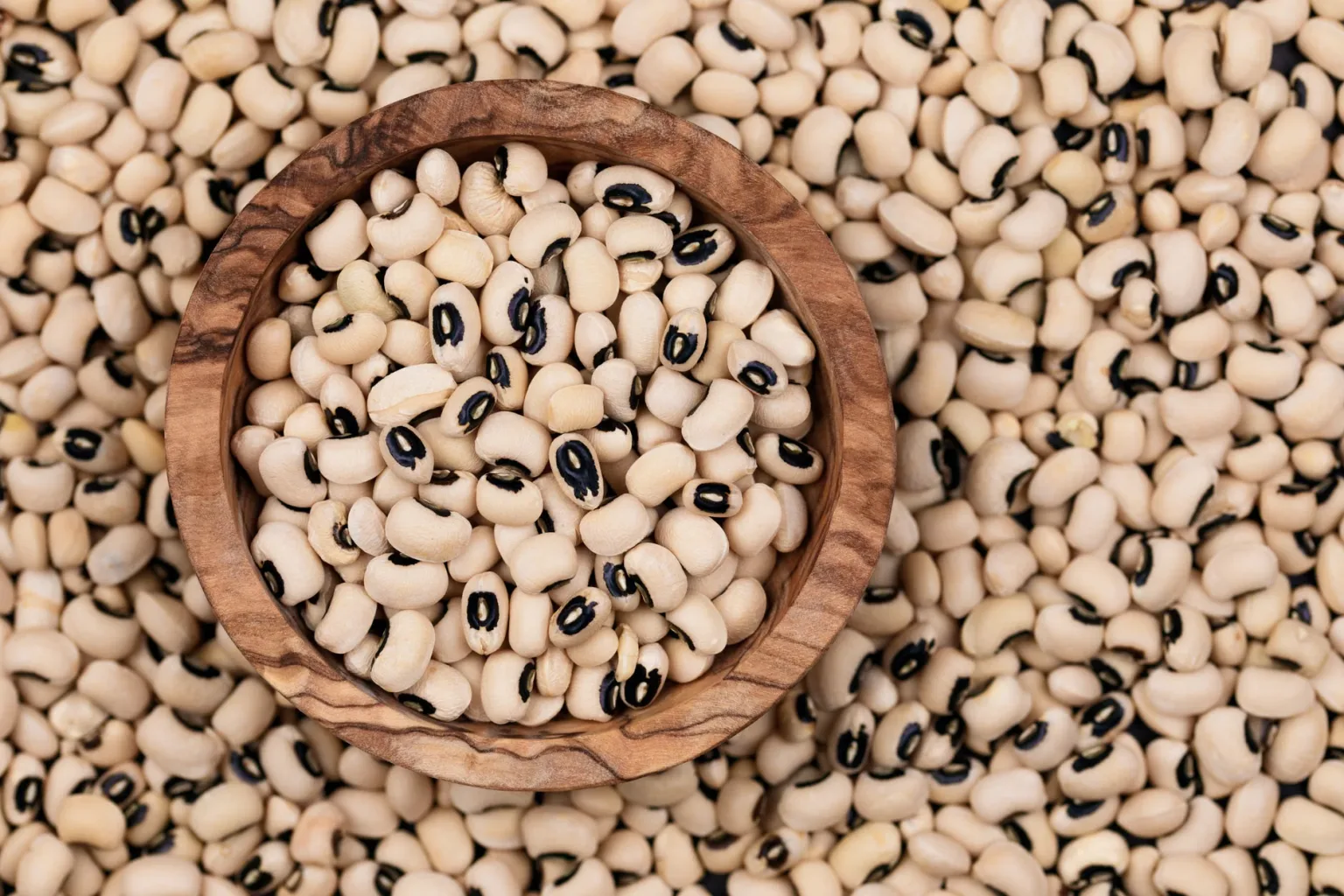
Black-eyed peas are edible seeds of a legume, recognized by the small dark mark against their pale skin. Despite the word “pea” in their name, they are used like beans in cooking. They are available dried and canned, and may also be sold frozen. Dried beans need to be cooked before eating, while canned beans are already cooked and can be added after draining and rinsing. Appearance, moisture, and preparation vary by product form, so check the package and adapt your recipe accordingly. Their mild flavor works well with vegetables, herbs, dressings, and other ingredients without overwhelming a dish.
When to use it
Use black-eyed peas when you want to add a legume to a salad, soup, stew, or casserole. Canned beans are convenient when you need to add them without cooking from dry; drain and rinse them before mixing them in. Dried beans are useful for making a larger batch and seasoning the cooking liquid to taste, but they require cooking. Cooked beans can also form the base of a dip or spread. For salads, add them when tender but still holding their shape; for a creamier result, mash or purée them.
How to use it
If using dried beans, sort through them and rinse them in a colander under cool water. Simmer in water until tender; cooking time can vary, so check the texture and follow package directions rather than relying on a fixed time. Drain the beans if your recipe calls for it. To use canned beans, open the can, drain the liquid, and rinse the beans in a colander before adding them to a dish. Toss them with tomato, corn, cilantro, and spring onion for a salad, or add them to soups, stews, and casseroles. You can also mash or purée them into a dip. Refrigerate leftovers promptly in a covered container.
Flavour and texture
Black-eyed peas have a mild, earthy flavor that pairs well with fresh vegetables, herbs, dressings, and spices. Once cooked, they are tender and substantial; depending on how thoroughly they are cooked, they can hold their shape or mash readily. Canned beans are ready to add to a recipe, while dried beans let you choose the final texture during cooking. For a salad, drain them well and fold them in gently to help keep them whole.
How to choose it
Choose dried, canned, or frozen beans according to your recipe and available time. For dried beans, look for a sealed package and seeds that appear clean and whole. For canned beans, check that the can is not leaking or bulging; do not use a damaged can. If you want to limit added salt, compare labels and choose a low-sodium or no-added-salt option when available. Check the package instructions, too, so you know whether the product needs cooking or only draining and rinsing.
Storage
Store dried beans in an airtight container in a cool, dry place. Keep unopened cans in a cool, dry place, and follow the package directions for frozen beans. After opening, refrigerate beans in a covered, nonmetal container and use within five days. Cooked beans or opened canned beans can also be frozen in a freezer-safe container; for best quality, use them within six months. Refrigerate prepared leftovers within two hours.
Substitutions
In a salad or similar dish, cooked black beans can replace black-eyed peas; the color will differ, and the flavor and texture may vary somewhat. Another cooked bean can work if its size and consistency suit the recipe. Adjust draining and seasoning to the product you choose. Do not swap dried beans for canned beans without accounting for the difference: dried beans need cooking, while canned beans are already cooked.
Common mistakes
Do not add dried beans to a salad as if they were ready to eat; cook them until tender first. With canned beans, remember to drain and rinse them if the recipe calls for it. Avoid a vigorous boil or rough stirring if you want the beans to keep their shape. Do not leave leftovers at room temperature for an extended period; refrigerate them promptly in a covered container.
Safety and allergens
Cook dried beans until tender and follow package instructions. Refrigerate cooked or opened beans in a covered container within two hours. Discard cans that are leaking or bulging, and wash your hands and any surfaces that came into contact with their contents.
Culinary uses
- Main ingredient in soups, stews, and casseroles
- Base for salads, dips, and spreads
Recommended techniques
- Simmer dried beans in water until tender
- Drain and rinse canned beans before using
- Mash or purée cooked beans for dips and spreads
Pairs well with
- Tomato, corn, cilantro, and spring onion
- Avocado with lime juice or vinegar
Frequently asked questions
Are black-eyed peas peas or beans?
In cooking, they are treated as a legume and used much like beans, even though some names call them peas. Their familiar visual feature is a dark mark on a pale seed.
Do canned black-eyed peas need to be cooked?
Canned beans are already cooked. Drain and rinse them before adding them to a recipe; they can go into salads, soups, or stews.
How should I store leftover cooked black-eyed peas?
Refrigerate them promptly in a covered, nonmetal container and use them within five days. For longer storage, freeze them in a freezer-safe container.
Ingredient allergens
Allergen listThere are no verified associations for these ingredients yet.
Estimated nutrition
- Fat
- 0 g
- Saturates
- 0 g
- Carbohydrate
- 20 g
- Sugars
- 2.86 g
- Fibre
- 5.7 g
- Protein
- 2.86 g
- Salt
- 0.02 g
Sources and review
Automatically researched, cross-checked and validated content. Sources consulted:
- Sevin 16oz Concentrate Label v20 ucanr.edu/media/278902
- Sevin RTU Gallon Label v14 picol.cahnrs.wsu.edu/DownloadLabel/67239/WA
- Qué es un agujero negro estelar y por qué no es peligroso el localizado cerca de la Tierra doi.org/10.64628/aao.tkkhghtg5
- frijoles de ojo negro o frijoles negros Archives | Dinner Tonight dinnertonight.tamu.edu/ingredient/frijoles-de-ojo-negro-o-frijoles-negros/
- African Diaspora Archaeology Network, Newsletter, March 2009 www.diaspora.illinois.edu/news0309/news0309.html
- Frijoles de Ojo Negro | Food Hero | boletín foodhero.org/es/magazines/frijoles-de-ojo-negro
- Frijoles Blancos de Ojo Negro | Cook for Your Life www.cookforyourlife.org/es/nuestro-blog-de-cocina/frijoles-blancos-de-ojo-negro/
- Frijol de Ojo Negro (Caupí): guía de cultivo y cuidados plotmygarden.com/es/plants/black-eyed-pea
- Frijoles negros: qué son, cómo cocinarlos y 8 recetas para sacarles todo el partido www.directoalpaladar.com/ingredientes-y-alimentos/frijoles-negros-que-como-cocinarlos-8-rece…
- Frijol negro - Wikipedia, la enciclopedia libre es.wikipedia.org/wiki/Frijol_negro