- Category
- Pulses
- State
- Dry
- Usual unit
- Variable
What it is
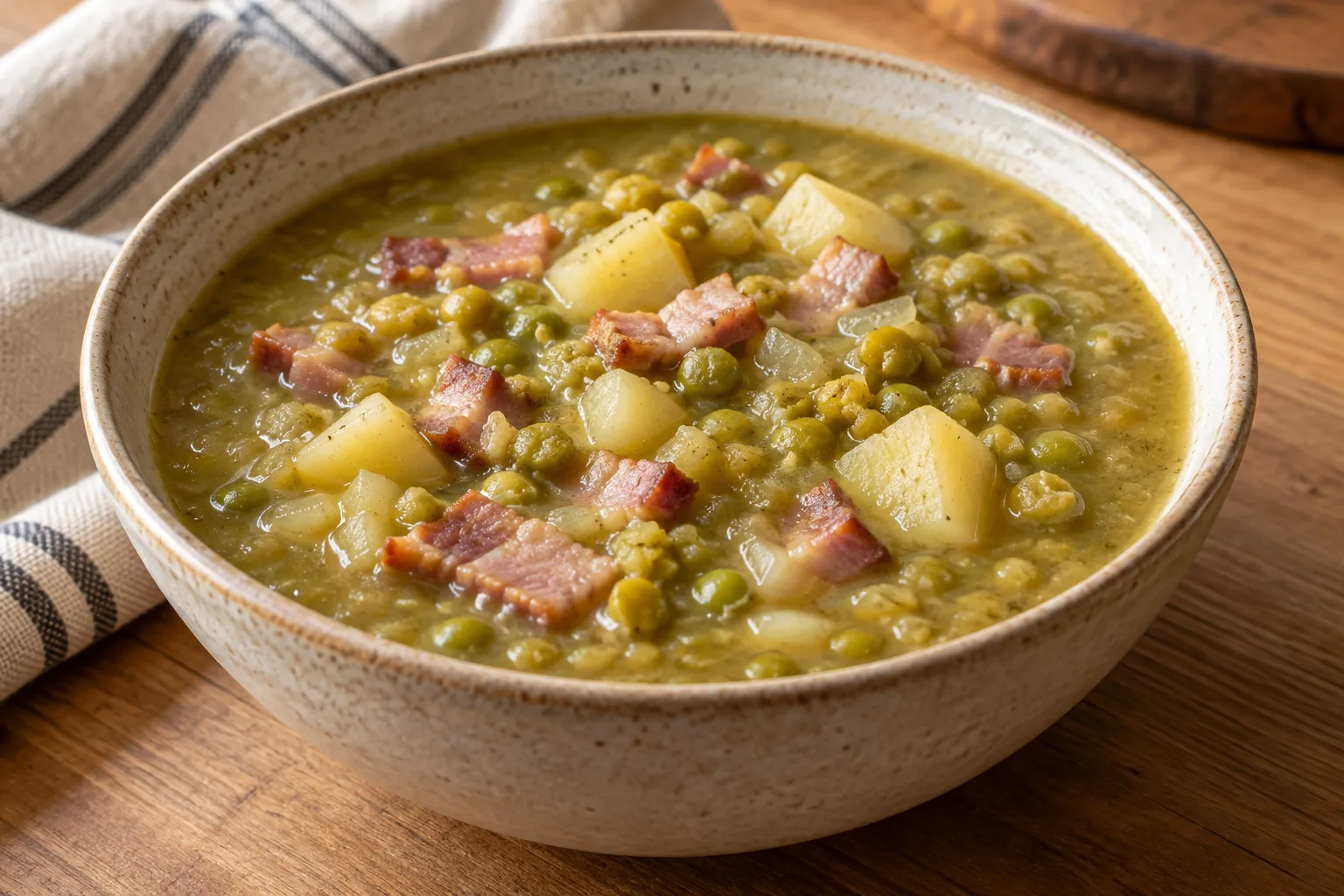
Dried peas are mature seeds of the pea plant, Pisum sativum, dried for storage and cooking. Unlike fresh peas, they are hard before cooking and are used as a dry legume. They are available in green or yellow varieties and as whole or split seeds. Split peas have had their skins removed and usually cook more quickly than whole peas. The final cooking time and texture vary with the product and preparation, so check the package directions and test for tenderness before finishing a dish.
When to use it
Use dried peas when you want a filling base for soup, purée, or stew, or a dry legume to keep in the pantry. Split peas are convenient when you want a soft texture that breaks down readily; whole peas may be preferable when you want the seeds to retain more shape, although the result depends on cooking. Since dried peas need preparation and cooking, plan ahead and check the package to see whether soaking is recommended and how to cook that particular variety.
How to use it
Before cooking, sort through the peas and discard any discolored or damaged seeds; rinse them and follow the package directions. Some recipes call for soaking first and discarding the soaking water, while other products or methods may differ. Cook the peas in liquid until tender, checking their texture as they cook, and add more liquid if the dish needs it. For a purée, blend once soft and adjust the consistency with liquid. They pair well with onion, leek, carrot, garlic, cumin, or cilantro, and can be served with toasted bread. Do not assume every variety needs the same soaking or cooking time.
Flavour and texture
Color and flavor vary by variety: dried peas are sold in green and yellow forms, among other shades. They are hard before cooking and soften as they cook. Split peas, which have no skins, tend to break down and thicken soups or purées more readily than whole peas. The exact result depends on the variety and cooking method.
How to choose it
Choose a dry, clean product with no visible moisture, and check that the package is intact. Select green or yellow peas, whole or split, according to the texture you want. Check the date and package directions. Before cooking, sort through the seeds and set aside any that are discolored or damaged.
Storage
Keep dried peas dry in a clean, tightly closed container, away from moisture. Dry products generally keep longer than fresh ones, but the exact storage life depends on the product and package. Observe the date on the label and avoid storing them in a damp place. Do not use peas that show moisture, mold, insects, or an unusual odor.
Substitutions
Split peas can replace whole dried peas in soups and purées, but they usually soften sooner and thicken the dish more. Lentils or chickpeas can play a similar role in a stew, though their flavor and texture differ. Adjust the liquid, preparation, and cooking method for the legume you choose, following its package directions.
Common mistakes
Do not treat dried peas like fresh or frozen peas; they need a different preparation. Do not assume whole and split peas cook alike: split peas usually soften sooner. Ignoring package directions, failing to sort the seeds, or blending them before tender can lead to an uneven result.
Safety and allergens
Sort and rinse the peas before cooking, and follow the package directions. If preserving cooked peas at home in jars, use a tested canning procedure specifically intended for dried legumes; do not improvise the method or processing time.
Culinary uses
- Base para sopas y cremas
- Ingrediente para guisos y platos de legumbres
Recommended techniques
- Remojar y enjuagar antes de cocinar, si se desea
- Cocer a fuego lento hasta que estén tiernos; triturar para obtener una crema
Pairs well with
- Cebolla, puerro, zanahoria y ajo
- Comino, cilantro y pan tostado
Frequently asked questions
Do dried peas need soaking?
It depends on the variety and product. Some recipes call for soaking, while directions can differ; check the package and follow the recipe's method.
What is the difference between whole and split dried peas?
Split peas have their skins removed and usually cook sooner and break down more readily. Whole peas tend to retain more shape, depending on how they are cooked.
How can I use dried peas?
Use them in soups, purées, and stews. Split peas are especially useful when you want a thick, smooth result.
Ingredient allergens
Allergen listThere are no verified associations for these ingredients yet.
Estimated nutrition
- Fat
- 7 g
- Saturates
- 1 g
- Carbohydrate
- 19.29 g
- Sugars
- 3.07 g
- Fibre
- 6 g
- Protein
- 7.18 g
- Salt
- 0.55 g
Sources and review
Automatically researched, cross-checked and validated content. Sources consulted:
- Client Challenge doi.org/10.2307/jj.27939689.16
- Los guisantes secos | EROSKI www.eroski.es/inspirate/blog-eroski/los-guisantes-secos/
- Los guisantes secos | Consumer www.consumer.es/alimentacion/los-guisantes-secos.html
- Sevin RTU Gallon Label v14 picol.cahnrs.wsu.edu/DownloadLabel/67239/WA
- Winter vegetable production on small farms and gardens west of the Cascades | Servicio de Extensión de OSU extension.oregonstate.edu/es/catalog/pnw-548-winter-vegetable-production-small-farms-gardens…
- alergia alimentarias www.aesan.gob.es/dam/jcr:d4878177-0981-4f7f-ab96-995783c0be60/alergias_alimentarias.pdf
- Beans or Peas – Shelled, Dried, All Varieties - National Center for Home Food Preservation nchfp.uga.edu/how/can/canning-vegetables-and-vegetable-products/beans-or-peas-shelled-dried-…
- Crema de guisantes secos: receta paso a paso - Mejor con Salud mejorconsalud.as.com/recetas/sanas/crema-guisantes-secos-receta-paso-paso/
- ¡Asegurándonos de que no eres un robot! digital.csic.es/bitstream/10261/166947/1/Ron_Guisante.pdf