- Category
- Meat
- State
- Fresh
- Usual unit
- unit
What it is
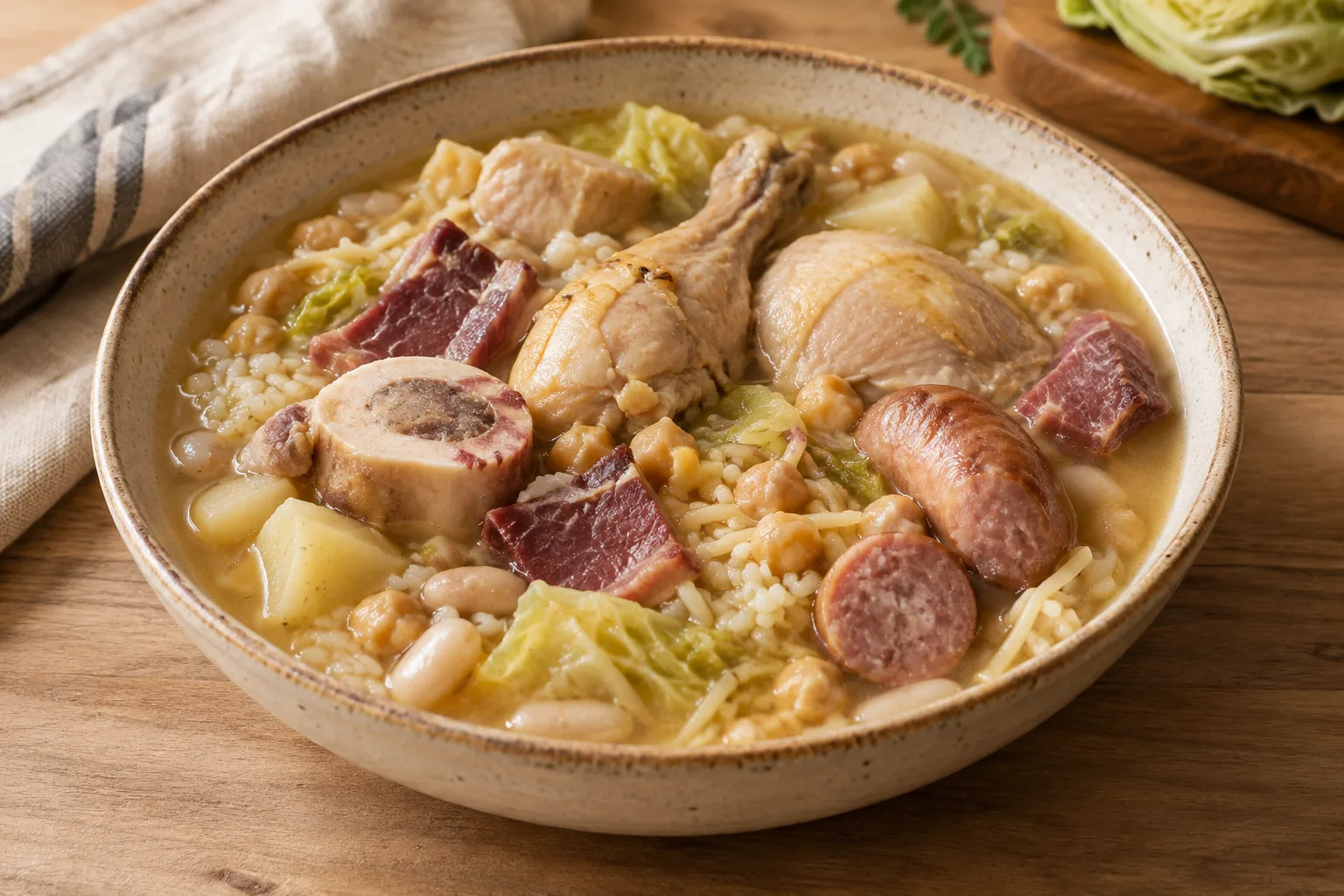
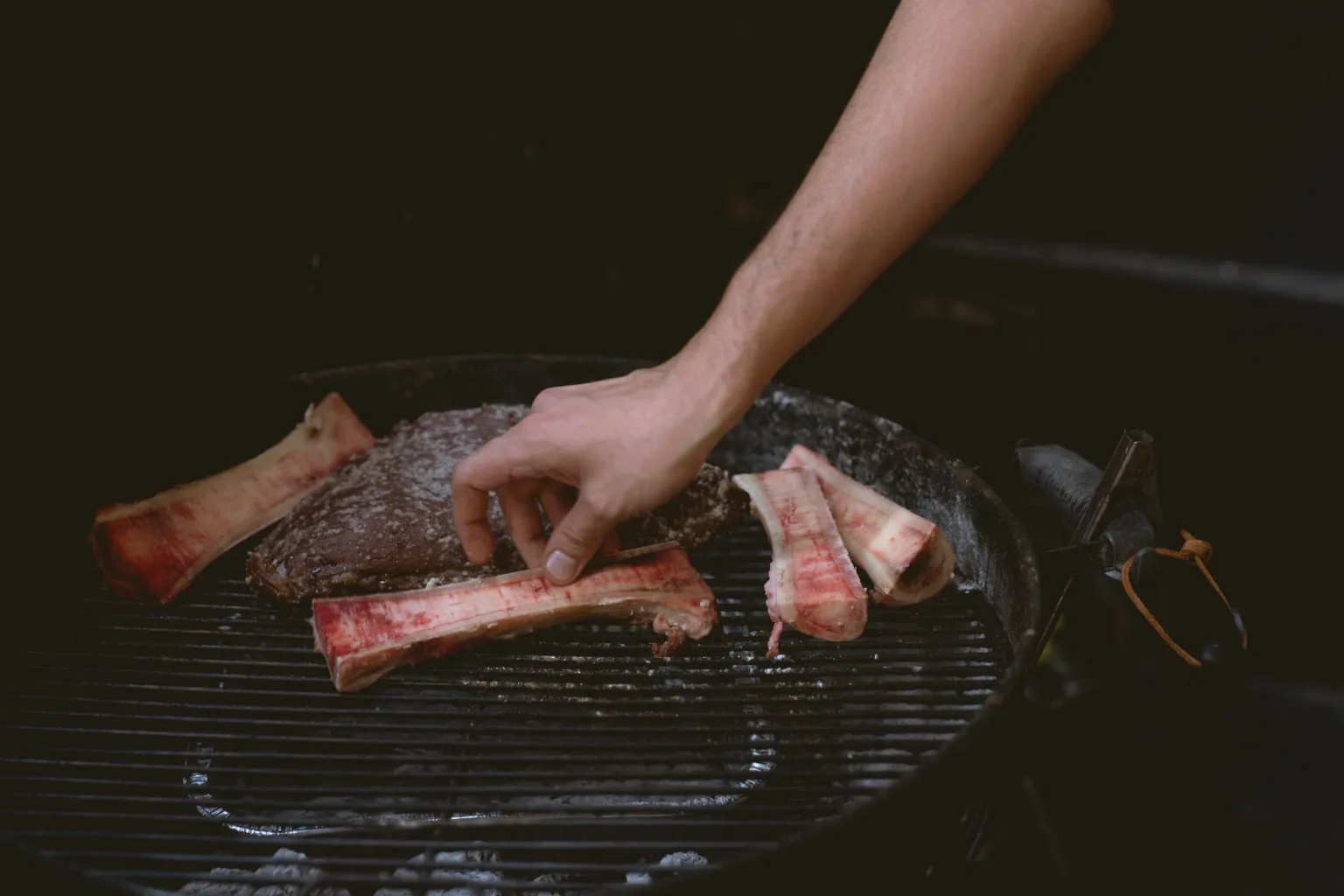
A ham bone is the bone left from a ham joint or cut, sometimes with small amounts of meat, fat, and connective tissue still attached. In cooking, it is mainly used to flavor broth, soup, legumes, rice dishes, and stews. Add it to the pot while the other ingredients cook, then remove it before serving. The size of the bone and the amount of meat or fat left on it vary, so the flavor it contributes can vary too. It is not usually served as a portion of meat: its main role is to season and enrich the liquid or dish as it cooks.
When to use it
Use a ham bone when a soup, broth, or stew would benefit from ham flavor. It works particularly well with legumes such as split peas and can also be used with vegetables, potatoes, or rice. Add it during cooking so its flavor can infuse the liquid, and remove it before serving. Because individual bones can vary in intensity, taste the dish before adding salt and adjust the seasoning near the end. If you want a milder result or do not want a ham flavor, use another broth instead.
How to use it
Add the bone to the pot with the cooking liquid and ingredients, such as legumes or vegetables, and let it flavor the dish as it cooks. A split-pea soup recipe, for example, uses a ham bone or ham hock with broth or water. Remove the bone before serving. If small pieces of meat remain attached, separate them only if they come away easily, and check the food for hard fragments. Taste before adding salt because the bone may make the dish taste more pronounced. If the bone is too large for the pot, ask a suitably equipped butcher or food shop to cut it with an appropriate saw rather than trying to split it with a kitchen knife.
Flavour and texture
A ham bone can give broth, soup, and stew a pronounced ham flavor and enrich the cooking liquid. How strong that flavor is depends on the individual bone and what remains attached, so taste the dish before adjusting its seasoning. The bone is not used as a meat portion for its texture; its main purpose is to flavor the food during cooking.
How to choose it
Choose a ham bone intended for food use and in good condition, with a size that suits your pot or recipe. The amount of meat or fat left on it can vary, as can the flavor it contributes. If it needs cutting, ask a shop equipped with a suitable saw to do it. Do not try to cut it at home with a kitchen knife, and check the piece before use for any loose fragments.
Storage
Store the bone according to the directions on its packaging or those provided by the shop where you bought it. Keep it protected and handle it hygienically, separate from ready-to-eat foods. If you do not have storage instructions, ask the seller before storing or using it. Do not assume that one storage period applies to every ham bone, since products and packaging can vary.
Substitutions
If you do not have a ham bone, prepared broth or stock can provide liquid and flavor, though it will not necessarily give the dish the same ham character. In soup, choose a different type of broth according to the recipe and the flavor you want. If the bone is included only to flavor a dish, leaving it out is also an option, but the finished dish will taste different.
Common mistakes
Do not automatically salt the dish at the start: taste it first, since the bone may contribute a strong flavor. Do not treat the bone like a cut of meat intended to be served in portions; it is mainly used for flavoring. Do not try to split it with a kitchen knife or overlook loose fragments. Have it cut with suitable equipment and remove it before serving.
Safety and allergens
Handle the bone hygienically and follow the storage directions provided for that product. Remove it before serving and check that no loose, hard fragments remain in the food. If it needs cutting, ask a shop with suitable equipment to do it.
Culinary uses
- Flavoring soups and broths
- Enriching legume dishes and stews
Recommended techniques
- Simmering in liquid to flavor a soup or broth
- Adding to a pot of legumes or stew during cooking
Pairs well with
- Split peas and other legumes
- Vegetables, potatoes, and rice
Frequently asked questions
What is a ham bone used for?
It is added during cooking to flavor broth, soup, legumes, and stews, then removed before serving.
What dishes go well with a ham bone?
It can be used with legumes such as split peas, as well as dishes containing vegetables, potatoes, or rice.
Should I salt the dish at the beginning?
Taste it first and adjust the seasoning near the end, since the intensity of the bone and its ham flavor can vary.
How should a large ham bone be cut?
Ask a shop equipped with a suitable saw to cut it. Do not try to split it with a kitchen knife.
Ingredient allergens
Allergen listThere are no verified associations for these ingredients yet.
Estimated nutrition
- Fat
- 3.48 g
- Saturates
- 1.23 g
- Carbohydrate
- 0.67 g
- Sugars
- 0.67 g
- Fibre
- 0 g
- Protein
- 15.4 g
- Salt
- 2.92 g
Sources and review
Automatically researched, cross-checked and validated content. Sources consulted:
- ¿Por qué la muerte es origen de miedos y tabúes? doi.org/10.64628/aao.fccyk3qj3
- The Essential Glossary of Cooking Terms for the Culinary Arts - Escoffier www.escoffier.edu/blog/culinary-arts/the-essential-glossary-of-cooking-terms-for-the-culinar…
- Nutrition After Your Transplant - Health Online healthonline.washington.edu/sites/default/files/record_pdfs/Nutrition-After-Your-Transplant-…
- Eating Spain: National Cuisine Since 1900 - UKnowledge uknowledge.uky.edu/context/hisp_etds/article/1031/viewcontent/Eating_Spain_National_Cuisine_…
- Referencias gastronomicas en DQ II www.ehumanista.ucsb.edu/sites/secure.lsit.ucsb.edu.span.d7_eh/files/sitefiles/cervantes/volu…
- Publicaciones de Seguridad alimentaria www.aesan.gob.es/actualidad/publicaciones-seguridad-alimentaria
- Sopa de Chícharos Partidos | Servicio de Extensión de OSU extension.oregonstate.edu/es/imported-publication/sopa-de-chicharos-partidos
- Name_____________________... chs.asu.edu/sites/g/files/litvpz611/files/2022-05/all_yellow_cd_score_sheets.pdf
- Hueso de jamón: cómo aprovecharlo en la cocina www.eiberico.com/blog/hueso-del-jamon/?srsltid=AYCX9vJgGALnXS3TKP_IPtQKxDQCZVY6kki4kvMSFYJR_…