- Category
- Vegetables
- State
- Fresh
- Usual unit
- unit
What it is
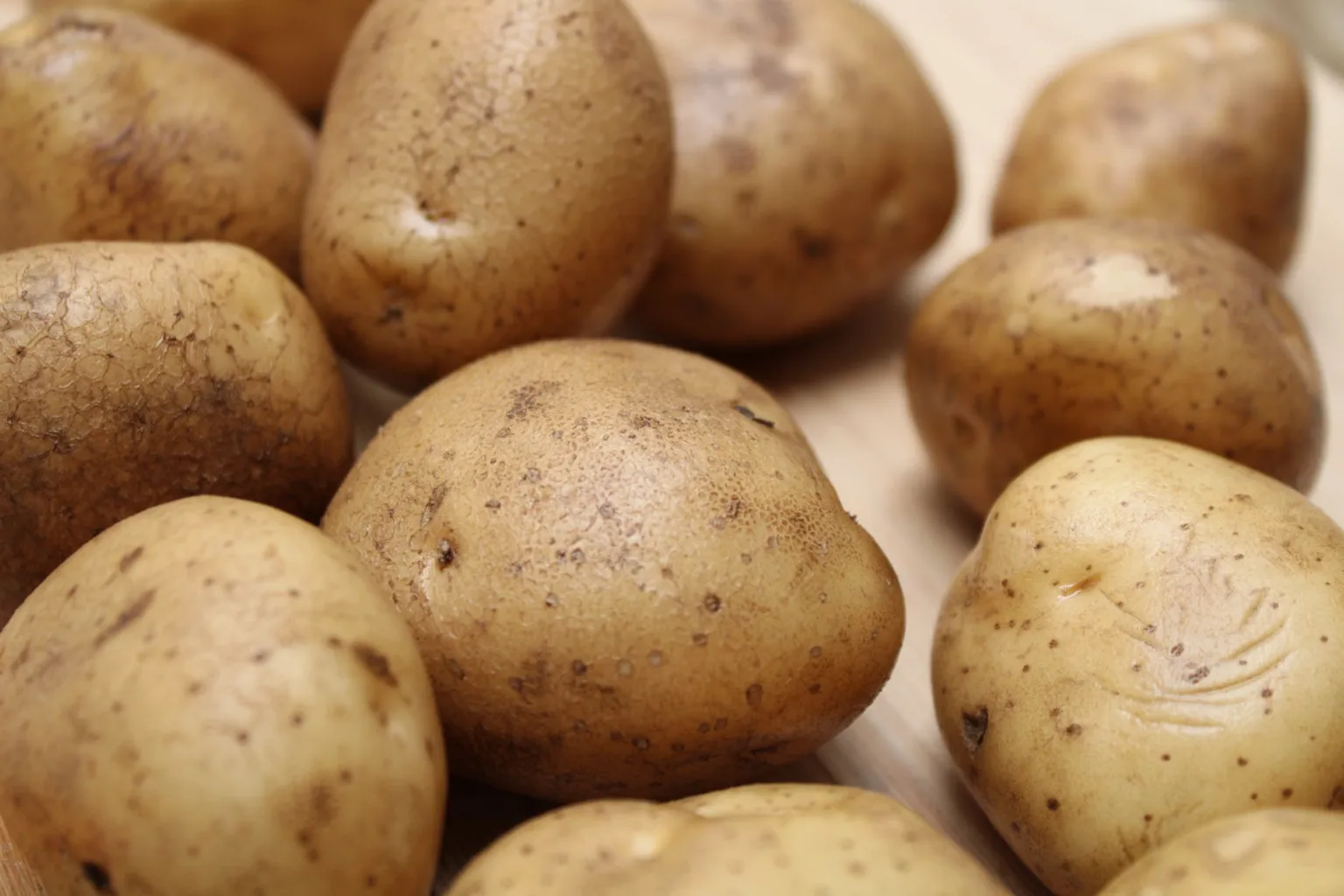
The potato is the edible tuber of the plant Solanum tuberosum and is used as a vegetable. Varieties differ in size, skin and flesh colour, firmness, and how they behave when cooked. A useful kitchen distinction is whether a potato keeps its shape or becomes softer and more floury. This helps you choose potatoes for salads, stews, mash, frying or oven dishes. Potatoes are sold fresh and can be the main ingredient or a side dish. The name varies by region; in some places, the potato is also called a spud, though “potato” is the usual English name.
When to use it
Choose potatoes when you want a substantial base for a stew, soup or side dish, or when they are the main ingredient in a tortilla, mash or fries. For salads and dishes where pieces should stay intact, look for a firm-textured variety. A more floury variety may suit a softer mash or fries with a tender interior. If you do not know the variety, remember that potatoes do not all cook alike and check their texture as they cook.
How to use it
Wash the potato and peel it if the preparation calls for it. Cut it into evenly sized pieces to help it cook evenly. Boil or steam it for salads and sides; roast or bake it; fry it; add it to a stew; or cook and mash it. For a potato tortilla, combine it with egg and, if desired, onion or pepper. Choose a firm variety when you want the pieces to hold their shape and a flourier one when you want them to break down. Cook potatoes before eating them.
Flavour and texture
Potatoes have a mild flavour that works with many ingredients. The result varies considerably with the variety and cooking method: some potatoes keep firm pieces, while others become softer and break down more readily. Boiling, roasting, frying and mashing all produce different textures; choose the method that suits the dish.
How to choose it
Choose firm potatoes without clearly green areas or many visible sprouts. For dishes that need intact pieces, look for varieties described as firm or suitable for salads and boiling. A flourier variety may be more suitable for mash or frying. Appearance alone does not tell you exactly how every variety will cook, so use any stated cooking-use guidance on the label.
Storage
Keep potatoes away from light, as exposure can cause green areas to appear. Check them before cooking and look for green areas, sprouts and an unusually bitter taste. Do not eat potatoes that are very green, have many sprouts or taste especially bitter. Follow any storage instructions on the packaging as well.
Substitutions
If you need potato pieces to hold their shape in a salad, switch to a firmer potato variety. For mash or frying, try a more floury variety. These are changes between potato varieties, not exact equivalents: the final texture also depends on preparation.
Common mistakes
Choosing a variety without considering the dish can leave pieces falling apart when they should stay intact, or produce a texture that does not suit mash or frying. Another mistake is leaving potatoes exposed to light or overlooking clearly green areas, many sprouts or an unusually bitter taste.
Safety and allergens
Cook potatoes before eating them. Do not eat potatoes that are very green, have many sprouts or taste especially bitter; do not taste them to check for bitterness. Follow any preparation instructions on the packaging.
Culinary uses
- Base for soups, stews and other cooked dishes
- Side dish or main ingredient in purées, salads and tortilla
Recommended techniques
- Boiling or steaming
- Roasting or baking
- Frying
- Mashing or puréeing
- Adding to stews
Pairs well with
- Eggs, including in potato tortilla
- Onion, peppers and salt
Frequently asked questions
Which potatoes are suitable for salad?
Choose a firm-textured variety that holds its shape during cooking, especially if you want to serve intact pieces.
Which potatoes work well for mash?
A more floury variety tends to break down more readily and may suit mashed potatoes.
Can potatoes be eaten raw?
It is preferable to cook potatoes before eating them. They can be boiled, steamed, roasted, fried or added to a stew.
Ingredient allergens
Allergen listThere are no verified associations for these ingredients yet.
Estimated nutrition
- Fat
- 0.34 g
- Saturates
- 0.09 g
- Carbohydrate
- 83.1 g
- Sugars
- 3.52 g
- Fibre
- 5.9 g
- Protein
- 6.9 g
- Salt
- 0.14 g
Sources and review
Automatically researched, cross-checked and validated content. Sources consulted:
- Client Challenge doi.org/10.2307/jj.27939689.16
- La patata: historia, variedades y usos gastronómicos | Girasoles webgirasoles.com/la-patata-historia-variedades-y-usos-gastronomicos/
- La patata, origen y datos curiosos | masymas supermercados www.supermasymas.com/blog/la-patata-cuanto-sabes-de-este-alimento/
- Etiquetado de sustancias que causan alergias e intolerancias alimentarias www.aesan.gob.es/seguridad-alimentaria/informacion-alimentaria/etiquetado-sustancias
- GastroWiki - Blog sobre Gastronomía gastroalianza.es/gastrowiki/articulo/variedades-de-patatas-usos-curiosidades-y-nombres
- ¿Cuántos tipos de patata existen? Nombres y usos fruteriasilvestre.com/cuantos-tipos-de-patata-existen/
- Food Allergies | FDA www.fda.gov/food/nutrition-food-labeling-and-critical-foods/food-allergies
- RISK ASSESSMENT OF FOOD ALLERGENS - IRIS iris.who.int/server/api/core/bitstreams/6c71a3db-88b8-4fcd-a807-f5220eb4fc34/content
- Allergens in food | safefood.vic.gov.au www.safefood.vic.gov.au/allergens-in-food
- Anaphylaxis due to potato starch (possibly caused by percutaneous sensitization) - PMC pmc.ncbi.nlm.nih.gov/articles/PMC8103007/
- La patata, un básico con historia, propiedades y mil formas de llegar a la mesa | Hostelería Salamanca www.hosteleriasalamanca.es/comer/comer-1/patata-basico-historia-propiedades-formas-llegar-me…