- Category
- Herbs and spices
- State
- Fresh
- Usual unit
- unit
What it is
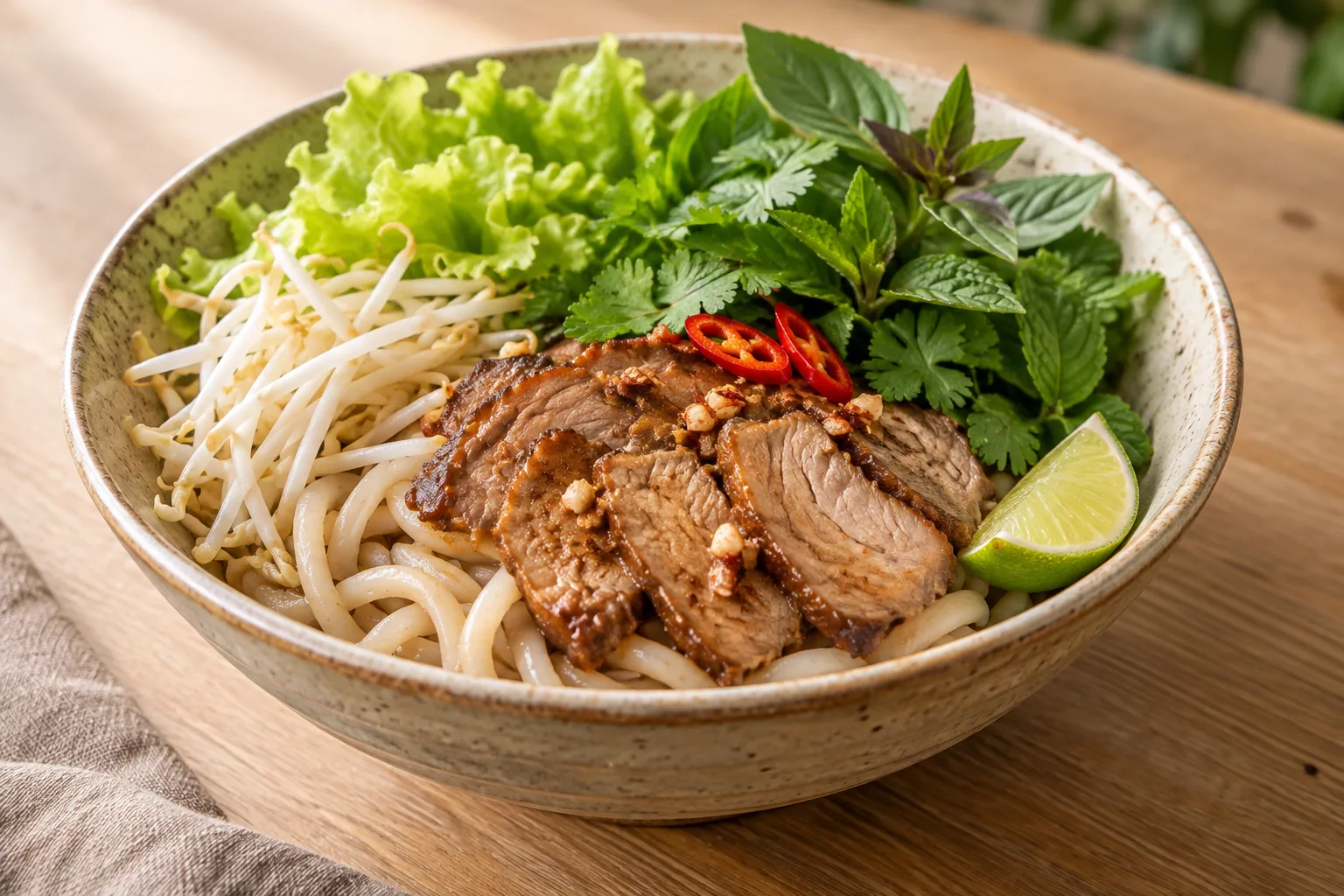
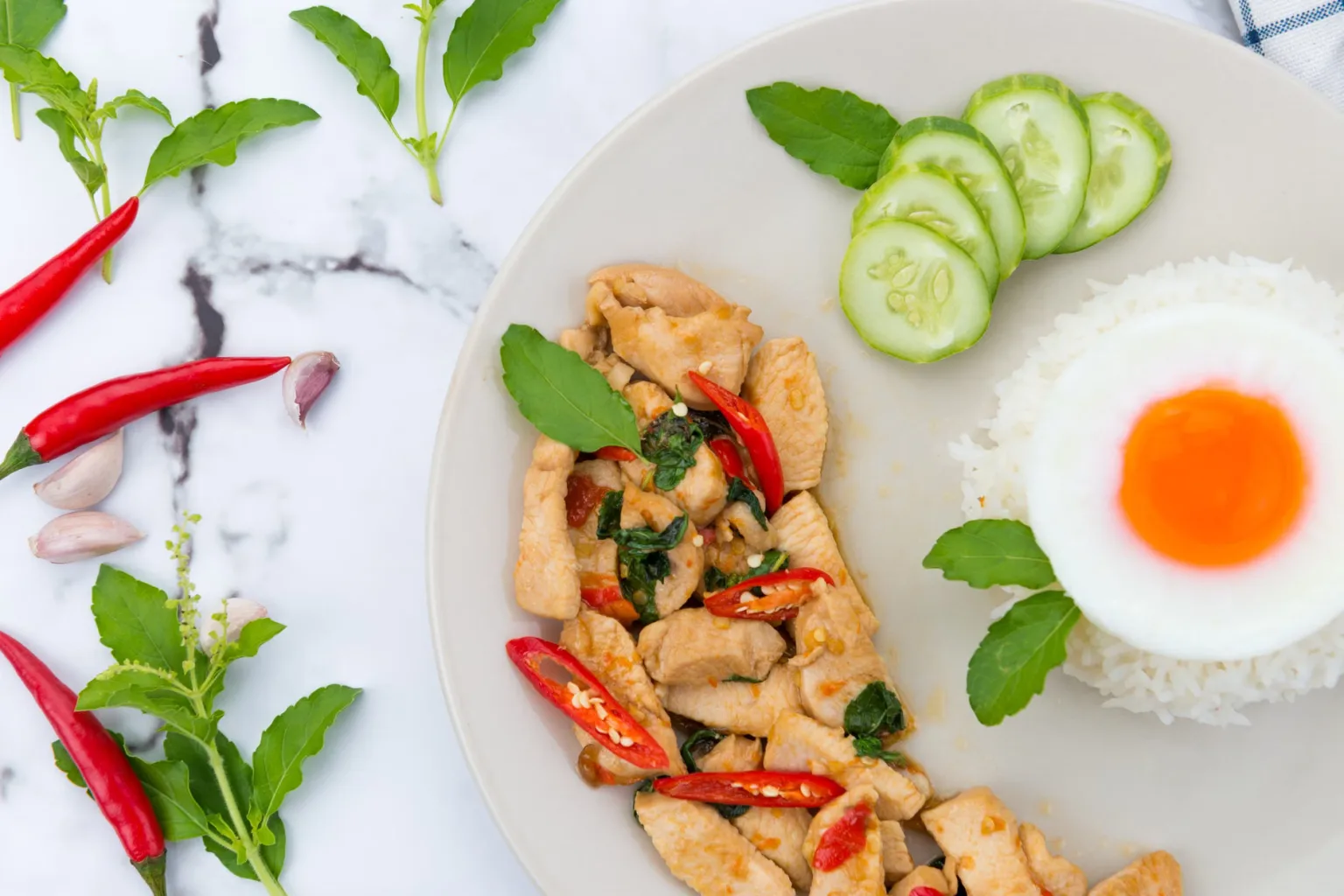
Thai basil is a fresh aromatic herb in the mint family, used in Southeast Asian cooking. The name commonly refers to Thai sweet basil, also called horapa, with green leaves and often purplish stems or shoots. Its aroma is described as having anise-like and licorice notes. It is not the same as Thai holy basil, called kaprao or krapao, which is a different variety with a distinct profile. Common names can be confusing, so check the label or ask which variety is being sold before buying or cooking.
When to use it
Choose Thai basil when you want a pronounced anise-like, herbal aroma in curries, stir-fries, soups or Southeast Asian-style salads. It can complement chili, garlic, coconut milk and lemongrass. Use it when that flavor profile matters to the dish, rather than swapping in holy basil without considering the difference: they are distinct varieties and do not bring the same aroma. Common sweet basil can be a practical alternative, though the result will taste different.
How to use it
Separate the leaves from the stems and use them whole or sliced, depending on the texture you want. Add them to curries, stir-fries and soups, or use them fresh in salads and as an aromatic finish. They pair well with chili and garlic and can complement dishes with coconut milk or lemongrass. If Thai sweet basil is unavailable, common sweet basil is a possible alternative, but it will change the flavor profile. Check that the herb is not holy basil when a recipe specifically calls for horapa.
Flavour and texture
The fresh leaves are tender and aromatic, with anise-like and licorice notes and a pronounced herbal character. They can taste more spiced than common sweet basil. Appearance, color and aroma can vary between plants and varieties, so the common name alone may not be enough to identify the herb. Thai holy basil has its own profile and should not be treated as identical.
How to choose it
Look for fresh-looking green leaves and, when the label specifies it, the sweet Thai basil variety or horapa. Some plants have purplish stems or shoots. Do not mistake it for holy basil, which is also sold as Thai basil and may be labeled kaprao or krapao. If you are unsure, check the variety name on the pack or ask the shop which type it is.
Storage
The available information identifies this ingredient as a fresh herb but does not establish a specific storage method or duration. Follow the package or seller’s instructions, and do not treat it as a dried herb or as shelf-stable at room temperature. If buying it loose, ask how to keep the leaves in good condition and use them while they still look fresh.
Substitutions
Common sweet basil, including Italian basil, can stand in if Thai basil is unavailable, but the aroma will be different and less distinctive. Holy basil is another variety with a different profile; use it only if the recipe allows for that change. No substitute exactly reproduces the anise-like character of Thai sweet basil.
Common mistakes
A frequent mistake is confusing Thai sweet basil, or horapa, with holy basil, or kaprao: they are different varieties. Replacing it with common sweet basil can also change the aroma noticeably. Check the variety name and do not expect an identical result when using a different basil.
Safety and allergens
No specific safety warning for this herb is established in the available information. Treat it as a fresh produce item and follow the handling directions on its package or from the seller.
Culinary uses
- Fresh aromatic herb
- Finishing and seasoning ingredient
Recommended techniques
- Tear or slice the leaves and add to a dish
- Stir into a curry or sauté near the end of cooking
Pairs well with
- Chili and garlic
- Coconut milk and lemongrass
- Curries, soups and stir-fries
Frequently asked questions
Is Thai basil the same as holy basil?
No. Thai sweet basil, or horapa, and holy basil, or kaprao, are different varieties with distinct aromas.
What does Thai basil taste like?
It has a pronounced herbal aroma with anise-like and licorice notes; its profile can be more spiced than common sweet basil.
Can I substitute Italian basil for Thai basil?
Yes, it can work as a practical alternative, but the dish’s aroma and flavor will be different.
Ingredient allergens
Allergen listThere are no verified associations for these ingredients yet.
Estimated nutrition
- Fat
- 10.7 g
- Saturates
- 1.33 g
- Carbohydrate
- 12 g
- Sugars
- 4 g
- Fibre
- 2.7 g
- Protein
- 22.7 g
- Salt
- 1.3 g
Sources and review
Automatically researched, cross-checked and validated content. Sources consulted:
- Client Challenge doi.org/10.2307/jj.27939689.16
- Curry - Wikipedia, la enciclopedia libre es.wikipedia.org/wiki/Curry
- Albahaca sagrada tailandesa – Kwan Homsai www.kwanhomsai.com/albahaca-sagrada-tailandesa/
- Albahaca- Gastronomía - Región de Murcia Digital www.regmurcia.com/servlet/s.Sl?r=ReP-19968-DETALLE_REPORTAJESPADRE&sit=c%2C543%2Cm%2C2719
- Albahaca: qué es, para qué sirve y beneficios bonviveur.com/es/noticias/albahaca
- La albahaca tailandesa combina la belleza, la fragancia y el sabor de la naturaleza thursd.com/es/articulos/albahaca-tailandesa
- Aromáticos de Tailandia y sus plantas | Umami Madrid www.umami-madrid.com/2008/09/01/aromaticos-de-tailandia-y-sus-plantas/
- ingredientes thai ✧ Cómo encontrarlos para tus recetas tailandesas thaigarden.es/ingredientes-thai/
- La albahaca como especia | El Huerto Urbano www.elhuertourbano.net/la-albahaca-como-especia/
- Albahaca tailandesa: cultivo, cuidados y plantas compañeras plotmygarden.com/es/plants/basil-thai
- Ingredientes tailandeses para sustituir al cocinar en el extranjero – deSIAMCuisine (Thailand) Co Ltd siam.recipes/es/blogs/news/which-ingredients-to-substitute-when-cooking-thai-food-overseas?s…
- - YouTube www.youtube.com/watch?v=Z9v0yU7Pt4Q
- La comida tailandesa: un viaje por sus sabores - Estudia Hostelería estudiahosteleria.com/blog/cocina/comida-tailandesa/