- Category
- Vegetables
- State
- Fresh
- Usual unit
- unit
What it is
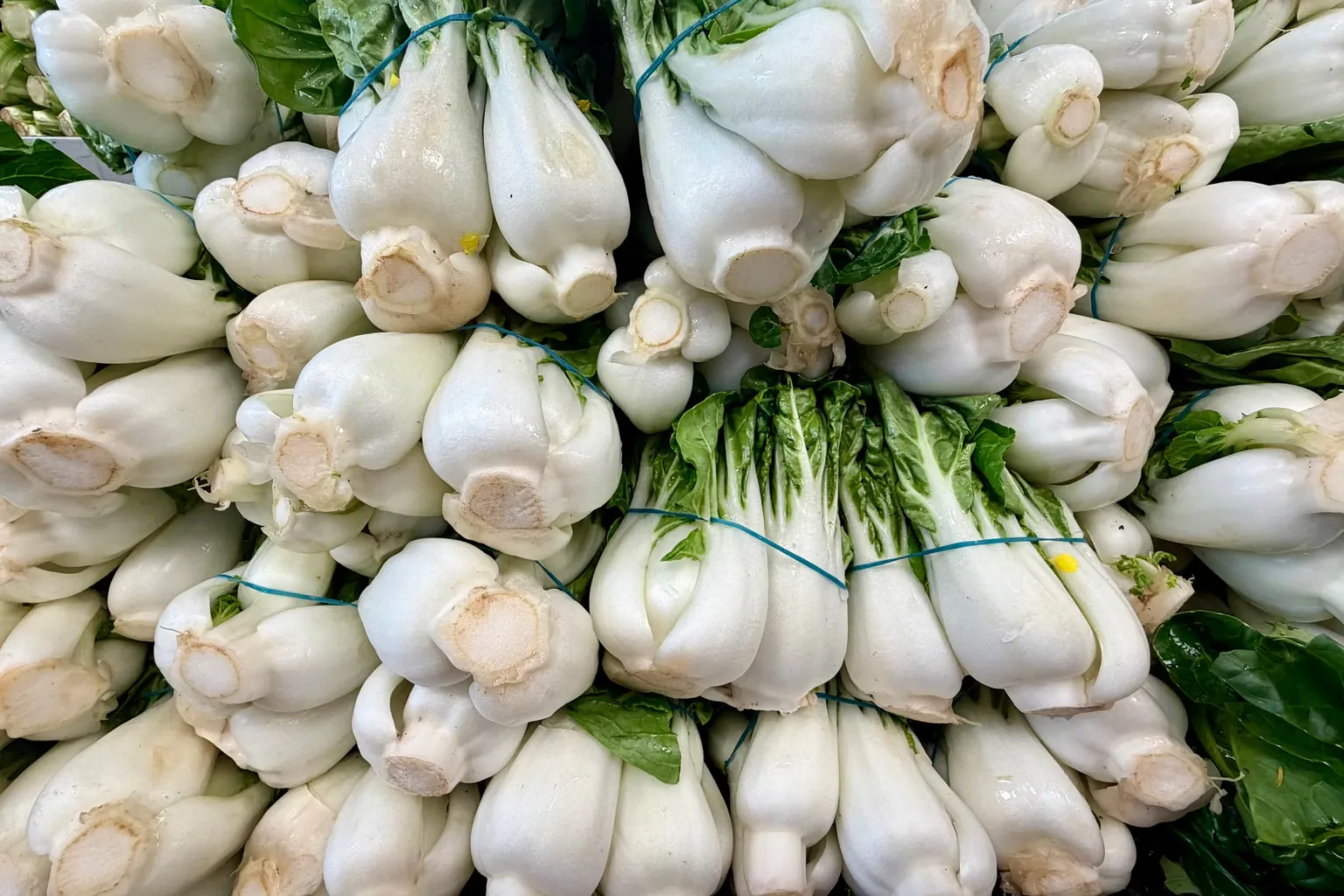
Bok choy, also called pak choi or paksoi, is a leafy vegetable in the Brassicaceae family. It has firm, pale stems and green leaves, and both parts are edible. Unlike cabbages that form a round, compact head, bok choy is usually sold as an open bunch. It comes in different sizes and varieties, including smaller baby bok choy. The contrast between crisp stems and delicate leaves makes it useful to cook the parts for slightly different lengths of time.
When to use it
Use bok choy when you want to add a leafy vegetable with substantial stems to a quick meal, soup or side dish. Firm stems hold their texture in a brief stir-fry, while the leaves can go in near the end so they soften without losing all their colour. You can also steam or grill it, or use young leaves in a salad. Availability and growing seasons vary by location and crop, so choose according to the bunch’s freshness and what is available at your market.
How to use it
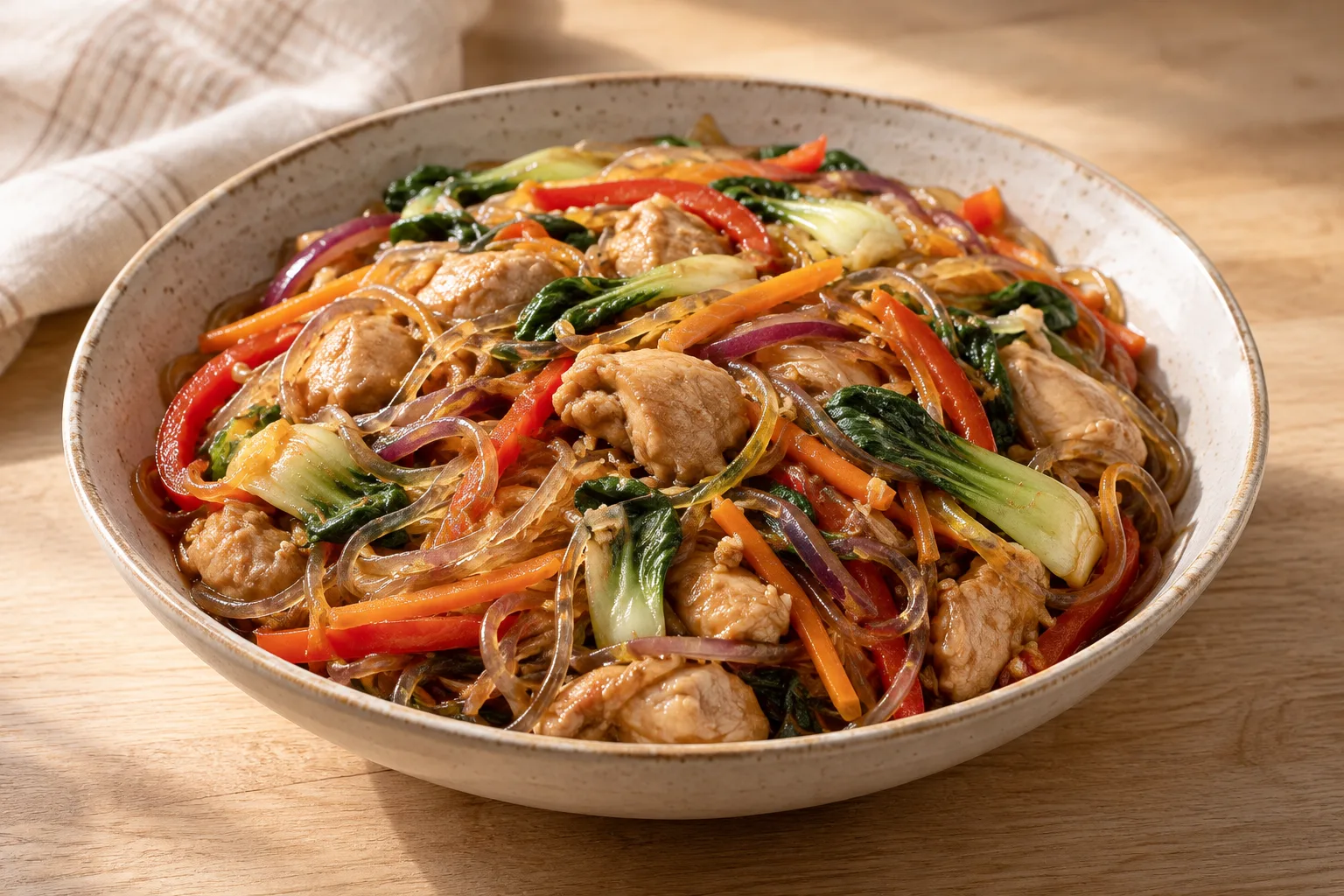
Trim just enough from the base to separate the stems, then wash the stems and leaves thoroughly under running water. Drain them; cut the stems into pieces and the leaves into larger pieces. For a stir-fry, start with the stems and add the leaves later, as they soften more quickly. You can also steam it, boil it briefly, grill it, or add it to soups and stews. Serve it as a side or combine it with rice, noodles, tofu, mushrooms or meat. Garlic, ginger, soy sauce and chilli are compatible seasonings. Baby bok choy is easier to cook whole; for larger bunches, separate the parts to help them cook evenly.
Flavour and texture
Its flavour is mild, with a little sweetness and a faint peppery or bitter note, similar to other cabbages and leafy greens. The stems are juicy and crisp; the leaves are softer and more delicate. The contrast is especially noticeable when you cook the parts separately and add them at different times.
How to choose it
Choose firm, fresh-looking stems and dark green leaves that are not wilted. Avoid bunches with slimy stems, limp leaves or visible brown spots, which indicate a loss of quality. Use the same checks for baby bok choy. Sizes vary between varieties, so a small bunch is not necessarily a sign of poor quality.
Storage
Keep unwashed bok choy in the refrigerator’s vegetable drawer. To help it stay fresh, wrap it in paper towels or place it in a loosely closed plastic bag. A university extension guide recommends using it within a week. Wash it just before preparation and discard parts that are clearly spoiled.
Substitutions
Green cabbage or napa cabbage can work in cooked dishes that suit a cabbage-family vegetable, although their shape and texture are not identical. Swiss chard can also stand in for bok choy in stir-fries or soups: its leaves and ribs give a comparable contrast, but the flavour differs. Adjust the cut and when you add each part to avoid overcooking.
Common mistakes
Do not cook every part for the same length of time: stems generally need longer than leaves. Avoid buying bunches with slimy stems or wilted leaves, and do not store them while wet. Before cutting, separate and wash the pieces thoroughly to remove dirt from around the base, stems and leaves.
Safety and allergens
No bok choy-specific hazard is identified here. As with other fresh vegetables, inspect the bunch and rinse it under running water before cutting or serving.
Culinary uses
- Leafy vegetable for stir-fries and sautéed dishes
- Vegetable for soups, salads and side dishes
Recommended techniques
- Stir-frying
- Steaming
- Boiling
- Grilling
Pairs well with
- Garlic and ginger
- Soy sauce and chilli
- Rice and noodles
- Tofu, mushrooms or meat
Frequently asked questions
Can you eat both the stems and the leaves?
Yes. Both parts are edible. The stems are crisper and the leaves more tender, so account for the difference when cooking.
How do you cook bok choy without leaving the stems tough?
Cut the stems into pieces and start cooking them before the leaves. Add the leaves near the end, once the stems are more tender.
How long does fresh bok choy keep in the refrigerator?
A university extension guide recommends keeping it unwashed in the refrigerator and using it within a week. Its actual keeping quality depends on initial freshness and storage conditions.
Ingredient allergens
Allergen listThere are no verified associations for these ingredients yet.
Estimated nutrition
- Fat
- 0 g
- Saturates
- 0 g
- Carbohydrate
- 4.71 g
- Sugars
- 2.35 g
- Fibre
- 1.2 g
- Protein
- 1.18 g
- Salt
- 0.09 g
Sources and review
Automatically researched, cross-checked and validated content. Sources consulted:
- Client Challenge doi.org/10.2307/jj.27939689.16
- USDA FoodData Central libguides.marist.edu/fdc
- Comité Científico aesan.gob.es/dam/jcr:3c94ae83-1384-420c-96c1-0c2aa6f1544e/comite_cientifico_34.pdf
- Try Bok Choy for a Different Vegetable www.uaex.uada.edu/counties/miller/news/fcs/fruits-veggies/Try%20Bok%20Choy%20for%20a%20Diffe…
- Bok Choy | Extension Fond du Lac County fonddulac.extension.wisc.edu/files/2020/09/bok-choy.pdf
- What I Eat in a Week @ Cal - Life life.berkeley.edu/what-i-eat-in-a-week-cal/
- April Fresh Produce Guide: How To Use Spring Fruit & Veg, According To Pro Chefs | Institute of Culinary Education www.ice.edu/blog/april-produce-guide
- How to Store Bok Choy for Maximum Freshness • southernwv.edu staging.southernwv.edu/how-to-store-bok-choy/
- Cabbage | UNL Food | Nebraska food.unl.edu/article/cabbage/
- Find Bok Choy Near Me ~ cms.ncwc.edu cms.ncwc.edu/bok-choy-near-me/
- Pak Choi: qué es, historia, propiedades y usos en cocina bonviveur.com/es/noticias/pak-choi
- Todo lo que necesitas saber sobre el bok choy | American Diabetes Association diabetesfoodhub.org/es/blog/todo-lo-que-necesitas-saber-sobre-el-bok-choy
- Pak Choy: usos, propiedades y recetas | Fine Dining Lovers www.finedininglovers.es/explorar/noticias/pak-choy-usos-propiedades-y-beneficios-recetas-fac…
- Pak choi: orígenes, receta y dónde comprar esta col china - Oriental Market www.orientalmarket.es/pak-choi/?srsltid=AYCX9vIs_YMAIOh50FRohrCx7l-GJpCkcMx7gBEpaNxgNc1Lnri9…