- Category
- Pulses
- State
- Dry
- Usual unit
- g
What it is
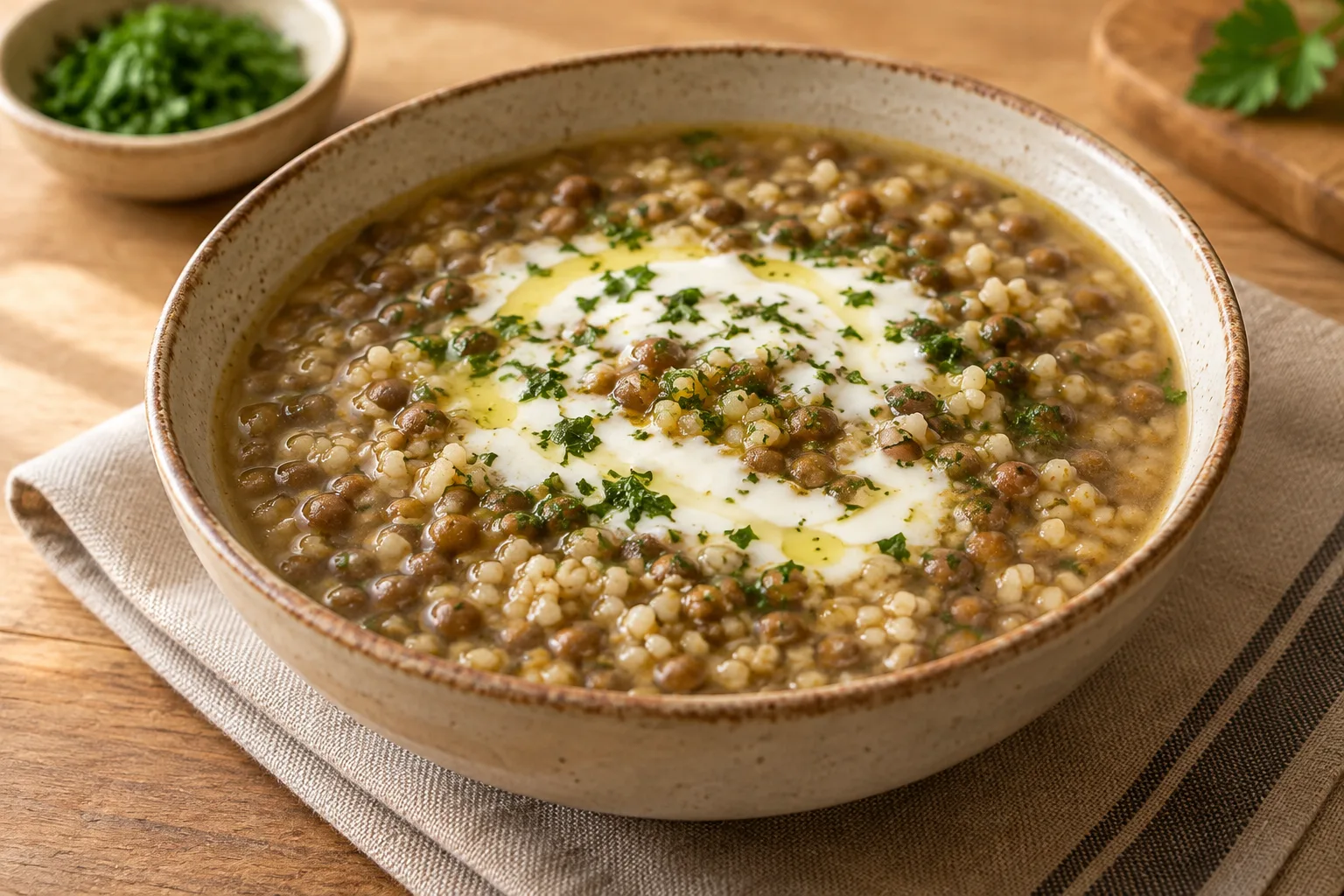
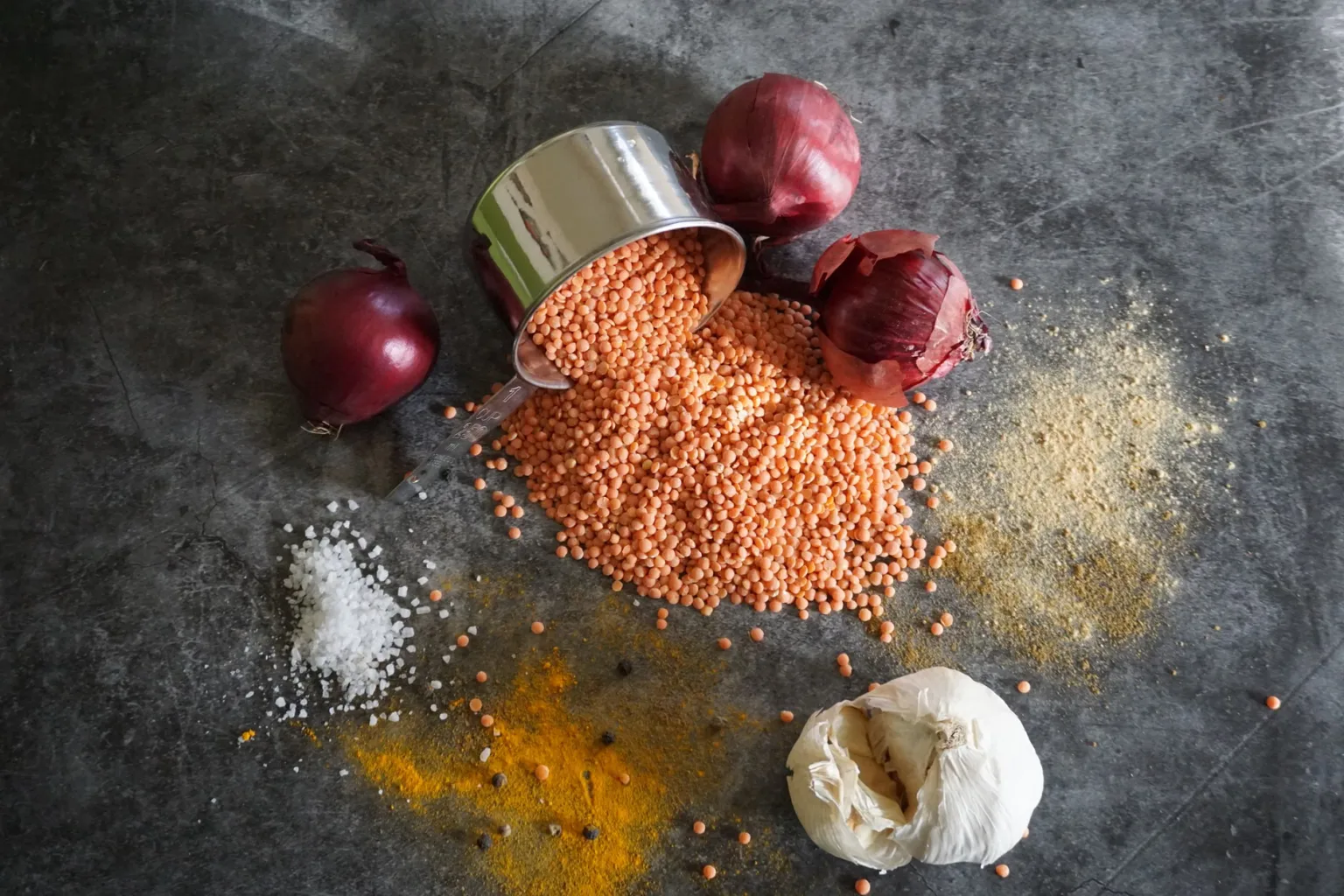
Lentils are the edible seeds of a legume, Lens culinaris. They come in different colors and sizes, including green, brown, black, yellow, red and orange. They may be sold whole, with their seed coats intact, or split and without the coats; cooked, packaged lentils are also available. Whole lentils generally hold their shape better after cooking, while split lentils tend to soften and break down more readily. The word “lentils” therefore does not describe one fixed texture: variety and processing help determine whether they suit a salad, stew or creamy dish. This profile focuses on dried lentils as the default form. If you buy a different form, follow the package directions and choose it for the texture you want.
When to use it
Choose whole lentils when you want distinct seeds in salads, grain bowls or stews. Split lentils, especially red or yellow ones, are useful in thick soups, stews and purées where a softer texture is welcome. Cooked, packaged lentils can be added to a dish that is nearly ready. Lentil types do not all soften at the same rate, so check the texture as they cook and choose a variety for the finished dish rather than by color alone.
How to use it
Before cooking dried lentils, look through them and remove any small stones or debris, then rinse them under running water. Pre-soaking is not necessary. Simmer in water or stock until tender; cooking time depends on the variety, whether the lentils are whole or split, and how old they are. Check them as they cook so they do not become softer than you want. Use whole lentils in salads, with rice or other grains, and in stews. Let split lentils soften further to thicken soups or make purées. Cooked, packaged lentils are ready to add to hot dishes; rinsing them can remove some of their packing liquid. Stir lentils into a sauce, vegetable dish or filling to add body.
Flavour and texture
Lentils have a mild, earthy flavor with a slight nutty quality. Whole lentils usually give a firmer texture and hold their shape, although the result depends on the variety and cooking. Split lentils, with their seed coats removed, soften more quickly and can break down into a thick, creamy consistency. Lentil types also differ in appearance, so choose according to the texture and look you want in the finished dish.
How to choose it
For a dish where distinct lentils matter, look for a whole variety and check whether the package says dried or cooked. Choose split lentils when you want them to soften into soups or purées. Check that the packaging is clear and intact, and read its date and storage directions. Older lentils may take longer to soften, so when texture is important, choose a product with clear variety information and seeds that look reasonably uniform.
Storage
Keep dried lentils in a tightly sealed container in a cool, dry, dark place to protect them from moisture and maintain quality. As a quality guide, they can keep for about a year under these conditions; also follow the date and directions on the package. Store cooked lentils covered in the refrigerator and use them within the recommended storage period, or freeze them. For cooked, packaged lentils, follow the storage instructions on the label.
Substitutions
Cooked yellow or red lentils can stand in for chickpeas in a hummus-style spread, though the flavor and consistency will change. You can also replace part of the meat in chili, stew or taco fillings with cooked lentils. If substituting lentils for another bean in soup or a grain bowl, account for differences in size and texture and adjust when you add them and how much liquid you use.
Common mistakes
Do not assume every lentil variety takes the same time to soften or will hold its shape. Split lentils break down more readily, and older lentils may take longer to become tender. Avoid skipping the check for debris and the rinse, and check texture during cooking: a variety suited to purée may not work for a salad of distinct grains.
Safety and allergens
Before cooking dried lentils, remove any debris or small stones and rinse them. Cook until tender and follow the package’s use and storage directions, especially for cooked or packaged lentils. Any specific instructions on the product should take precedence.
Culinary uses
- base for soups and stews
- salad and grain-bowl ingredient
- thickener for soups, stews and sauces
- plant-based substitute for part of the meat in fillings
Recommended techniques
- sort and rinse before cooking
- simmer until tender
- cook split lentils into a soft puree
- blend cooked lentils into a paste
Pairs well with
- rice and other cooked grains
- onion and garlic
- vegetables and leafy greens
- parsley, mint, cumin and lemon
Frequently asked questions
Do lentils need to be soaked before cooking?
Dried lentils generally do not need pre-soaking. Sort through them, rinse, and cook until they reach the texture you want.
Which lentils are best for a salad?
Choose whole lentils, which generally hold their shape better. Check them as they cook so they do not become too soft.
Which lentils work well in a thick soup?
Split lentils, often red or yellow, soften and break down readily, making them useful for thickening soups and making purées.
Ingredient allergens
Allergen listThere are no verified associations for these ingredients yet.
Estimated nutrition
- Fat
- 0 g
- Saturates
- 0 g
- Carbohydrate
- 59.4 g
- Sugars
- 0 g
- Fibre
- 28.1 g
- Protein
- 25 g
- Salt
- 0.04 g
Sources and review
Automatically researched, cross-checked and validated content. Sources consulted:
- En el etiquetado alimentario hay algunas menciones que son obligatorias eletiquetadocuentamucho.aesan.gob.es/obligatoria.html
- Client Challenge doi.org/10.2307/jj.27939689.16
- The Essential Glossary of Cooking Terms for the Culinary Arts - Escoffier www.escoffier.edu/blog/culinary-arts/the-essential-glossary-of-cooking-terms-for-the-culinar…
- Lentils • The Nutrition Source nutritionsource.hsph.harvard.edu/food-features/lentils/
- Eating Spain: National Cuisine Since 1900 - UKnowledge uknowledge.uky.edu/context/hisp_etds/article/1031/viewcontent/Eating_Spain_National_Cuisine_…
- Content - Health Encyclopedia - URochester Medicine www.urmc.rochester.edu/encyclopedia/content?contentid=16370-1&contenttypeid=76
- Para la ciudadanía www.aesan.gob.es/para-la-ciudadania
- On the Pulse of Healthful Eating: Making Freezer Meals With Lentils, Chickpeas and Split Peas | NDSU Agriculture www.ndsu.edu/agriculture/extension/publications/pulse-healthful-eating-making-freezer-meals-…
- Prof www.magyp.gob.ar/sitio/areas/ss_mercados_agropecuarios/areas/regionales/_archivos/000030_Inf…
- Lenteja patrimonioalimentario.culturaypatrimonio.gob.ec/wiki/index.php/Lenteja
- A partir de ese momento iniciamos una cocción lenta a fuego mínimo, asustando la legumbre tres veces durante todo el proceso (as... www.mapa.gob.es/ca/alimentacion/temas/calidad-diferenciada/librodelegumbresespanolas24abr17_…
- Lentils - Spend Smart Eat Smart spendsmart.extension.iastate.edu/pantry-picks/lentils/
- Lenteja - EcuRed www.ecured.cu/Lentejas
- La lenteja www.joseanalija.com/lenteja/
- La lenteja | Consumer www.consumer.es/alimentacion/la-lenteja.html