Asia · Eastern Asia

Japan

Explore Japanese food through its varied pantry, regional preparations, and everyday ways of eating. Rice, fermented seasonings, clear broths, noodles, portable rice parcels, and griddled dishes reveal a cuisine shaped by exchange and local adaptation rather than a single national menu.

Food and eating habits

How people eat in Japan

50 indicators exploring everyday meals, ingredients and food culture. Information is completed progressively from documented evidence.

50 of 50 indicators with documented information

Not all data are comparable: food supply, purchases and intake are different measures. Check the period, population and method for each finding. Qualitative descriptions do not establish percentages or amounts.

Timing and company

8/8
Timing and company — Japan
IndicatorFindings and context
Meal times
Quantitative findingSurvey

Mean start±standard deviation, h:min: breakfast 7:24±0:53, lunch 12:32±0:32 and dinner 19:19±0:55.

Scope, method and limitations
Observation period
2016–2018
Unit
h:min, mean±SD
Population or sample
2681 adults aged 20–79, private-household volunteers; adult MINNADE component.
Geographic scope
32 prefectures; historical 2016–2018 data, not nationally representative.
Definition and method
Eight weighed dietary-record days, two nonconsecutive days per season; self-reported start and finish times.
Comparison limitations
Partial sample coverage. Self-identified breakfast, lunch, dinner and snacks; water-only occasions excluded. These are not current whole-population means. Consumption days only; n=2655 breakfast, 2676 lunch and 2679 dinner. These are not modal intervals or percentiles.
Meals per day
Quantitative findingSurvey

Means±standard deviation: 2·92±0·21 main meals, 1·74±1·24 snacks and 4·66±1·27 eating occasions per day.

Scope, method and limitations
Observation period
2016–2018
Unit
occasions/day, mean±SD
Population or sample
2681 adults aged 20–79, private-household volunteers; adult MINNADE component.
Geographic scope
32 prefectures; historical 2016–2018 data, not nationally representative.
Definition and method
Eight weighed dietary-record days, two nonconsecutive days per season; self-reported start and finish times.
Comparison limitations
Partial sample coverage. Self-identified breakfast, lunch, dinner and snacks; water-only occasions excluded. These are not current whole-population means.
Meal duration
Quantitative findingSurvey

Mean duration±standard deviation: breakfast 19±9, lunch 24±8 and dinner 35±17 min/day on consumption days with data.

Scope, method and limitations
Observation period
2016–2018
Unit
min/day, mean±SD
Population or sample
2681 adults aged 20–79, private-household volunteers; adult MINNADE component.
Geographic scope
32 prefectures; historical 2016–2018 data, not nationally representative.
Definition and method
Eight weighed dietary-record days, two nonconsecutive days per season; self-reported start and finish times.
Comparison limitations
Partial sample coverage. Self-identified breakfast, lunch, dinner and snacks; water-only occasions excluded. These are not current whole-population means. Consumption days only; n=2655 breakfast, 2676 lunch and 2679 dinner. These are not modal intervals or percentiles.
Daily energy distribution
Quantitative findingObserved intake

Dinner contributed a mean±standard deviation of 40·0±9·4% of daily energy intake.

Scope, method and limitations
Observation period
February–March 2003 and 2013
Unit
% daily energy intake, mean±SD
Population or sample
639 adults aged 20–81; two volunteer Japanese samples combined.
Geographic scope
Winter records, February–March 2003 and 2013; not a current national estimate.
Definition and method
Four nonconsecutive weighed dietary-record days; dinner energy contribution calculated for each participant and summarised as mean±standard deviation.
Comparison limitations
Partial coverage: only dinner is published here. Breakfast, lunch and snack percentages use denominators excluding nonconsumers; they must not be summed or normalised as a partition. Samples and years differ from MINNADE.
Weekdays and weekends
Quantitative findingSurvey

In 2006, mean breakfast start was 7:12 on weekdays, 7:33 on Saturday and 7:46 on Sunday.

Scope, method and limitations
Observation period
October 2006
Unit
h:min, mean start time
Population or sample
Residents of Japan aged 10 or older covered by the official survey; both sexes, total result.
Geographic scope
Historical national comparison for 2006. It does not describe current schedules and is not combined with the adult MINNADE sample.
Definition and method
Two-stage stratified sampling; two consecutive record days between 14 and 22 October 2006 in 15-minute intervals. Breakfast: first Meals activity starting between 4 and 11.
Comparison limitations
Partial historical coverage: breakfast start only, without weekend meal duration or count. The mean is not the modal time and is not interpreted as a time followed by the whole population.
Eating at home and away
Quantitative findingSurvey

In men, 76.2% of meals were recorded at home and 23.8% away; in women, 83.1% at home and 16.9% away.

Scope, method and limitations
Observation period
August–October 2021
Unit
% of recorded main meals
Population or sample
111 men and 111 women from volunteer cohabiting couples in 14 prefectures; men aged 30–76 and women aged 30–69.
Geographic scope
August–October 2021; 1295 male and 1317 female meals, pooling breakfast, lunch and dinner.
Definition and method
Four nonconsecutive weighed-record days: three weekdays and one weekend day. Location and companions recorded.
Comparison limitations
Percentage of recorded occasions, not people. Snowball sample of couples with Internet access; represents neither Japan nor people living alone. Family, friends and colleagues are not separated.
Cooking frequency
Quantitative findingSurvey

In the subgroup reporting increased preparation time and effort, 51.3% said they cooked almost every day.

Scope, method and limitations
Observation period
1–3 July 2020
Unit
% of increased-time-and-effort subgroup
Population or sample
Subgroup of 563 people from a voluntary panel of 2285 adults aged 20–69 in 13 special-alert prefectures.
Geographic scope
Survey on 1–3 July 2020 during the pandemic; this subgroup represents neither all participants nor Japan.
Definition and method
Internet questionnaire selecting for involvement in cooking or grocery shopping. Self-reported frequency stratified by changes in preparation time and effort from before the pandemic.
Comparison limitations
Partial coverage of a selected subgroup. Almost every day is a response category, not an exact number of days per week. Daily preparation minutes were not measured and no national frequency is calculated.
Eating together
Quantitative findingSurvey

In men, 42.9% of meals were alone and 57.1% with someone; in women, 29.9% alone and 70.1% with someone.

Scope, method and limitations
Observation period
August–October 2021
Unit
% of recorded main meals
Population or sample
111 men and 111 women from volunteer cohabiting couples in 14 prefectures; men aged 30–76 and women aged 30–69.
Geographic scope
August–October 2021; 1295 male and 1317 female meals, pooling breakfast, lunch and dinner.
Definition and method
Four nonconsecutive weighed-record days: three weekdays and one weekend day. Location and companions recorded.
Comparison limitations
Percentage of recorded occasions, not people. Snowball sample of couples with Internet access; represents neither Japan nor people living alone. Family, friends and colleagues are not separated.

Pantry and recipes

2/2
Pantry and recipes — Japan
IndicatorFindings and context
Most consumed ingredients
Quantitative findingObserved intake

Selected groups in 2024, mean±standard deviation: cereals 406.8±130.8 g/person/day and vegetables 249.6±118.0 g/person/day.

Scope, method and limitations
Observation period
2024
Unit
g/person/day, national corrected mean±SD
Population or sample
18457 participants from eligible households, aged 1 or older, both sexes.
Geographic scope
Nationally corrected results from the October–November 2024 survey; neither food supply nor purchases nor a complete ingredient ranking.
Definition and method
One-day weighed household record avoiding Sundays, holidays and unusual days; quantities apportioned among household members. Stratified area sampling; weighting for household participation by prefecture.
Comparison limitations
Partial coverage of two groups, without annualisation or raw-to-cooked weight conversion. National correction does not adjust the sex/age structure. Ineligible households and people are excluded; one autumn day does not describe each person’s usual intake or all seasons.
Ingredient prevalence in recipes
Qualitative descriptionRecipe sample

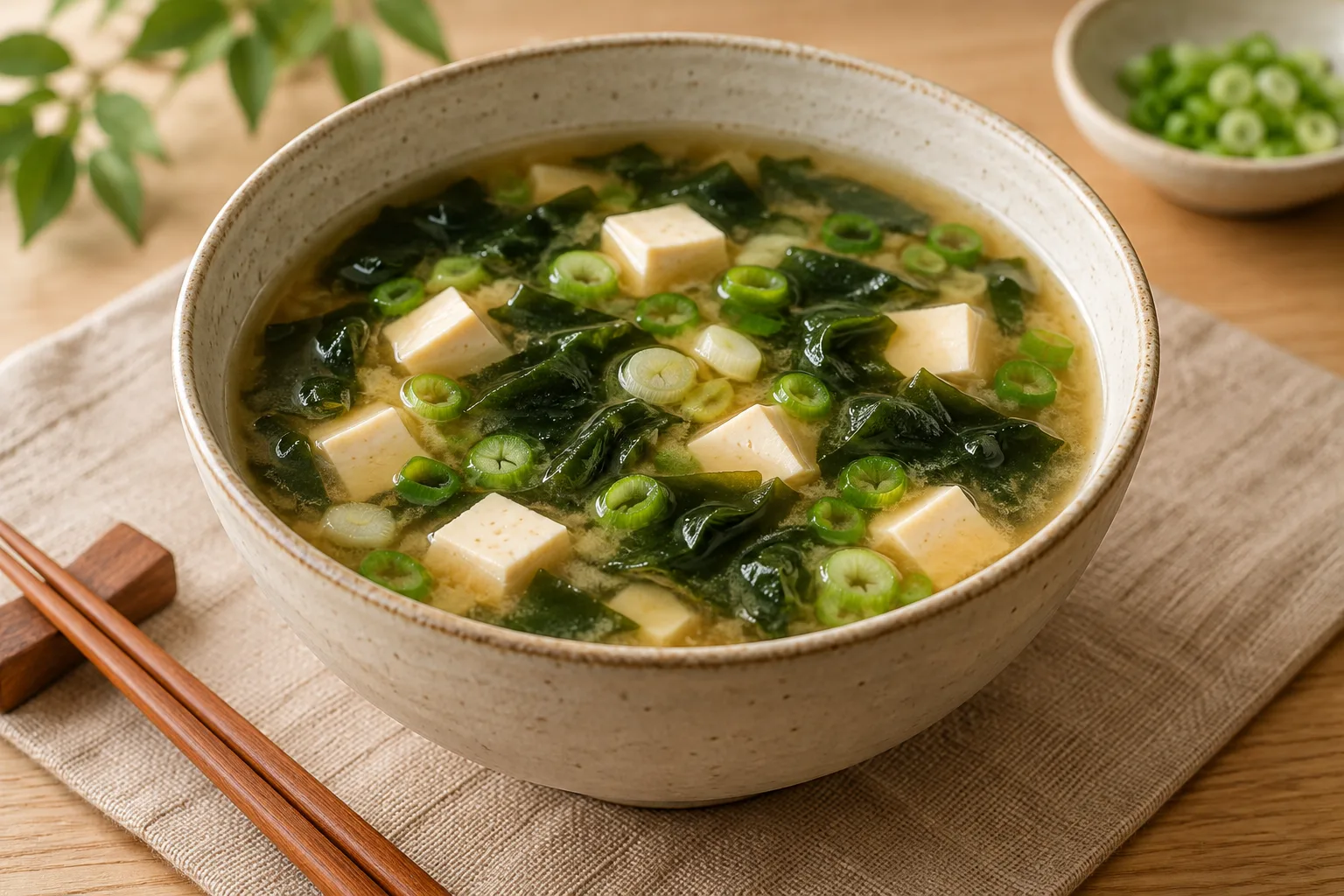
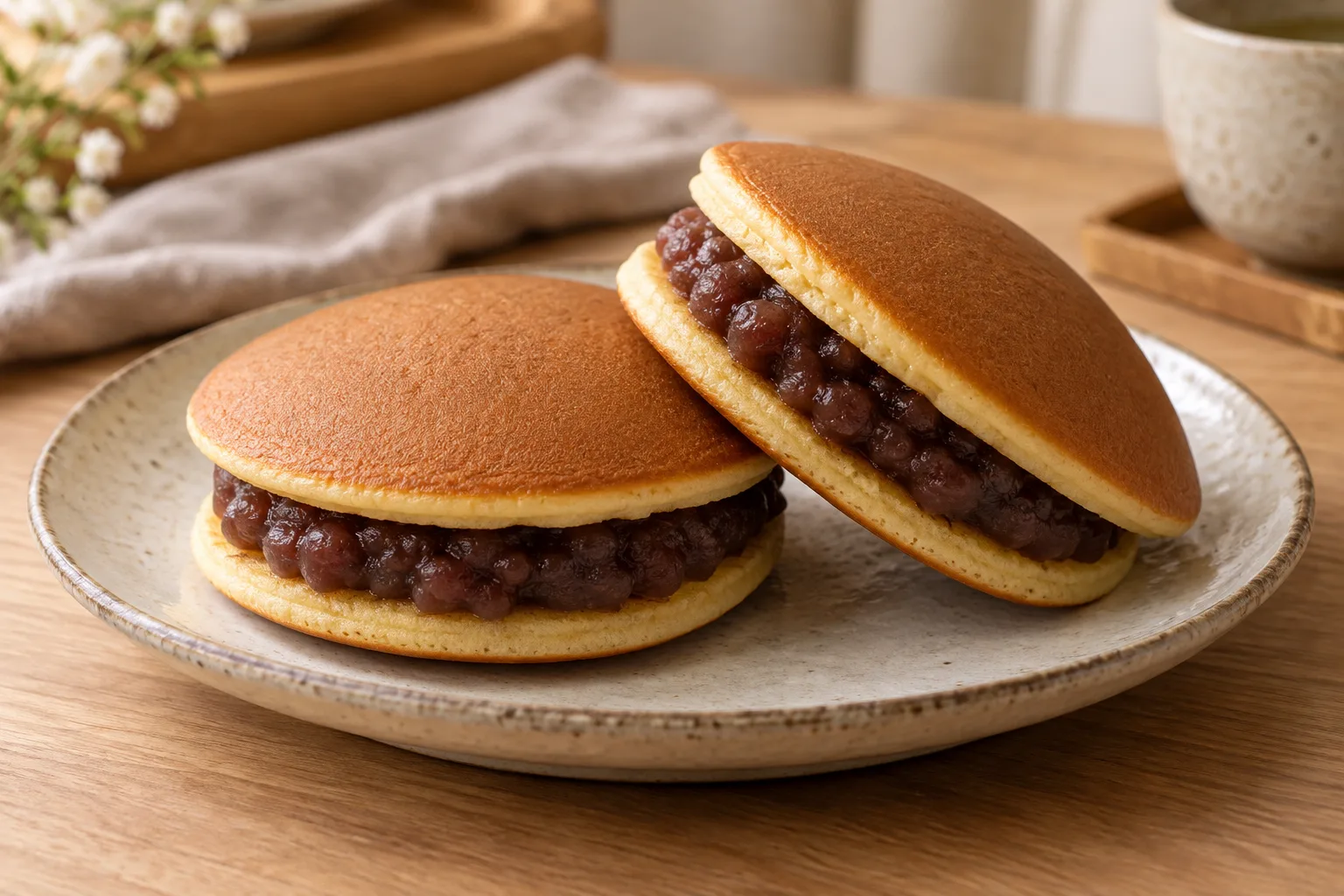
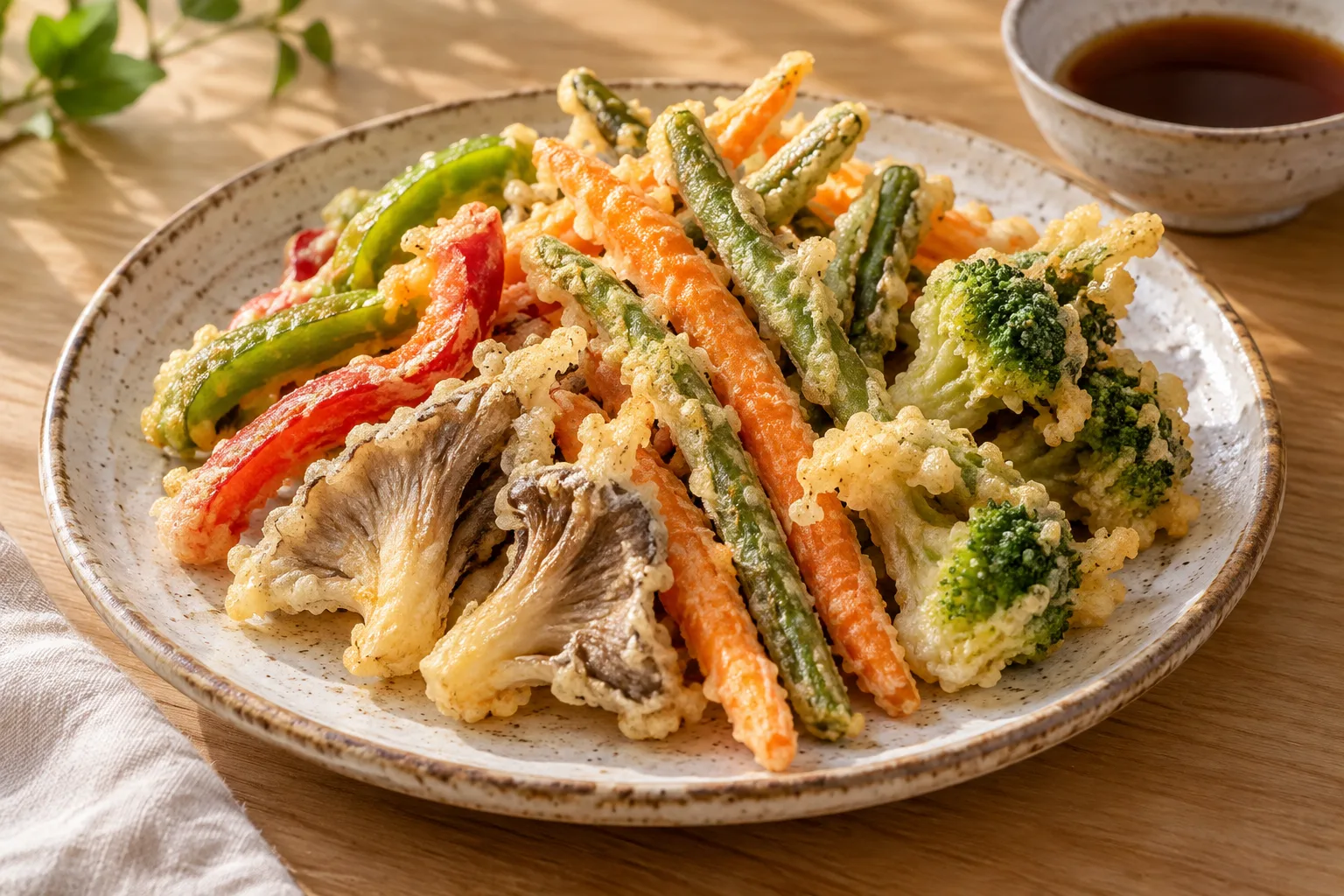
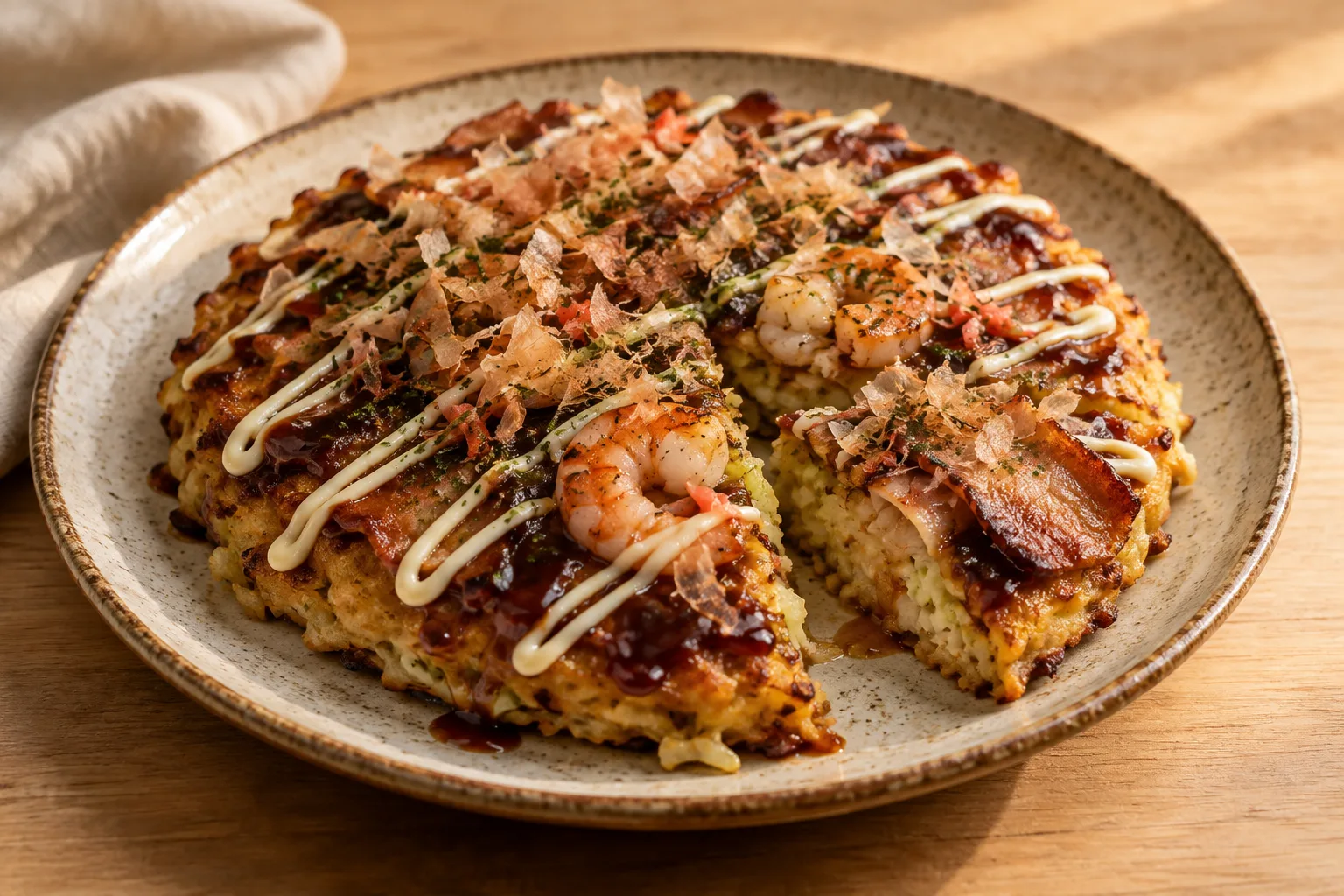
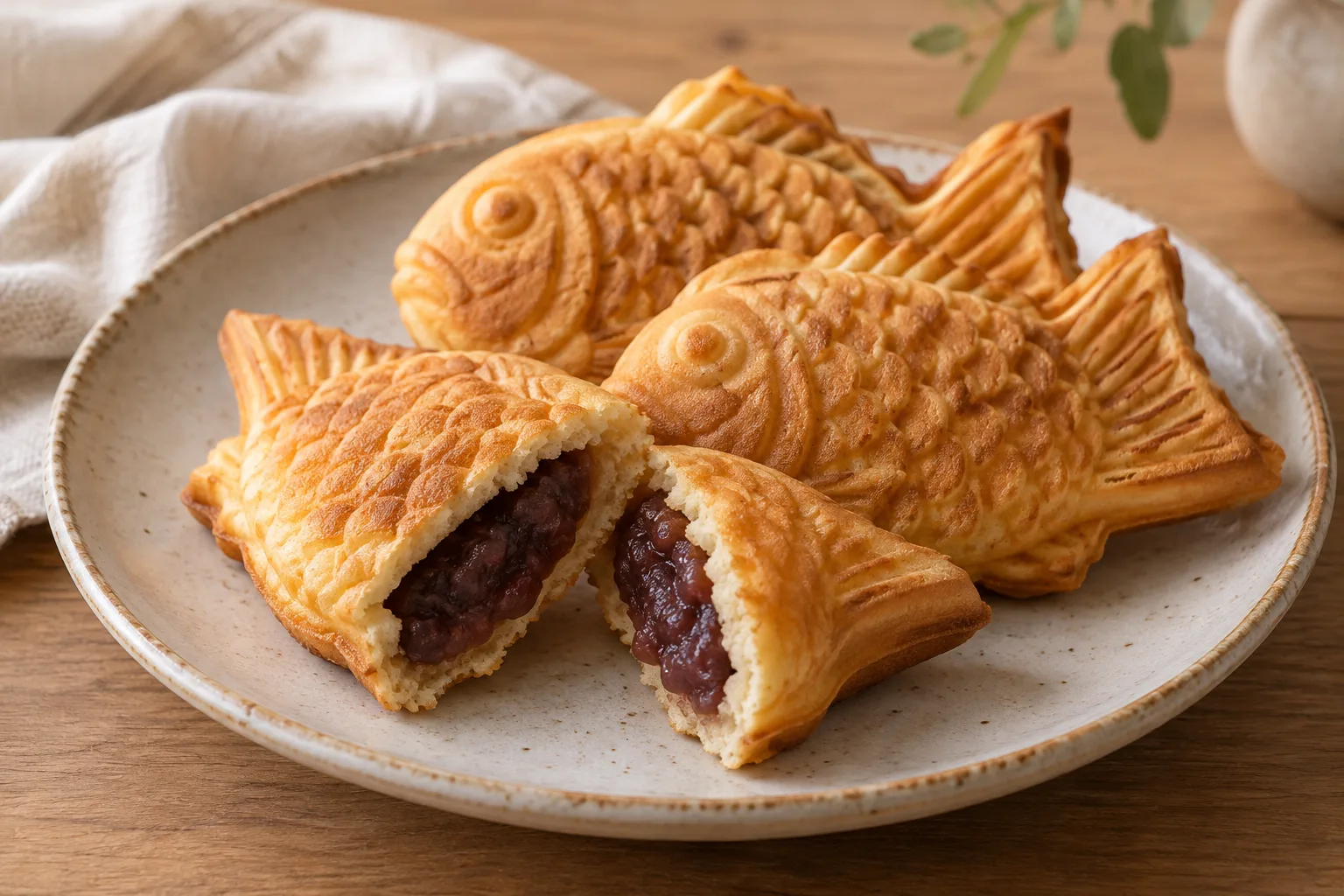
The sample includes short-grain rice, water and salt in onigiri; cabbage, dashi and flour in okonomiyaki; flour and cornstarch in tempura; anko in taiyaki and dorayaki; and miso, tofu and wakame in a vegetarian soup.

Scope, method and limitations
Observation period
Catalogue captured 2026-11-03
Population or sample
Six published Japanese recipes with Spanish translation in KitchenPause, captured on 3 November 2026.
Geographic scope
Editorial sample from the site catalogue; represents neither all Japanese dishes nor residents’ intake.
Definition and method
All published recipes attributed to Japan selected and deduplicated by stable identity. Visible ingredient lists read and checked against native ingredient rows.
Comparison limitations
Partial qualitative coverage: examples of combinations, without occurrence percentages or a quantitative ranking. No cooking-frequency, purchase or intake extrapolation.

Cereals and plant foods

6/6
Cereals and plant foods — Japan
IndicatorFindings and context
Cereals and cereal products
Quantitative findingObserved intake

In 2024, rice and rice products: 293.5±133.0 g/person/day; wheat and wheat products: 102.4±79.5 g/person/day (nationally corrected mean±standard deviation).

Scope, method and limitations
Observation period
2024
Unit
g/person/day, national corrected mean±SD
Population or sample
18457 participants from eligible households, aged 1 or older, both sexes.
Geographic scope
Nationally corrected results from the October–November 2024 survey; neither food supply nor purchases nor a complete ingredient ranking.
Definition and method
One-day weighed household record avoiding Sundays, holidays and unusual days; quantities apportioned among household members. Stratified area sampling; weighting for household participation by prefecture.
Comparison limitations
Only two selected subgroups; products are not all expressed on one common dry or cooked basis. without annualisation or raw-to-cooked weight conversion. National correction does not adjust the sex/age structure. Ineligible households and people are excluded; one autumn day does not describe each person’s usual intake or all seasons.
Bread
Quantitative findingObserved intake

In 2024, bread excluding sweet buns: 33.3±32.5 g/person/day; sweet buns: 4.7±16.7 g/person/day (nationally corrected mean±standard deviation).

Scope, method and limitations
Observation period
2024
Unit
g/person/day, national corrected mean±SD
Population or sample
18457 participants from eligible households, aged 1 or older, both sexes.
Geographic scope
Nationally corrected results from the October–November 2024 survey; neither food supply nor purchases nor a complete ingredient ranking.
Definition and method
One-day weighed household record avoiding Sundays, holidays and unusual days; quantities apportioned among household members. Stratified area sampling; weighting for household participation by prefecture.
Comparison limitations
The table does not detail bread varieties or recipes and ingredients. without annualisation or raw-to-cooked weight conversion. National correction does not adjust the sex/age structure. Ineligible households and people are excluded; one autumn day does not describe each person’s usual intake or all seasons.
Pulses
Quantitative findingObserved intake

In 2024, the legume and legume-product group: 60.1±57.5 g/person/day. Within it, tofu: 30.9±39.4; natto: 9.6±13.9 g/person/day (nationally corrected mean±standard deviation).

Scope, method and limitations
Observation period
2024
Unit
g/person/day, national corrected mean±SD
Population or sample
18457 participants from eligible households, aged 1 or older, both sexes.
Geographic scope
Nationally corrected results from the October–November 2024 survey; neither food supply nor purchases nor a complete ingredient ranking.
Definition and method
One-day weighed household record avoiding Sundays, holidays and unusual days; quantities apportioned among household members. Stratified area sampling; weighting for household participation by prefecture.
Comparison limitations
Includes soy and processed products; not a dry-pulse weight. Tofu and natto are already included in the total. without annualisation or raw-to-cooked weight conversion. National correction does not adjust the sex/age structure. Ineligible households and people are excluded; one autumn day does not describe each person’s usual intake or all seasons.
Vegetables
Quantitative findingObserved intake

In 2024, vegetables: 249.6±118.0 g/person/day. Within the group, onion: 32.3±29.8; cabbage: 28.8±36.6 g/person/day (nationally corrected mean±standard deviation).

Scope, method and limitations
Observation period
2024
Unit
g/person/day, national corrected mean±SD
Population or sample
18457 participants from eligible households, aged 1 or older, both sexes.
Geographic scope
Nationally corrected results from the October–November 2024 survey; neither food supply nor purchases nor a complete ingredient ranking.
Definition and method
One-day weighed household record avoiding Sundays, holidays and unusual days; quantities apportioned among household members. Stratified area sampling; weighting for household participation by prefecture.
Comparison limitations
The total includes vegetable juice and pickles. Onion and cabbage are included categories, not additional amounts; weekly frequency was not measured. without annualisation or raw-to-cooked weight conversion. National correction does not adjust the sex/age structure. Ineligible households and people are excluded; one autumn day does not describe each person’s usual intake or all seasons.
Fruit
Quantitative findingObserved intake

In 2024, fruit group: 76.4±79.2 g/person/day; its fresh-fruit subgroup: 67.5±71.9. Within fresh fruit, banana: 16.2±28.1; apple: 14.2±30.8 g/person/day (nationally corrected mean±standard deviation).

Scope, method and limitations
Observation period
2024
Unit
g/person/day, national corrected mean±SD
Population or sample
18457 participants from eligible households, aged 1 or older, both sexes.
Geographic scope
Nationally corrected results from the October–November 2024 survey; neither food supply nor purchases nor a complete ingredient ranking.
Definition and method
One-day weighed household record avoiding Sundays, holidays and unusual days; quantities apportioned among household members. Stratified area sampling; weighting for household participation by prefecture.
Comparison limitations
The total includes jam and fruit juice or fruit drinks. Fresh fruit, banana and apple are nested categories and must not be added together. without annualisation or raw-to-cooked weight conversion. National correction does not adjust the sex/age structure. Ineligible households and people are excluded; one autumn day does not describe each person’s usual intake or all seasons.
Potatoes, roots and tubers
Quantitative findingObserved intake

In 2024, tubers and their products, excluding the separate starch category: 45.3±47.7 g/person/day. Within the group, potato and products: 23.9±34.4; sweet potato and products: 8.0±21.3 g/person/day (nationally corrected mean±standard deviation).

Scope, method and limitations
Observation period
2024
Unit
g/person/day, national corrected mean±SD
Population or sample
18457 participants from eligible households, aged 1 or older, both sexes.
Geographic scope
Nationally corrected results from the October–November 2024 survey; neither food supply nor purchases nor a complete ingredient ranking.
Definition and method
One-day weighed household record avoiding Sundays, holidays and unusual days; quantities apportioned among household members. Stratified area sampling; weighting for household participation by prefecture.
Comparison limitations
Potato and sweet potato are already included in the group; their products are not necessarily raw roots. No separate cassava figure is provided. without annualisation or raw-to-cooked weight conversion. National correction does not adjust the sex/age structure. Ineligible households and people are excluded; one autumn day does not describe each person’s usual intake or all seasons.

Protein foods

5/5
Protein foods — Japan
IndicatorFindings and context
Meat
Quantitative findingObserved intake

In 2024, total meat: 106.3±63.9 g/person/day. Within the group, beef: 13.7±25.6; pork: 43.3±41.9; chicken: 35.4±46.1 g/person/day (nationally corrected mean±standard deviation).

Scope, method and limitations
Observation period
2024
Unit
g/person/day, national corrected mean±SD
Population or sample
18457 participants from eligible households, aged 1 or older, both sexes.
Geographic scope
Nationally corrected results from the October–November 2024 survey; neither food supply nor purchases nor a complete ingredient ranking.
Definition and method
One-day weighed household record avoiding Sundays, holidays and unusual days; quantities apportioned among household members. Stratified area sampling; weighting for household participation by prefecture.
Comparison limitations
The total includes other meats and products not detailed here. Subgroups are already included and must not be added to the total. Recorded intake, not carcass weight or supply. without annualisation or raw-to-cooked weight conversion. National correction does not adjust the sex/age structure. Ineligible households and people are excluded; one autumn day does not describe each person’s usual intake or all seasons.
Fish and seafood
Quantitative findingObserved intake

In 2024, total fish and shellfish: 59.1±50.0 g/person/day. Fresh subgroup: 34.6±41.4; processed: 24.5±30.0. Within fresh fish, salmon and trout: 5.4±15.6 g/person/day (nationally corrected mean±standard deviation).

Scope, method and limitations
Observation period
2024
Unit
g/person/day, national corrected mean±SD
Population or sample
18457 participants from eligible households, aged 1 or older, both sexes.
Geographic scope
Nationally corrected results from the October–November 2024 survey; neither food supply nor purchases nor a complete ingredient ranking.
Definition and method
One-day weighed household record avoiding Sundays, holidays and unusual days; quantities apportioned among household members. Stratified area sampling; weighting for household participation by prefecture.
Comparison limitations
Fresh and processed are food categories, not percentages eaten raw or cooked. Salmon and trout form one category included in fresh fish. No percentages are calculated. without annualisation or raw-to-cooked weight conversion. National correction does not adjust the sex/age structure. Ineligible households and people are excluded; one autumn day does not describe each person’s usual intake or all seasons.
Eggs
Quantitative findingObserved intake

In 2024, the egg group recorded 41.4±29.4 g/person/day (nationally corrected mean±standard deviation).

Scope, method and limitations
Observation period
2024
Unit
g/person/day, national corrected mean±SD
Population or sample
18457 participants from eligible households, aged 1 or older, both sexes.
Geographic scope
Nationally corrected results from the October–November 2024 survey; neither food supply nor purchases nor a complete ingredient ranking.
Definition and method
One-day weighed household record avoiding Sundays, holidays and unusual days; quantities apportioned among household members. Stratified area sampling; weighting for household participation by prefecture.
Comparison limitations
Daily group mass only, without conversion to egg counts or kg/person/year. Does not describe types or weekly frequency. without annualisation or raw-to-cooked weight conversion. National correction does not adjust the sex/age structure. Ineligible households and people are excluded; one autumn day does not describe each person’s usual intake or all seasons.
Milk and dairy products
Quantitative findingObserved intake

In 2024, total dairy group: 128.2±111.2 g/person/day. Within it, milk: 79.7±91.6; cheese: 3.9±7.1; fermented milk and lactic acid bacteria drinks: 36.8±49.2 g/person/day (nationally corrected mean±standard deviation).

Scope, method and limitations
Observation period
2024
Unit
g/person/day, national corrected mean±SD
Population or sample
18457 participants from eligible households, aged 1 or older, both sexes.
Geographic scope
Nationally corrected results from the October–November 2024 survey; neither food supply nor purchases nor a complete ingredient ranking.
Definition and method
One-day weighed household record avoiding Sundays, holidays and unusual days; quantities apportioned among household members. Stratified area sampling; weighting for household participation by prefecture.
Comparison limitations
Subgroups are already included in the total. The fermented category combines products and drinks and is not yoghurt alone. Milk grams are not converted to millilitres. without annualisation or raw-to-cooked weight conversion. National correction does not adjust the sex/age structure. Ineligible households and people are excluded; one autumn day does not describe each person’s usual intake or all seasons.
Protein sources
Quantitative findingObserved intake

In 2024, animal protein accounted for 55.0±9.9% of total protein (nationally corrected mean±standard deviation of individual proportions).

Scope, method and limitations
Observation period
2024
Unit
% of total protein, national corrected mean±SD of individual ratios
Population or sample
18457 participants from eligible households, aged 1 or older, both sexes.
Geographic scope
Nationally corrected results from the October–November 2024 survey; neither food supply nor purchases nor a complete ingredient ranking.
Definition and method
One-day weighed household record avoiding Sundays, holidays and unusual days; quantities apportioned among household members. Stratified area sampling; weighting for household participation by prefecture.
Comparison limitations
Partial coverage of protein sources: aggregated animal share only, without separate meat, fish, egg, dairy or legume shares. Mean of individual percentages, not a ratio of mean gram intakes. No plant share calculated by subtraction. without annualisation or raw-to-cooked weight conversion. National correction does not adjust the sex/age structure. Ineligible households and people are excluded; one autumn day does not describe each person’s usual intake or all seasons.

Fats, flavours and condiments

3/3
Fats, flavours and condiments — Japan
IndicatorFindings and context
Cooking fats
Quantitative findingObserved intake

In 2024, the oils and fats group recorded 11.4±7.6 g/person/day; within it, vegetable oils and fats: 9.2±6.8; butter: 1.1±2.3 g/person/day (nationally corrected mean±standard deviation).

Scope, method and limitations
Observation period
2024
Unit
g/person/day, national corrected mean±SD
Population or sample
18457 participants from eligible households, aged 1 or older, both sexes.
Geographic scope
Nationally corrected results from the October–November 2024 survey; neither food supply nor purchases nor a complete ingredient ranking.
Definition and method
One-day weighed household record avoiding Sundays, holidays and unusual days; quantities apportioned among household members. Stratified area sampling; weighting for household participation by prefecture.
Comparison limitations
This is a food group, not total dietary fat as a nutrient. It does not distinguish specific vegetable oils or use frequency; subgroups are already included in the total. It does not establish that the population avoids cooking with fat. without annualisation or raw-to-cooked weight conversion. National correction does not adjust the sex/age structure. Ineligible households and people are excluded; one autumn day does not describe each person’s usual intake or all seasons.
Herbs and spices
Qualitative descriptionCultural context

In Kyoto, chirimen-sansho combines small dried fish with green sansho fruit; in Hyogo, sansho is simmered with soy sauce, sake and mirin to make tsukudani. The catalogue’s Osaka okonomiyaki includes pickled ginger.

Scope, method and limitations
Observation period
Undated regional descriptions; catalogue checked 2026-11-03
Population or sample
Regional archives from Kyoto and Hyogo and one catalogue recipe, checked against six published Japanese recipes on 3 November 2026.
Geographic scope
Documented regional examples and one editorial example from the site recipe catalogue.
Definition and method
Regional archive ingredients and uses read; okonomiyaki ingredient list checked against its public recipe page.
Comparison limitations
Partial qualitative coverage: does not measure national or sample herb/spice prevalence, frequency or use amounts. Historical descriptions are not recast as general current practices.
Sauces and condiments
Quantitative findingObserved intake

In 2024, soy sauce: 10.7±8.5 g/person/day; miso: 9.5±8.1 g/person/day (nationally corrected mean±standard deviation). One specific regional use is simmering sansho with soy sauce, sake and mirin to make tsukudani in Hyogo.

Scope, method and limitations
Observation period
2024
Unit
g/person/day, national corrected mean±SD
Population or sample
18457 participants from eligible households, aged 1 or older, both sexes.
Geographic scope
Nationally corrected results from the October–November 2024 survey; neither food supply nor purchases nor a complete ingredient ranking.
Definition and method
One-day weighed household record avoiding Sundays, holidays and unusual days; quantities apportioned among household members. Stratified area sampling; weighting for household participation by prefecture.
Comparison limitations
These are product masses, not grams of salt or sodium. No contribution to total salt or dish composition is calculated or generalized. The usage example is regional and qualitative, not a national frequency. without annualisation or raw-to-cooked weight conversion. National correction does not adjust the sex/age structure. Ineligible households and people are excluded; one autumn day does not describe each person’s usual intake or all seasons.

Meal composition

6/6
Meal composition — Japan
IndicatorFindings and context
Breakfast composition
Quantitative findingObserved intake

Mean±standard deviation attributed to breakfast: rice 66·9±70·1; bread 28·2±29·9; dairy products 65·4±76·9 g/person/day.

Scope, method and limitations
Observation period
2003 and 2013
Unit
g/person/day attributed to meal, mean±SD
Population or sample
639 adults aged 20–81; two volunteer Japanese samples combined.
Geographic scope
Winter records, February–March 2003 and 2013; not a current national estimate.
Definition and method
Four nonconsecutive weighed dietary-record days; dinner energy contribution calculated for each participant and summarised as mean±standard deviation.
Comparison limitations
Daily per-capita amounts attributed to this meal type, not grams per serving or a compulsory menu. Includes people who did not consume that food; the sample does not represent the current whole population. Partial coverage: only dinner is published here. Breakfast, lunch and snack percentages use denominators excluding nonconsumers; they must not be summed or normalised as a partition. Samples and years differ from MINNADE.
Main meal composition
Qualitative descriptionCultural context

An ichiju-sansai meal composition brings together rice, soup, a main dish and two side dishes.

Scope, method and limitations
Observation period
Undated culinary composition model
Population or sample
General culinary description, without a surveyed population.
Geographic scope
Cultural meal-composition model, not necessarily assigned to lunch or dinner.
Definition and method
Official description of meal composition read.
Comparison limitations
Partial qualitative coverage; no frequency, quantities, specific dishes or universal current menu established.
Dinner composition
Quantitative findingObserved intake

Mean±standard deviation attributed to dinner: rice 133·7±73·6; total vegetables 142·5±74·5; fish, including shellfish 45·3±34·8 g/person/day.

Scope, method and limitations
Observation period
2003 and 2013
Unit
g/person/day attributed to meal, mean±SD
Population or sample
639 adults aged 20–81; two volunteer Japanese samples combined.
Geographic scope
Winter records, February–March 2003 and 2013; not a current national estimate.
Definition and method
Four nonconsecutive weighed dietary-record days; dinner energy contribution calculated for each participant and summarised as mean±standard deviation.
Comparison limitations
Daily per-capita amounts attributed to this meal type, not grams per serving or a compulsory menu. Includes people who did not consume that food; the sample does not represent the current whole population. Partial coverage: only dinner is published here. Breakfast, lunch and snack percentages use denominators excluding nonconsumers; they must not be summed or normalised as a partition. Samples and years differ from MINNADE.
Appetisers and snacks
Quantitative findingObserved intake

Mean±standard deviation attributed to snacks: confectioneries 28·3±31·8; fruit 13·4±28·6; dairy products 23·3±45·0 g/person/day.

Scope, method and limitations
Observation period
2003 and 2013
Unit
g/person/day attributed to meal, mean±SD
Population or sample
639 adults aged 20–81; two volunteer Japanese samples combined.
Geographic scope
Winter records, February–March 2003 and 2013; not a current national estimate.
Definition and method
Four nonconsecutive weighed dietary-record days; dinner energy contribution calculated for each participant and summarised as mean±standard deviation.
Comparison limitations
Daily per-capita amounts attributed to this meal type, not grams per serving or a compulsory menu. Includes people who did not consume that food; the sample does not represent the current whole population. Partial coverage: only dinner is published here. Breakfast, lunch and snack percentages use denominators excluding nonconsumers; they must not be summed or normalised as a partition. Samples and years differ from MINNADE.
Desserts and sweets
Quantitative findingObserved intake

In 2024, all confectioneries: 24.4±32.4 g/person/day; within the group, Japanese confectioneries: 9.1±18.7; cakes and pastries: 5.9±16.7 g/person/day (nationally corrected mean±standard deviation).

Scope, method and limitations
Observation period
2024
Unit
g/person/day, nationally corrected mean±SD
Population or sample
18457 participants from eligible households, aged 1 or older, both sexes.
Geographic scope
Nationally corrected results from the October–November 2024 survey; neither food supply nor purchases nor a complete ingredient ranking.
Definition and method
One-day weighed household record avoiding Sundays, holidays and unusual days; quantities apportioned among household members. Stratified area sampling; weighting for household participation by prefecture.
Comparison limitations
Whole-day intake, not exclusively desserts after a meal; subgroups already included, without addition to the total. No frequency per occasion measured. Partial coverage of two groups, without annualisation or raw-to-cooked weight conversion. National correction does not adjust the sex/age structure. Ineligible households and people are excluded; one autumn day does not describe each person’s usual intake or all seasons.
Portion sizes
Quantitative findingCultural context

As a guideline reference serving, one SV of vegetable dishes corresponds to about 70 g of main ingredients and one fruit SV to about 100 g. These are not observed household portions.

Scope, method and limitations
Observation period
2005 guide model; English interpretation undated
Unit
g of main ingredients per reference SV; guidance, not observed
Population or sample
Educational reference, without an intake sample.
Geographic scope
Guide model adopted in 2005; the consulted English interpretation has no stated date.
Definition and method
SV definitions read, not calculated from surveys.
Comparison limitations
Partial guideline coverage: vegetable-dish ingredients include vegetables, potatoes, beans except soybeans, mushrooms and seaweed. Not total dish weight, an observed portion or personal dietary advice.

Techniques and equipment

5/5
Techniques and equipment — Japan
IndicatorFindings and context
Cooking techniques
Qualitative descriptionCultural context

In Kyoto, chirimen-sansho is prepared by dry-roasting small fish and then simmering them with sansho, stock, sake, mirin and soy sauce until the broth is gone.

Scope, method and limitations
Observation period
Undated regional culinary description
Population or sample
Documented regional preparation, without a population sample.
Geographic scope
Kyoto
Definition and method
Ingredients, operations and limits in the regional entry read.
Comparison limitations
Partial qualitative coverage of one regional example, without household, recipe or consumption percentages. Does not establish national frequency or storage life.
Vegetable preparation
Qualitative descriptionCultural context

Kyoto senmaizuke uses thinly sliced Shogoin turnip pickled with vinegar, kombu and chilli. The described version is neither a long-storage pickle nor a lactic fermentation.

Scope, method and limitations
Observation period
Undated regional culinary description
Population or sample
Documented regional preparation, without a population sample.
Geographic scope
Kyoto
Definition and method
Ingredients, operations and limits in the regional entry read.
Comparison limitations
Partial qualitative coverage of one regional example, without household, recipe or consumption percentages. Does not establish national frequency or storage life.
Food preservation
Qualitative descriptionCultural context

The regional Hyogo sansho preparation describes blanching, draining and cooling the fruit, then dividing it into small portions, wrapping and freezing it for use in other preparations.

Scope, method and limitations
Observation period
Undated regional culinary description
Population or sample
Documented regional preparation, without a population sample.
Geographic scope
Hyogo
Definition and method
Ingredients, operations and limits in the regional entry read.
Comparison limitations
Partial qualitative coverage of one regional example, without household, recipe or consumption percentages. Does not establish national frequency or storage life.
Fermented foods
Quantitative findingObserved intake

In 2024, miso: 9.5±8.1 and natto: 9.6±13.9 g/person/day (nationally corrected mean±standard deviation). Miso is made by mixing steamed soybeans with koji and salt; koji may be based on rice, barley or soybeans.

Scope, method and limitations
Observation period
2024
Unit
g/person/day, national corrected mean±SD
Population or sample
18457 participants from eligible households, aged 1 or older, both sexes.
Geographic scope
Nationally corrected results from the October–November 2024 survey; neither food supply nor purchases nor a complete ingredient ranking.
Definition and method
One-day weighed household record avoiding Sundays, holidays and unusual days; quantities apportioned among household members. Stratified area sampling; weighting for household participation by prefecture.
Comparison limitations
Two selected fermented foods; not consumption frequency, the share of fermenting households or all fermented-food intake. The production description is not a complete recipe. Partial coverage of two groups, without annualisation or raw-to-cooked weight conversion. National correction does not adjust the sex/age structure. Ineligible households and people are excluded; one autumn day does not describe each person’s usual intake or all seasons.
Kitchen equipment
Quantitative findingSurvey

In March 2026, 36.6% of households with two or more people owned a dishwasher.

Scope, method and limitations
Observation period
2026
Unit
% of eligible two-or-more-person households owning dishwasher
Population or sample
Eligible households with two or more people in Japan; excludes foreign, student and institutional-resident households.
Geographic scope
Dishwasher ownership; table labels end-March and the survey reference date is the 15th.
Definition and method
Three-stage municipality, area and household sample; postal or online responses. Each owning household counted once even if it owns several units.
Comparison limitations
Partial equipment coverage: excludes single-person households and does not measure ovens, microwaves or pressure cookers. Ownership is not use. Responses vary by item; the overall maximum response count is not taken as the dishwasher denominator.

Drinks

3/3
Drinks — Japan
IndicatorFindings and context
Everyday drinks
Quantitative findingObserved intake

In 2024, the beverage category in Table: 570.4±370.4 g/person/day; its alcoholic-beverage subgroup: 90.9±187.1 g/person/day (national corrected mean±standard deviation).

Scope, method and limitations
Observation period
2024
Unit
g/person/day, national corrected mean±SD
Population or sample
18457 participants from eligible households, aged 1 or older, both sexes.
Geographic scope
Nationally corrected results from the October–November 2024 survey; neither food supply nor purchases nor a complete ingredient ranking.
Definition and method
One-day weighed household record avoiding Sundays, holidays and unusual days; quantities apportioned among household members. Stratified area sampling; weighting for household participation by prefecture.
Comparison limitations
Partial coverage of food categories defined in the table; the alcoholic subgroup is already included in the total. Does not measure total hydration or identify water separately. Coffee and cocoa remain combined. Grams are not converted to millilitres or cups; no frequency or added sugar/milk inferred. Partial coverage of two groups, without annualisation or raw-to-cooked weight conversion. National correction does not adjust the sex/age structure. Ineligible households and people are excluded; one autumn day does not describe each person’s usual intake or all seasons.
Coffee and tea preparation
Quantitative findingObserved intake

In 2024, tea: 189.3±231.2; coffee and cocoa combined: 132.9±142.0 g/person/day (national corrected mean±standard deviation).

Scope, method and limitations
Observation period
2024
Unit
g/person/day, national corrected mean±SD
Population or sample
18457 participants from eligible households, aged 1 or older, both sexes.
Geographic scope
Nationally corrected results from the October–November 2024 survey; neither food supply nor purchases nor a complete ingredient ranking.
Definition and method
One-day weighed household record avoiding Sundays, holidays and unusual days; quantities apportioned among household members. Stratified area sampling; weighting for household participation by prefecture.
Comparison limitations
Partial coverage of food categories defined in the table; the alcoholic subgroup is already included in the total. Does not measure total hydration or identify water separately. Coffee and cocoa remain combined. Grams are not converted to millilitres or cups; no frequency or added sugar/milk inferred. Partial coverage of two groups, without annualisation or raw-to-cooked weight conversion. National correction does not adjust the sex/age structure. Ineligible households and people are excluded; one autumn day does not describe each person’s usual intake or all seasons.
Drinks with meals
Quantitative findingObserved intake

Non-energetic beverages attributed to breakfast 185·1±151·3, lunch 172·8±125·6 and dinner 139·2±122·1 g/person/day (mean±standard deviation).

Scope, method and limitations
Observation period
2003 and 2013
Unit
g/person/day attributed to meal, mean±SD
Population or sample
639 adults aged 20–81; two volunteer Japanese samples combined.
Geographic scope
Winter records, February–March 2003 and 2013; not a current national estimate.
Definition and method
Four nonconsecutive weighed-record days, three working and one non-working; meals labelled by participants. Four-day participant averages, including nonconsumers.
Comparison limitations
Partial historical coverage of a nonrandom sample: daily amounts assigned to meals, not grams per occasion or percentages of people. Water-only occasions were excluded from eating-occasion definition; no total hydration or current national preferences can be measured.

Nutrition and dietary patterns

3/3
Nutrition and dietary patterns — Japan
IndicatorFindings and context
Energy and nutrients
Quantitative findingObserved intake

In 2024, energy 1859±425 kcal/person/day; protein 70.6±18.5, fat 60.3±19.3, carbohydrate 241.5±58.6 and fibre 17.7±5.1 g/person/day (national corrected mean±standard deviation).

Scope, method and limitations
Observation period
2024
Unit
kcal/person/day and g/person/day, national corrected mean±SD
Population or sample
18457 participants from eligible households, aged 1 or older, both sexes.
Geographic scope
Nationally corrected results from the October–November 2024 survey; neither food supply nor purchases nor a complete ingredient ranking.
Definition and method
One-day weighed household record avoiding Sundays, holidays and unusual days; quantities apportioned among household members. Stratified area sampling; weighting for household participation by prefecture.
Comparison limitations
Observed intake, not recommendations or food supply. One autumn day does not measure usual annual intake; national correction does not adjust age/sex structure.
Salt and sugars
Quantitative findingObserved intake

In 2024, sodium 3682±1130 mg/person/day and salt equivalent 9.4±2.9 g/person/day (national corrected means±standard deviation). In a 2016 adult subsample, free sugars: men 4.8±3.9% and women 5.8±4.2% of daily energy.

Scope, method and limitations
Observation period
2024 salt/sodium;2016 free sugars
Unit
mg or g/person/day; % daily energy, mean±SD
Population or sample
Salt/sodium: 18457 eligible participants aged 1+. Free sugars: 9865 adults aged 20+, 4071 men and 5794 women; pregnant/lactating women and participants with incomplete data excluded.
Geographic scope
Two different survey populations: October–November 2024 and 2016; not a comparable time series.
Definition and method
One-day weighed household records, apportioned among members. Free sugars estimated using a composition database: added sugars plus those in honey, syrups, juices and concentrates; expressed as energy percentage.
Comparison limitations
Partial coverage: free sugars differ from total and added sugars. The 2016 subsample required complete clinical data and is not the whole national sample. One day does not measure usual intake. Salt equivalent was calculated by the source; sodium is not converted here or added to salt.
Dietary patterns
Quantitative findingSurvey

In March 2023, 5.9% of the sample reported a diet without meat or fish, the combined vegetarian or vegan category.

Scope, method and limitations
Observation period
2023 (10–11 March)
Unit
% valid Japanese online-panel respondents
Population or sample
887 Japanese participants aged 18–25 registered in an online panel.
Geographic scope
Japanese survey on 10–11 March 2023; sample from a meat-alternatives study.
Definition and method
Self-reported dietary preference before the choice experiment; valid responses after excluding comprehension-test failures.
Comparison limitations
Partial coverage: not national prevalence or a record of food consumed. The combined no-meat-or-fish definition is retained; no further criteria or national vegan/flexitarian percentages inferred.

Shopping, prices and waste

7/7
Shopping, prices and waste — Japan
IndicatorFindings and context
Food expenditure
Quantitative findingPurchases

Mean food spending: 94895 JPY per household per month. The Engel coefficient is 28.6%; definitions differ: spending includes gifts and services to other households, whereas the coefficient’s food numerator excludes them.

Scope, method and limitations
Observation period
2025
Unit
JPY/household/month; % consumption expenditure
Population or sample
Japanese households with two or more persons; not individual people.
Geographic scope
Monthly average for calendar year 2025 in the household budget survey.
Definition and method
Household income and expenditure records. Category means include households with no such spending. Food spending includes gifts and services to other households; the Engel coefficient’s food numerator excludes them.
Comparison limitations
Partial coverage: no per-person spending is calculated by dividing by mean household size. Do not divide this spending by total consumption to derive the Engel coefficient: definitions differ.
Cost of a common basket
Quantitative findingSurvey

As a historical fixed-quantity menu example, the MIS model for a Japanese schoolboy budgeted 8914 JPY per week. Ingredients and meals bought outside are included: not an ingredient-only grocery basket or observed spending.

Scope, method and limitations
Observation period
2011 (historical priced menu model)
Unit
JPY/week; fixed-quantity model including prepared/purchased meals
Population or sample
Model of a boy in the third year of Japanese junior high school; neither a pupil average nor an intake sample.
Geographic scope
Mitaka and the Tokyo area. Food prices collected on 20 January 2011 at Seiyu Kichijoji, Musashino; purchased meals priced at Mitaka establishments or online.
Definition and method
Consensus menu reviewed by a nutrition specialist; fixed food list with usage quantities, weights, packs, unit prices and amounts. Published weekly total adopted without recalculating quantities, waste or monthly conversions.
Comparison limitations
Partial historical coverage of one model combining ingredients and prepared meals. Neither a current national basket nor a recommended threshold. Do not compare with baskets for other pupils or adults containing different foods or quantities.
Cost of specific meals
Quantitative findingPurchases

Yoshinoya’s regular-size gyudon (並盛) is listed at 498 JPY for dining in and 489 JPY for takeout, including tax. These are prices for one chain and dish, not a national average.

Scope, method and limitations
Observation period
2026 (menu observation; not effective price-change date)
Unit
JPY/serving, tax included
Population or sample
One regular-size gyudon (並盛), per serving; Yoshinoya’s Japanese menu.
Geographic scope
Japan, menu observed on 3 November 2026. An official October campaign distinguishes regular and promotional prices; that promotion ended.
Definition and method
Official tax-inclusive menu prices read separately for dine-in and takeout. Regular menu size retained without assigning an unpublished portion weight.
Comparison limitations
Partial coverage of one chain and dish. Some outlets and delivery have different prices. The menu has no effective date; observation is not presented as the price-change date.
Grocery shopping locations
Quantitative findingSurvey

In the online panel, 75.0% reported usually using food supermarkets and 15.5% some internet channel. Multiple answers were allowed: these are usage percentages, not spending shares or mutually exclusive categories.

Scope, method and limitations
Observation period
2025
Unit
% panel respondents, multiple responses
Population or sample
4000 online panellists aged 15–74; sex, age and regional quotas.
Geographic scope
Nine areas of Japan; survey on 21–25 November 2025.
Definition and method
Multiple-response question on usual ingredient, food and drink shopping locations. Quotas based on the 2019 resident register; market-research, media and civil-service professionals excluded.
Comparison limitations
Partial coverage: reported use, not food-spending share. Quota panel, not a national probability sample. Overlapping categories; do not sum percentages or compare years with different categories.
Shopping frequency
Quantitative findingSurvey

In the November 2025 online survey, 37.2% of food purchasers reported shopping two or three days a week and 29.2% about one day. This question covered 1962 people aged 20–79; these are neither mean visits nor mean basket spending.

Scope, method and limitations
Observation period
2025
Unit
% food purchasers
Population or sample
Online survey of 2068 adults aged 20–79; frequency question based on 1962 food purchasers.
Geographic scope
Japan; fieldwork on 25–28 November 2025.
Definition and method
Supermarket association’s original consumer survey, conducted by Intage Research. Responses distributed across weekly shopping-day bands.
Comparison limitations
Partial coverage: purchasers’ reported days, not mean visits. No mean frequency or mean basket spending calculated. An online panel does not establish probability-sample representativeness.
Prepared food and delivery
Quantitative findingSurvey

In the June 2025 panel subgroup, 81.7% bought commercially prepared food at least monthly. The study covered two metropolitan regions and included takeout and delivery; it estimates neither national prevalence nor separate delivery frequency.

Scope, method and limitations
Observation period
2025
Unit
% age60–69 subgroup, at least monthly
Population or sample
Subgroup aged 60–69; online screening of 10000 people aged 20–79. Subgroup denominator not derived by adding other cells.
Geographic scope
Tokyo, Saitama, Chiba and Kanagawa, plus six Kinki prefectures; 5–10 June 2025.
Definition and method
Weight-back by age, household structure and region. Commercially prepared food eaten away from its purchase location, ready to eat, reheat or thaw; includes takeout and delivery.
Comparison limitations
Partial regional coverage: neither national prevalence nor separate delivery frequency. Follow-up of 2000 monthly users is another sample. Oil-manufacturer research; no health effects inferred.
Household food waste
Quantitative findingSurvey

Estimated edible household food loss: 2235 thousand tonnes per year. The report gives 961 for direct disposal, 350 for excessive removal of edible parts and 925 for plate leftovers, in the same unit; rounded components do not exactly sum to the total.

Scope, method and limitations
Observation period
2024 (fiscal year)
Unit
thousand tonnes/year; edible household food loss
Population or sample
Households in Japan; national estimate of edible household waste.
Geographic scope
Fiscal year 2024. Business waste and inedible parts excluded; not a per-person figure.
Definition and method
Accepted municipal estimates are combined with extrapolations for other municipalities. Ratios come from current composition audits or the latest previously accepted data, using simple means and excluding outliers.
Comparison limitations
Partial indicator coverage: annual mass, without monetary cost or a per-capita calculation. Not a weighed census of every household. Intermediate extrapolation ratios are not shares of the national total; retain original rounding.

Seasons and celebrations

2/2
Seasons and celebrations — Japan
IndicatorFindings and context
Seasonal produce
Qualitative descriptionCultural context

In Kyoto, senmaizuke is made around November, when Shogoin turnips are ready for shipment. It is also made at home during this turnip’s harvest season.

Scope, method and limitations
Observation period
Undated regional culinary description
Population or sample
Documented regional culinary practice; not a population survey.
Geographic scope
Kyoto, Japan; cultural description without a statistical observation date.
Definition and method
Regional description, calendar and ingredients read; no frequency or prevalence estimated.
Comparison limitations
Partial qualitative coverage of one turnip and one Kyoto preparation. Not a complete national calendar or a measure of imported availability or current purchases.
Celebration food
Qualitative descriptionCultural context

In Kyoto, New Year’s Day is associated with Daifuku tea: pickled plums and knotted kombu are placed in a cup and tea is poured over them.

Scope, method and limitations
Observation period
Undated regional culinary description
Population or sample
Documented regional culinary practice; not a population survey.
Geographic scope
Kyoto, Japan; cultural description without a statistical observation date.
Definition and method
Regional description, calendar and ingredients read; no frequency or prevalence estimated.
Comparison limitations
Partial qualitative coverage of one regional custom; establishes neither universal household practice nor a health benefit. Does not cover all national celebrations.
Explore its cuisines

Japan’s Foodways: Rice, Fermentation, Regional Bowls, and Shared Tables

Documentary synthesis prepared with AI assistance. It does not replace specialist review or certify kitchen testing. · Updated 11 November 2026

A cuisine of many forms and settings

Japanese food is best approached as a collection of practices and dishes, not as one fixed meal or a short list of famous exports. Rice appears as a cooked staple, a shaped portable bite, and the base beneath a topping; noodles may be served in broth; vegetables and seafood may be preserved, simmered, or fried. The same broad idea can take different forms from place to place, as the varied regional interpretations of ramen and miso demonstrate. A familiar soup of miso, tofu, and seaweed is only one combination, not a template for every household or occasion.

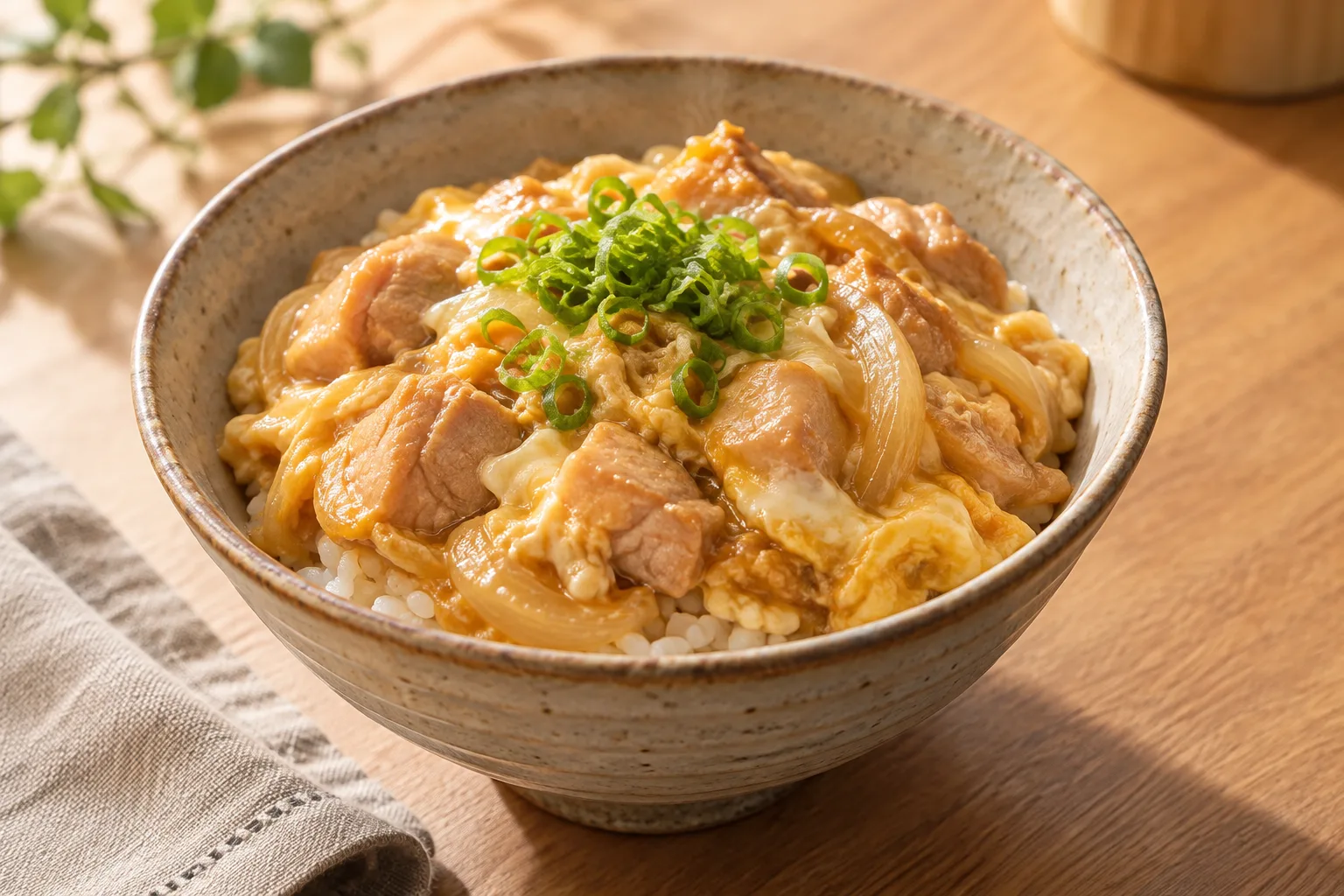
A useful way to read a dish is to notice how its parts work together: a grain or noodle base, a broth or sauce, and ingredients that supply contrast. In an oyakodon, chicken and softly cooked egg sit over rice; in okonomiyaki, cabbage and batter meet on a hot griddle; a bowl of ramen brings broth, noodles, and toppings into one serving. These examples show how a cuisine can include both modest everyday food and elaborate combinations without making either stand for all of Japan.

Exchange, adaptation, and changing tastes

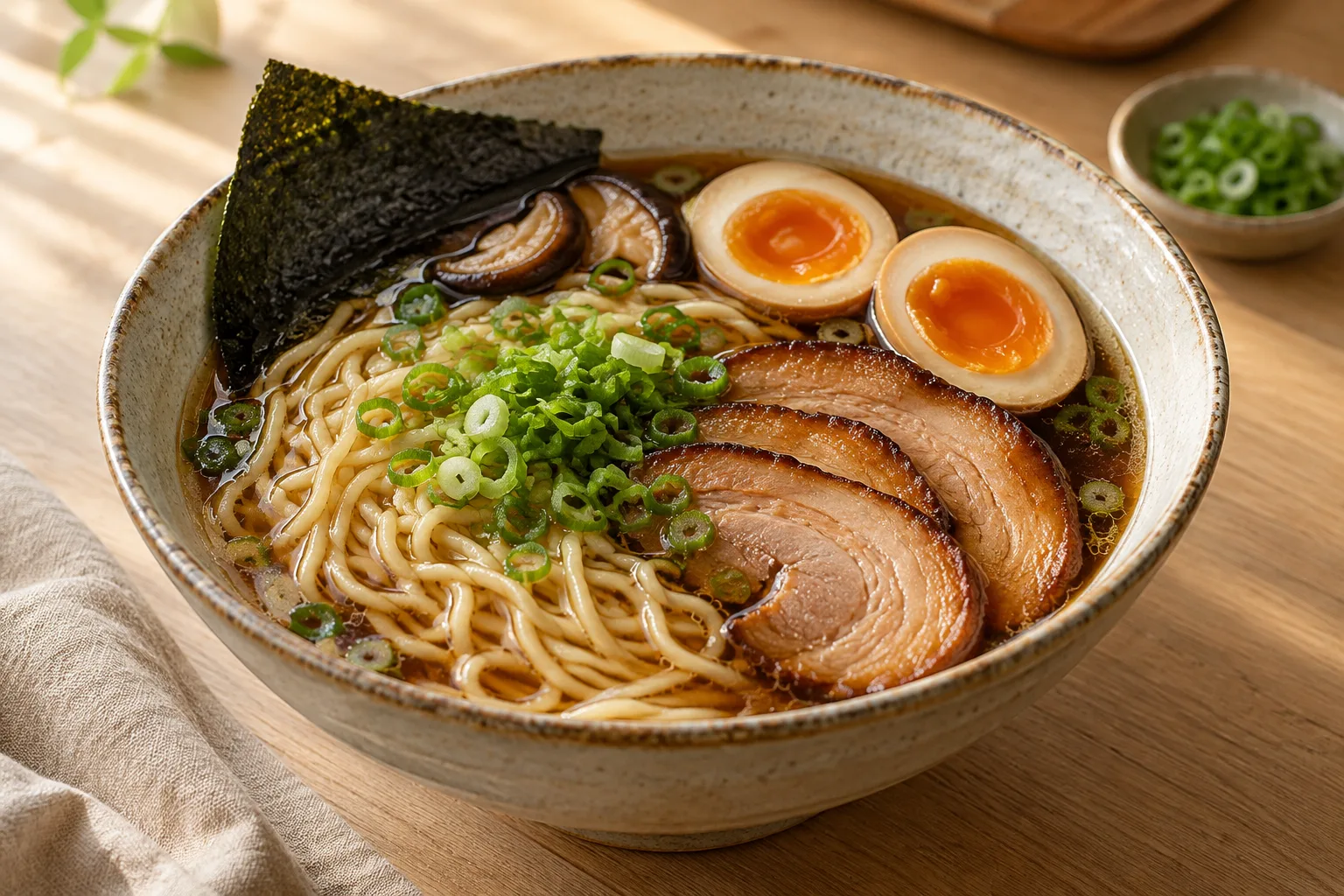
Japanese food history includes sustained borrowing and adaptation. Ramen developed from Chinese noodle traditions and became a recognizably Japanese bowl through local broths, seasonings, noodles, and toppings. Its varieties include shoyu, seasoned with soy sauce, and regional styles such as Sapporo and Hakata ramen. This history is a reminder that a dish can have a history of movement while developing a distinct life in its adopted setting.

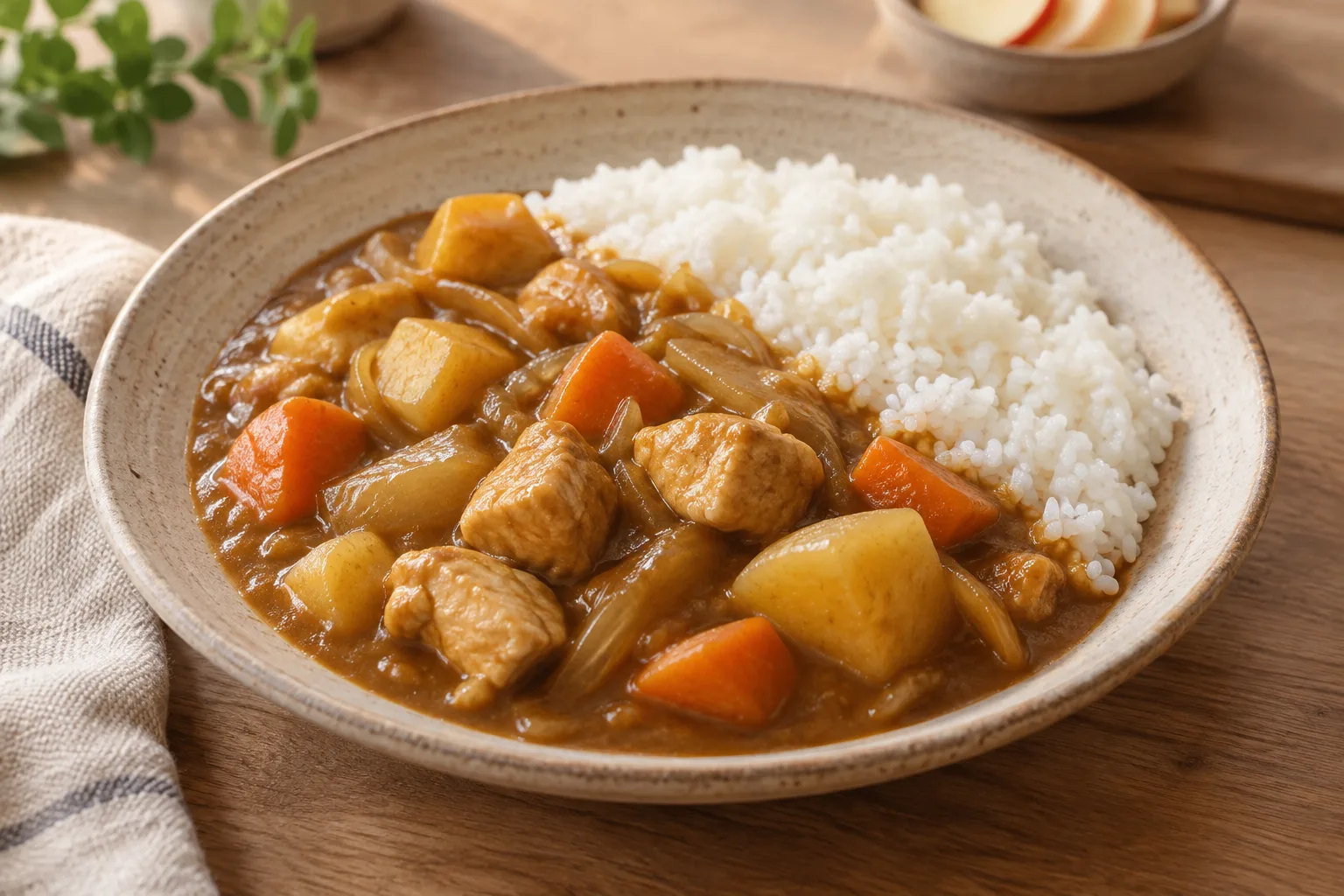
Other documented exchanges took different routes. Tempura is associated with Portuguese influence in Japan during the sixteenth century; the Japanese preparation of quickly fried vegetables and seafood became its own culinary form. Curry arrived through British foodways during the Meiji era and was adapted into a thicker, often mild-to-sweet sauce served with rice, or in dishes such as curry udon and curry bread. Fermented miso also has a history of regional development and changing production, from household preparation to broader commercial manufacture. These histories are not evidence that every Japanese dish has a foreign origin: they describe particular exchanges and transformations, alongside food traditions that evolved through local practice.

Rice, sea vegetables, and fermented seasonings

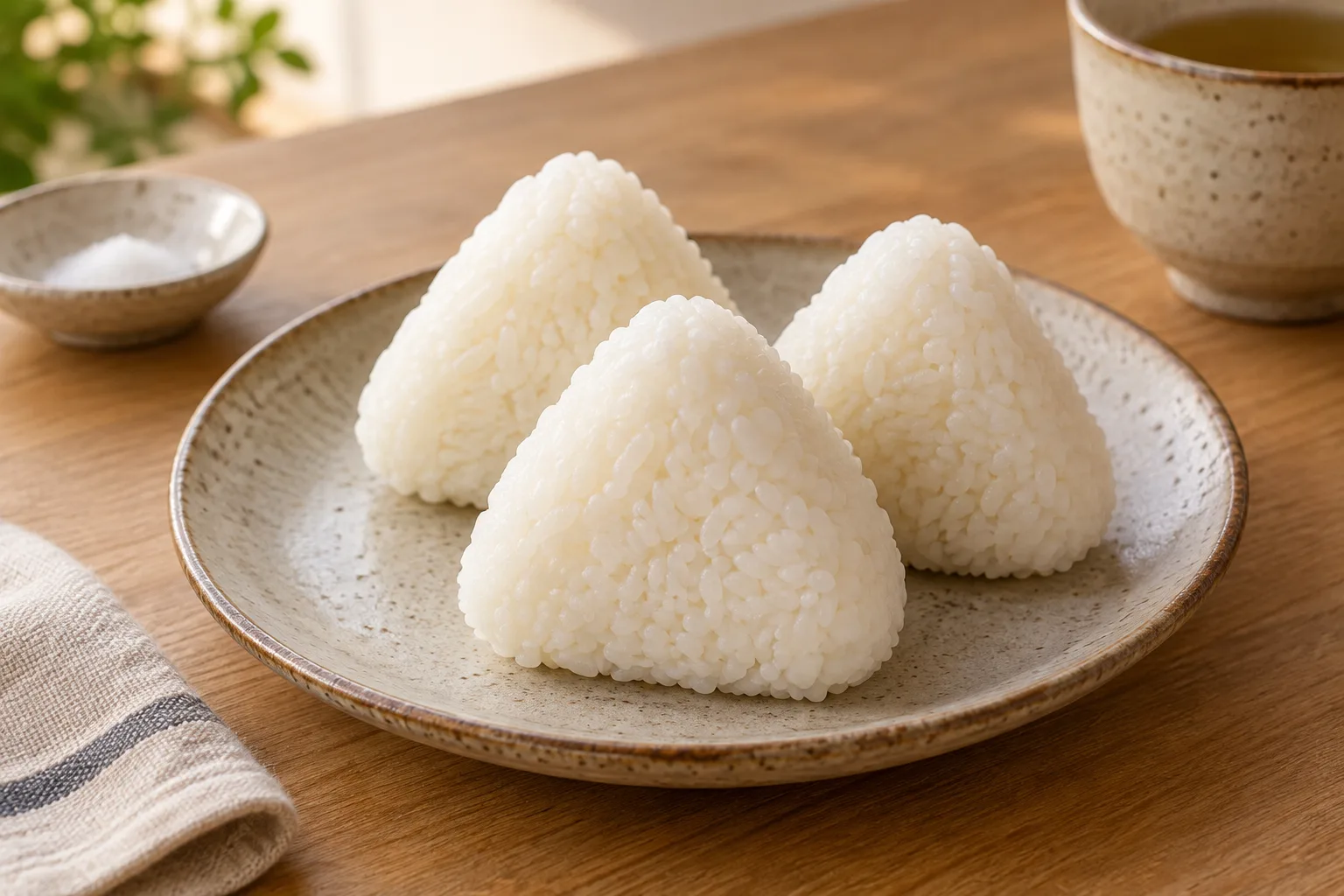
The pantry behind many Japanese preparations is defined not just by ingredients, but by how they are transformed. Cooked short-grain rice can be shaped into onigiri and held together by its texture; a strip of nori can wrap a parcel for eating by hand. Rice also forms the base of donburi, where simmered ingredients and sauce are served over it. The fillings and seasonings of rice parcels vary, including salted plum, salmon, tuna, or dried-fish and seaweed mixtures.

Fermentation provides another set of essential tools. Miso is made with soybeans, salt, and koji, with rice, barley, or soy contributing to different types. Its colour, saltiness, and flavour vary, and miso can be used in soup or as a seasoning beyond soup. Soy sauce adds a distinct savoury seasoning; it is not interchangeable with miso, which is a paste. Dried kombu, dried bonito flakes, dried sardines, and dried shiitake contribute to different broths and infusions. Wakame, tofu, azuki beans, and cabbage appear in specific preparations—from miso soup and rice parcels to sweets and griddled dishes—rather than as interchangeable symbols of a single pantry.

Broths, savouriness, and textural contrast

A Japanese dish often builds flavour through layers rather than through one seasoning alone. Dashi is a family of broths: kombu and dried bonito are a common combination, while dried shiitake or small dried sardines can contribute different characters. In miso soup, broth and miso meet tofu, wakame, or other additions; the particular ingredients and miso type change the result. Different misos bring different strengths, from milder white varieties to more assertive red ones. The broth is therefore a foundation, not a universal recipe with one required formula.

Textures also define how a dish is experienced. Tempura pairs a thin fried coating with vegetables or seafood; the ingredient remains central rather than hidden beneath a heavy crust. Ramen sets springy noodles against a broth and chosen toppings. Okonomiyaki offers a tender cabbage-and-batter centre with a browned surface and sauces added at the end. In sweets, a soft or finely textured azuki paste can fill taiyaki or dorayaki, while the griddled outside gives another contrast. Across these examples, salty, sweet, savoury, crisp, tender, and smooth qualities belong to particular preparations; they should not be collapsed into one supposed national flavour.

Food for carrying, gathering, and passing on

Some Japanese preparations are designed for portability and everyday sharing. Onigiri is shaped cooked rice, often filled or seasoned, and commonly wrapped in nori. Its form suits a lunchbox, a journey, or a snack that can be eaten by hand; it also appears in bento, packed meals for school, work, or an outing. Historical accounts describe rice parcels as food carried by travellers and soldiers, while present-day accounts include home preparation and ready-to-eat versions. The long life of the form lies in its usefulness as well as its many possible fillings.

Other forms bring people together around a hot surface or a shared meal. Okonomiyaki is cooked on a griddle and is associated with regional styles, including Osaka and Hiroshima versions; restaurants may prepare it in view of diners, and some settings let diners finish cooking at the table. Miso soup is served as a companion to meals, with ingredients that can vary by household, region, or season. Dorayaki, filled with sweet azuki paste, belongs to a different kind of pause: a snack or sweet often enjoyed with tea. These are concrete, different occasions—not a claim that all Japanese meals follow one ritual or schedule.

Shaping, simmering, frying, and griddling

Several practical techniques show how preparation can change an ingredient’s role. For onigiri, cooked rice is shaped while warm enough to handle, with hands moistened to limit sticking. It may be formed around a filling, seasoned on the outside, or wrapped with nori. A yaki-onigiri takes the shaped parcel further: it is browned on a griddle or in a pan, sometimes with soy sauce or miso brushed on near the end. This produces a toasted exterior while keeping the rice at the centre of the preparation.

Miso soup brings together a broth, paste, and additions such as tofu and wakame; dissolving the miso separately in a little broth helps it blend into the pot. Tempura uses a light batter and brief frying for pieces of vegetable or seafood. Okonomiyaki instead combines batter and finely cut cabbage, then cooks the mixture as a broad cake on a hot griddle, turning it so that it cooks through and browns. Ramen has its own assembly logic: broth, noodles, seasoning, and toppings each contribute, and are brought together in the serving bowl. These are distinct methods, not a generic set of instructions for every Japanese dish.

Bowls, accompaniments, and everyday meals

The serving vessel and arrangement often tell you what kind of preparation is being eaten. A donburi is a bowl of rice with a topping; oyakodon combines chicken, onion, and egg simmered in a seasoned liquid and placed over rice. The egg may remain soft, giving the topping a moist texture against the rice. A ramen bowl combines noodles with broth and toppings, while a bowl of miso soup can accompany rice and other dishes. These examples show several ways a meal can be organised, not a single required format.

Portable food has its own table logic. Onigiri can be eaten without cutlery, and nori can make it easier to hold; it is also included in packed lunches. Tempura is served soon after frying, sometimes with a dipping sauce or salt, and its crispness is part of the experience. Okonomiyaki may be shared from a griddle or served as an individual portion with sauce and other toppings. A sweet such as dorayaki can accompany tea. At home, in shops, and in restaurants, the meal may take different shapes. The useful distinction is between these documented serving forms, rather than assumptions that every meal includes the same number or arrangement of dishes.

A small vocabulary of dishes and ingredients

These terms name particular ingredients, preparations, or serving forms. Their meanings are useful starting points for reading menus and recipes, but a name does not guarantee that every version is identical.

  • Dashi: A family of broths made by extracting flavour from ingredients such as kombu, dried bonito, dried sardines, or dried shiitake. Combinations differ by preparation.
  • Miso: A fermented paste made with soybeans, salt, and koji, sometimes using rice or barley. Types differ in colour, saltiness, and flavour.
  • Onigiri: Cooked rice shaped into a parcel, ball, or triangle; it may be salted, filled, seasoned, or wrapped in nori.
  • Okonomiyaki: A griddled preparation of batter and ingredients, commonly including cabbage; Osaka and Hiroshima are among its documented regional styles.
  • Oyakodon: A donburi of rice topped with chicken and egg simmered with seasonings such as dashi, soy sauce, and mirin.
  • Tempura: Vegetables or seafood coated in a light batter and quickly fried.
  • Anko: Sweet paste made from azuki beans, used as a filling in sweets such as taiyaki and dorayaki.
  • Ramen: A bowl of noodles served in broth with seasonings and toppings; shoyu identifies a soy-sauce-seasoned style.

One country, many cuisines

Hokkaido

The documented examples here include Hokkaido azuki beans and soup curry. Azuki beans grown in Hokkaido are used to make anko, a sweet paste found in Japanese confectionery. Hokkaido is also associated with soup curry, a brothier form served with substantial pieces of ingredients. Together these examples point to different uses of local produce and a regional curry style; they are illustrations, not a complete account of Hokkaido’s foodways.

Kyoto

A specific Kyoto-linked confectionery term is Ogura-an, a mixed azuki paste whose name is associated with Mount Ogura in Kyoto. It belongs to the wider family of sweet bean pastes used in Japanese sweets, alongside smoother and coarser textures. This documented connection supports a precise confectionery example, not a claim that anko or this preparation represents Kyoto’s cuisine as a whole.

Okinawa

A documented Okinawan example is curry made with bitter melon, or gōyā. It shows how a familiar Japanese curry form can be paired with a named local ingredient. The example is specific: it does not establish a complete account of Okinawan food traditions or the broader history of the Ryukyu Islands, and should be read as one regional preparation within a much wider culinary landscape.

Osaka

Osaka is one of the regions associated with okonomiyaki, a griddled preparation made with batter and ingredients such as cabbage. The mixture cooks as a cake on a hot surface and is finished with sauces and toppings. Osaka-style okonomiyaki is one regional form; Hiroshima-style preparation is also documented, so the dish should not be treated as a single uniform recipe across Japan.

Cook
Read as an article ↗
Places and communities

One country, many cuisines

An initial selection of regions to explore. Culinary boundaries may differ from administrative divisions.

Japan

Hokkaido

The documented examples here include Hokkaido azuki beans and soup curry. Azuki beans grown in Hokkaido are used to make *anko*, a sweet paste found in Japanese confectionery. Hokkaido is also associated with *soup curry*, a brothier form served with substantial pieces of ingredients. Together these examples point to different uses of local produce and a regional curry style; they are illustrations, not a complete account of Hokkaido’s foodways.

Japan

Kyoto

A specific Kyoto-linked confectionery term is *Ogura-an*, a mixed azuki paste whose name is associated with Mount Ogura in Kyoto. It belongs to the wider family of sweet bean pastes used in Japanese sweets, alongside smoother and coarser textures. This documented connection supports a precise confectionery example, not a claim that *anko* or this preparation represents Kyoto’s cuisine as a whole.

Japan

Okinawa

A documented Okinawan example is curry made with bitter melon, or *gōyā*. It shows how a familiar Japanese curry form can be paired with a named local ingredient. The example is specific: it does not establish a complete account of Okinawan food traditions or the broader history of the Ryukyu Islands, and should be read as one regional preparation within a much wider culinary landscape.

Japan

Osaka

Osaka is one of the regions associated with *okonomiyaki*, a griddled preparation made with batter and ingredients such as cabbage. The mixture cooks as a cake on a hot surface and is finished with sauces and toppings. Osaka-style okonomiyaki is one regional form; Hiroshima-style preparation is also documented, so the dish should not be treated as a single uniform recipe across Japan.

Cook · 1
Cook

Recipes connected with Japan

Each recipe documents one version. Geographic associations do not imply an exclusive origin.

Shoyu ramen
Image generated by the Kitchenpause team
352 minAdvanced

Shoyu ramen

Japanese ramen for 4, with chicken and pork broth, soy sauce tare, noodles, chashu, marinated eggs, and scallion oil. Hands-on preparation time and yield are estimates.

View recipe
Japanese Curry with Rice
Image generated by the Kitchenpause team
65 minEasy

Japanese Curry with Rice

Japanese curry with chicken, vegetables, and apple, served with rice. Serves 4; preparation times are estimates, and cook the rice according to its package directions.

View recipe
Japanese Oyakodon
Image generated by the Kitchenpause team
27 minEasy

Japanese Oyakodon

A bowl of rice topped with chicken and onion simmered in dashi, soy, mirin, sake, and sugar, then finished with egg. Serves 4; preparation times are estimates.

View recipe
Japanese Matcha Cheesecake
Image generated by the Kitchenpause team
150 minAdvanced

Japanese Matcha Cheesecake

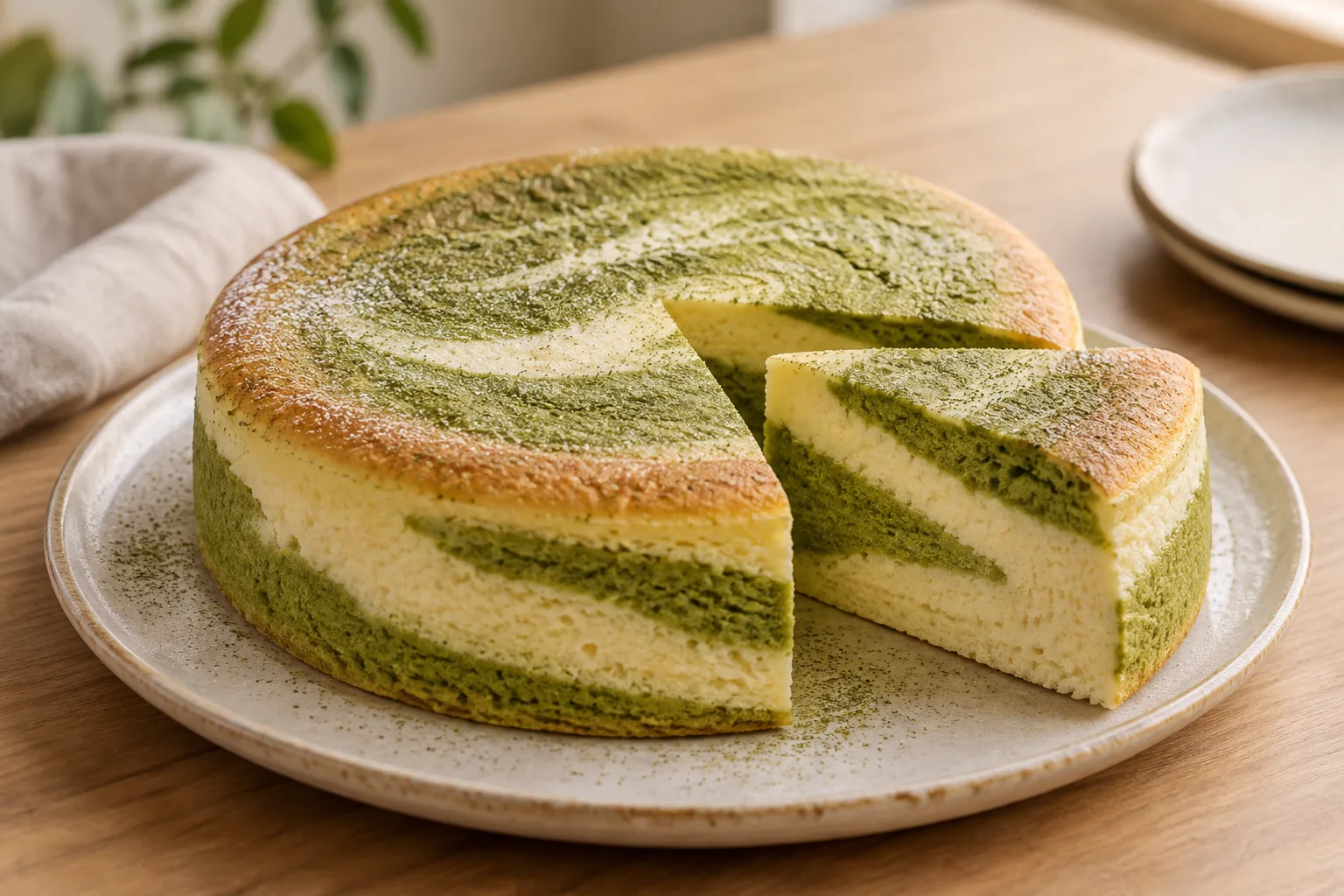
A light, airy Japanese cheesecake with matcha and green-and-white bands. Servings and preparation time are estimates.

View recipe
Simple Japanese Onigiri
Image generated by the Kitchenpause team
45 minEasy

Simple Japanese Onigiri

Japanese short-grain rice bites, lightly salted and shaped by hand into triangles. This simple version has no filling and no vinegar.

View recipe
Japanese Vegetable Tempura
Image generated by the Kitchenpause team
35 minIntermediate

Japanese Vegetable Tempura

Bite-size vegetables coated in a light batter of flour, egg, and very cold water, then quickly fried until crisp.

View recipe
Osaka-style Okonomiyaki
Image generated by the Kitchenpause team
60 minIntermediate

Osaka-style Okonomiyaki

Japanese cabbage pancakes with shrimp and pork belly, served with homemade okonomiyaki sauce. Makes 4 servings.

View recipe

Sources consulted

Read the sources and each document’s scope. A heritage inscription concerns a particular practice, not all of a country’s cuisine.

  1. 令和6年国民健康・栄養調査 栄養摂取状況(第1表の1・第5表の1) www.mhlw.go.jp/content/001675212.pdf Ministry of Health, Labour and Welfare, Japan Consulted: November 3, 2026
  2. 2024年 国民健康・栄養調査 表5-1 official metadata www.e-stat.go.jp/stat-search/files?cycle=7&layout=datalist&month=0&page=1&tclass1=0000012475… e-Stat / MHLW Consulted: November 3, 2026
  3. 令和6年国民健康・栄養調査 調査の概要 www.mhlw.go.jp/content/001675210.pdf Ministry of Health, Labour and Welfare, Japan Consulted: November 3, 2026
  4. Chirimen Sansho — Kyoto City www.maff.go.jp/e/policies/market/dento_syoku/menu/tirimen_sansyo.html Ministry of Agriculture, Forestry and Fisheries, Japan Consulted: November 3, 2026
  5. Sansho no Tsukudani — Hyogo Prefecture www.maff.go.jp/e/policies/market/k_ryouri/search_menu/4878/index.html Ministry of Agriculture, Forestry and Fisheries, Japan Consulted: November 3, 2026
  6. Okonomiyaki de Osaka www.kitchenpause.com/es/recetas/okonomiyaki-de-osaka KitchenPause Consulted: November 3, 2026
  7. Eating patterns in a nationwide sample of Japanese aged 1–79 years from MINNADE study: eating frequency, clock time for eating, time spent on eating and variability of eating patterns europepmc.org/articles/PMC9991801 Public Health Nutrition Consulted: November 3, 2026
  8. Association between meal context and meal quality: an ecological momentary assessment in Japanese adults europepmc.org/articles/PMC11377557 European Journal of Nutrition Consulted: November 3, 2026
  9. Characterisation of breakfast, lunch, dinner and snacks in the Japanese context: an exploratory cross-sectional analysis europepmc.org/articles/PMC9991704 Public Health Nutrition Consulted: November 3, 2026
  10. Factors Influencing Changes in Food Preparation during the COVID-19 Pandemic and Associations with Food Intake among Japanese Adults europepmc.org/articles/PMC8620480 Nutrients Consulted: November 3, 2026
  11. 2006 Survey on Time Use and Leisure Activities: Summary of Results, Questionnaire A www.stat.go.jp/english/data/shakai/2006/pdf/jikan-a.pdf Statistics Bureau of Japan Consulted: November 3, 2026
  12. Outline of the 2006 Survey on Time Use and Leisure Activities www.stat.go.jp/english/data/shakai/2006/gaiyo.htm Statistics Bureau of Japan Consulted: November 3, 2026
  13. Taiyaki japonés relleno de anko www.kitchenpause.com/es/recetas/taiyaki-japones-relleno-de-anko KitchenPause Consulted: November 3, 2026
  14. Tempura japonesa de verduras www.kitchenpause.com/es/recetas/tempura-japonesa-de-verduras KitchenPause Consulted: November 3, 2026
  15. Dorayaki japonés con anko www.kitchenpause.com/es/recetas/dorayaki-japones-con-anko KitchenPause Consulted: November 3, 2026
  16. Onigiri japonés sencillo www.kitchenpause.com/es/recetas/onigiri-japones-sencillo KitchenPause Consulted: November 3, 2026
  17. Sopa de miso vegetariana con tofu y wakame www.kitchenpause.com/es/recetas/sopa-de-miso-vegetariana-con-tofu-y-wakame KitchenPause Consulted: November 3, 2026
  18. Japanese Cuisine — ichiju sansai www.maff.go.jp/e/policies/market/japan-cuisine/index.html Ministry of Agriculture, Forestry and Fisheries, Japan Consulted: November 3, 2026
  19. Interpretation of Japanese food guide spinning top — standard reference servings www.maff.go.jp/j/balance_guide/attach/pdf/index-1.pdf Ministry of Agriculture, Forestry and Fisheries, Japan Consulted: November 3, 2026
  20. FY2005 Annual Report — guide adoption in June2005, Table3 www.maff.go.jp/e/pdf/fy2005_rep.pdf Ministry of Agriculture, Forestry and Fisheries, Japan Consulted: November 3, 2026
  21. Senmaizuke — Kyoto www.maff.go.jp/e/policies/market/k_ryouri/search_menu/1900/index.html Ministry of Agriculture, Forestry and Fisheries, Japan Consulted: November 3, 2026
  22. Soy sauce, miso and other seasonings — types and production www.maff.go.jp/e/policies/market/dento_syoku/bunrui/syouyu-miso.html Ministry of Agriculture, Forestry and Fisheries, Japan Consulted: November 3, 2026
  23. Consumer Confidence Survey March2026 — methods and Table3 household durable ownership www.esri.cao.go.jp/jp/stat/shouhi/honbun202603.pdf Economic and Social Research Institute, Cabinet Office, Japan Consulted: November 3, 2026
  24. Association of Free Sugars Intake with Cardiometabolic Risk Factors among Japanese Adults: The2016National Health and Nutrition Survey,Japan europepmc.org/articles/PMC7761430 Nutrients / original research Consulted: November 3, 2026
  25. Young consumers’ perceptions of and preferences for alternative meats: an empirical study in Japan and China www.frontiersin.org/journals/sustainable-food-systems/articles/10.3389/fsufs.2023.1290131/fu… Frontiers in Sustainable Food Systems / original research Consulted: November 3, 2026
  26. How to brew and enjoy delicious Uji tea — Daifuku tea on New Year’s Day www.ujicha.or.jp/en/knowledge/howto/ Kyoto Prefectural Tea Industry Chamber Consulted: November 3, 2026
  27. 家計調査報告 家計収支編 2025年平均結果の概要 www.stat.go.jp/data/kakei/sokuhou/tsuki/pdf/fies_gaikyo2025.pdf Statistics Bureau of Japan Consulted: November 3, 2026
  28. MIS法を用いた最低生活水準の推計 — 食費の価格調査方法 mhlw-grants.niph.go.jp/system/files/2010/101011/201001049A/201001049A0008.pdf MHLW-funded original MIS research; Iwata, Abe and colleagues Consulted: November 3, 2026
  29. MIS法を用いた最低生活水準の推計 — 中学3年生男子の固定献立・食費計算 mhlw-grants.niph.go.jp/system/files/2010/101011/201001049A/201001049A0011.pdf MHLW-funded original MIS research; Iwata, Abe and colleagues Consulted: November 3, 2026
  30. 牛丼 — 店内・テイクアウト価格 www.yoshinoya.com/menu/gyudon/gyu-don/ Yoshinoya Consulted: November 3, 2026
  31. 秋の牛丼フェス2026(終了)— 通常価格と特別価格 www.yoshinoya.com/campaign/gyudon_fes_202610/ Yoshinoya Consulted: November 3, 2026
  32. 令和7年度 食生活・ライフスタイル調査 www.maff.go.jp/j/zyukyu/survey/attach/pdf/lifestyle-12.pdf Ministry of Agriculture, Forestry and Fisheries, Japan Consulted: November 3, 2026
  33. スーパーマーケット白書2026 — 消費者調査2025 www.super.or.jp/wp/wp-content/uploads/2026/03/NSAJ-Supermarket-hakusho2026.pdf National Supermarket Association of Japan Consulted: November 3, 2026
  34. 生活科学研究 No.52 — 2025年中食調査 www.nisshin-oillio.com/report/report/images/no52/no52.pdf Nisshin OilliO Consulted: November 3, 2026
  35. 令和7年度 食品廃棄物等の発生抑制及び再生利用の促進の取組に係る実態調査 報告書(令和8年3月) www.env.go.jp/recycle/foodloss/pdf/houkokusyo_r07.pdf Ministry of the Environment, Japan Consulted: November 3, 2026
  36. 2024年度の食品ロス量 — 消費者庁大臣発言要旨(2026年6月30日) www.caa.go.jp/notice/statement/kikawada2/046772.html Consumer Affairs Agency, Japan Consulted: November 3, 2026
  37. Arroz - Wikipedia, la enciclopedia libre es.wikipedia.org/wiki/Arroz es.wikipedia.org Consulted: November 8, 2026
  38. Cómo hacer Taiyaki + Batido Black Forest - Bake-Street.com bake-street.com/como-hacer-taiyaki/ bake-street.com Consulted: October 3, 2026
  39. Taiyaki | www.cocinista.es www.cocinista.es/web/es/recetas/cocina-internacional/japon/taiyaki.html cocinista.es Consulted: October 3, 2026
  40. Taiyaki: qué es, origen y variedades - Oriental Market www.orientalmarket.es/taiyaki-que-es-origen-y-variedades/?srsltid=AU7gw4WVsweQPz4b8tlKb-Fg32… orientalmarket.es Consulted: October 3, 2026
  41. Taiyaki: el dulce japonés con forma de pez - Muy Japones www.muyjapones.com/taiyaki-el-dulce-japones-con-forma-de-pez/ muyjapones.com Consulted: October 3, 2026
  42. Taiyaki, el dulce japonés con forma de pez | Japón Secreto ⛩️ japon-secreto.com/tag/taiyaki/ japon-secreto.com Consulted: October 3, 2026
  43. Cómo hacer Anko, pasta dulce de judías rojas - Bake-Street.com bake-street.com/como-hacer-anko/ bake-street.com Consulted: October 12, 2026
  44. Una chapucillas y cocinillas en casa: Taiyaki chapucillasycocinillas.blogspot.com/2025/08/taiyaki.html chapucillasycocinillas.blogspot.com Consulted: October 3, 2026
  45. ¿Qué es el taiyaki y cómo se prepara? | Conoce Japón conocejapon.es/vocabulario-japones/que-es-el-taiyaki/ conocejapon.es Consulted: October 3, 2026
  46. Como preparar Anko - Muy Japones www.muyjapones.com/como-preparar-anko/ muyjapones.com Consulted: November 1, 2026
  47. Recetas con anko: dulces japoneses irresistibles cookpad.com/es/buscar/anko cookpad.com Consulted: October 3, 2026
  48. ANKO, EL RELLENO DE LOS DORAYAKIS www.doraemon-world.com/receta/anko-el-relleno-de-los-dorayakis/ doraemon-world.com Consulted: October 3, 2026
  49. Taiyaki: qué es, origen y variedades - Oriental Market www.orientalmarket.es/taiyaki-que-es-origen-y-variedades/?srsltid=AU7gw4U0nQPuw-P5QDC3a4xJjC… orientalmarket.es Consulted: October 3, 2026
  50. Taiyaki – たい焼き en Una japonesa en Japón - ある帰国子女のブログ unajaponesaenjapon.com/36003/taiyaki-dulce-japones-con-forma-de-pez unajaponesaenjapon.com Consulted: October 3, 2026
  51. Taiyaki - Wikipedia, la enciclopedia libre es.wikipedia.org/wiki/Taiyaki es.wikipedia.org Consulted: October 3, 2026
  52. Okonomiyaki japonés auténtico (receta fácil paso a paso) | ComerJapones comerjapones.com/receta-de-okonomiyaki-la-pizza-japonesa/ comerjapones.com Consulted: October 7, 2026
  53. Okonomiyaki | receta japonesa ¿tortilla o pizza? - Recetas sin lactosa - Orielo's Kitchen www.recetassinlactosa.com/okonomiyaki-receta-japonesa/ recetassinlactosa.com Consulted: October 7, 2026
  54. Como hacer (BIEN) OKONOMIYAKI japonés - Superpilopi superpilopi.com/como-hacer-bien-okonomiyaki-japones/ superpilopi.com Consulted: October 7, 2026
  55. Okonomiyaki: comida callejera japonesa, en casa — diegodoal diegodoal.com/recetas/okonomiyaki diegodoal.com Consulted: October 7, 2026
  56. TOKYO-YA - Líder en Alimentación Japonesa al por Mayor y Menor www.tokyo-ya.es/blog/recetaokonomiyaki/?srsltid=AU7gw4UNfJQnSM_kWOgNj-Rp7YWDaY7AIuhqGutwxR5e… tokyo-ya.es Consulted: October 7, 2026
  57. Salsa Okonomiyaki: historia, receta y su importancia en la gastronomía japonesa | Gastronomía & Cía www.gastronomiaycia.com/salsa-okonomiyaki-historia-receta-y-su-importancia-en-la-gastronomia… gastronomiaycia.com Consulted: October 7, 2026
  58. Tempura japonesa crujiente: receta y por qué en Sushisom sabe mejor sushisom.net/es/blog-sushisom-dev/tempura-japonesa-crujiente-sushisom sushisom.net Consulted: October 11, 2026
  59. Tempura Japonesa El Mejor Rebozado Para Tus Alimentos👍 cocinafrancia.com/2022/09/01/tempura-japonesa/ cocinafrancia.com Consulted: October 11, 2026
  60. Tempura de verduras: receta japonesa fácil y crujiente harineraelmolino.com/tempura-de-verduras-crujiente-ligera-y-deliciosa/ harineraelmolino.com Consulted: October 11, 2026
  61. Receta de Tempura Tradicional. (Rápido y Fácil) Japonpedia 🍤 japonpedia.com/receta-tempura/ japonpedia.com Consulted: October 11, 2026
  62. Cinco claves para que la tempura te salga siempre perfecta: la mejor fritura para verduras y mariscos www.directoalpaladar.com/ingredientes-y-alimentos/cinco-consejos-tempura-perfecta-fritura-ve… directoalpaladar.com Consulted: October 11, 2026
  63. La tempura japonesa - Muy Japones www.muyjapones.com/la-tempura-japonesa/ muyjapones.com Consulted: October 11, 2026
  64. Cocina japonesa: Tempura estudiahosteleria.com/blog/cocina/cocina-japonesa/ estudiahosteleria.com Consulted: October 11, 2026
  65. La Fusión Restaurante - Torrevieja lafusion.club/origen-iberico-tempura-japonesa/ lafusion.club Consulted: October 11, 2026
  66. Tempura, la técnica que cruje tan bien como sabe | Excelencias Gourmet www.excelenciasgourmet.com/es/tempura-tecnica-culinaria excelenciasgourmet.com Consulted: October 11, 2026
  67. La tempura japonesa es Galicia Calidade www.afuegolento.com/articulo/la-tempura-japonesa-es-galicia-calidade/18041/ afuegolento.com Consulted: October 11, 2026
  68. Tempura de verduras, cómo hacerla fácil y perfecta en casa bonviveur.com/es/recetas/tempura-de-verduras bonviveur.com Consulted: October 11, 2026
  69. Receta con vídeo de tempura - Aprende a cocinar tempura... www.cocinista.es/web/es/recetas/cocina-internacional/japon/tempura-video-.html cocinista.es Consulted: October 11, 2026
  70. 天ぷら Tempura Japón 天麩羅 天婦羅 – Manuel Crespo foodlinkus.com/2015/11/26/%E5%A4%A9%E3%81%B7%E3%82%89-tempura-japon-%E5%A4%A9%E9%BA%A9%E7%BE… foodlinkus.com Consulted: October 11, 2026
  71. Tempura: La fritura japonesa www.huffingtonpost.es/andres-madrigal/tempura-la-fritura-japone_b_2677916.html huffingtonpost.es Consulted: October 11, 2026
  72. Harina en la cocina japonesa: mucho más que tempura harineraelmolino.com/la-harina-en-la-gastronomia-japonesa-mucho-mas-que-tempura/ harineraelmolino.com Consulted: October 11, 2026
  73. Tempura: los 10 errores que resecan o ablandan tu receta www.lavanguardia.com/comer/tendencias/20211021/7802598/10-errores-resecan-ablandan-tempura.h… lavanguardia.com Consulted: October 11, 2026
  74. Tempura de Verduras - Danza de Fogones danzadefogones.com/tempura-de-verduras/ danzadefogones.com Consulted: October 11, 2026
  75. Tempura de verduras y los secretos para hacerla perfecta en casa www.sushibartottori.com/blog/los-mejores-trucos-para-conseguir-en-casa-una-tempura-como-la-d… sushibartottori.com Consulted: October 11, 2026
  76. Tempura de verduras, un mundo por descubrir - Helios www.helios.es/tempura-de-verduras-un-mundo-por-descubrir/ helios.es Consulted: October 11, 2026
  77. Recetas japonesas fáciles: Tempura de verduras y langostinos www.mistralbonsai.com/recetas-japonesas-faciles-tempura-verduras-langostinos/ mistralbonsai.com Consulted: October 11, 2026
  78. Dorayaki. Receta | ComerJapones comerjapones.com/dorayaki-receta/ comerjapones.com Consulted: October 12, 2026
  79. Dorayakis, la receta para hacer el dulce preferido de Doraemon bonviveur.com/es/recetas/dorayakis-caseros bonviveur.com Consulted: October 12, 2026
  80. Dorayakis Japoneses, los auténticos | Velocidad Cuchara www.velocidadcuchara.com/dorayakis-thermomix/ velocidadcuchara.com Consulted: October 12, 2026
  81. Receta fácil de dorayakis | Gastronosfera www.gastronosfera.com/recetas/receta-facil-de-dorayakis gastronosfera.com Consulted: October 12, 2026
  82. Dorayaki - Muy Japones www.muyjapones.com/dorayaki-un-dulce-japones/ muyjapones.com Consulted: October 12, 2026
  83. Receta de onigiris y furikake casero — diegodoal diegodoal.com/recetas/onigiri-furikake-casero diegodoal.com Consulted: October 26, 2026
  84. Yaki onigiri | CreatiVegan.net creativegan.net/archives/yaki-onigiri/ creativegan.net Consulted: October 26, 2026
  85. Receta de Onigiri Auténtica, Tradicional y Fácil - Japonpedia japonpedia.com/receta-onigiri/ japonpedia.com Consulted: October 26, 2026
  86. Onigiri japonés: receta fácil y original de bolas de arroz de sushi con relleno www.directoalpaladar.com/recetas-de-arroces/onigiri-japones-bolas-arroz-sushi-rellenas-perfe… directoalpaladar.com Consulted: October 18, 2026
  87. Onigiri: Cómo Preparar el Bollito de Arroz Japonés japanhousesp.com.br/es/jhsponline/onigiri-como-preparar-bolinho-de-arroz-japones/ japanhousesp.com.br Consulted: October 26, 2026
  88. Onigiri receta: Aprendé los pasos www.superprof.com.ar/blog/sandwich-japon-cocina/ superprof.com.ar Consulted: October 18, 2026
  89. ¿Qué es el Onigiri? El Popular Snack de Arroz de Japón www.byfood.com/es/blog/what-is-onigiri-p-856 byfood.com Consulted: October 26, 2026
  90. The history and appeal of onigiri, Japan’s soul food that is loved worldwide | Japan Rice myjapanrice.com/en/tidbits/the-history-and-appeal-of-onigiri-japans-soul-food-that-is-loved-… myjapanrice.com Consulted: October 18, 2026
  91. Washoku: culturas alimentarias tradicionales de Japón ich.unesco.org/en/RL/washoku-traditional-dietary-cultures-of-the-japanese-notably-for-the-ne… UNESCO Consulted: October 20, 2026
  92. Our Regional Cuisines www.maff.go.jp/e/policies/market/k_ryouri/ Ministerio de Agricultura, Silvicultura y Pesca de Japón (MAFF) Consulted: October 20, 2026
  93. Japanese Food Culture www.maff.go.jp/e/data/publish/attach/pdf/index-113.pdf MAFF Consulted: October 20, 2026
  94. Washoku: cocina y cultura alimentaria www.maff.go.jp/j/shokusan/gaisyoku/pamphlet/pdf/washoku_english.pdf MAFF Consulted: October 20, 2026
  95. Hokkaido — Our Regional Cuisines www.maff.go.jp/e/policies/market/k_ryouri/search_menu/pref/hokkaido/index.html MAFF Consulted: October 20, 2026
  96. Kyoto — Our Regional Cuisines www.maff.go.jp/e/policies/market/k_ryouri/search_menu/pref/kyoto/index.html MAFF Consulted: October 20, 2026
  97. Okinawa — Area stories www.maff.go.jp/e/policies/market/k_ryouri/areastory/1494/index.html MAFF Consulted: October 20, 2026
  98. Okonomiyaki — Our Regional Cuisines www.maff.go.jp/e/policies/market/k_ryouri/search_menu/5798/index.html MAFF Consulted: October 20, 2026
  99. Yaki Onigiri: receta fácil de onigiri a la plancha... www.cocinista.es/web/es/recetas/cocina-internacional/japon/yaki-onigiri-onigiri-a-la-plancha… cocinista.es Consulted: October 26, 2026
  100. Onigiri, la receta del sorprendente bocado de arroz japonés bonviveur.com/es/recetas/onigiri bonviveur.com Consulted: October 26, 2026
  101. Onigiri: el invento japonés entre el sushi y el bocadillo | El Comidista | Gastronomía | EL PAÍS elpais.com/gastronomia/el-comidista/2021/05/10/articulo/1620664321_929498.html elpais.com Consulted: October 26, 2026
  102. Onigiri el delicioso snack japonés - Muy Japones www.muyjapones.com/onigiri-el-delicioso-snack-japones/ muyjapones.com Consulted: October 26, 2026
  103. Transformation of Japanese Food - Online Exhibition: Japanese Food Culture: History and Mystery - Subject & Course Guides at University of Kansas guides.lib.ku.edu/c.php?g=1239199&p=9069160 guides.lib.ku.edu Consulted: October 31, 2026
  104. Sopa de miso. Receta | ComerJapones comerjapones.com/sopa-de-miso-receta/ comerjapones.com Consulted: November 3, 2026
  105. Sopa Miso - Shoot the Cook - Recetas fáciles y sabrosas www.shoothecook.es/sopa-miso/ shoothecook.es Consulted: November 3, 2026
  106. SOPA DE MISO | El gran básico japonés - Las Recetas de MJ www.lasrecetasdemj.com/2020/02/sopa-de-miso-el-gran-basico-japones.html lasrecetasdemj.com Consulted: November 3, 2026
  107. Sopa Miso - Muy Japones www.muyjapones.com/sopa-miso/ muyjapones.com Consulted: November 3, 2026
  108. Sopa Miso - Danza de Fogones danzadefogones.com/sopa-miso/ danzadefogones.com Consulted: November 3, 2026
  109. Sopa Miso con shiitake y wakame - Bake-Street.com bake-street.com/sopa-miso/ bake-street.com Consulted: November 3, 2026
  110. Sopa de miso o sopa miso, receta tradicional de la gastronomía japonesa koketo.es/curso-iniciacion-la-cocina-japonesa/sopa-miso koketo.es Consulted: November 3, 2026
  111. miso | Centro de Información Umami es.umamiinfo.com/richfood/foodstuff/miso.html es.umamiinfo.com Consulted: November 3, 2026
  112. Todo sobre el miso: tipos, propiedades y recetas - Blog Conasi www.conasi.eu/blog/consejos-de-salud/macrobiotica/miso-tipos-propiedades-recetas/ conasi.eu Consulted: November 3, 2026
  113. Miso ¿Qué es este condimento y cómo puedo usarlo? www.abc.es/recetasderechupete/miso-que-es-este-condimento-y-como-puedo-usarlo/36353/ abc.es Consulted: November 3, 2026
  114. Tarta de queso japonesa súper esponjosa - Superpilopi superpilopi.com/tarta-de-queso-japonesa-super-esponjosa/ superpilopi.com Consulted: November 4, 2026
  115. Tarta de queso japonesa | Recetas | Gastronomía | EL PAÍS elpais.com/gastronomia/recetas/2016/10/19/receta/1476906514_131989.html elpais.com Consulted: November 4, 2026
  116. Japanese Cotton Cheesecake con té Matcha | Delicious Martha deliciousmartha.com/japanese-cotton-cheesecake-con-te-matcha/ deliciousmartha.com Consulted: November 4, 2026
  117. ▷ Tarta de Queso Japonesa 【 Deliciosa y Súper Esponjosa 】 ✅ www.mykaramelli.com/blog/tarta-de-queso-japonesa/?srsltid=AYCX9vIzpz1KnQiRa6pVMzW8xQVxgXcyJz… mykaramelli.com Consulted: November 4, 2026
  118. TARTA DE QUESO TE MATCHA www.alambique.com/blog/tarta-de-queso-matcha-n718?srsltid=AYCX9vI4PqveGYLEkhM7ntlA8HVxaN_l6H… alambique.com Consulted: November 4, 2026
  119. Tarta de queso japonesa: análisis de los mejores ingredientes y utensilios asiáticos para prepararla en casa sukimotril.es/tarta-queso-japonesa/ sukimotril.es Consulted: November 4, 2026
  120. Receta del ‘oyakodon’ | Nippon.com www.nippon.com/es/articles/-/37331 nippon.com Consulted: November 6, 2026
  121. Oyakodon del Big Green Egg - pollo a la parrilla y huevo con arroz. www.biggreenegg.eu/es/inspiracion/recetas/oyakodon biggreenegg.eu Consulted: November 6, 2026
  122. OYAKODON: APRENDA A HACER ESTA RECETA JAPONESA CASERA japanhousesp.com.br/es/jhsponline/oyakodon-aprendea-a-fazer-esta-caseira-receita/ japanhousesp.com.br Consulted: November 6, 2026
  123. Oyakodon – iRASSHAi irasshai.co/es/blogs/recettes-japonaises/recette-oyakodon irasshai.co Consulted: November 6, 2026
  124. Oyakodon - Wikipedia, la enciclopedia libre es.wikipedia.org/wiki/Oyakodon es.wikipedia.org Consulted: November 6, 2026
  125. Curry japonés con pollo – Kwan Homsai www.kwanhomsai.com/curry-japones-con-pollo/ kwanhomsai.com Consulted: November 8, 2026
  126. Curry japonés, la mejor versión del curry — diegodoal diegodoal.com/recetas/curry-japones diegodoal.com Consulted: November 8, 2026
  127. Receta de Katsu Kare (curry japonés) | Andy Cooks www.andy-cooks.com/es/blogs/recipes/kare-japanese-curry?srsltid=AYCX9vJOvZnspriNCgMWvgfRmVmI… andy-cooks.com Consulted: November 8, 2026
  128. Katsukarē o curry japonés - No me comes nada www.nomecomesnada.es/katsukare-o-curry-japones/ nomecomesnada.es Consulted: November 8, 2026
  129. Curry japonés - Wikipedia, la enciclopedia libre es.wikipedia.org/wiki/Curry_japon%C3%A9s es.wikipedia.org Consulted: November 8, 2026
  130. Receta de Arroz con Curry Japonés (Kare Raisu) | Aromata – Aromata Condiments aromatacondiments.com/blogs/recetas/como-preparar-arroz-curry-japones-kare-raisu?srsltid=AYC… aromatacondiments.com Consulted: November 8, 2026
  131. Sushi y seguridad alimentaria, recomendaciones para el control de peligros asociados a este plato en servicios de comidas - Higiene ambiental higieneambiental.com/sushi-y-seguridad-alimentaria-recomendaciones higieneambiental.com Consulted: November 8, 2026
  132. Curry japonés | Receta fácil y casera | Recetas Fáciles ✔️ www.recetasfaciles.com.es/receta-facil/curry-japones/ recetasfaciles.com.es Consulted: November 8, 2026
  133. Principios legales de la cocina japonesa | Consumer www.consumer.es/seguridad-alimentaria/principios-legales-de-la-cocina-japonesa.html consumer.es Consulted: November 8, 2026
  134. Curry con arroz estilo japonés | Japón a la carta | NHK WORLD RADIO JAPÓN www3.nhk.or.jp/nhkworld/es/radio/cooking/20121019.html nhk.or.jp Consulted: November 8, 2026
  135. SHOYU RAMEN - Las Recetas de MJ www.lasrecetasdemj.com/2016/04/shoyu-ramen-videoreceta.html lasrecetasdemj.com Consulted: November 10, 2026
  136. Shoyu ramen japonés | K33 Kitchen - Deliciosas recetas a base de plantas www.k33kitchen.com/es/recipes/japanese-shoyu-ramen/ k33kitchen.com Consulted: November 10, 2026
  137. Shoyu Ramen – Kwan Homsai www.kwanhomsai.com/shoyu-ramen/ kwanhomsai.com Consulted: November 10, 2026
  138. Shoyu Ramen | www.cocinista.es www.cocinista.es/web/es/recetas/cocina-internacional/japon/shoyu-ramen.html cocinista.es Consulted: November 10, 2026
  139. Los trucos que debes seguir para hacer un auténtico shoyu ramen en solo 30 minutos www.directoalpaladar.com/videos-recetas/trucos-que-debes-seguir-para-hacer-autentico-shoyu-r… directoalpaladar.com Consulted: November 10, 2026
  140. Receta Shoyu Ramen – Tare y Caldo www.nishikidori.com/es/blogs/nuestras-recetas/receta-shoyu-ramen-tradicional?srsltid=AYCX9vL… nishikidori.com Consulted: November 10, 2026
  141. Ramen Shoyu Carne: calorías e información nutricional | EatBetter www.eatbetter.app/es/alimento/ramen-shoyu-de-carne eatbetter.app Consulted: November 10, 2026
  142. Todo sobre el ramen | Kikkoman www.kikkoman.es/reportajes-gastronomicos/detail/ramen-goes-international kikkoman.es Consulted: November 10, 2026
  143. Ramen - Wikipedia, la enciclopedia libre es.wikipedia.org/wiki/Ramen es.wikipedia.org Consulted: November 10, 2026
  144. Ramen Shoyu: análisis y comparativa de los mejores productos asiáticos para prepararlo en casa sukimotril.es/ramen-shoyu/ sukimotril.es Consulted: November 10, 2026
  145. Historia y Origen del Ramen - Yummy Barcelona yummybarcelona.com/historia-y-origen-del-ramen/ yummybarcelona.com Consulted: November 10, 2026

We use session and security technologies to provide our features. Only with your permission do we load Google Analytics to measure visits and Google Maps on Contact. Choose separately, reject or accept both.

Withdraw either permission here. Withdrawing analytics reloads the page to unload the running tag.

Cookie policy