Documentary synthesis prepared with AI assistance. It does not replace specialist review or certify kitchen testing. · Updated 11 November 2026
A cuisine of many forms and settings
Japanese food is best approached as a collection of practices and dishes, not as one fixed meal or a short list of famous exports. Rice appears as a cooked staple, a shaped portable bite, and the base beneath a topping; noodles may be served in broth; vegetables and seafood may be preserved, simmered, or fried. The same broad idea can take different forms from place to place, as the varied regional interpretations of ramen and miso demonstrate. A familiar soup of miso, tofu, and seaweed is only one combination, not a template for every household or occasion.
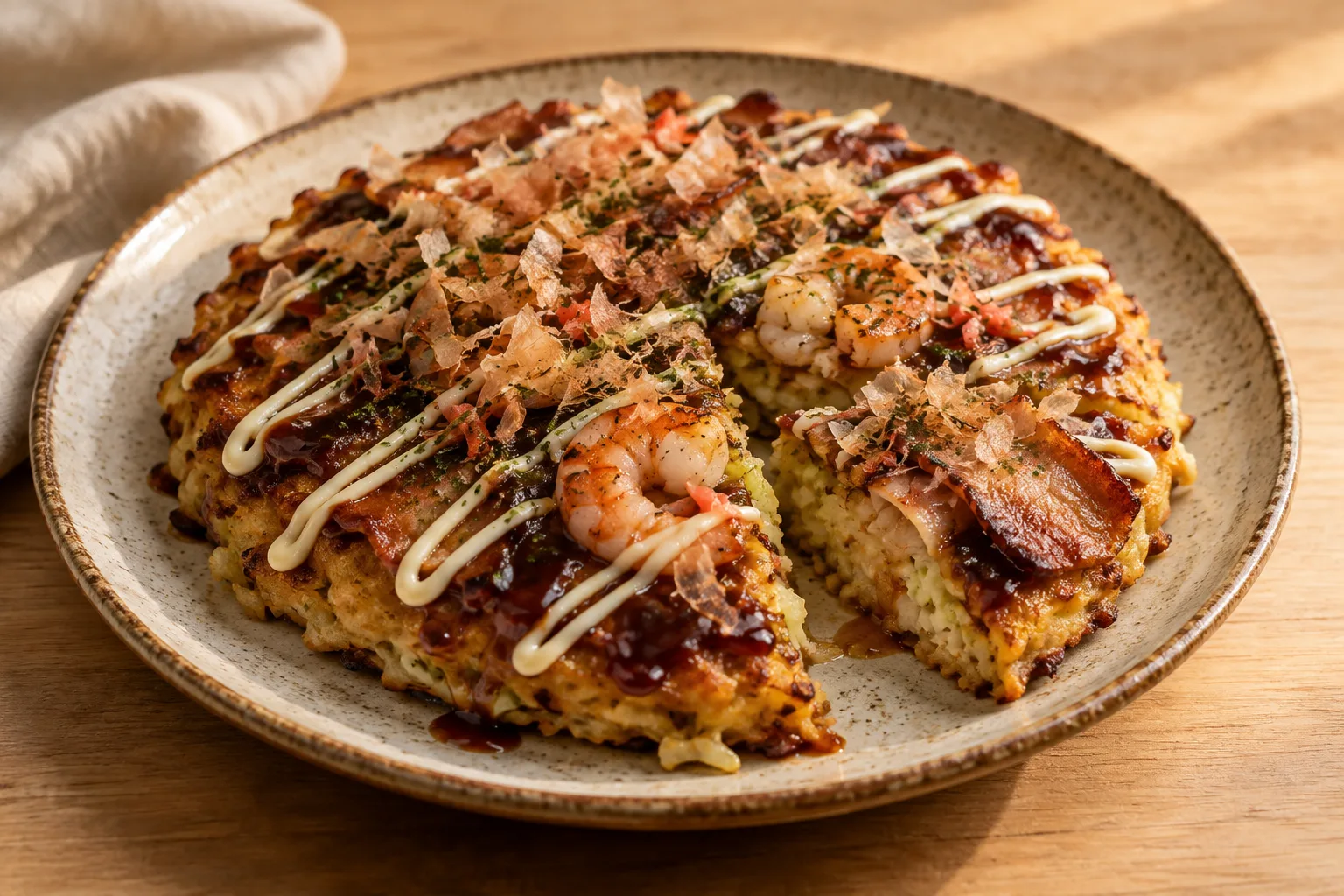
A useful way to read a dish is to notice how its parts work together: a grain or noodle base, a broth or sauce, and ingredients that supply contrast. In an oyakodon, chicken and softly cooked egg sit over rice; in okonomiyaki, cabbage and batter meet on a hot griddle; a bowl of ramen brings broth, noodles, and toppings into one serving. These examples show how a cuisine can include both modest everyday food and elaborate combinations without making either stand for all of Japan.
Exchange, adaptation, and changing tastes
Japanese food history includes sustained borrowing and adaptation. Ramen developed from Chinese noodle traditions and became a recognizably Japanese bowl through local broths, seasonings, noodles, and toppings. Its varieties include shoyu, seasoned with soy sauce, and regional styles such as Sapporo and Hakata ramen. This history is a reminder that a dish can have a history of movement while developing a distinct life in its adopted setting.
Other documented exchanges took different routes. Tempura is associated with Portuguese influence in Japan during the sixteenth century; the Japanese preparation of quickly fried vegetables and seafood became its own culinary form. Curry arrived through British foodways during the Meiji era and was adapted into a thicker, often mild-to-sweet sauce served with rice, or in dishes such as curry udon and curry bread. Fermented miso also has a history of regional development and changing production, from household preparation to broader commercial manufacture. These histories are not evidence that every Japanese dish has a foreign origin: they describe particular exchanges and transformations, alongside food traditions that evolved through local practice.
Rice, sea vegetables, and fermented seasonings
The pantry behind many Japanese preparations is defined not just by ingredients, but by how they are transformed. Cooked short-grain rice can be shaped into onigiri and held together by its texture; a strip of nori can wrap a parcel for eating by hand. Rice also forms the base of donburi, where simmered ingredients and sauce are served over it. The fillings and seasonings of rice parcels vary, including salted plum, salmon, tuna, or dried-fish and seaweed mixtures.
Fermentation provides another set of essential tools. Miso is made with soybeans, salt, and koji, with rice, barley, or soy contributing to different types. Its colour, saltiness, and flavour vary, and miso can be used in soup or as a seasoning beyond soup. Soy sauce adds a distinct savoury seasoning; it is not interchangeable with miso, which is a paste. Dried kombu, dried bonito flakes, dried sardines, and dried shiitake contribute to different broths and infusions. Wakame, tofu, azuki beans, and cabbage appear in specific preparations—from miso soup and rice parcels to sweets and griddled dishes—rather than as interchangeable symbols of a single pantry.
Broths, savouriness, and textural contrast
A Japanese dish often builds flavour through layers rather than through one seasoning alone. Dashi is a family of broths: kombu and dried bonito are a common combination, while dried shiitake or small dried sardines can contribute different characters. In miso soup, broth and miso meet tofu, wakame, or other additions; the particular ingredients and miso type change the result. Different misos bring different strengths, from milder white varieties to more assertive red ones. The broth is therefore a foundation, not a universal recipe with one required formula.
Textures also define how a dish is experienced. Tempura pairs a thin fried coating with vegetables or seafood; the ingredient remains central rather than hidden beneath a heavy crust. Ramen sets springy noodles against a broth and chosen toppings. Okonomiyaki offers a tender cabbage-and-batter centre with a browned surface and sauces added at the end. In sweets, a soft or finely textured azuki paste can fill taiyaki or dorayaki, while the griddled outside gives another contrast. Across these examples, salty, sweet, savoury, crisp, tender, and smooth qualities belong to particular preparations; they should not be collapsed into one supposed national flavour.
Food for carrying, gathering, and passing on
Some Japanese preparations are designed for portability and everyday sharing. Onigiri is shaped cooked rice, often filled or seasoned, and commonly wrapped in nori. Its form suits a lunchbox, a journey, or a snack that can be eaten by hand; it also appears in bento, packed meals for school, work, or an outing. Historical accounts describe rice parcels as food carried by travellers and soldiers, while present-day accounts include home preparation and ready-to-eat versions. The long life of the form lies in its usefulness as well as its many possible fillings.
Other forms bring people together around a hot surface or a shared meal. Okonomiyaki is cooked on a griddle and is associated with regional styles, including Osaka and Hiroshima versions; restaurants may prepare it in view of diners, and some settings let diners finish cooking at the table. Miso soup is served as a companion to meals, with ingredients that can vary by household, region, or season. Dorayaki, filled with sweet azuki paste, belongs to a different kind of pause: a snack or sweet often enjoyed with tea. These are concrete, different occasions—not a claim that all Japanese meals follow one ritual or schedule.
Shaping, simmering, frying, and griddling
Several practical techniques show how preparation can change an ingredient’s role. For onigiri, cooked rice is shaped while warm enough to handle, with hands moistened to limit sticking. It may be formed around a filling, seasoned on the outside, or wrapped with nori. A yaki-onigiri takes the shaped parcel further: it is browned on a griddle or in a pan, sometimes with soy sauce or miso brushed on near the end. This produces a toasted exterior while keeping the rice at the centre of the preparation.
Miso soup brings together a broth, paste, and additions such as tofu and wakame; dissolving the miso separately in a little broth helps it blend into the pot. Tempura uses a light batter and brief frying for pieces of vegetable or seafood. Okonomiyaki instead combines batter and finely cut cabbage, then cooks the mixture as a broad cake on a hot griddle, turning it so that it cooks through and browns. Ramen has its own assembly logic: broth, noodles, seasoning, and toppings each contribute, and are brought together in the serving bowl. These are distinct methods, not a generic set of instructions for every Japanese dish.
Bowls, accompaniments, and everyday meals
The serving vessel and arrangement often tell you what kind of preparation is being eaten. A donburi is a bowl of rice with a topping; oyakodon combines chicken, onion, and egg simmered in a seasoned liquid and placed over rice. The egg may remain soft, giving the topping a moist texture against the rice. A ramen bowl combines noodles with broth and toppings, while a bowl of miso soup can accompany rice and other dishes. These examples show several ways a meal can be organised, not a single required format.
Portable food has its own table logic. Onigiri can be eaten without cutlery, and nori can make it easier to hold; it is also included in packed lunches. Tempura is served soon after frying, sometimes with a dipping sauce or salt, and its crispness is part of the experience. Okonomiyaki may be shared from a griddle or served as an individual portion with sauce and other toppings. A sweet such as dorayaki can accompany tea. At home, in shops, and in restaurants, the meal may take different shapes. The useful distinction is between these documented serving forms, rather than assumptions that every meal includes the same number or arrangement of dishes.
A small vocabulary of dishes and ingredients
These terms name particular ingredients, preparations, or serving forms. Their meanings are useful starting points for reading menus and recipes, but a name does not guarantee that every version is identical.
- Dashi: A family of broths made by extracting flavour from ingredients such as kombu, dried bonito, dried sardines, or dried shiitake. Combinations differ by preparation.
- Miso: A fermented paste made with soybeans, salt, and koji, sometimes using rice or barley. Types differ in colour, saltiness, and flavour.
- Onigiri: Cooked rice shaped into a parcel, ball, or triangle; it may be salted, filled, seasoned, or wrapped in nori.
- Okonomiyaki: A griddled preparation of batter and ingredients, commonly including cabbage; Osaka and Hiroshima are among its documented regional styles.
- Oyakodon: A donburi of rice topped with chicken and egg simmered with seasonings such as dashi, soy sauce, and mirin.
- Tempura: Vegetables or seafood coated in a light batter and quickly fried.
- Anko: Sweet paste made from azuki beans, used as a filling in sweets such as taiyaki and dorayaki.
- Ramen: A bowl of noodles served in broth with seasonings and toppings; shoyu identifies a soy-sauce-seasoned style.
One country, many cuisines
Hokkaido
The documented examples here include Hokkaido azuki beans and soup curry. Azuki beans grown in Hokkaido are used to make anko, a sweet paste found in Japanese confectionery. Hokkaido is also associated with soup curry, a brothier form served with substantial pieces of ingredients. Together these examples point to different uses of local produce and a regional curry style; they are illustrations, not a complete account of Hokkaido’s foodways.
Kyoto
A specific Kyoto-linked confectionery term is Ogura-an, a mixed azuki paste whose name is associated with Mount Ogura in Kyoto. It belongs to the wider family of sweet bean pastes used in Japanese sweets, alongside smoother and coarser textures. This documented connection supports a precise confectionery example, not a claim that anko or this preparation represents Kyoto’s cuisine as a whole.
Okinawa
A documented Okinawan example is curry made with bitter melon, or gōyā. It shows how a familiar Japanese curry form can be paired with a named local ingredient. The example is specific: it does not establish a complete account of Okinawan food traditions or the broader history of the Ryukyu Islands, and should be read as one regional preparation within a much wider culinary landscape.
Osaka
Osaka is one of the regions associated with okonomiyaki, a griddled preparation made with batter and ingredients such as cabbage. The mixture cooks as a cake on a hot surface and is finished with sauces and toppings. Osaka-style okonomiyaki is one regional form; Hiroshima-style preparation is also documented, so the dish should not be treated as a single uniform recipe across Japan.
Cook